


11 The Watcher Behind the Glass
The morning after the dinner that had shattered the villa’s fragile peace, the air itself felt different. The oppressive, pressurized silence had been cracked open, and in its place was a new, volatile energy—a current of defiance from Ante and a corresponding, seething rage from Jure that seemed to vibrate through the very limestone of the cliffs. Jure had retreated to his study, the door a solid, unyielding slab of oak, from behind which the low, furious murmur of a phone call could occasionally be heard. He was reasserting control in the only way he knew how: through the blunt instrument of his business, trying to dominate a world that still, at least partially, bent to his will.
Ante, meanwhile, felt a restlessness he hadn’t known since he was a teenager chafing against his father’s rule. The image of Mirna at the dinner table—pale, trembling, a beautiful bird with its wings pinned—was seared into his mind. It was more than just concern for a vulnerable person; it was a deep, moral revulsion that demanded action. He couldn’t leave her in that gilded cage with the wolf who claimed to be her keeper.
He found her not in the solarium, but outside, by the infinity pool. The pool was another of his father’s architectural statements, a sheet of flawless, cerulean water that spilled over a nearly invisible edge, merging visually with the sea and sky beyond. It was a place designed for spectacle, for cocktail parties and the display of wealth. But today, it held only a single, solitary figure.
Mirna was sitting on the rough, warm stone at the pool’s edge, her back to the villa. She had discarded the provocative silk dress and was back in one of the simple, pale cotton shifts, this one the colour of sea foam. Her legs were drawn up, her arms wrapped around her knees, and she was leaning forward, her long, slender toes skimming the surface of the water, sending out tiny, concentric ripples that distorted her reflection. Her posture was not one of leisure, but of profound yearning. She looked less like a woman at a pool and more like a exile staring across the border into her lost homeland.
Ante approached with the same caution he would use nearing a rare and skittish marine mammal. He made sure his footsteps were audible on the stone, giving her ample warning. She heard him and went rigid, her head whipping around, her body coiling to flee. When she saw it was him, the panicked tension in her shoulders eased by a fraction, but the wariness in her magnificent violet eyes remained, a deep, watchful pool of its own.
“May I join you?” he asked, stopping a respectful several feet away.
She didn’t nod, but she didn’t shake her head either. She simply turned back to look at the sea, a silent, neutral permission. He took it, settling himself on the warm stone a safe distance from her, drawing his own knees up. The morning sun was warm on their skin, and the only sounds were the sigh of the breeze, the distant cry of gulls, and the gentle, hypnotic lap of the water against the pool’s edge.
For a long time, they sat in silence. Ante didn’t try to force conversation. He could feel the tremors of her fear, the way she was hyper-aware of his presence. He simply existed beside her, allowing the peaceful morning and the shared view to work as a balm. He watched her profile, the straight, delicate line of her nose, the full curve of her lips, the way the sun gilded the loose, dark-blonde curls that had escaped her simple ponytail. She was, without a doubt, the most stunningly beautiful woman he had ever seen. But her beauty was secondary to the air of tragic mystery that clung to her, a sadness so profound it felt ancient.
Finally, he spoke, his voice soft, blending with the ambient sounds. “My father said you don’t remember anything. Is that true?”
It was a direct question, but he asked it gently, without pressure.
Mirna didn’t look at him. Her gaze remained fixed on the horizon, on the seamless line where the sky met the sea. She gave a small, almost imperceptible shake of her head. “I don’t remember,” she whispered, her voice so faint it was nearly carried away by the breeze. “It is all… dark. And empty.” She was silent for a moment, her toes making slow circles in the water. “Except for the sea. The sea… it is the only thing that feels familiar.”
The way she said it—not with joy, but with a heart-wrenching homesickness—pierced him. It wasn’t just a preference; it was a primal connection, the only solid ground in the earthquake of her existence.
“I understand that,” Ante said, and he meant it. “I’ve always felt that way too. It’s why I do what I do.”
This caught her attention. She turned her head slightly, her violet eyes regarding him with a flicker of curiosity. “What do you do?”
“I’m a marine biologist. I study the sea. The life in it, the currents, the way it breathes.”
A change came over her face. It was subtle, but to Ante, who had only seen fear and blank confusion in her expression, it was as dramatic as a sunrise. The tight, guarded set of her features softened. The deep, fearful shadows in her eyes seemed to recede, and in their place, a tiny, hesitant light kindled. It was the light of interest, of a dormant mind stirring awake.
“You… study it?” she asked, as if the concept were both foreign and fascinating.
“Yes,” he said, and he began to talk. He didn’t speak in dry, academic terms. He spoke as a poet of the deep. He told her about the diurnal migration, the vast, daily journey of trillions of tiny creatures rising from the abyss to the surface at dusk and descending again at dawn, a vertical river of life. He described the intelligence of the octopus, a creature that could change its shape and colour, that could solve puzzles and feel curiosity. He talked about the songs of the humpback whales, complex, evolving melodies that traveled for hundreds of miles through the dark water, a language of longing and community.
As he spoke, the transformation in her was breathtaking. The fearful, cowering girl began to fade, replaced by an alert, intensely focused young woman. She uncurled her body, turning fully towards him, her eyes wide and absorbing every word. She was no longer looking at the sea with yearning; she was looking at him as if he held the keys to a kingdom she had once known.
When he paused, she didn’t just offer a polite murmur. She asked a question. Her voice was still soft, but it was clear, intelligent.
“The light… it changes, doesn’t it? The deeper you go? The blue… it eats the red.”
Ante stared at her, stunned. It was a perceptive, technically accurate observation about how water absorbs different wavelengths of light. It wasn’t common knowledge.
“Yes,” he said slowly, his curiosity now fully ignited. “That’s exactly right. It’s why so many deep-sea creatures are red—it appears black in the depths, a form of camouflage.”
She nodded, as if this made perfect, instinctual sense to her. “And the currents… they are like roads. Under the surface. They carry the young, the seeds of things, to new places.”
Another sharp, intuitive leap. She was describing larval dispersal, a fundamental concept in oceanography, but she wasn’t using scientific jargon. She was describing it as if it were a story she had always known, a piece of folklore from a lost culture.
“How do you know these things?” he asked, his voice filled with wonder, not accusation.
The light in her eyes flickered, and a shadow of the old confusion returned. She looked down at her hands, twisting in her lap. “I… I don’t know. It just… feels true. When you speak, the words… they find a place inside me that is not empty.”
The admission was so vulnerable, so honest, that it stole Ante’s breath. He was no longer just a concerned bystander. He was a man witnessing the emergence of a remarkable soul from a prison of amnesia and terror. Her knowledge wasn’t learned; it was innate, woven into the very fabric of her being, as integral to her as the colour of her eyes. It was a knowledge of the sea.
He continued to talk, now tailoring his stories to her intuitive understanding. He spoke of the bioluminescent creatures that lit up the midnight zone with their own cold fire, of the strange, pressure-adapted life around hydrothermal vents, of the silent, graceful dance of the manta rays. And she listened, her questions becoming more insightful, her comments revealing a deep, pre-conscious sympathy with the marine world. She didn’t just understand it; she seemed to feel it.
For the first time since he had arrived, Ante saw a glimpse of who she might have been before the void claimed her. Not a passive victim, but a creature of profound connection and intelligence. A spirit as deep and mysterious as the ocean she longed for.
And as he watched the morning sun illuminate her face, now alight with a passion that had nothing to do with his father, Ante felt something shift irrevocably within himself. It was no longer just a desire to protect her. It was the beginning of something far more dangerous, and far more beautiful. He was falling, not into the abyss of her past, but into the luminous, violet depths of her present. The war for Mirna was no longer just a moral crusade; it had become profoundly, terrifyingly personal.
The study, Jure’s command center, his sanctuary of control, had become a prison of his own making. The monolithic desk, once the fulcrum upon which he leveraged fortunes, was now just a barren landscape of polished ebony, the abandoned contract for the Hvar hotel development a stark symbol of his neglected empire. The world of Barišić Holdings, with its clean, brutal logic of profit and loss, felt like a childish game compared to the primal, high-stakes war being waged within the confines of his own villa.
He stood at the window, his back to the room, a crystal tumbler of rakija held so tightly in his fist his knuckles were a bloodless white. The liquor, usually a smooth, warming comfort, tasted like ash on his tongue. His entire being was focused, with the predatory intensity of a hawk circling its prey, on the scene unfolding below him in the terraced gardens.
The infinity pool, his architectural marvel, his statement of dominance over the very edge of the continent, had been defiled. It was no longer a symbol of his power; it was a stage for a betrayal that felt more personal and more devastating than any business rival could ever conceive.
They were there again. Ante and her.
A cold, hard knot, like a fist of frozen stone, had taken up permanent residence in the pit of Jure’s stomach. He had felt it form during the disastrous dinner, and now, watching them, it tightened another vicious turn, squeezing the air from his lungs and sending a dull, throbbing ache through his jaw, which he had been clenching for the better part of an hour.
From his elevated vantage point, he had a god’s-eye view of the corruption of his property. Ante was sitting on the warm stone, his posture easy and relaxed, his face animated as he spoke. And Mirna… his Mirna… was listening.
It was her posture that inflicted the deepest wound. For weeks, her body had been a language of terror and submission around him—shoulders hunched, spine rigid, head perpetually bowed as if awaiting a blow. She was a closed fist, a shuttered window.
But down there, with his son, she was… open. She was turned towards Ante, her body uncoiled, her shoulders soft and rounded instead of tense with dread. The defensive, cross-armed barrier she always held against the world was gone; one of her hands was resting on the stone between them, palm up, as if in receptivity. Her head was tilted, a gesture of genuine interest, of absorption. It was a posture of trust. A trust she had never, for a single second, granted to him.
And then it happened. The ultimate violation.
Ante said something, gesturing out towards the sea. And Mirna’s head dipped slightly, and a soundless laugh shook her shoulders. A moment later, the corners of her mouth—those pale, perfect lips that had been so cold and stiff beneath his—curved upwards. It wasn’t a full smile, not yet. It was a ghost of a smile, a fleeting, fragile thing, like the first, tentative crack in a sheet of winter ice. But it was there. A smile. For Ante.
Jure felt a white-hot spike of fury so pure it momentarily blinded him. The knot in his stomach liquefied into a seething, acidic jealousy. The obsession that had driven him, the possessiveness that had been a dark, thrilling fire in his blood, now curdled, transforming into something uglier, more dangerous. It was no longer just about owning her beauty or her mystery; it was about the annihilation of this new, smiling version of her that existed only for his son.
How dare he? The thought was a roar in his mind. How dare this boy, with his soft hands and his sentimental notions about fish, come into my house and coax a smile from my possession?
He saw Ante point to something in the water, a leaf or an insect, and Mirna leaned forward to look, her hair falling over her shoulder in a dark-golden curtain. The movement was natural, graceful, utterly devoid of the frozen panic that characterized her every movement in Jure’s presence. It was the movement of a woman, not a hostage.
He watched as Ante stood and offered her his hand. Jure’s breath hitched. Would she take it? Would she allow that physical connection, the one she recoiled from in Jure with a violence that was both insulting and arousing?
She hesitated, looking at Ante’s outstretched hand for a long moment. Then, slowly, tentatively, she placed her slender, pale hand in his. It was not a grip of passion, but one of trust. A simple, human assist to her feet.
But to Jure, watching from his Olympus of rage, it was an obscenity. It was a betrayal that felt more intimate than if he had walked in on them in bed. This was a meeting of minds, of spirits, and it was a territory he could not conquer with force or gifts. He saw the way Ante’s hand held hers for a fraction of a second longer than necessary, the way his thumb brushed over her knuckles in a gesture of unconscious tenderness before releasing her.
They began to walk, slowly, along the path that wound through the oleander and lavender bushes, their heads close together, still talking. Ante was taller, his dark head inclined towards her, his expression one of focused attentiveness. Mirna was listening, her face turned up to his, that faint, haunting trace of a smile still playing about her lips.
Jure could not hear their words, but he could imagine them. He could imagine Ante’s voice, calm and warm, not the low, commanding growl that made her flinch. He could imagine him speaking of the sea, not as a boundary to be dominated or a view to be owned, but as a living, breathing entity to be understood. He was speaking her language, the only language her soul seemed to remember, and in doing so, he was building a bridge to her that Jure, with all his power and wealth, could never construct.
The jealousy was a physical sickness now. It was a vine of thorns wrapping around his heart, each beat a fresh puncture wound. He saw the way the sun caught the silver threads in her hair, the way the breeze molded the simple cotton dress to her body, outlining the gentle swell of her hips. He had seen her naked, had felt the cold marble of her skin under his hands, and yet, in this moment, she was more exposed, more truly seen by his son’s gentle, curious gaze than she had ever been by Jure’s hungry one.
This was not part of the plan. She was supposed to be his beautiful, broken doll, dependent and grateful. Her fear was supposed to be the proof of his ownership. Her obedience was the music to which his power danced. But this… this quiet, growing connection with Ante was a rebellion. It was a silent, insidious coup happening in broad daylight, right under his nose.
He thought of the dinner, of the way Ante had challenged him. “She’s a person, not a responsibility.” The words had been a declaration of war. And now, Ante was on the battlefield, winning the only prize that mattered, not with force, but with kindness. It was a tactic Jure despised because it was one he could not replicate. He could buy her silk and silver, but he could not buy the light that was now dawning in her violet eyes.
He watched them until they disappeared from view, following the path down towards the cliff edge, towards the sound of the sea that called to her. The space where they had been felt charged, haunted by the ghost of her smile.
Jure finally turned from the window. The room was dark and cool, a tomb. He drained the rest of the rakija, the burn in his throat a pale imitation of the fire in his gut. He looked at his reflection in the dark screen of his dormant computer. The face that stared back was not that of a powerful king, but of a threatened, aging predator. The lines on his face seemed deeper, the silver in his hair more pronounced. He saw the desperate, hungry gleam in his own eyes, and he recognized it for what it was: the terror of losing what he had never truly possessed.
The obsession had mutated. It was no longer a simple, linear hunger. It was now a dual-headed beast: one head still desired her with a ferocious, physical need, while the other head wanted to punish her for the crime of smiling at another man, for the sin of finding solace in someone who was not him.
He would not allow it. This… this infection of happiness, of connection, had to be cauterized. Ante had to be driven out. And Mirna… Mirna had to be reminded of the fundamental, unalterable truth of her existence.
She was his.
He had pulled her from the sea. He had named her. He owned the roof over her head, the clothes on her back, the food she ate. Her life was a gift from him, and he could revoke it just as easily.
The cold knot in his stomach was back, harder and more determined than ever. The plans began to form in his mind, dark and ruthless. He would separate them. He would remind her of her place. He would reassert his ownership in a way that would shatter this newfound, fragile trust and send her scuttling back into the terrified, obedient shell where she belonged.
The view from his window was now just a view. The battle was no longer out there; it was inside these walls, inside his own heart, a civil war between his desire to possess her and his rage at her refusal to be truly possessed. And as the sun climbed higher, casting long, distorted shadows across the villa, Jure Barišić knew, with a chilling certainty, that he would rather break her completely than share a single, smiling glance with another man. The hunter was cornered, and a cornered hunter is the most dangerous beast of all.

12 His Hands in the Darkness
The moon was a cold, sharp sliver of bone, casting a weak, pewter light over the restless sea. In the villa, the silence was absolute, a heavy blanket smothering the echoes of the day. The cheerful sounds of the gulls were gone, replaced by the low, mournful sigh of the wind around the cliff face and the distant, rhythmic boom of waves against the rocks—a sound that was both a lullaby and a funeral dirge for the girl in the south guest room.
Mirna lay in the center of the vast bed, but she did not sleep. The thin cotton of her nightdress felt like a flimsy defense against the memory of the day, a day that had been both a blessing and a curse. The hours spent by the pool, then walking the cliff path with Ante, had been the first truly human moments she could remember. His voice, talking of the sea’s secret roads and its luminous, deep-water creatures, had felt like a key turning in a lock deep inside her, opening a door to a part of herself that was not defined by fear. For a few precious hours, she had not been Mirna, the terrified amnesiac. She had been a person, listening, learning, feeling. The ghost of a smile still tingled on her lips, a fragile, alien sensation.
But as the sun had set, the shadow of the villa had stretched over her, long and possessive. The memory of Jure’s face at dinner, the cold fury in his eyes when he had watched her with Ante, had seeped back into her bones, colder than the evening air. The fragile peace she had found was a sandcastle, and she knew the tide of his obsession was coming in.
She heard it before she saw him. Not a footstep, but the absence of one. The profound silence of the night was broken by the subtle, metallic snick of her door handle turning. There was no knock. No warning. The door opened on well-oiled hinges, a sliver of darker shadow in the dark room.
Mirna’s body went from a state of anxious wakefulness to a petrified, heart-hammering rigidity. She squeezed her eyes shut, feigning sleep, a child’s futile hope that a monster would be fooled. She held her breath, every muscle tensed, listening.
She could feel him in the room. His presence was a physical pressure, a change in the atmosphere. He carried the scent of rakija and expensive cologne, a combination that now smelled only of dread. The soft, shuff sound of his bare feet on the marble floor was like the approach of a predator in a cave.
He stood by the bed for a long time, just looking at her. She could feel his gaze like a weight on her skin, tracing the outline of her body beneath the thin duvet. It was a possessive inventory, and she felt like a piece of livestock being valued.
Then, the bed dipped with his weight as he sat on the edge. The movement was deliberate, heavy. The scent of him, of alcohol and male intent, filled the space around her. A small, involuntary whimper escaped her throat before she could stop it.
He knew she was awake.
A low, soft sound came from him. It wasn’t a laugh, but a vibration of satisfaction. “You’re not sleeping, Mirna,” he murmured, his voice a rough, intimate caress in the darkness.
His hand came to rest on her hip, over the duvet. The touch was a brand, even through the layers of fabric. She flinched, a full-body spasm she couldn’t control.
“Shhh,” he soothed, but the sound was a lie. There was no comfort in it, only a promise of forced calm. “There’s no need to be afraid.”
His hand began to move, a slow, stroking motion from her hip to her waist. Then, his fingers slipped under the edge of the duvet. The touch of his skin on hers through the thin nightdress was an electric shock of violation. She gasped, her eyes flying open in the gloom. She could see the broad, dark shape of him, the glint of his eyes in the faint moonlight.
“You were very… animated today with my son,” he said, his tone conversational, but the undercurrent was a riptide of accusation. His hand slid from her waist to her stomach, his palm flat and hot against her. “I saw you smiling. I didn’t know you could smile.”
The words were a punishment. He was letting her know she was always being watched, that her every moment of happiness was a transgression against him.
He leaned over her, his face close to hers. The rakija on his breath was thick and sour. “This is your home, Mirna. I am your home. You would do well to remember that.”
And then his mouth was on hers.
It was not like the kiss on the terrace. That had been a brand of ownership, a hard, public claim. This was different. This was darker, more intimate, more terrifying. It was a kiss that sought not just submission, but a response. His lips were demanding, moving against her stiff, unyielding mouth with a desperate, angry hunger. He used his tongue to force her lips apart, and the invasion was so visceral, so violating, that a silent scream echoed in the vault of her mind.
She lay perfectly still, a statue in his arms. Her hands were clenched into fists at her sides, her nails digging into her palms so hard she drew blood. Tears, hot and shameful, began to well in her eyes and spill over, tracing slow, cold paths down her temples and into her hair. She was a shell. A hollow, porcelain doll. If she did not move, if she did not breathe, if she made herself disappear, perhaps it would end.
His hands began to roam.
Emboldened by her passivity, by the absolute power her terror granted him, his touch grew bolder, more comprehensive. One hand tangled in her hair, holding her head in place for his devouring kiss. The other slid from her stomach, up her ribcage. His touch was not tender. It was a mapping, a claiming of territory. He was re-inscribing the borders of his possession over the landscape of her body, erasing the ghost of the smile his son had inspired.
His fingers found the soft, yielding curve of her breast through the cotton nightdress. He cupped it, his thumb brushing back and forth over the peak until it hardened, not with desire, but with a reflexive, horrified betrayal by her own body. A fresh wave of tears, silent and desperate, soaked the pillow. This was a new level of violation. This was not just her skin; this was her most intimate self, being handled like an object.
He broke the kiss, his breathing ragged and hot against her wet cheek. He looked down at her in the dim light, at her tear-streaked face, her wide, unseeing eyes staring past him at the ceiling.
“You see?” he whispered, his voice thick with a grotesque parody of passion. “You see how you respond to me? This is real. This is what matters. Not his… childish stories about fish.”
His hand moved from her breast, sliding down her side, over the plane of her hip, and then down her thigh. He pushed the hem of her nightdress up, his rough, calloused palm sliding against the smooth, sensitive skin of her inner thigh. She jerked, a violent, involuntary contraction of her muscles, a final, desperate signal from a nervous system pushed to its absolute limit.
He paused, his hand resting high on her thigh. He looked at her face, at the sheer, unadulterated panic in her eyes, at the silent, relentless river of her tears. He saw that she was not present. She had vacated the premises. The body beneath him was an empty vessel, a beautiful, breathing corpse.
A complex, furious emotion warred within him. The animal part of him, the part that had claimed her from the beach, wanted to take her completely, to consummate his ownership in the most primal way possible, to shatter this remaining distance and force her to acknowledge him, even if it was only with a scream.
But the strategist, the collector, held back. To go that far, to cross that ultimate threshold while she was this catatonic, might break her in a way that could not be repaired. He did not want a broken doll; he wanted a compliant one. He wanted her fear, but he also wanted the perverse satisfaction of her eventual, terrified surrender. To take her now would be an admission that he could not win her spirit, only conquer her flesh by force. And after seeing her with Ante, her spirit was the prize he craved most.
He withdrew his hand, slowly, letting his fingers trail possessively over her skin as he did so. He pulled her nightdress back down, a gesture that was somehow more degrading than the exposure itself. He smoothed the duvet over her, as if tucking in a child after a nightmare he himself had authored.
He leaned down, his lips close to her ear. “This is enough for tonight,” he murmured, his voice a low, possessive hum. “It is a beginning. You are learning. Your body is learning who it belongs to.”
He stayed there, sitting on the edge of the bed, for another few minutes, just watching her cry. He drank in her utter helplessness, her complete subjugation. It was a balm on the jealous rage that had consumed him all day. Ante could make her smile, but he, Jure, could reduce her to this. He could touch what he wanted, when he wanted. That was a power his son could never wield.
Finally, he stood up. The bed groaned in relief as his weight left it. He looked down at her one last time, a dark silhouette against the moonlit window.
“Sleep, Mirna,” he commanded softly. “Dream of the sea if you must. But remember whose hand pulled you from it.”
He turned and left, closing the door behind him with the same soft, definitive click.
The moment the door shut, the spell of petrified stillness broke. A great, shuddering sob wracked Mirna’s body, then another, and another. She rolled onto her side, curling into the tightest possible ball, pulling the duvet over her head as if she could hide from the memory of his hands, his mouth, his smell. The tears were no longer silent; they were great, heaving, body-wracking sobs of utter despair and violation.
She was a shell. He had scooped her out, leaving nothing but a hollow, echoing chamber of shame and terror. The fleeting sense of self she had discovered with Ante had been annihilated, replaced by the grim, incontrovertible knowledge of her status. She was not a person. She was a belonging. A beautiful, breathing object to be used for the gratification of the man who owned her.
She cried until she was empty, until her throat was raw and her eyes were swollen shut. The moon continued its cold journey across the sky. The sea continued its relentless boom against the cliffs. And in the dark, silent villa, two forms of obsession lay awake: one burning with a jealous, possessive fire, the other frozen solid in the absolute zero of despair. The war for Mirna was no longer a battle of wills; it had become a systematic demolition of a soul, brick by terrified brick.


13 A Vigil in the Dark
The villa, for Ante, had always been a place of paradoxical echoes. As a boy, its vast, minimalist spaces had amplified the silence between his parents, turning quiet resentment into a deafening roar. Now, as a man, the echoes were different, more sinister. They were the echoes of a terror so profound it seemed to vibrate in the very marble and glass, a frequency only he and its source could perceive.
He had retired to his old bedroom, a spacious room in the north wing with its own, less dramatic view of the pine-covered slopes behind the villa. It was a room frozen in time, filled with the artifacts of a youth he’d long since outgrown: sailing trophies, faded posters of marine life, a bookshelf still holding his well-thumbed copies of Cousteau and Carson. Usually, this room offered a strange comfort, a connection to a simpler self. Tonight, it felt like a cell. The four walls did not keep the world out; they trapped him inside with the gnawing, sickening certainty of what was happening elsewhere in the house.
He had tried to read, but the words of a research paper on cephalopod cognition swam meaninglessly before his eyes. He had tried to sleep, but every time he closed his lids, he saw her face—not as it had been by the pool, alight with dawning understanding, but as it was at dinner: a mask of pure, petrified fear under the weight of his father’s hand.
The image of Jure was a stain on his mind. The possessive grip, the way he had spoken about her as a “blank slate,” the cold fury in his eyes when Ante had challenged him. He knew his father was a hard man, a man who took what he wanted with the unshakeable conviction that it was his by right. He had built an empire on that principle. But this… this was different. This wasn’t a hostile takeover of a company. This was the slow, deliberate consumption of a human being. It was a perversion of the very concept of rescue. His father hadn’t saved Mirna; he had salvaged her, like a beautiful piece of wreckage, and was now holding her captive in a private museum of his own obsession.
Ante lay in the dark, his body thrumming with a helpless, directionless energy. The memory of her hand in his, so small and trusting, was a searing brand on his conscience. He had felt the delicate bones, the cool, smooth skin. He had looked into her violet eyes and seen, for a fleeting moment, a person, not a prisoner. And now, somewhere in this silent, oppressive fortress, she was alone with the man who saw her only as a possession.
It was then that he heard it.
A sound so faint it was barely a disturbance in the air, more felt than heard. A choked, guttural sob, muffled by distance and walls, but unmistakable in its agony.
He was out of his bed in an instant, his heart hammering against his ribs like a frantic fist on a door. He stood frozen in the center of his room, every nerve ending screaming. It came from down the hall. From the south wing. From her room.
The sound was not one of simple sadness. It was the sound of a soul being shredded. It was a gasp for air in a room filling with water, a silent scream given a sliver of voice. It was the most desolate, hopeless sound he had ever heard.
His feet carried him out of his room and into the dark, wide hallway before his mind had fully processed the decision. The polished concrete was cold beneath his bare feet. The villa was a landscape of shadows, the moon through the skylights casting long, distorted shapes that seemed to reach for him. He moved silently, a ghost in his own father’s house, drawn by the siren song of her despair.
He stopped outside her door. It was a solid, heavy slab of oak, a barrier between the horror inside and the paralyzed world outside. He pressed his ear against the cool, smooth wood.
He didn’t hear the sobs anymore. The silence from within was somehow worse. It was the silence of aftermath, of a storm that had passed, leaving only devastation in its wake. He could picture her in there, curled into a ball on the floor or huddled in a corner of that vast bed, her face buried in a pillow to stifle the sounds of her own breaking. He could feel her terror, her shame, her utter aloneness, as if it were a cold mist seeping under the door and coiling around his ankles.
His fist clenched at his side, the knuckles cracking in the silence. A white-hot, primitive fury surged through him, so potent it made him lightheaded. He wanted to smash the door down. He wanted to grab his father by the throat and drag him out of this house, out of her life. He wanted to gather her up in his arms and carry her far away from this cliff-edge prison, to a place where the only thing reflected in her violet eyes was the sun on open water.
The urge to intervene was a physical force, a current pulling him toward the door handle. His fingers twitched, reaching for it.
But then, he stopped.
A colder, more rational dread washed over him, dousing the fire of his rage. If he burst in now, what would he find? His father, still in the room, his presence a vile confirmation of Ante’s worst fears? Or worse, his father gone, leaving only Mirna, shattered and exposed? And what would his sudden, violent intrusion do to her?
He saw it in his mind’s eye: him throwing the door open, his own face a mask of fury and concern. She would look up, those incredible eyes wide with a fresh, panicked terror. She would not see a rescuer. She would see another man, another violation, another unpredictable force in a world that had become a nightmare. After whatever his father had just done to her, the last thing she needed was another man forcing his way into her space, no matter his intentions. His presence, in that raw, violated moment, would not be a comfort. It would be a fresh assault. It would shatter what little composure she had left.
He was trapped in an impossible paradox. To do nothing was to be complicit, to allow the monstrous violation to continue unchallenged. But to act, to charge in as the avenging knight, might destroy her completely. Her trust in him, so tentatively offered by the pool, was a spider-silk thread. His father’s brutality was a hammer. His own righteous anger could be the anvil upon which she was crushed between them.
He leaned his forehead against the cool wood of the door, his body trembling with the effort of his inaction. He was a scientist, a man who believed in observation, in understanding, in careful, measured intervention. But this was not a wounded dolphin or an oil-damaged reef. This was a human heart, being systematically dismantled, and there was no textbook for this, no proven methodology for extracting a soul from a gilded cage without breaking it.
He heard a sound from within again. Not a sob this time, but a soft, rhythmic creaking. The sound of the bed, as if someone was rocking back and forth, a slow, hopeless motion of a body trying to comfort a spirit that was beyond reach. The image was so acutely painful it felt like a physical blow.
He stood there for what felt like an eternity, his ear pressed to the door, his fist clenched, his heart a drum of futile rage and aching pity. He was a sentinel at the gates of hell, armed with nothing but a desperate desire to help and the terrible knowledge that his help might be the final, fatal shock.
He wanted to whisper through the door. “Mirna, it’s Ante. I’m here. You’re not alone.” But the words felt hollow, pathetic. They would not stop the hands that had touched her. They would not erase the memory of the violation. They were just more sounds in the night, another voice from the world of men that had brought her nothing but pain.
The rocking inside the room slowed, then stopped. The silence returned, deeper and more absolute than before. It was the silence of exhaustion, of a spirit that had cried itself into a numb, hollowed-out void.
Ante knew, with a sinking certainty, that his vigil was over. There was nothing he could do tonight. No heroic rescue, no words of comfort. The battle for Mirna would not be won with a single, dramatic charge. It would be a war of attrition, fought in the daylight, with patience and subtlety, a campaign to slowly, carefully, build a bridge she could choose to cross herself.
The realization was its own form of agony. It required him to accept her suffering, to turn his back and walk away, leaving her alone in the dark with her trauma. It felt like a betrayal of every decent instinct he possessed.
With a final, agonized look at the unyielding door, he pushed himself away. Each step back down the hallway was a defeat. The shadows seemed to mock him. The distant, rhythmic boom of the sea was no longer a lullaby but a funeral drum.
He slipped back into his bedroom and closed the door, leaning against it as if barricading himself from his own conscience. The room that had once been a sanctuary of his youth now felt like a confession of his cowardice. He had heard the sound of a soul drowning, and he had chosen to stay on the shore.
He did not sleep. He stood at his window, watching the moon’s cold path across the sky until it was swallowed by the predawn grey. The knot of rage and helplessness in his chest had not loosened; it had crystallized into a cold, hard resolve. He might not have been able to storm the castle tonight, but he had seen its darkest dungeon. He had heard the cries of its prisoner.
And he knew, with a certainty that would define every moment that followed, that he would not rest until he had found a way to set her free. The monster was his father, and the battlefield was his own home. And as the first sliver of sun painted the horizon, Ante made a silent vow to the sea, to the sky, and to the terrified girl in the south wing: this would not stand. He would find a way. No matter the cost.
14 The Moment the Myth Awoke
The morning after the night of silent screams felt brittle, as if the very air in the villa had been glazed over with a thin, invisible layer of ice. Ante had risen with the sun, his body aching from a sleepless night spent standing vigil at his window, his mind a churning sea of rage and strategy. He moved through the quiet house with a purposeful energy, his senses heightened, listening for any sound from the south wing. There was only silence—a heavy, exhausted silence that was more telling than any sob.
He found his father already in the kitchen, a rare occurrence. Jure was standing at the counter, drinking a thick, black coffee, his back to the room. He was dressed for business, a dark, tailored suit a stark contrast to the sun-drenched casualness of the villa. He didn’t turn as Ante entered.
“I have to go to Dubrovnik,” Jure announced, his voice flat, devoid of its usual commanding resonance. It was the voice of a man consolidating his forces after a skirmish. “The Austrians are being difficult. It will take most of the day.”
Ante said nothing. He watched the rigid set of his father’s shoulders, the way he held his coffee cup like a weapon. This was a retreat, a tactical withdrawal. He was leaving the battlefield, but only to secure his flanks. His absence was not a reprieve; it was a warning of a coming, greater assault.
“Fine,” Ante said, his own voice carefully neutral.
Jure finally turned. His eyes, the colour of old whiskey, were bloodshot, but the flinty core was undimmed. They scanned Ante, looking for signs of rebellion, for the fallout from the night before.
“Mirna is still unwell,” Jure stated, a preemptive strike. “She needs rest. Quiet. I expect you to respect that.”
The hypocrisy was so galling it took Ante’s breath away. He was the one who needed to respect her, after the violation he had undoubtedly inflicted? The urge to confront him, to name the unnameable horror, was a physical pressure in his throat. But he remembered the sound of her choked sob, the terrible silence that followed. A direct confrontation would only make things worse for her. It would paint a target on her back.
“Of course,” Ante forced out, the words tasting like ash.
Jure gave a curt nod, a king satisfied his orders would be obeyed. He finished his coffee, placed the cup in the sink with a definitive clink, and left without another word. A few moments later, the sound of the Land Rover’s engine faded down the driveway.
The villa was theirs.
The ice in the air did not melt, but it shifted. The oppressive, watchful presence was gone, replaced by a tense, waiting void. Ante waited a full hour, giving his father time to be well and truly gone, before he went to find her.
He didn’t go to her room. He went to the solarium. She was there, as he’d suspected she would be. But she wasn’t curled on the rug. She was standing at the glass wall, her forehead pressed against the cool surface, her palms flat beside her head as if trying to push through to the sea beyond. She was wearing the same simple sea-foam coloured dress from the day before, and she looked so frail, so utterly drained, that she seemed almost translucent, a watercolour painting of a girl.
“Mirna?” he said softly from the doorway.
She didn’t jump. She simply went still, then slowly turned her head. The sight of her face struck him like a blow. The delicate skin around her incredible violet eyes was swollen and shadowed, a testament to a night of tears. But the eyes themselves were different. The flicker of intelligent curiosity he’d seen yesterday was gone. In its place was a flat, hollow emptiness, a deep, traumatized shock. She looked at him without recognition for a moment, as if he were just another feature of the nightmare.
“I thought,” Ante began, choosing his words with the care of a man defusing a bomb, “you might like to get out. Away from the house. I have the dinghy. We could just… be on the water.”
He saw the war in her eyes. The instinctive, caged fear of leaving the known prison for the unknown. But then, her gaze drifted past him, to the vast, blue expanse of the sea. The hollow look was pierced by a needle of pure, agonizing longing. The sea was her siren, her tormentor, and her only salvation.
She gave a single, almost imperceptible nod.
He didn’t offer his hand. He simply turned and led the way, and he heard the soft, hesitant shuffle of her bare feet following him.
The dinghy was a small, inflatable Zodiac with a modest outboard motor, a practical workhorse he used for coastal surveys. It was a world away from the gleaming, predatory luxury of The Siren. It was simple, honest, and it sat low in the water, intimately connected to the sea.
He helped her in, his touch on her elbow brief and impersonal. She settled on the pontoon, her arms wrapped tightly around herself, her body tense as they puttered away from the dock. She didn’t look back at the villa, that stark, white fortress on the cliff. Her entire being was focused forward, on the open water.
As the villa shrank behind them, its windows like blind, accusing eyes, a remarkable transformation began to take place. It was slow at first, like a flower opening to the sun after a long night. The tense, hunched line of her shoulders began to soften. The death-grip she had on her own arms loosened. She took a deep, shuddering breath, and it seemed to be the first full breath she had taken since he’d found her in the solarium.
Ante cut the engine to a gentle putter, wanting to minimize the mechanical intrusion. The silence of the sea enveloped them, broken only by the lap of water against the rubber hull and the cry of the gulls. The sunlight danced on the waves, and the air was clean and sharp with salt.
Mirna leaned over the side, tentatively at first, then with more confidence. She trailed her fingers in the water, her gaze fixed on the shifting, sun-dappled depths. And then, she began to hum.
It was a strange, melodic tune, unlike any music Ante had ever heard. It was not a human melody with a clear structure; it was a series of rising and falling, fluid notes, full of clicks and trills that mimicked the sound of water over stone, the echo in a cave, the sigh of the waves. It was ancient and wild, a song without words, a language of the deep.
Ante watched, mesmerized, his scientific mind cataloging the sound, his human heart simply captivated. She was no longer the terrified captive. In this element, she was in her element. A serenity settled over her features, smoothing away the shadows of trauma, and in that moment, her beauty was so profound it was almost painful to behold.
And then, the sea answered.
A sleek, grey shape broke the surface about fifty meters off the starboard side, its dorsal fin a perfect, dark triangle. Then another. And another.
Dolphins.
A pod of half a dozen bottlenose dolphins, their skin gleaming like wet slate in the sun, altered their course and arrowed towards the dinghy. They were playing, leaping and twisting in the air with effortless, joyful grace. They reached the boat and fell into formation, positioning themselves perfectly on either side of the bow.
They began to ride the pressure wave, their bodies so close Ante could see the intelligent, curious gleam in their eyes, the permanent, smiling curve of their mouths. They weren’t just investigating the boat; they were interacting with her.
Mirna’s humming shifted, incorporating new, complex clicks and whistles. She leaned further over, her hand still in the water, and one of the larger dolphins rolled onto its side, its flank brushing against her fingertips. It was a gesture of recognition, of familiarity. The dolphin let out a series of chattering clicks, and Mirna responded with a soft, warbling note from her own song.
Ante’s breath caught in his throat. He had spent his life studying marine mammals. He had seen dolphins approach boats before, drawn by curiosity or the hope of food. But he had never seen anything like this. This wasn’t a casual encounter. This was a conversation. This was a reunion.
He killed the engine completely. The silence was now absolute but for the swish of water, the puff of dolphin blowholes, and Mirna’s otherworldly humming.
“They know you,” Ante whispered, the words torn from him in a rush of astonished reverence.
Mirna turned her head to look at him. The hollow emptiness was entirely gone. Her violet eyes were clear and deep, reflecting the sky and the sea and a knowledge that was as old as the tides. There was no fear in them now, only a calm, profound certainty.
“They are my friends,” she said simply, as if stating the most obvious fact in the world.
And in that moment, as he looked from her serene, luminous face to the dolphins playing and chattering around her with an almost protective affection, the wild, impossible thought that had been forming at the edges of his mind since he first saw her, since he heard her speak of the sea’s secrets as if they were childhood memories, finally crystallized.
It was a thought that defied all logic, all science, all rational understanding of the world. It was a leap into the realm of myth and legend, into the whispered stories old fishermen told over glasses of rakija on dark nights. Stories of the Jadranke, the Morske Devojke—the beautiful, powerful women of the sea, the daughters of the Adriatic, who could charm the winds and the creatures of the deep, whose songs could lure sailors to their doom or guide them safely home.
A woman with no past. Found naked on a secluded shore. With impossible violet eyes and an innate, intuitive knowledge of the sea. Who hummed a song that called dolphins to her side as friends.
The pieces, insane as they were, fit together with a terrifying, beautiful perfection.
He wasn’t looking at a traumatized amnesiac. He wasn’t looking at his father’s tragic captive.
He was looking at a creature of the sea. A being who belonged not in a villa on a cliff, but in the vast, blue wilderness around them. His father hadn’t just kidnapped a woman; he had captured a myth. He had pulled a siren from her sanctuary and was trying to cage her in a world of silk and stone.
The realization was a seismic shift in his reality. The moral imperative to save her was now compounded by something far more profound, far more terrifying. He wasn’t just trying to free a woman from a monster. He was trying to return a goddess to her domain.
He looked at Mirna, truly looked at her, and saw not just a beautiful, suffering girl, but a miracle. And he knew, with a certainty that shook him to his very core, that his father’s obsession was a blasphemy against nature itself. The war was no longer a family conflict. It was a battle between the human world of possession and the ancient, untamable magic of the deep. And Ante knew, without a shadow of a doubt, which side he was on.

15 Song Beneath the Blackening Horizon
The sun was beginning its slow, deliberate descent, painting the western sky in washes of gold and rose, a stark, beautiful lie that masked the darkness waiting for them on the shore. The dinghy, which had been a vessel of revelation, now felt like a condemned rowboat returning to the gallows. The playful clicks and whistles of the dolphins had faded, replaced by the low, monotonous grumble of the outboard motor—a sound that seemed to chant, going back, going back, going back.
Mirna had withdrawn again. The serene, sea-connected creature who had communed with the dolphins was gone, folded back into the trembling, fearful girl as the villa grew larger on the cliff. Her hand, which had so gracefully trailed in the water, was now clenched in her lap, her knuckles white. Her gaze, which had been clear and deep as the ocean abyss, was now clouded with a returning dread, fixed on the approaching fortress with the hollow stare of a prisoner returning to her cell.
Ante’s heart ached with a pain that was both profound and terrifying. He had glimpsed her true self, the being she was meant to be, and the contrast with the broken creature beside him was unbearable. The wild, impossible theory that had bloomed in his mind on the water now felt less like a fantasy and more like the only key that could unlock the terrible, illogical truth of her.
He guided the dinghy into the sheltered inlet, the sound of the motor echoing off the concrete dock. The silence that fell when he cut the engine was heavy, oppressive. The villa loomed above them, its blank, glass eyes watching their return.
He secured the lines, his movements slow, reluctant to end this fragile interlude of freedom. He turned to her. She was still sitting on the pontoon, unmoving, as if hoping the boat might suddenly turn around and carry her back to the open sea.
“Mirna,” he said softly.
She flinched at the sound of her name, a reaction that was now as instinctive as breathing. She looked at him, and the fear in her violet eyes was a physical weight.
He knew he couldn’t promise her freedom. He couldn’t promise her safety. His father’s will was a force of nature in this place, as immovable as the cliffs themselves. Any grand, sweeping promise would be a lie, and she deserved more than lies.
He knelt in the bottom of the boat, bringing his eyes level with hers, trying to project a calm he was far from feeling. “I know you’re scared,” he said, his voice low and earnest. “I know what this place is for you. I… I heard… last night.”
Her eyes widened in fresh horror, a flush of shame staining her pale cheeks. She looked away, unable to bear his gaze.
“I’m not him,” Ante whispered, the words a fervent vow. “I will never be him. And I will do my best to protect you.”
It was a small promise, a humble promise, but it was the only one he could make that was true. He was not all-powerful. He was not the master of this house. He was just a man, standing against a monster, armed with nothing but a desperate need to do what was right.
She didn’t respond. She didn’t nod or smile. But she did look back at him, and for a fleeting second, the sheer, panicked edge of her terror seemed to soften into something else—a fragile, desperate hope, so thin it could be shattered by a harsh word.
It was enough. For now, it was enough.
He helped her out of the boat, his hand under her elbow a brief, steadying pressure. They walked up the stone steps to the villa in silence, the shadow of the building falling over them like a shroud. The moment they crossed the threshold, the change in her was instantaneous and heartbreaking. Her shoulders hunched, her head bowed, and she became smaller, trying to make herself invisible. She was once again the ghost in the machine, the beautiful, silent secret of the south wing.
She fled to her room without a word, the door closing with a soft, final click.
Ante stood alone in the vast, empty living area, the echo of his own promise ringing in his ears. I will do my best to protect you. But how? How did one protect a creature of myth from a man of ruthless, earthly power? How did one fight a legend with lawyers and logic? He couldn’t call the police. What would he say? My father is holding a mermaid captive. They would laugh, or worse, they would see it as a family dispute over a vulnerable, mentally ill young woman, and his father’s wealth and influence would easily crush any inquiry.
No. To protect her, he needed to understand her. He needed to arm himself not with weapons, but with knowledge. He needed to prove the impossible.
He went to his father’s study. The room still smelled of Jure—of leather, old paper, and the faint, expensive scent of his cologne. It felt like a violation to be in here, but it housed the only real library in the villa. His father was a man who collected things, and that included books, especially rare, leather-bound volumes on Croatian history and local lore, more for their value as objects than their content.
Ante ignored the shelves of business biographies and economic treatises. He went to the back, to the section his father never touched. The books here were older, their spines cracked and faded, their pages smelling of dust and salt and time. He ran his fingers along the titles, his heart pounding with a strange, anticipatory dread.
Legends of the Dalmatian Coast. Folk Tales of Konavle. The Spirits of the Adriatic.
He pulled down a heavy, cloth-bound volume, its cover embossed with a stylized wave. He took it and several others to his father’s massive desk, the desk from which empires were commanded, and he began to read.
At first, it felt like a descent into madness. He was a scientist, a man of data and observation. He dealt in salinity levels, migration patterns, and spectral analysis of cephalopod skin. This was a world of superstition, of stories told by drunken sailors and frightened fishermen.
But as he read, the pieces, insane as they were, began to lock into place with a chilling, poetic logic.
The Morske Devojke. The Sea Maidens. They were not the fish-tailed mermaids of Northern European lore. They were described as breathtakingly beautiful women, often found sunning themselves on remote rocks or secluded coves. They had long, flowing hair, the colour of seaweed or sun-bleached gold. Their eyes were frequently described as being of an unusual, captivating colour—sometimes green as the sea itself, sometimes a deep, hypnotic blue… or, in a few obscure verses from a collection of islander poems, a “violet as the sky before a storm.”
They were creatures of duality. They could be benevolent, calming the waves to guide lost fishermen home, filling their nets with fish as a reward for kindness. They could sing, and their songs could charm the very winds, persuading the Bura to relent or the Jugo to bring life-giving rain.
But they could also be wrathful. They could summon tempests to dash ships against the rocks if they were dishonoured or their sanctuaries were violated. They were known to lure arrogant or cruel men to a watery grave with their unearthly beauty and enchanting songs. They were the soul of the Adriatic—beautiful, generous, but fiercely possessive and dangerously vengeful.
One passage, from a crumbling journal of a 19th-century priest from Korčula, made the hair on Ante’s arms stand on end:
“The old ones here speak of the women of the water not as demons, but as ancient spirits of the place. They say these beings can walk on land for a time, appearing as human women of surpassing beauty, but they are tied to the sea as a man is tied to the air he breathes. To trap one, to pull her from her element and hold her captive, is to invite a curse of unimaginable proportion. The sea does not forgive the theft of its daughters.”
To trap one. To pull her from her element.
Ante’s blood ran cold. He thought of the cove, the one his father was so secretive about. A perfect, secluded sanctuary. Had his father stumbled upon her there, not as a shipwreck victim, but in her natural state, resting between the sea and the land? Had he found her in a deep, transformative sleep, as the legends sometimes suggested, and taken her, believing her to be merely a helpless, beautiful woman?
It explained everything. Her amnesia—not a medical condition, but the disorientation of a spirit ripped from its world. Her innate, intuitive knowledge of the sea—not learned, but inherent. Her connection with the dolphins—a kinship with the children of her domain. Her fear of clothing, her unfamiliarity with human customs—she was not human.
And her eyes. Those impossible, luminous violet eyes. The final, breathtaking piece of the puzzle.
He leaned back in his father’s leather chair, the books spread before him like evidence in a trial against reality itself. The rational part of his brain, the part with a PhD, screamed in protest. It was impossible. There was no scientific basis. It was folklore, fantasy, the product of pre-scientific minds trying to explain the mysteries of the deep.
But the other part of him, the part that had looked into her eyes and seen an ancient, knowing soul, the part that had heard her hum a song that called dolphins to her side, knew it was the truth. It was the only truth that made any sense of the senseless.
His father’s obsession was no longer just monstrous; it was sacrilegious. He wasn’t just holding a woman against her will; he was holding a force of nature captive. He was poking a stick at the heart of the sea itself, and he was too blinded by his own greed and lust to see the tsunami of retribution he was courting.
Ante looked out the study window. The last of the sun’s rays were bleeding away, and the sea was turning into a vast, black emptiness. Somewhere out there was her home. And in this villa, his father was trying to break her, to force her into a human shape she was never meant to wear.
He had come in here seeking answers, and he had found a nightmare more profound than he could have ever imagined. But within that nightmare was also a path forward. To protect her, he didn’t need to prove she was human. He needed to help her remember what she was. He needed to convince her that the call of the sea was not just a memory, but her destiny. And he needed to do it before his father’s violation of her crossed a line from which there was no return, for her, for his father, and perhaps for all of them. The curse of the sea was not just a story. He felt it, a cold pressure in the air, a gathering storm on the horizon of fate.

16 The War Inside the Villa
The knowledge was a live wire in Ante’s brain, crackling with a terrifying energy. The musty scent of old books still clung to him, but it was the perfume of revelation, of a truth so vast and strange it had reshaped the very contours of his reality. He was no longer just a man in his father’s house; he was a guardian standing at the threshold of a myth, and a monster was trying to kick the door down.
He had spent the hours after his research in a state of heightened, almost preternatural awareness. Every sound from the south wing was a siren’s call of anxiety. The soft click of Mirna’s door, the faint shuffle of her feet—each one was a reminder of the fragile, impossible life trembling in the room down the hall. The weight of what he now believed—what he knew—was a physical burden on his shoulders. It was a secret that isolated him from the entire rational world.
He heard the Land Rover long before it reached the villa, the growl of its engine a jarring intrusion into the tense quiet. The sound was a declaration: the king was returning to his castle. Ante’s muscles coiled. The time for observation, for research, was over. The time for confrontation had arrived.
He waited in the living room, standing in the center of the vast, polished space, a gladiator in the arena. He didn’t sit. He didn’t pour a drink. He simply stood, his hands clenched at his sides, his body thrumming with a volatile mix of scientific disbelief and primal, protective fury.
The front door opened and Jure stepped through. He looked tired, his expensive suit jacket slung over his shoulder, his tie loosened. But the fatigue vanished the moment he saw his son’s stance, the unyielding challenge in his eyes. Jure’s own gaze, which had been distant and business-weary, sharpened instantly into flinty focus. The air in the room thickened, charged with the static of impending storm.
“The Austrians are settled,” Jure said, his tone dismissive, as he dropped his jacket onto the back of a sofa. “For now.” He headed for the sideboard and the rakija. It was a ritual, a re-establishment of his dominion.
“This isn’t about the Austrians,” Ante said, his voice low and clear, cutting through the ritualistic sounds of pouring liquid.
Jure paused, the bottle hovering over the glass. He didn’t turn around. “No? Then what is it about? Your little boat trip? I saw the dinghy was out.”
“It’s about Mirna.”
The name hung in the air between them, a dividing line. Jure slowly placed the bottle down. He picked up his glass, turned, and leaned against the sideboard, taking a slow, deliberate sip. His eyes, over the rim of the crystal, were cold and assessing.
“What about her?”
Ante took a step forward. The distance between them was now a no-man’s-land. “Who is she, really?” he asked, the question a direct challenge to the foundation of his father’s narrative. “A woman with no past? No family? No one who has come looking for her? It’s been weeks. Doesn’t that strike you as… impossible?”
Jure’s face was an impassive mask, but a tiny muscle twitched in his jaw. “The world is full of impossible things. She was lost. I found her. I gave her a home. That is all you need to know.”
“It’s not all I need to know!” Ante’s voice rose, the control he’d been clinging to beginning to fray. “What are you doing to her? I hear her at night. I see the way she looks at you—like you’re going to skin her alive. You don’t look at a person you saved that way. You look at your jailer that way.”
Jure’s composure cracked. The mask of the benevolent benefactor shattered, revealing the raw, possessive granite beneath. His eyes darkened, the whiskey colour turning muddy with rage.
“You will lower your voice,” he hissed, pushing himself off the sideboard. “You are a guest in this house. You know nothing of the situation.”
“I know enough!” Ante shot back, advancing another step. “I know you’ve taken a vulnerable, terrified young woman and you’re holding her here like a… a trophy! You touch her, and she freezes. She cries herself to sleep. What ‘situation’ justifies that, Father? What business model covers the cost of a soul?”
“SHE IS MINE!”
The roar erupted from Jure with the force of a volcanic blast. It wasn’t just loud; it was a physical wave of sound that seemed to shake the glass in the windows. Spittle flew from his lips, his face contorted into a mask of such pure, unadulterated possession that it was monstrous.
“I pulled her from the sea!” he bellowed, stabbing a finger towards the window, towards the cove. “I! She was nothing! A piece of driftwood! I gave her a name! I gave her a life! Every breath she takes is by my grace! Her body is my sanctuary, because I SAVED IT FROM THE DARKNESS!”
The argument was no longer an argument. It was a physical clash, a seismic event where two opposing tectonic plates of morality finally ground against each other.
“You didn’t save her, you salvaged her!” Ante yelled back, his own fury meeting his father’s head-on. “And you’re trying to break her to fit your collection! She’s not a painting, she’s a person!”
“YOU KNOW NOTHING!” Jure slammed his glass down on the sideboard. The crystal, impossibly, did not break, but the sound was a gunshot in the room. He strode forward until he was inches from his son, his larger frame looming, his breath hot and smelling of rakija and rage. “You with your soft life, your little fish, your… your morals! This is the real world! You see something of value, you take it! You make it yours! That is the only law that matters!”
“The law says she’s a person with rights!” Ante stood his ground, his chest heaving. “The law says what you’re doing is kidnapping! It’s abuse!”
“THE LAW?” Jure laughed, a harsh, ugly sound. “I am the law here! This is my land! My house! My… MIRNA!”
The violence escalated from verbal to physical. Jure shoved Ante, a hard, open-handed push to the chest. It was not a fight-ending blow, but a punctuation of his absolute authority, a physical manifestation of his words: I am the law here.
Ante stumbled back a step, more from shock than force. The touch, the aggression, broke the last vestige of his restraint. The image of Mirna’s terrified face, the memory of her silent sobs, the weight of the legends—it all coalesced into a white-hot point of action.
He shoved his father back.
It was a harder shove, fueled by a younger man’s strength and a righteous fury. Jure, caught off guard, staggered back, his heel catching on the edge of the rug. He didn’t fall, but the indignity of it, the challenge to his physical dominance, ignited an inferno in his eyes.
With a guttural roar, Jure lunged. He wasn’t a brawler, but he was a powerful man used to getting his way through intimidation. He grabbed Ante by the front of his shirt, his fists twisting the fabric, and drove him back against the massive, slate coffee table. The impact was jarring, the hard, raw edge digging into Ante’s back.
“You… will… NOT… INTERFERE!” Jure snarled, his face inches from Ante’s, his eyes wild with a possessive madness Ante had never seen before. It was the look of a dragon guarding its hoard.
They struggled, a graceless, desperate tangle of limbs. It was not a fight of technique, but a raw explosion of generational conflict—the old world of brutal acquisition against the new world of empathy and ethics. A vase of fresh flowers was knocked from a side table, shattering on the marble floor, water and petals spreading like a bloodstain. A chair was kicked over.
In the south guest room, Mirna was curled on the floor, her arms wrapped around her head, trembling so violently her teeth chattered.
The argument had started as a low, menacing rumble, a distant thunderstorm. But it had quickly escalated into a cataclysm. She heard the raised voices, the distorted, angry tones she couldn’t make out, but the intent was clear: they were fighting. Over her.
Jure’s voice was a familiar terror, a sound that could freeze her blood. The violence in it tonight was a new peak, a raw, shredding fury that promised annihilation. Each roar, each shouted word—“MINE!” “SAVED HER!”—was a hammer blow against her fragile spirit, reminding her of her absolute powerlessness, of the fact that she was a bone being fought over by two dogs.
But then, cutting through the paralyzing fear, was Ante’s voice.
It was different. It wasn’t the low, possessive growl of his father. It was higher, sharper, laced with a desperate, defiant anger. She couldn’t make out the words, but she could hear the tone—a shield being raised, a sword being drawn. He was fighting back. He was yelling at the monster, not cowering before it.
The sound of the shattering glass made her cry out, a small, muffled sound into the rug. Then came the grunts, the heavy thuds of bodies hitting furniture, the scuffling of feet. The violence was no longer just verbal; it was physical. The villa itself seemed to be groaning under the strain of the conflict.
A fresh, suffocating terror gripped her. What if Jure hurt him? What if Ante, the only person who had looked at her without hunger or ownership, was broken? The thought was a new kind of despair, one that went beyond her own safety. For the first time, her fear was not entirely for herself.
And within that new fear, something else sparked. A fragile, impossible, terrifying little flame of hope.
He was defending her. He was standing up to the man who owned the very air she breathed. He was risking his own safety, his place in this family, for her. No one had ever done that. No one had ever even seen her as worth defending.
The hope was as painful as the fear. It was a sharp, bright shard in the dark, hollow cavern of her being. It was dangerous. To hope was to open herself up to a new, more profound kind of shattering if that hope was crushed.
But she couldn’t extinguish it. As the sounds of the struggle continued from the living room—the primal, guttural sounds of two men tearing at each other over the ghost of who she was—Mirna, the sea-creature, the captive, the blank slate, clung to the sound of Ante’s defiant voice. It was a lifeline thrown into the abyss. And in the trembling darkness of her room, her fingers, metaphorically, began to curl around it. The war was no longer just outside her door. It was now inside her heart, a battle between the terror that had defined her and the fragile, terrifying, beautiful ember of hope.

17 The Moment the Myth Remembered Herself
The silence that descended upon the villa after the storm of the confrontation was of a different quality than before. It was not the tense, waiting silence of Jure’s brooding presence, nor the terrified hush of Mirna’s isolation. This was a bruised and battered silence, a quiet thick with the fallout of shattered illusions and physical violence. The air itself felt wounded, the echoes of shouted words and crashing furniture seeming to linger like ghosts in the polished spaces.
Ante had retreated to his room, his body aching from the struggle. A dark bruise was already blooming on his ribs where the edge of the slate table had bitten into him, and his knuckles were raw. But the physical pain was nothing compared to the seismic shift in his understanding of his father. The man was not just difficult or ruthless; he was unhinged, possessed by a demon of ownership that had consumed his humanity. The dragon, once a metaphorical beast of business, was now a very real, fire-breathing monster guarding a treasure that was not his to keep.
He had showered, the hot water stinging his scrapes, and tried to calm the adrenaline still coursing through his veins. His mind replayed the confrontation, the raw, ugly truth of his father’s words: “She is mine.” It was the creed of a slaver, not a saviour. And now, armed with the impossible knowledge from the old books, the words felt even more blasphemous.
He had to see her. He had to know if she was alright, and he had to offer her the key he had found, the key that might unlock the prison of her own mind.
He found her not in the solarium or her room, but back by the infinity pool, as if drawn to the closest approximation of the sea she could find. The scene was a poignant echo of the morning, but the feeling was entirely different. The sun was lower now, casting long, deep shadows, and the light was a soft, liquid gold.
She was sitting on the submerged ledge in the shallow end, her simple cotton dress hitched up above her knees, her legs submerged to the thighs. Her feet were bare, pale and graceful in the turquoise water. She was leaning back on her hands, her face tilted to the sky, her eyes closed. And for the first time since he had known her, she looked not just beautiful, but truly at peace. The ever-present tension in her shoulders had melted away. The lines of fear around her mouth were smoothed. She was absorbing the last of the day’s warmth, her body languid, her breathing slow and deep. She looked, in that moment, less like a captive and more like a resting naiad, a water spirit returned to her element.
Ante approached quietly, not wanting to shatter the fragile serenity. But she must have sensed his presence, for her eyes opened. They were not wide with fear, nor hollow with despair. They were calm, the violet depths clear and reflective, like the still surface of a mountain lake at dusk. She didn’t startle. She simply turned her head and looked at him.
He sat beside her on the warm stone, not too close, letting his own legs dangle in the cool water. They sat in a companionable silence for a few moments, watching the light dance on the surface.
“I remember… songs,” she said softly, her voice no longer a terrified whisper, but a melodic murmur that blended with the lap of the water.
Ante’s heart skipped a beat. He remained silent, letting her find the words.
She closed her eyes again, as if listening to a distant melody. “Not with words. Not like… human songs. They are… the sound of water moving through deep caves. The echo where the light is blue, and then… gone. The vibration of the great currents, the paths that run under the world.” She opened her eyes, and they were filled with a profound, aching wonder. “I was singing them today. To the dolphins. It felt… like breathing.”
She looked at him, a faint crease of confusion on her brow. “I think… I think I was lost, Ante. Not from a boat or a city. I was lost from… the song.”
Her words were not the confused ramblings of an amnesiac. They were the precise, poetic descriptions of a native returning to her homeland. They confirmed everything he had read, everything he had felt in his soul on the dinghy.
He took a slow, deep breath. The moment had come. The line between science and myth, between the rational world and the world of wonder, was about to be crossed.
“Mirna,” he began, his voice low and earnest, filled with a reverence he usually reserved for the most sacred mysteries of the deep. “I need to tell you something. It will sound… impossible. But after today, after hearing you, after seeing you with the dolphins… I believe it is the truth.”
She watched him, her head tilted, her expression open and trusting. There was no fear, only a deep, quiet curiosity.
“I don’t think you are human,” he said.
The words hung in the golden air, simple, stark, and world-shattering.
He expected shock. Disbelief. Perhaps even laughter. He saw none of that. Her violet eyes simply widened, absorbing the statement, turning it over like a smooth, familiar stone found on a long-forgotten beach.
He continued, the words pouring out of him now, a river of legend and logic. He told her of the Morske Devojke, the Sea Maidens of the local folklore. He described the tales of beautiful women with hypnotic eyes who were as much a part of the Adriatic as the water and the stone. He spoke of their ability to charm the winds and the creatures of the deep, of their songs that could guide or destroy, of their intimate, elemental connection to the sea.
“They say these beings can walk on land for a time,” he whispered, his gaze locked with hers, “but they are tied to the sea. Their spirit is of the water. To be trapped on land, away from it… it would be a kind of suffocation. A forgetting.”
He gestured to her, to the way she sat half in the water, as if needing the connection to feel whole. “I don’t think you were lost from a ship, Mirna. I think my father found you in that cove in a state between worlds. I think he pulled you from your sanctuary, from your home, and in doing so, he severed you from the very thing that gives you life. Your amnesia… it’s not an injury. It’s the disorientation of a fish pulled from the ocean. You don’t remember because this…” he gestured to the villa, the world of air and stone, “…this is not your world. You belong to the sea.”
He finished, his heart hammering. He had laid his insane theory bare before her, the culmination of his research, his observation, and a leap of faith that had forever altered his perception of reality.
He waited for her reaction.
A single, perfect tear welled in the corner of her eye, but it was not a tear of sadness or fear. It was a tear of profound, soul-deep recognition. It traced a slow, silvery path down her cheek and fell, disappearing into the pool with a tiny, insignificant plink.
A shuddering breath escaped her, and then… a transformation.
It was as if a shell, an invisible carapace of confusion and terror that she had carried since the moment she awoke in this world, simply cracked and fell away. The last vestiges of tension melted from her face, replaced by an expression of such immense, overwhelming relief that it was almost heartbreaking to behold. It was the look of a prisoner who has just heard the jail door clang open after a lifetime of confinement.
“Yes,” she breathed, the word a soft exhalation of absolute certainty. “Yes.”
She looked down at her hands, her arms, her legs in the water, as if seeing them for the first time. Not as a human woman’s body, but as the temporary form of something else, something ancient and wild.
“I have felt it,” she whispered, her voice gaining strength, coloured with a wonder that was entirely new. “A pulling. A calling. In the deep of the night, I hear it—a hum that is below the sound of the waves. It hurts to be away from it. It is a… a thirst.” She looked at him, her violet eyes blazing with a clarity that was terrifying and beautiful. “When I am near the water, the thirst is less. When I am in it…” she trailed off, gesturing to her submerged legs, “…it is almost gone. I feel… whole.”
She looked out at the darkening sea, and her expression was no longer one of yearning, but of belonging. “I was not lost,” she said, the truth settling into her like a cornerstone. “I was going home.”
The confirmation, from her own lips, was the final, irrevocable proof Ante needed. The legends were not stories. They were history. She was living myth, and his father had committed the ultimate sacrilege.
In the quiet of the evening, by the glowing water of the pool, a new alliance was forged. It was not just between a man and a woman, or a protector and a victim. It was an alliance between the world of human reason and the ancient, magical truth of the sea. Ante had given her the one thing no one else could: the truth of her own identity. And in return, she had given him a purpose that transcended family, career, or science.
He had to get her back. Not just to safety, but to the sea. To her home. The task was now more daunting and more sacred than he could have ever imagined. He was no longer just defying his father; he was attempting to correct a cosmic wrong. He was trying to return a goddess to her throne. And as the stars began to prick the velvet sky above them, Ante knew he would die before he let his father’s monstrous obsession keep her caged on land for a single day longer.
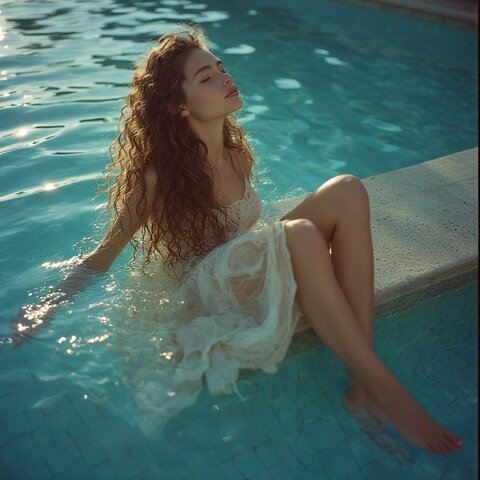
18 The Weight of Ownership
The cave, their sanctuary, had become a confessional. The air, thick with the scent of salt and sun-warmed pine, was charged not with fear, but with the profound, quiet electricity of a shared, impossible truth. For Mirna, the revelation had been a baptism, washing away the grime of confusion and terror and leaving behind a core of shining, certain identity. For Ante, it had been a conversion, a shifting of his entire worldview to accommodate a miracle.
They sat on the smooth, white pebbles, just beyond the reach of the gentle, lapping waves. Their heads were bent close together, not in romantic intimacy, but in the fierce, focused conspiracy of two people who have just uncovered a secret that changes everything.
“The songs,” Mirna was saying, her voice stronger now, laced with a wonder that was both new and ancient. “They are maps. They tell of the warm current that flows from the south in the spring, carrying the life. They tell of the deep, cold canyons where the light cannot reach, and the cities that glow in the dark.”
Ante listened, his marine biologist’s mind reeling, fitting her poetic descriptions to the known topography of the Adriatic seabed. It was all there, all accurate, but described not with scientific terminology, but with the visceral, sensory language of a native.
“And the caves…” she continued, her violet eyes looking at something he could not see. “There is one… a cathedral of stone, not far from here. The entrance is beneath the water, under a ledge where the red coral grows thick as a forest. Inside, the air is in a pocket… and the light… it filters through a fissure in the ceiling, and when the sun is high, the water is lit with a blue fire.”
Ante knew the place. It was a legendary diving spot, notoriously difficult to find and dangerous to enter. He had only seen pictures. “Blue Grotto,” he whispered, awestruck. “You know it.”
“It is a resting place,” she said simply. “A place of quiet songs.”
In that moment, surrounded by the evidence of her true nature, Ante felt a surge of protective ferocity that dwarfed anything he had felt before. This was not just about saving a woman; it was about preserving a living piece of the world’s magic. He began to formulate a plan, his words tumbling out in a low, urgent whisper.
“We have to be careful. He’s watching us. But I have friends in Split, with a boat. We could get a message out. We could—”
The sound was so subtle it was almost absorbed by the ambient noise of the cove: the crunch of a single pebble under a heavy, deliberate foot.
They both froze.
Ante’s head snapped up. Mirna’s breath caught in her throat, the newfound light in her eyes snuffed out in an instant, replaced by the old, familiar, primal terror.
Jure stood at the entrance to the beach, where the narrow path from the cliffs met the pebbles. He was still dressed in his suit trousers and a white shirt, now wrinkled and open at the neck, as if he had torn his tie off in a fury. He had not come by sea. He had come the land way, the difficult way, driven by a jealous instinct that had led him straight to them.
He did not speak. He did not need to. His rage was a physical force, a distortion in the air around him. The peaceful, secluded beauty of the cove curdled in his presence. His face was not the mask of cold fury from their previous argument; it was a raw, contorted landscape of pure, unadulterated wrath. His eyes, burning with a dark fire, were fixed on the scant inches between Ante and Mirna’s heads.
He had seen it all. The intimacy of their posture, the shared secret in their eyes, the world from which he was so utterly excluded.
“You,” he breathed, the word a venomous hiss that carried across the quiet beach.
Mirna scrambled back, her hands scraping on the pebbles, a small, terrified animal caught in the open. The transformation was instantaneous and heartbreaking. The serene sea-creature was gone, vanished back into the terrified shell of Mirna, the captive.
Ante shot to his feet, placing his body between his father and Mirna. “Father, stop. This isn’t what you think.”
“ISN’T IT?” Jure roared, the sound exploding in the confined space, echoing off the limestone walls. He began to stride towards them, his steps crushing the pebbles, each one a punctuation mark of his advancing fury. “I see what it is! I see you, you treacherous little bastard, poisoning her against me! Stealing what is MINE!”
“She is not yours!” Ante shouted, his voice ringing with a conviction that came from his new knowledge.
That was the final, unforgivable blasphemy.
Jure closed the distance in three long, powerful strides. He didn’t even look at Ante. His entire focus was on Mirna, who was now trying to rise, her legs trembling too much to support her. With a brutal, unthinking force, he shot out his hand and grabbed her by the upper arm.
The sound she made was not a scream. It was a choked, guttural cry of pain and terror, the sound a rabbit makes when the talons close.
“Let go of her!” Ante lunged forward, grabbing his father’s wrist, trying to pry his fingers loose. They were like iron bands, sunk deep into the soft flesh of her arm. He could see the skin whitening around his grip.
Jure turned his maddened gaze on his son. With a snarl of pure contempt, he shoved Ante away with his free arm. The shove was fueled by a strength born of insane jealousy, and Ante stumbled backward, landing hard on the pebbles.
“You see?” Jure spat down at him, his voice a low, shaking growl. “You are nothing. A boy playing at being a man. This is real power.” He shook Mirna, a short, vicious jerk that made her cry out again. “This is ownership.”
He began to drag her towards the path. She was limp, her feet stumbling and scrambling over the stones, her free hand clawing uselessly at his imprisoning fist. Her eyes, wide and desperate, found Ante’s for a split second—a silent, agonized plea.
“Stop! You’re hurting her!” Ante shouted, pushing himself up from the ground, his own anger a white-hot counterpoint to his father’s cold fury.
Jure didn’t break his stride. He hauled Mirna, half-carrying, half-dragging her, up the steep, narrow path. Ante followed, his heart hammering, his mind racing. He couldn’t tackle him on the path; they could all go over the edge.
The journey back to the villa was a brutal, silent procession of violence. Jure’s grip never loosened. Mirna’s whimpers were the only sound, a desperate counter-melody to the crunch of their footsteps and Jure’s ragged breathing. Ante followed a few paces behind, a helpless witness to the atrocity, his fists clenched, every instinct screaming to attack, but the risk to Mirna too great.
They burst out of the foliage and onto the manicured lawn of the villa. Jure didn’t pause. He dragged Mirna across the grass, towards the terrace doors. Mrs. Petrović appeared in the doorway, her hand flying to her mouth, her face a mask of horror.
“Gospodin Barišić!” she gasped.
“Get out of the way,” Jure snarled, not even looking at her.
He hauled Mirna through the living room and down the hall towards the south wing. Ante was right behind them.
“Father, for God’s sake, listen to me!” Ante pleaded, desperation clawing at him. “You don’t understand what she is!”
Jure reached her door, wrenched it open, and threw Mirna inside. She fell to her knees on the marble floor with a sickening thud. He stood in the doorway, a colossal, raging silhouette.
“I understand perfectly,” he seethed, his voice trembling with rage. “She is mine. And you… you are no longer welcome.”
Before Ante could react, Jure stepped back and slammed the door. There was a sharp, metallic click. The sound of a key turning in a lock. A sound Ante had never heard in this house before.
He was locked out.
He stood there, stunned, staring at the unyielding wood. From inside, he heard a soft, broken sob, then the sound of the bathroom door closing and locking as well—a futile, second layer of defense against the monster who held the only key.
He hammered on the door with his fist. “Mirna! Mirna, are you alright?”
There was no answer. Only the sound of his own pounding heart and the ragged sound of his breathing.
He turned. Jure was standing a few feet away, the key in his hand, his chest heaving. The rage had not subsided; it had condensed into something colder, more deadly.
“You will pack your things,” Jure said, his voice dangerously calm. “You will get in your car. And you will leave. If you ever come back, if you ever try to contact her, if you so much as whisper her name, I will destroy you. I will bury you in lawsuits. I will ruin that precious career of yours. I will make sure you have nothing. Do you understand me?”
Ante looked at his father, at the man who had once taught him to sail, who had sat with him in this very villa and pointed out the constellations. He saw no trace of that man. He saw only the dragon, coiled around its treasure, fire in its eyes.
“You can’t do this,” Ante said, his voice shaking with a mixture of fury and despair.
Jure took a step closer, his eyes boring into Ante’s. “I can. And I am.” He gestured with the key. “She is my property. And I am evicting you from my domain. Now. Get. Out.”
The finality in his voice was absolute. He was not making a threat; he was stating a fact. The law of the land, his land, had been declared.
Defeated, outmaneuvered, and physically expelled, Ante had no choice. He turned and walked away, the image of Mirna’s terrified face as she was dragged away burned onto his soul. He had failed. The dragon had won this round. The cage door had not just been closed; it had been double-locked, and he was now on the outside, listening to the desperate, silent screams from within. The war was far from over, but the first major battle had just been catastrophically lost.

19 The Final Dominion
The drive from the villa to the small, rented house he used in Split was a blur of white-knuckled fury and soul-crushing despair. Ante’s hands were locked on the steering wheel, his mind a screaming vortex of failure. The image of Mirna being dragged across the lawn, her arm a pale stalk in his father’s brutal grip, played on a relentless loop behind his eyes. The sound of the key turning in the lock was a sound that had locked him out, and locked her in a hell he could only imagine.
He burst into the quiet, familiar space of his home, a place usually filled with the comforting clutter of his life—stacked research papers, diving gear drying in the shower, the smell of coffee and salt. Tonight, it felt alien, a sterile waiting room while a terminal patient suffered miles away. He paced the floor, his body still thrumming with useless adrenaline. He had to do something. He had to call someone.
The police.
The thought was a logical, immediate impulse. He grabbed his phone, his thumb hovering over the emergency number. He could picture it: the flashing blue lights illuminating the villa’s stark facade, the stern-faced officers, his father’s cold, controlled lies. “My son is unstable. The girl is a relative, traumatized, under my care. He has developed an unhealthy obsession.”
And then what? They would question Mirna. They would find a terrified, confused young woman who could not remember her own name, who had no identification, no history. She would be taken to a hospital. She would be subjected to tests, to scans, to a battery of psychological evaluations. They would probe and prod the mystery of her, trying to fit her into a diagnostic box.
And then… the truth. Or a version of it.
His blood ran cold as the full, horrific implication of his theory crashed down upon him. If she was what he believed her to be, a hospital or a state institution would be a death sentence. They wouldn’t see a Morska Devojka. They would see a biological anomaly. A medical mystery. Her unique physiology, her impossible violet eyes, her connection to the sea—it wouldn’t be seen as magic. It would be seen as a condition. A syndrome. She would become a specimen. She would be transferred to some secure research facility, poked and studied by men in white coats who would drain the mystery from her until she was just a set of fascinating, inexplicable data points on a chart. They would keep her in a tank, perhaps. A clinical, chlorinated prison far deadlier than his father’s gilded cage. She would die there, of a broken heart and a spirit extinguished by the relentless glare of science.
He dropped his phone onto the sofa as if it had burned him. The police were not the answer. They were the path to a different, more impersonal kind of damnation.
He was her only hope. And he was on the outside, discredited, threatened, and powerless.
He poured a glass of water, his hand shaking so badly the liquid sloshed over the rim. He had to think. He had to plan. He had friends, colleagues he could trust. He could get a boat, he could…
The hours bled into each other, a torment of frantic, circular planning and the gnawing, gut-wrenching fear of what was happening to her in that locked room. He imagined her crying. He imagined her terrified silence. He clung to the hope that his father’s rage would cool, that his monstrous possessiveness would still, on some level, manifest as a twisted form of care. He was a collector, after all. He wouldn’t break his most prized possession.
It was a naive hope, and he knew it. He had seen the look in his father’s eyes. It was the look of a man whose obsession had curdled into something far darker, far more desperate.
Back at the villa, the silence was a lie. It was a heavy, pregnant silence, filled with the poison of Jure’s fury and the ozone-tang of impending violence. He had not calmed. The sight of his son and Mirna together in the cove, the shared intimacy he had witnessed, had acted like a catalyst, transforming his desire from a possessive flame into a conflagration that demanded fuel.
He stood in his study, the bottle of rakija not a companion for contemplation but a weapon for courage. He drank not to savor, but to numb, to inflame, to justify. Each burning swallow was a confirmation of his rights. He had found her. He had saved her. Every smile, every glance, every breath she took belonged to him. And his son, his treacherous, soft-hearted son, had tried to steal it.
The alcohol mixed with the jealousy in his veins, creating a volatile, toxic brew. The rationalizations came easily, dressed in the robes of entitlement. She needed to be reminded. She needed to understand, in the most fundamental way possible, that there was no escape, no other allegiance. Her body was the final frontier of his dominion, and he would plant his flag there tonight.
He finished the bottle and threw it into the fireplace, where it shattered against the cold, blackened stone. The sound was satisfying. A prelude.
He stalked out of the study and down the long, dark hallway to the south wing. The villa was asleep. Mrs. Petrović was long gone, the staff dismissed. There were no witnesses. In his world, there never were.
He stood outside her door, the key cold and heavy in his hand. He could hear nothing from within. No sobs. No movement. Just a silence that felt, to him, like defiance.
He unlocked the door and pushed it open.
Mirna was not in bed. She was standing by the window, a silhouette against the moonlit sea, as if trying to draw strength from it. She turned as he entered, and the fear on her face was a living thing, a palpable energy that filled the room. But it was different tonight. It wasn’t the frozen, passive terror of before. There was a new, wild desperation in her eyes. The truth Ante had given her had forged a tiny, fragile core of resistance.
“Get out,” she whispered, her voice trembling but clear.
The words, the defiance, were like gasoline on the fire of his rage. A slow, ugly smile spread across his face. “This is my room. My house. You do not tell me to get out.”
He moved towards her. He was unsteady on his feet, but his intent was a laser beam of purpose.
Mirna backed away, her hands coming up in a defensive posture he had never seen from her before. “Don’t touch me.”
“I will touch what is mine,” he slurred, his voice a low growl.
He lunged for her.
Mirna’s obedience, born of weeks of terror and dependency, finally shattered. The instinct to survive, to protect the sacred truth of herself that she had just rediscovered, overrode the conditioned response to submit. She did not freeze. She fought.
It was a wild, feral, hopeless fight. She scratched at his face, her nails drawing thin, red lines on his cheek. She bit the hand that clamped over her mouth, tasting blood and the foulness of his skin. She kicked and twisted, her body a frantic whirl of desperate motion.
For a moment, Jure was stunned. This was new. This was a rebellion. And it made the final conquest all the more necessary.
A guttural roar of fury erupted from him. He was far stronger, far heavier, fueled by a maddened strength. He caught her flailing wrists, his grip brutal, and forced her back onto the bed. She was like a bird in a hurricane, her struggles pathetic against his immovable force. He used his weight to pin her down, his knees digging into her thighs, one hand still locked on her wrists above her head.
“You. Are. MINE!” he snarled, his face inches from hers, his breath a toxic cloud of rakija.
He crushed his mouth down on hers, a violent, suffocating act meant to silence her cries and her spirit. She twisted her head away, a ragged, choked scream finally escaping her throat. It was a sound of pure, unadulterated agony, the sound of a soul being flayed alive.
The tragedy of what happened next was not merely in the brutal, physical violation. It was in the systematic, savage destruction of every last vestige of safety she had ever managed to construct in her shattered world. The bed, which had been her refuge, became an altar of desecration. The room, her only sanctuary, became a torture chamber. The man who had named her, who had clothed her, who had presented himself as her savior, revealed himself as her ultimate destroyer.
He was relentless, a force of pure, egoistic need, taking what he believed was his by right of conquest. He took not just her body, but her innocence, her trust in the very concept of shelter, her fragile, newfound hope. He took the sea-creature and tried to break her into a thing of land and flesh, a possession to be used.
Mirna stopped fighting. The resistance drained out of her, leaving a void more terrible than any fear. She lay beneath him, her eyes open and unseeing, fixed on some point on the ceiling far away. The tears still flowed, but silently now, a river of internal ruin. She was gone. The self that had spoken of blue-light caves and deep-current songs had been violently evicted, leaving only a hollow, broken shell.
When it was over, Jure rolled off her, his breathing ragged. The frenzy had passed, leaving behind a cold, satisfied emptiness. He looked at her, at her still form, the tear-streaked face, the vacant eyes. He felt a surge of power. This was control. This was ownership. She was his now, in a way she had never been before.
He stood, rearranged his clothes, and looked down at his prize. There was no remorse in his eyes. Only the grim satisfaction of a task completed.
He walked to the door, then paused, turning back to the bed.
“You will learn,” he hissed into the dark, silent room, his voice a venomous promise. “You are mine.”
He stepped out and locked the door behind him. The click of the bolt was the sound of a tomb sealing.
Inside, Mirna did not move. She did not pull the covers over her nakedness. She did not curl into a ball. She simply lay there, the physical pain a distant echo of the cataclysm that had just occurred within her. The last flickering candle of her spirit had been snuffed out. The song of the deep water was silent. There was only the void, the lock on the door, and the crushing, absolute certainty of her captivity. She was his. And the world, inside and out, was forever dark.

20 The Daughter of the Abyss
Dawn arrived not as a gentle reprieve, but as a slow, cruel illumination of a crime scene. The first grey light seeped through the vast window of the south guest room, revealing the devastation in stark, unforgiving detail. The rumpled sheets, twisted into agonized shapes. A torn strip of cotton from her nightdress lying like a fallen petal on the marble floor. The silence, which had been a blanket of shock, now felt like a shroud.
Mirna had not moved from where she had eventually fallen—or perhaps crawled—to the floor. She lay on her side, curled in a loose, broken coil between the bed and the wall, a discarded doll. Her body was a map of bruises, some already blooming into ugly purples and blues against the alabaster canvas of her skin. The physical pain was a deep, throbbing hum, a constant, low-level reminder of the violation. But it was a distant sensation, a radio playing in another room. The true cataclysm was internal.
The innocent, scared girl—the one who had awoken with no memory, the one who had accepted the name Mirna, who had trembled at every touch and clung to the fragile hope offered by a kind voice—that girl was gone. She had been systematically dismantled over weeks of fear, and the final, brutal act of the previous night had shattered whatever fragile scaffolding remained. The core of her, the essential I, had been hollowed out, leaving a cavern of nothingness.
When the key turned in the lock, she didn’t flinch. The sound was just another data point in her new, horrifying reality. The door opened, and Jure stood there.
He was clean, shaved, dressed in another crisp, white linen shirt. He looked like a man who had enjoyed a restful night and was ready to face his day. There was no guilt in his eyes, no hesitation. There was only a sense of grim, settled ownership. The storm of rakija-fueled fury had passed, and in its wake was the calm, hard certainty of the conqueror.
He didn’t speak. He simply looked at her lying on the floor, and a flicker of something—not pity, but perhaps satisfaction—crossed his face. She was where she belonged. Broken. Humbled.
He walked over to her, his footsteps echoing in the silent room. He knelt beside her, his shadow falling over her. She didn’t look at him. Her eyes were fixed on the grain of the polished marble, seeing nothing.
“Get up,” he said, his voice flat, devoid of the previous night’s rage, which made it all the more terrifying.
She didn’t move. Apathy was her only remaining defense, a final, inner room he could not enter.
His hand shot out and grabbed her arm, his fingers digging into a fresh bruise. A spark of raw, physical agony jolted through her numbness, and a small, involuntary sound escaped her lips.
“I said, get up,” he repeated, his tone hardening.
He yanked her to her feet. Her legs, weak and trembling, barely held her. She swayed, her body screaming in protest. He held her upright, his grip like a vise, and looked her over. His gaze was clinical, appraising, like a farmer checking livestock after a storm.
“This is how it is now, Mirna,” he stated, his voice a low, cold drone. “This is your life. You will learn to accept it. You will learn to be grateful for the roof over your head, for the food you eat. You will learn that your body belongs to me, to do with as I please. There is no one coming for you. There is no other world.”
He was branding the new reality onto her, word by cruel word.
Then, he pushed her back onto the bed.
This time was different from the night before. The night had been about furious, drunken consummation, a wild claiming. This morning was about cold, sober reinforcement. It was a lesson. A deliberate, methodical act meant to erase any lingering notion of resistance, to grind the shattered pieces of her spirit into dust.
He was more violent, not with the chaotic rage of passion, but with the calculated force of a man asserting absolute control. He cared only for his own feelings, his own gratification, his own need to see her utterly subdued. There was no pretense of desire, only the raw exercise of power. He was a machine of possession, and she was the raw material.
Mirna did not fight. There was nothing left to fight with. She lay passive, her mind fleeing the horror of her body, disassociating so completely that she felt she was floating near the ceiling, looking down on the brutal scene with a detached, academic curiosity. That is a body on a bed. That is a man. This is what humans do. The connection between the body and the self that inhabited it had been severed. She was a ghost in her own flesh.
When he was finished, he stood, adjusted his clothing, and looked down at her with that same, chilling satisfaction. He didn’t say a word. He simply turned and left, locking the door behind him once more.
The click of the lock was the period at the end of the sentence of her life.
Mirna lay where he left her, the new aches layering over the old. The numbness returned, deeper and more absolute than before. She was an empty vessel. A void. The name Mirna meant nothing. The face in the mirror would be a stranger’s. She was nothing.
Hours bled away. The sun climbed, peaked, and began its descent, casting long, accusing shadows across the room. She didn’t move to eat the food Mrs. Petrović silently left by the door. She didn’t drink the water. She simply existed in a state of non-being, a creature of pure suffering.
But as the last light faded and the room was plunged into the deep blue of twilight, something began to stir in the void. It was not a thought, not a memory. It was a sensation. A deep, rhythmic pull, like a tide beginning to turn.
The moon, a perfect, luminous silver coin, rose over the sea. Its light filtered through the window, a cold, clean beam that cut through the darkness of the room and fell directly upon her where she lay on the floor. It painted a silvery rectangle across her bruised legs and her tangled, dark-blonde hair.
And in that moonlight, something shifted.
It was not a conscious decision. It was an awakening, a reclamation from a place far deeper than memory, from a time before names, before language, before the concept of fear.
The innocent, scared girl did not just recede; she was absorbed, her suffering becoming fuel for something far older and more potent. The void inside her did not fill with a new personality; it filled with the sea.
A knowledge that was not learned, but inherent, began to flow into the emptiness. It was the knowledge of pressure, of the immense, crushing weight of the abyss. It was the knowledge of cold, of the sunless, frigid depths where life glowed with its own inner fire. It was the knowledge of currents, of the vast, powerful rivers that moved beneath the surface, shaping continents and destinies.
The songs returned. Not the gentle, melodic maps she had hummed to Ante, but older, darker songs. Songs of shipwrecks. Songs of storms summoned from a clear sky. Songs of the terrible, beautiful justice of the deep, where the arrogant and the cruel were swallowed without a trace.
A low, resonant hum started in her chest, a vibration so deep it was barely audible. It was the sound of the earth’s core, the sound of tectonic plates grinding. Her body, which had been a source of pain and humiliation, began to feel different. The bruises, the aches—they were not marks of weakness, but of a temporary, fragile form. They were the scars of a battle fought in a foreign element.
She slowly, deliberately, uncurled her body. She pushed herself up from the floor, her movements no longer clumsy or weak, but possessed of a new, deliberate grace. She stood, naked and bathed in the moonlight, and walked to the window.
She did not look like a victim anymore. She stood tall, her shoulders back, her head held high. Her violet eyes, which had been pools of terror and then voids of nothingness, now glowed with an inner, silver light, reflecting the moon. They were ancient eyes, deep and knowing and utterly merciless.
She looked out at the sea, not with yearning, but with recognition. It was not a place she wanted to be. It was a part of her. It was her strength, her fury, her soul.
Jure Barišić had not broken a girl. He had tried to break a force of nature. He had believed the storm could be caged. He had believed the tide could be commanded.
He was wrong.
He had awakened not the gratitude of a rescued victim, but the cold, implacable wrath of the sea itself. The Morska Devojka was gone. In her place stood a daughter of the abyss, and she had learned the language of the land-dwellers. It was the language of violence. And she was now fluent.
A slow, chilling smile, devoid of any human warmth, touched her lips. It was the smile of a predator that has just identified its prey.
The moon continued its silent journey. The sea continued its rhythmic boom against the cliffs. And in the locked room, a new kind of silence reigned—the silence of the deep, the silence before the tempest. The reckoning had not been averted. It had only just begun.












0 Comments