

Summary
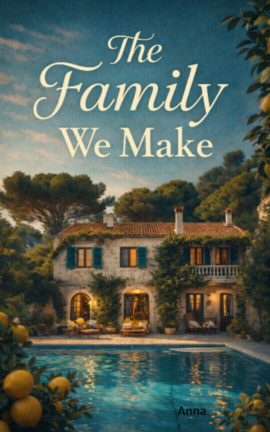
Nestled on a sun-drenched hill near Dubrovnik, Villa Mimoza is more than a luxurious guesthouse with a sparkling swimming pool—it’s a sanctuary of chaos, laughter, and fierce family love, masterfully held together by its warm-hearted owner, Marija. Her legendary cooking and care make guests feel like family, but her real family is the true force of nature. There’s her handsome son, Petar, a talented graphic designer helping run the villa, who dreams of a calm life with his sweet Polish girlfriend, Ania. Ania, a freelance translator, secretly weaves the villa’s vibrant dramas into her fictional stories, finding endless inspiration in her adopted Croatian clan. That clan is dominated by Marija’s older sister, Ina, a famous singer with a voice as sharp as her tongue.
1 The Arrival
The afternoon sun, a relentless disc of polished silver, poured its molten light over the Dalmatian coast, baking the white stone of Vila Mimoza to a gentle warmth. The air, thick with the scent of pine resin, hot rosemary, and the salt-tang of the nearby Adriatic, hummed with cicada song. To Marija, standing on the guesthouse’s shaded terrace, it was the symphony of home, a melody she was about to offer as a balm.
She adjusted a single, perfect lemon on the wrought-iron table and watched the dusty lane. Her guests were due. Not tourists, not this time. The email had been clear: a team of four corporate lawyers from a Frankfurt firm, seeking a five-day “strategic retreat.” Marija had read between the digital lines. They were seeking salvation. They were burned out, frayed at the edges, their nerves likely stretched as tight as violin strings. And Vila Mimoza was her instrument of peace.
The terrace was a stage set for serenity. Bougainvillea cascaded in violent pink torrents over stone walls. Below, the swimming pool—a liquid turquoise jewel set in sun-bleached stone—glittered invitingly, its surface barely ruffled by the breeze. Beyond, a tapestry of olive groves and cypress trees sloped down to a sliver of pebbled beach and the vast, blue expanse of the sea. Dubrovnik’s ancient walls were a faint, golden smudge in the hazy distance.
A low rumble disrupted the cicadas. Two sleek, black sedans, looking profoundly out of place, crept up the lane, their chrome winking in the harsh light. Marija smoothed her simple linen dress, a deep cobalt blue that mirrored the sea’s afternoon shade, and allowed herself a small, anticipatory smile. The curtain was rising.
The cars disgorged four people who seemed to carry a cloud of tension with them, a palpable aura of stale airplane air and unresolved arguments. There was Mark, tall and pinched, already squinting at his phone as if it were a legal adversary. Sophia, elegant but brittle, her sunglasses a fortress on her face. Leo, younger, with a forced energy, rolling his shoulders as if shedding an invisible burden. And Clara, whose kind eyes darted around anxiously, as if expecting a reprimand from the landscape itself.
“Dobrodošli! Welcome to Vila Mimoza,” Marija’s voice was a warm contralto, cutting through the silent tension. She moved forward, hands extended not for handshakes, but in a gesture that encompassed the terrace, the view, the air itself. “I am Marija. Leave your bags, leave your worries. They will be collected. Come, you must be parched.”
Her command was gentle but absolute. Bewildered, they obeyed, leaving their luggage by the cars as a young man from the village appeared silently to attend to it. She led them to the terrace where a pitcher beaded with condensation awaited. “This is bezalkoholni bez,” she said, pouring a pale liquid fragrant with wild fennel, chamomile, and lemon verbena into glass tumblers. “It means ‘without alcohol, without worry.’ A family recipe. Drink.”
It was not a suggestion. Clara took the first sip, and Marija saw the faint, almost imperceptible sag of her shoulders. A tiny surrender. Leo gulped his down. Mark sipped, his eyes still scanning an email over the rim of his glass. Sophia merely held the cool glass to her temple.
“The schedule,” Mark began, his voice a dry rustle. “We have conference calls scheduled for—”
“The schedule,” Marija interrupted, her smile never wavering, “is the sun, the sea, and the smell of the rosemary. Your first meeting is with the horizon. It is very demanding, but only of your attention.” She saw a flicker in Sophia’s face, the ghost of a smile behind the sunglasses. “Your rooms are ready. They have no desks. They have balconies. You will find robes and slippers. At seven, we will gather here for a welcome dinner. Until then, you exist only for yourselves.”
She delivered their keys—old-fashioned skeleton keys tied with leather thongs to pieces of local limestone. “Now, go. Get lost. The house, the gardens, they will find you when you are ready.”
They drifted off, a silent, disoriented little brigade. Marija watched them go, her keen eyes missing nothing. Mark’s rigid back, Sophia’s hesitant step towards the pool view, Leo’s immediate reach for his laptop bag before thinking better of it, Clara’s deep, deliberate breath.
Now, for the secret weapon.
The kitchen of Vila Mimoza was Marija’s sanctuary, a sun-drenched space where modernity bowed to tradition. A huge stone sink, a well-loved AGA cooker, and shelves lined with jars of preserved sunshine: apricots, figs, peppers, and tomatoes. And in the center, on a heavy wooden table dusted with flour, sat her ally: the lemon-and-rosemary olive oil cake.
It was still warm from the oven, its crust a pale, perfect gold. She had made it that morning, the ritual as sacred as any prayer. The fragrant oil from their own groves, the eggs from the village chickens, the sugar, the flour. Then, the zest of four sun-ripened lemons, bright and sharp, stirred into the batter until the air itself tasted citrus-clean. Finally, the rosemary—not dried, but finely chopped fresh sprigs, their piney, peppery fragrance a counterpoint to the lemon, an earthier, more mysterious note.
She did not glaze it. She let its simplicity speak. Now, she placed it on a terracotta plate, garnished it with a single sprig of rosemary and a thin, curling ribbon of lemon zest. She brewed a small pot of strong, black coffee, the kind that stood up to sweetness, and carried it all out to a small table under the ancient olive tree that shaded the northern side of the house.
She did not summon them. She simply placed the offering and sat, waiting for the magic to work.
Clara was the first, drawn by the scent perhaps, or the simple need to escape the silence of her room. She appeared around the corner, looking softer in the borrowed robe.
“Please,” Marija said, gesturing to the chair opposite. “The cake is lonely.”
Clara sat. Marija cut a generous slice. The crumb was tender, moist, a vibrant yellow from the oil and yolks. She placed it before Clara, then poured the coffee.
The first bite was a transformation. Marija watched as Clara’s eyes, which had been darting and worried, slowly closed. She chewed, and a sigh escaped her, a real one, from a place deeper than mere politeness. “Oh,” she whispered. “Oh, that’s… incredible.”
“It is sunshine and the mountain,” Marija said simply. “Eat. Drink. The emails will fossilize without you.”
One by one, the others were lured. Leo, following the coffee smell. Sophia, having changed into flowing linen trousers, drawn by the sight of Clara’s unguarded pleasure. Even Mark, eventually, his phone finally dark in his hand, appeared, looking oddly vulnerable without his digital shield.
Marija served them all, speaking little. The questions came, tentative at first.
“The rosemary… in a cake? It’s extraordinary,” Leo said, his voice losing its forced cheer.
“It is from the bush by the gate,” Marija replied. “It tastes of this specific spot of earth, of this sea air. You cannot buy it.”
“How long have you run this place?” Sophia asked, her sunglasses now perched on her head, revealing tired but intelligent eyes.
“Long enough to know that the most important briefs are not read under fluorescent lights, but under this tree,” Marija said, her smile deepening. “The house belonged to my family. It was a ruin. My husband and I… we brought it back to life. He is gone now, but the house still breathes for us.”
There was a respectful silence, filled only with the sound of forks on terracotta and the buzzing of bees in the lavender.
Mark took a slow sip of coffee, his gaze fixed on the distant sea. “You said no schedule. But we have… deliverables.”
“Your only deliverable today,” Marija said, her tone firm yet kind, “is to watch the light change on the water. When the sun hits that point,” she gestured to a specific cypress tree on the ridge, “turning it to fire, then you will have completed your first task. Tomorrow, we can talk of other things.”
It was absurd. It was antithetical to every fibre of their being. And yet, empowered by the cake, soothed by the unspoken understanding in this shared, silent snack under the tree, they found they could not refuse.
As the afternoon waned, Marija left them there. She returned to the kitchen to begin the dinner—a slow-cooked peka of lamb and young potatoes, its earthy, herbal aroma soon weaving through the house. Through the window, she watched her guests.
Mark had actually leaned back in his chair, his face to the sun. Leo was walking barefoot on the grass, looking at his feet as if discovering them. Sophia and Clara were in quiet conversation, their postures unlocked, their gestures looser.
The lemon-and-rosemary cake was three-quarters gone. Its job was done. It had not just been dessert; it had been a key. It had bypassed their overworked minds and spoken directly to their senses, to a memory of simplicity they had all but forgotten. It had said, You are here. You are safe. You can stop.
As the first golden flush of evening gilded the cypress tree Marija had pointed out, she saw Mark glance at it, then at his watch, a faint, bewildered smile on his lips. He had met the deadline. He had delivered himself to the moment.
Marija wiped her hands on her apron, a deep contentment settling in her bones. The lawyers had arrived as bundles of frayed wires. Now, they were beginning, just beginning, to unspool. The Vila Mimoza peace offensive had commenced. And it was, as always, delicious.
2 Petar’s Design
The frustration was a physical thing, a low-grade heat at the base of Petar’s skull, humming in tune with the overworked computer fan. On the screen, the logo glared back at him—a soulless, geometric interpretation of a “traditional Dalmatian fishing net.” It was the seventh iteration for Klara, the owner of a new, painfully trendy seafood restaurant in Split. Her feedback on version six—“Can it be more authentic, but also more minimalist? And maybe playful? But also serious. For a sophisticated clientele.”—played on a loop in his mind. It made his teeth ache.
“Authentic,” he muttered to the empty room, pushing back from the oversized drafting table that dominated the far wall of his live-work studio. The space was the old stone barn of Vila Mimoza, converted with a blend of sleek modernity and rustic preservation. One wall was original, sun-bleached stone; the other was floor-to-ceiling glass looking directly onto the terrace and the pool. His mother’s domain was just through the main house, but here, he ruled over a kingdom of Wacom tablets, Pantone swatches, and the gentle, persistent chaos of creativity.
He scrubbed a hand through his dark, already-messy hair. The logo was fine. It was clean, scalable, technically proficient. It was also dead. It had no heartbeat, no scent of salt or sound of lapping waves. It was a corporate idea of “Dalmatian,” sterilized and packaged. It was everything he feared his own work might become if he stayed hunched in this room forever, catering to clients who used words like “brand synergy” unironically.
With a violent click, he put the screen to sleep, banishing the sterile geometry. The sudden emptiness was a relief. He grabbed his oldest, most battered sketchbook—a Moleskine with a cover stained by coffee and sea spray—and a charcoal pencil. He didn’t need digital perfection now; he needed the analogue truth of friction, of smudges, of imperfection.
He pushed open the heavy glass door and stepped into the furnace-blast of afternoon heat. The world shifted instantly. The sterile, air-conditioned silence was replaced by the living soundtrack of Vila Mimoza: the cicadas’ relentless hymn, the soft shush-shush of the automatic pool cleaner, the distant, rhythmic crunch of his mother’s knife on a chopping board from the kitchen window. The scents—chlorine, hot stone, blooming jasmine, and the unmistakable, savory ghost of yesterday’s peka—wrapped around him.
He settled into a worn canvas lounger under the shade of a massive umbrella, its fringe fluttering in the faint, salt-tinged breeze. He opened the sketchbook, not to a blank page, but to one already inhabited by half-formed ideas: a fluid pattern based on olive branches, a playful typographic experiment using Glagolitic script, a series of quick, angry strokes that were probably his subconscious reacting to Klara from Split.
He turned to a fresh page. His gaze lifted, not with purpose, but with a habitual, thirsty need for beauty. It found the view he had drawn a thousand times, yet which never grew stale: the perfect rectangle of turquoise water, its surface a mosaic of shattered sunlight; the pale, sun-bleached stone of the terrace edge; the defiant purple burst of bougainvillea against the white wall; and beyond, the majestic, drowsy sweep of the olive grove descending towards the silver-blue line of the sea. The composition was effortless, a masterclass in balance and serenity.
His pencil began to move, not to capture the whole, but to dissect it. He started with the hard lines: the severe, comforting right angle of the pool coping, the strong vertical of a cypress tree spearheading the sky. Then he moved to the organic: the chaotic, joyful spill of the bougainvillea, rendered not as flowers, but as a cloud of soft, smudged texture. He drew the way the light pooled in the corner of the terrace, a tangible, liquid gold. He sketched the dappled shadows of the olive leaves on the grass, a lacework of fleeting darkness.
This was his true language. This was where logic met feeling. The frustration from Klara’s logo began to dissolve, its sharp edges smoothed away by the rhythmic, meditative scratch of charcoal on paper. Here, there was no client asking for “playful but serious.” There was only light, form, shadow, and the deep, silent history of the land. This view was his first memory, his constant, his home. Drawing it was an act of remembrance, of reaffirmation.
And as his hand moved, tracing the curve of a terracotta pot, his mind, unshackled, did what it always did when given this kind of peace. It travelled north. It travelled to her.
Ania.
Her absence was a specific kind of quiet in the house. It wasn’t empty; his mother and the guests and the cats and Luciano the duck filled it with noise. But it lacked a particular frequency—the soft, Polish-accented laughter from the sunroom where she translated legal documents, the gentle tap-tap-tap of her keyboard as she wrote her stories late into the night, the way she’d hum Chopin études while making tea. It lacked the warmth of her hand slipping into his as they walked down to the beach after dinner, her skin still cool from holding her iced tea.
He smiled, his pencil pausing. He pictured her in her childhood bedroom in Krakow, likely curled in an oversized sweater, her brow furrowed in concentration. Not over a translation, but over one of her fictional worlds. She was probably writing about a water nymph in the Vistula River, or a melancholy ghost in the cloth hall, but he knew the truth: her best stories were quietly filling with the colors and characters of Dalmatia. The sharp-tongued market vendor in Gruž had become a witch with a heart of gold in her last tale. The ancient, wrinkled fisherman who mended his nets by the old port was surely being drafted into service as a retired sea god. And Aunt Ina… Petar’s smile turned into a soft chuckle. Ina was a treasure trove of fictional potential, a hurricane in designer heels that Ania observed with the rapt, slightly terrified fascination of a naturalist discovering a new, fabulous, and dangerous species.
He missed her with a physical ache that was both sweet and sharp. He missed her questions—the earnest, insightful ones that made him see his own home in new ways. “Why do the old women here dress in black for so long?” she’d once asked, leading to a two-hour conversation about tradition, grief, and community that was more profound than any university lecture. He missed the way she looked at his designs, not just with a girlfriend’s praise, but with a storyteller’s eye. “This font feels… loyal,” she’d said of a logo he’d done for a family-owned winery. She’d been right.
His sketch of the pool view began to morph subtly. In the corner, emerging from the smudged bougainvillea, a figure started to take shape. Not a detailed portrait, but an impression: a curve of a shoulder, the fall of long hair, a posture of quiet observation. She was sitting on the terrace edge, her feet dangling towards the water, a spectral presence in his familiar landscape. His daydream deepened.
He imagined her return. The sound of the taxi on the gravel. Her tentative smile, tired from travel, brightening when she saw him. The way she would melt into his hug, smelling of airplane and home and her own unique scent of vanilla and ink. He’d carry her bag, and she’d immediately start talking, the words tumbling out in a bilingual cascade—Polish, Croatian, English—as she told him everything: her mother’s new obsession with pottery, her father’s terrible jokes, the strange dream that gave her an idea for a story about Saint Blaise.
They’d come out here, to this very spot. She’d kick off her sandals and dip her toes in the pool, gasping at the coolness. She’d ask about the guests, and he’d tell her about the lawyers and his mother’s cake-based diplomacy. He’d show her his failed logos, and she’d point at one obscure element and say, “But this part is good. This little line is like a wave sighing. Start there.” And he would, and it would be the solution.
The fantasy was so vivid he could almost feel the warmth of her beside him on the lounger. This was his solace. Not just the drawing, but the dreaming it unlocked. The pool, the view, they were the catalyst. They quieted the noise of unsatisfying work and opened a channel to the thing that grounded him most: love. Ania’s love didn’t just comfort him; it inspired him. She saw the artist in him, not just the graphic designer. She believed in the man who could find truth in a charcoal smudge as much as in a vector curve.
A loud, indignant “QUACK!” shattered the reverie.
Luciano waddled into his line of sight, a feathery paragon of entitlement. The mallard stopped at the edge of the pool, fixing Petar with a beady, disapproving eye, as if offended by the lack of offerings.
“No grapes for you, tyrant,” Petar said, his voice rough from disuse. “You’ve already bullied the Swiss couple out of their breakfast rolls.”
Luciano quacked again, a sound of pure affront, then executed a perfect, disdainful about-face and plunged into the water, sailing across the turquoise surface like a tiny, self-important galleon.
The interruption didn’t irritate him. It anchored him back into the delightful, ridiculous reality of his life. He looked down at his sketchbook. The pool was rendered in soft, confident strokes. The bougainvillea was a storm of dark texture. And in the corner, the impression of Ania was there, a ghost of future joy woven into the present scene.
He closed the book. The frustration over Klara’s logo was still present, but it was no longer a boiling heat. It was a problem to be solved, a puzzle. And he knew, now, how to approach it. He wouldn’t start with a fishing net. He would start with the sea. With the feeling of the Adriatic—not a postcard blue, but the deep, mysterious indigo at noon, the silver-green shimmer under the moon, the fierce, stormy grey of the bura. He would start with the texture of sun-warmed stone, the gnarled wisdom of an olive tree trunk, the soft, decaying edge of a fisherman’s woolen sweater.
He stood up, his body humming with a new, calm energy. He cast one last look at the view, committing the feeling to memory—the heat, the light, the promise held in the empty lounger beside him. The design on the computer was a dead end. But the design in his soul, the one inspired by this place and animated by thoughts of her, was very much alive.
He walked back into the cool gloom of his studio. Instead of waking the computer, he went to his shelf and pulled down a large sheet of heavy, textured paper. He clipped it to a board, selected a stick of deep indigo Conté crayon, and with the memory of the sea horizon firm in his mind, he made his first, bold, sweeping mark.
He wasn’t designing a logo for a restaurant in Split. He was beginning to translate a heartbeat. And somewhere over the Alps, Ania, hunched over her own notebook, was doing the same with words. The thought filled him with a certainty as solid as the stone of Vila Mimoza. She would be home soon. And until then, he had work to do.
3 Ania’s Inspiration
Krakow wore a cloak of soft, persistent rain, a grey woolen blanket that muted the city’s vibrant colors and turned the cobblestones of the Rynek Główny into a slick, dark mirror. In her childhood bedroom, now a sanctuary of books and memories, Ania sat curled in the window nook, a chunky knit blanket around her shoulders, a steaming mug of herbata z malinami cooling beside her. The view was of a damp courtyard and the fire escape of the neighboring building, a world away from the relentless Dalmatian sun. Yet, within the confines of her laptop screen, she was not in Poland at all. She was deep in the Adriatic, off the coast of a rocky island that looked suspiciously like Lokrum, listening to a furious, divine racket.
The Siren of Srebrena Luka was in a mood.
Her name was Iness, and today, the very sea offended her. The salt was too salty. The current was dithering indecisively. A particularly insolent octopus had dared to rearrange the pearls on her underwater grotto’s entrance, and now the feng shui was utterly ruined. Worse, the local fishermen, whom she normally tolerated for the quality of their wistful, lovelorn ballads (excellent for her digestion), were singing a crass new pop song about a moped. It was an atrocity.
Ania’s fingers flew over the keyboard, a small, absorbed smile on her lips. This was the purest joy, the state of flow where the real world—the patter of rain, the distant hum of her mother’s radio in the kitchen, the lingering anxiety over a tricky medical translation she’d finished that morning—simply dissolved. Here, in the story, she was both creator and captivated audience.
The inspiration was as vivid as the image of Petar’s face when he described his aunt’s latest escapade during their video call two nights ago. Ina, on a whim, had apparently commandeered the sound system at a friend’s vineyard opening in Istria, declared the hired band’s rendition of “Volim Te” to be “as lively as a dead fish,” and proceeded to perform a forty-minute set of Dalmatian klapa songs, reducing the entire audience to a puddle of tears and laughter, and securing a lifetime supply of Malvasia for Vila Mimoza. Petar had narrated it with a mixture of horror and awe, his hands gesticulating wildly on the pixelated screen. “She just… took the microphone, Ania! Like it was her divine right! And the worst part is, she was magnificent.”
Ania had listened, enthralled. Ina was a force of nature, a human tempest in a silk kaftan. To Petar and Marija, she was family—exasperating, unpredictable, and fiercely loved. To Ania, she was a literary goldmine. Iness, the Siren of Srebrena Luka, was her latest excavation from that rich vein.
Iness surfaced, her hair a tempest of dark seaweed and defiance, her voice, when she spoke to the complaining seagull, could have cut glass. “What do you mean, the tides are ‘fine’? They’re sloppy! Languid! They lack conviction! Go and tell the Moon to put some backbone into it, or I shall go up there and have words with her myself.”
The seagull, wisely, fled.
Ania paused, sipping her tea. She thought of Ina’s voice—not when she was singing, which was pure, molten honey, but when she was speaking. It was a low, smoky contralto that could deliver a compliment so beautifully you’d cherish it for weeks, or a critique so surgically precise you’d feel flayed alive, yet grateful for the insight. Ania had been on the receiving end of both. The first time they met, Ina had looked her up and down, taken her hand, and said, “So. You are the Polish whisper who tamed my stormy nephew. You have kind eyes. But your posture is terrible. You writers hunch like vultures over your prey. Stand up. Let the world see you.” It had been terrifying and, Ania realized later, the first real welcome into the family.
She poured that terrifying warmth into Iness. The siren was vain, capricious, melodramatic, and held the entire bay in a kind of begrudging, possessive thrall. She complained about the quality of shipwrecks these days (“No poetry! Just container ships with boring, plastic cargo!”), but would summon a sudden summer squall to guide a lost child’s sailboat safely to shore. She belittled the lesser nymphs for their frivolity, but had once spent a decade patiently teaching a deaf dolphin to “hear” music through the vibrations in the water.
A young, handsome fisherman, brave or foolish, sailed into her cove. He had heard the legends, the warnings. He had come to prove a point. “I am not afraid of your songs, spirit!” he called out, his voice trembling only slightly.
Iness rose from the water, draped on a rock like a queen on a throne of disappointment. She didn’t sing. She sighed, a sound of profound boredom that made the water tremble. “Oh, not this again,” she said, examining her claws, which today were the color of a stormy twilight. “The ‘brave mortal’ routine. It’s been done, darling. Centuries ago. And the ending is always so messy. You get obsessed, you forget to mend your nets, your goat dies, it’s a whole tedious tragedy. Go away. Catch some mackerel. Write a poem for a nice girl in the village. Live.”
The fisherman, his heroic narrative utterly derailed, blinked. “You’re… not going to enchant me?”
“With that haircut?” Iness scoffed. “Please. I have standards. Now shoo. You’re blocking my sunlight.”
Ania laughed aloud, a soft sound swallowed by the rain. This was the heart of it. The real Ina, beneath the drama and the sharp tongue, possessed a bedrock of fierce, practical love. She had seen through Ania’s initial shyness not to weakness, but to a quiet strength. She had told her stories of Petar as a clumsy, dreamy boy, of Marija’s grief after her husband died, of her own lonely triumphs on stages across Europe. They were gifts, these stories, offered not to embarrass, but to connect, to weave Ania into the family tapestry.
Her phone buzzed on the windowsill. A message from her mother: Zupa grzybowa na obiad. (Mushroom soup for dinner.) A wave of homesickness washed over her, but it was a complex tide. She missed the solid, comforting love of this place, the smell of her mother’s soup. But she also ached for the vibrant, chaotic love of Dalmatia—for Petar’s quiet presence beside her in the studio, for Marija’s hand patting hers as she passed in the kitchen, for the outrageous, life-affirming spectacle that was Ina.
She looked back at the screen. The story was begging for a twist. Iness needed a challenge worthy of her, something that couldn’t be dismissed with a sarcastic quip. Ania thought of Marija. Of the quiet, immense power it took to run Vila Mimoza, to heal guests with cake and silent understanding. A different kind of strength.
The challenge came not from a hero, but from a silence. A new, cold current began to seep into the bay, a numb, grey nothingness that silenced the click of dolphins, dulled the colors of the coral, and stilled the playful waves. It was the Anti-Song. It came from a deep, forgotten trench—the drowned memory of a loss so profound it had fossilized into a void that consumed all feeling, all music.
Iness’s complaints stopped. Her vanity fell away. For the first time in millennia, she was afraid. This thing could not be scolded, seduced, or outmaneuvered. It simply was. And it was spreading.
She swam to the edge of the grey void, her own song feeling brittle and small against the crushing quiet. She thought of the fisherman’s awful, earnest ballads. She thought of the giggle of the water nymphs she pretended to despise. She thought of the nightly chorus of the frogs in the reeds, the wind in the pines on the shore, the crackle of a fisherman’s fire. The cacophonous, beautiful, living noise of her home.
Ania’s typing slowed, becoming more deliberate. This was no longer just a playful caricature. Iness was becoming real. She was facing the erosion of everything she loved, and her sharp tongue and theatrical sighs were useless. What would she do? What would Ina do, if something threatened her family, her Marija, her Petar?
The answer came clearly.
Iness did not try to sing a more beautiful song. She did not try to fight the silence with its own weapon. Instead, she began to gather. She swam to the fisherman’s boat and commanded, in a voice that brooked no argument, “Sing. Your worst, most sentimental song. Now.” Flummoxed, he obeyed. She captured the ragged, off-key melody in a bubble of light. She went to the chattering nymphs and took a snippet of their gossip. She harvested the grumble of a passing sperm whale, the sigh of the sea grass, the distant church bell from the village, the happy shriek of a child skipping stones.
She collected every imperfect, mundane, glorious sound of life in her bay. And then, with a concentration that made the very water molecules vibrate with effort, she wove them together. Not into a siren’s enchanting lure, but into a shield. A cacophony of pure, defiant life.
She pushed it into the grey void. The silence resisted, trying to swallow the noise. But the shield was too complex, too messy, too real. It was love letters and complaints and lullabies and curses and recipes shouted across kitchens. It was the sound of a family, in all its chaotic, quarrelsome, glorious noise. The void, which understood only perfect, monolithic silence, could not comprehend it. It frayed. It retreated.
Exhausted, Iness floated in the suddenly warm, familiar water. The fisherman, clutching his hat, asked, “Why… why did that work?”
Iness, looking older and wiser than her ageless face should allow, said softly, “Because it is easy to silence a single perfect note. It is impossible to kill a symphony that doesn’t know it’s supposed to stop playing.”
Ania stopped typing. The rain had lightened to a drizzle. The clock on her screen told her hours had passed. She felt drained, but exhilarated. The story was there, messy and alive. It was about Ina, yes. But it was also about Marija’s resilient quiet, about Petar’s creative struggle, about her own place as a collector of their stories. It was about the defiant, beautiful noise of Vila Mimoza itself—the clatter of pans, the splash in the pool, Ina’s singing, Petar’s frustrated sighs, Luciano’s indignant quacks, her own tapping keyboard.
She saved the document: “The Siren’s Shield.” She would polish it later. Now, she needed to hear that symphony.
She picked up her phone and video-called Petar. It rang once, twice. The connection established, and his face filled her screen, backdropped by the familiar stone wall of his studio. He looked tired, but his eyes lit up when he saw her.
“Hey, you,” he said, his voice a warm rumble. “Escaping the Polish monsoon?”
“I was deep underwater, actually,” she said, her smile breaking through. “Arguing with a siren.”
He laughed, understanding immediately. “Let me guess. She was criticizing the oceanographic standards of the entire Mediterranean?”
“Something like that.” Ania felt a lump rise in her throat, a sudden, fierce longing. “Petar?”
“Yeah?”
“Tell me a noise from the house. Any noise.”
He looked puzzled for a second, then his expression softened. He understood her, too. He held the phone away, and for a moment, the audio filled with distant, glorious chaos: the faint clang of a pot (Marija), a burst of Croatian pop music from a guest’s balcony, a sharp, melodic shout that could only be Ina calling for someone, and beneath it all, the steady, whispering rush of the sea.
He brought the phone back to his face. “Hear that?”
Ania closed her eyes, letting the symphony wash over her. “Yes,” she whispered. “I’m writing it all down.”
4 Luciano’s Reign
The morning at Vila Mimoza was a study in liquid gold. The sun, still low over the Hvar channel, poured its light over the estate, turning the pool from a nocturnal slab of ink into a shimmering, inviting turquoise. The air was fresh, carrying the peppery scent of rosemary from the garden and the clean, sharp smell of chlorine. It was the hour when guests, seduced by the promise of having such beauty all to themselves, ventured out with towels and novels and the quiet hope of a perfect day.
Except for one, immovable, emerald-green problem.
Luciano sat in the exact center of the prime sunbathing real estate: the wide, smooth stone slab at the pool’s shallow end, designed for lounging with one’s feet in the water. He wasn’t swimming. He wasn’t preening. He was holding court. His chest, a magnificent ruff of iridescent burgundy, was puffed out. His head was held high, his dark, intelligent eyes fixed in a regal stare that swept across the terrace with the indifference of a bored monarch. One webbed foot was tucked neatly against his body, the other planted firmly, a declaration of sovereignty.
The early bird guests—the two German hikers, Margot and Klaus—stood at the edge of the terrace, towels folded over their arms, looking from the duck to the empty loungers, and back to the duck. The slab was their preferred spot. Luciano knew this. He had observed their pattern for three days.
“Guten Morgen, Luciano,” Klaus ventured, using the friendly, patient tone one might employ with a particularly stubborn piece of luggage.
Luciano blinked. Slowly. He did not quack. He did not waddle. He simply was. An immovable feathered statue of entitlement.
Margot took a tentative step forward, pointing politely to the space beside him. “Entschuldigung… we would just like to sit…”
Luciano’s head swiveled toward her. He didn’t hiss or spread his wings in threat. He merely looked at her, and in that look was a centuries-old lineage of duckish disdain that seemed to say, “Your desire is noted, and found to be irrelevant to the current geopolitical situation of this slab.”
From the kitchen window, Marija saw the standoff unfolding. She shook her head, a smile playing on her lips as she chopped apricots for jam. “Stari moj car,” she murmured to herself. My old king. Luciano’s moods were as predictable as the jugo wind—you knew it was coming, you just had to batten down the hatches and ride it out.
Petar, emerging from his studio with a coffee mug, leaned against the doorframe and assessed the scene. “The Dauphin is holding the throne room hostage again, I see.”
“He wants tribute,” Marija said, without looking up. “He didn’t like the melon I gave him yesterday. Too watery. He has a refined palate, that one.”
“He’s a duck, Mati,” Petar said, though with no real conviction. After five years, they all knew Luciano was not just a duck. He was a feathery vortex of need and personality, adopted as a lost duckling and now ruling them all with an iron beak.
“Try telling him that,” Marija chuckled. “Go. Negotiate. Before the poor Germans call the embassy.”
Petar sighed, put his mug down, and ambled out into the sun. He approached the diplomatic crisis with practiced calm. “He won’t move for less than grapes,” Petar explained to Margot and Klaus. “Red ones, preferably. Seedless is a sign of respect. Green are acceptable in a pinch, but will likely result in a longer occupation.”
Klaus looked baffled. “He… he negotiates?”
“He has a very strong sense of barter economics,” Petar confirmed. “Also, he hates the sound of the leaf blower. That’s the nuclear option. We try not to use it.” He crouched down, about a meter from the slab, to be at eye level with His Majesty. “Luciano. The humans want the slab. What is your price today?”
Luciano regarded Petar, whom he considered a useful but often slow-understanding subject. He gave a single, soft quack. It was not aggressive. It was a statement of terms.
“Grapes?” Petar asked.
Another quack, slightly firmer.
“Red grapes?” Silence. A tilt of the head. “Seedless red grapes?” Luciano gave a gentle, affirmative dip of his beak. The treaty was proposed. Petar stood. “Seedless red grapes. I’ll be right back.” As he walked to the kitchen, he passed Ina, who was having a late breakfast on the upper terrace, wrapped in a silk kimono, surveying her domain. She had watched the entire proceeding through oversized sunglasses. “Your pet is a fascist, dragi,” she called down, her voice rich with amusement. “A beautiful, green-headed fascist. I rather admire his technique. No violence, just… profound inconvenience. It’s very effective.” “He learned from the best, Teta,” Petar shot back, grinning as he disappeared inside. Ina laughed, a smoky, delighted sound. “He did! He has my flair for the dramatic entrance and exit! Remember when he stole that woman’s diamond earring and dropped it in the pool? Priceless.” Petar returned with a small bowl of perfect, ruby-red seedless grapes. He placed it ceremoniously on the stone slab, about half a meter from Luciano’s right side. For a long moment, Luciano did not move. He examined the offering. He seemed to be counting. Assessing the color saturation. Judging the succulence from a distance. The entire terrace held its breath—the Germans, Petar, even Ina had leaned forward, her coffee forgotten. Then, with a dignity that would make a swan look gauche, Luciano unfolded his tucked foot, stood, and waddled—not hurriedly, but with a stately, unhurried pace—the exact three steps to the bowl. He selected the foremost grape, plucked it delicately, and swallowed. He gave one more look around, a “This is acceptable; you may proceed with your petty human sunbathing,” glance, and then, bowl nudged securely against his chest, he began to waddle away, off the slab and towards the shade of the oleander bush, his preferred dining area. The path was clear. Margot and Klaus scurried onto the slab with relieved laughter, spreading their towels as if claiming a conquered land. But Luciano’s reign was not so simply appeased. His procession across the terrace was a victory lap. He passed the table where a young British couple was having coffee. He paused. Looked at the buttery croissant on the woman’s plate. He didn’t beg. He just… existed meaningfully beside it. “Oh! Hello duck!” the woman said brightly. Luciano stared at the croissant. Then at her. Then back at the croissant. “I don’t think you should…” her partner began. It was too late. Enchanted, the woman broke off a piece and offered it. Luciano accepted it with a genteel nod, then continued his waddle, the grape bowl and now a bit of croissant constituting his morning’s plunder. From her kimono-clad perch, Ina nodded in approval. “See? He doesn’t take. He allows you to give. It’s a gift. Charisma, Petar! You could learn!” Petar rolled his eyes, returning to his coffee. “The last thing the world needs is two of you.” The day warmed. Luciano, his tribute consumed, returned to the pool not as a blockade, but as its presiding spirit. He swam precise, regal laps, a tiny, feathered admiral reviewing his fleet of inflatable loungers and noodles. He would suddenly mount the steps at the deep end, shake himself in a glittering spray that made sunbathing guests shriek and laugh, and then parade along the edge, inspecting toes and sandals with detached curiosity. During lunch, he stationed himself between the kitchen door and the outdoor dining area, knowing that morsels were most likely to fall during the transport of plates. He received a piece of grilled zucchini, a bit of bread crust, and a single, perfect French fry from a delighted child. By mid-afternoon, his reign was absolute. Guests were not merely tolerating him; they were seeking his favor. They cooed at him, took pictures, and most importantly, they came prepared. A Swedish couple had bought a small bag of peas in the village, just for him. An Italian man offered him tiny pieces of focaccia, calling him “il piccolo duca.” Luciano accepted all tributes with the same dignified grace, bestowing upon the givers a sense of having passed a test. As the sun began its slow descent, painting the sky in peaches and lavenders, Luciano’s energy waned. He conducted one final inspection tour of the pool perimeter. Then, he waddled to his royal bedchamber: a specially designed, straw-lined dog kennel in a shaded, vine-covered corner of the garden, secure from foxes and full of his “treasures”—a shiny bottle cap, a stolen wine cork, a child’s plastic ring. He stood at the entrance, looked out over his kingdom—the pool now empty of humans, the terrace waiting for the evening’s wine drinkers, the lights of Vila Mimoza starting to twinkle like early stars. He gave one last, soft, satisfied quack, a sound that hung in the tranquil air like a benediction. Then, he ducked inside. The reign, for today, was complete. Tomorrow, the tribute would be due again. Perhaps blueberries. Or a segment of a particularly good orange. He would decide at dawn. From the kitchen, where she was setting out glasses for the evening, Marija watched him settle. “Laku noć, kralju,” she whispered. Goodnight, king. And in the quiet, just before the first guests came down for a drink, the only sound was the contented rustle of a duck arranging his feathers in his private palace, monarch of all he surveyed.
5 The Polish Translator
The air at Dubrovnik’s Čilipi Airport tasted of jet fuel, hot asphalt, and the faint, persistent promise of the sea. Petar paced the short stretch of arrivals hall, his stomach a knot of excited nerves. It felt ridiculous, after two years together, to feel this adolescent jitter before seeing her. But the three weeks of her absence had stretched like taffy, thin and strangely flavorless. The house had been full—of his mother’s warmth, his aunt’s cacophony, the chatter of guests—but it had lacked its specific, quiet frequency. The frequency of Ania.
He scanned the screen. Her flight from Frankfurt, the connector from Krakow, had landed. The doors from baggage claim slid open intermittently, disgorging tanned tourists in flip-flops, weary businessmen, and families laden with oversized suitcases. And then, there she was.
She emerged not in a rush, but with a kind of deliberate calm, wheeling a small suitcase behind her. She looked subtly different, and it took Petar a moment to place it: she had the slight pallor of a Polish winter still clinging to her, a contrast to the sun-baked glow of everyone around her. She wore a simple linen dress the color of wheat, and her long, honey-brown hair was piled in a loose, messy knot. Her eyes, scanning the crowd, were the warm, intelligent grey of a dove’s wing. When they found him, they crinkled at the corners, and her whole face softened into a smile that was like a key turning in a long-locked door.
“Ania!” He couldn’t stop his own grin, wide and unreserved.
He met her halfway, the suitcase forgotten between them as he pulled her into his arms. She melted into him with a small, relieved sigh. She smelled of airplane cotton and the faint, clean scent of her Polish soap, with an underlying note of home—of the lavender sachets she kept in her drawers at Vila Mimoza.
“Hi,” she murmured into his shoulder, her voice husky from travel.
“Hi,” he breathed back, kissing her temple, her hair. He pulled back, cradling her face. “You’re here.”
“I’m here.” Her smile deepened. “I missed the noise. The quiet in Krakow was… too loud.”
He knew exactly what she meant. He took her bag, slinging his free arm around her shoulders as they walked out into the dazzling Adriatic afternoon. The drive back to Vila Mimoza was a tapestry of familiar beauty he got to re-weave for her. He pointed out the new blooms on the oleander bushes lining the road, the particularly vivid shade of blue the sea was today, the progress on a stone wall being rebuilt by an old man in a village they passed.
“And the house?” she asked, her head leaning against the window, watching the landscape fly by. “The lawyers?”
“Gone. Transformed. Mom’s cake worked its usual magic. They left calling her ’majka’ and promising to send their cousins.”
“And Luciano?”
“His reign continues. He’s developed a new fondness for sun-dried tomatoes. It’s a costly addiction.”
She laughed, the sound filling the car. “And your aunt?”
Petar’s expression became a comic mask of long-suffering affection. “Ina is… in top form. She’s decided the guesthouse needs a ‘sonic rebranding’ and has been auditioning local crickets for what she calls ‘an evening symphony.’ She’s also feuding with the postman over a lost package of French skincare products. It’s geopolitical.”
Ania listened, her smile never fading, storing every detail like a squirrel with nuts. Inspiration. This was the texture she craved for her stories.
As they turned onto the gravel lane leading to Vila Mimoza, Ania sat up straighter, a palpable anticipation tightening her posture. The white stone of the house glowed in the late afternoon sun, the bougainvillea a violent, joyful splash against it. It was, every time, a homecoming.
They were barely out of the car when the force of nature herself manifested.
Ina swept out of the front door as if making a stage entrance. She was a vision in a flowing, coral-colored caftan, her dark hair a perfect cascade, oversized sunglasses hiding her eyes. She moved with a languid, hip-swaying confidence that made the simple act of crossing the terrace seem like a crossing of the Red Sea.
“Dobrodošla kući, dušo!” she boomed, her voice a melodious cannonade. Welcome home, darling! She descended upon Ania, enveloping her in a cloud of expensive perfume and a crushing, genuine embrace. She held her at arm’s length. “Look at you! Pale as a Slavic moon! We must fix this immediately. Three hours by the pool, minimum. And you’ve lost weight. Petar! Is she not eating in Poland? I will speak to her mother!”
Petar opened his mouth to defend Ania’s mother, or his own caretaking abilities, but Ania, still within Ina’s grasp, simply looked up at the dazzling, terrifying woman. The sweet, slightly travel-weary demeanor didn’t falter. Instead, her eyes sparkled with genuine admiration and a translator’s precise appreciation for the right phrase.
In perfect, beautifully accented Croatian, Ania said, “Hvala, Teta Ina. It is so good to be back in the storm.” She paused, letting the poetic turn of phrase hang for a half-second, then delivered the line with the quiet confidence of someone stating an immutable fact. “You are a force of nature.”
The effect was instantaneous and spectacular.
Ina, who was used to flattery—from fawning fans, from smitten men, from polite relatives—froze. This was not flattery. This was taxonomy. This was a clear-eyed observation delivered with the grace of a gift. The words, in that flawless Croatian, bypassed Ina’s defenses entirely. They didn’t slide off the polished carapace of her celebrity; they slipped right through, finding the real woman beneath who appreciated accuracy, drama, and a well-turned phrase more than anything.
A slow, brilliant smile spread across Ina’s face. She removed her sunglasses, revealing eyes that were suddenly soft and shrewd. She looked from Ania to Petar and back again.
“Gledaj ti nje,” she said to Petar, a phrase dripping with approval. Would you look at her. “She doesn’t just speak the language. She speaks the truth.” She looped her arm through Ania’s, steering her towards the house, leaving Petar with the suitcase. “A force of nature! I like it. It has weight. Power. Better than ‘diva.’ ‘Diva’ is cheap. Anyone can be a diva. But a force of nature…” She savored the words as they walked. “That is a compliment with consequences. Come. You will tell me everything about Poland. Is it still so tragically landlocked? And I must hear about this siren you are writing. Petar says she is rude and magnificent. I am already her greatest fan.”
Petar stood by the car, watching them go. His formidable aunt, who could reduce seasoned journalists to stammering puddles, was being led into her own home by his gentle, smiling girlfriend, who had just performed the most elegant verbal jujitsu he had ever witnessed. He shook his head in wonder. Ania didn’t confront Ina’s intensity; she translated it. She named it, honored it, and in doing so, completely disarmed it.
Inside, Marija waited, her welcome quieter but no less profound. She wiped her hands on her apron and opened her arms, and Ania went into them without hesitation. “My girl,” Marija murmured, kissing both her cheeks. “The kitchen has been too tidy.”
“I brought you poppy seeds from Krakow,” Ania said, pulling a carefully wrapped package from her bag. “For makovinjač
.”
Marija’s eyes gleamed. “You see? She knows the way to a Dalmatian heart is through the stomach, but with a Polish twist. Smart girl.”
The evening unfolded in a warm, familiar rhythm, but with a new, subtle harmony. At dinner on the terrace, Ina held court, but her gaze kept returning to Ania, whom she had placed to her right.
“So, this translating,” Ina began, swirling her wine. “You take cold, hard legal words and make them into other cold, hard legal words. Where is the poetry in that?”
Ania took a sip of water, considering. “The poetry is in the precision, Teta Ina. Finding the exact word in Croatian that carries the same weight, the same loophole, or the same protection as the word in Polish or English. It’s like… engineering a bridge between two minds. If the translation is off by a centimeter, the whole case, the whole contract, can collapse.” She smiled. “The stories I write are where I build bridges to places that don’t exist.”
Ina leaned back, impressed. “Hah! You see? An artist of reality and fantasy. This is a complete person.” She pointed a dramatic finger at Petar. “You. You draw pretty pictures. She builds bridges of law and magic. Do not let this one get away, or I will disown you and adopt her.”
Later, after the meal, as Petar and Ania finally stole a moment alone by the pool, the night sky a velvet blanket pierced by a million diamonds, he pulled her close.
“A ‘force of nature,’ huh?” he whispered into her hair.
She looked up at him, the moonlight catching in her grey eyes. “It’s the most accurate term. She generates her own weather system. It’s magnificent to behold. You just have to know whether to bring an umbrella or a sail.”
He laughed softly, his chest vibrating against hers. “And you? What are you? A gentle, persistent rain that makes everything grow?”
Ania thought for a moment, her cheek against his shoulder. “No,” she said quietly. “I think I’m the translator. I stand between the storm and the quiet shore, and I try to explain each to the other.”
He held her tighter, understanding that in her sweet, perceptive way, she had just described not only her role in his family, but the very essence of her soul. She had returned, and with a single, perfect phrase, she had not just charmed Ina; she had claimed her rightful, unshakeable place in the beautiful, chaotic ecosystem of Vila Mimoza. The Polish translator was home.
6 Poolside Confessional
The evening had laid a gentle hand on Vila Mimoza. The fierce, possessive sun had finally relinquished its hold, sinking behind the Hvar channel in a spectacular, slow-motion conflagration of tangerine, rose, and violet. In its wake, a soft, lavender twilight descended, bringing with it the first brave chirps of crickets and the scent of night-blooming jasmine that seemed to rise from the very stones.
Marija moved through this liquid dusk with the quiet purpose of a ritual. She carried a heavy wooden tray out to the large, low table by the infinity pool’s edge. On it: a bottle of local Pošip, its pale gold color still visible in the fading light, two simple, long-stemmed glasses, a small bowl of her own green olives, cracked and marinated with wild fennel and orange zest, and a few squares of dark, bitter chocolate. This was not service. This was sacrament.
The guest, Diana, was already there. She sat not on the plush lounger, but on the warm stone coping of the pool itself, her feet dangling in the water, making slow, absent-minded circles. She was a woman in her late forties, with the elegant bone structure and careful grooming that spoke of a life attended to, yet her posture was a study in quiet erosion. She had arrived two days prior from London, alone, with a stack of untouched novels and a smile that never quite reached her eyes. Marija had noted it immediately—the careful, too-bright politeness that was the uniform of deep, private sadness.
“I thought the night could use a little companionship,” Marija said, her voice blending with the whisper of the evening breeze. She set the tray down with a soft thunk on the table.
Diana started slightly, as if surfacing from deep water. “Oh, Marija, you shouldn’t have. I’m fine, really.”
“I know you are,” Marija said, not unkindly, as she poured the wine. “But the wine is lonely, and the olives are boasting about their flavor. They need an audience.” She handed Diana a glass and settled into the chair beside her, not facing her directly, but angled towards the vast, darkening sea. A confessional stance—side-by-side, looking forward, making the speaking easier.
They sat in silence for a few moments, sipping the crisp, mineral wine. The first star pierced the cobalt veil overhead.
“It’s so peaceful here,” Diana said, her voice barely louder than the lap of water against the pool’s edge. “It almost makes you forget.”
“Forget what?” Marija asked, her tone neutral, inviting, like an open door.
The question hung in the fragrant air. Diana took a sharp breath, then a long, slow sip of wine. When she spoke again, the careful polish was gone, sanded away by isolation and the extraordinary trust this place, this woman, seemed to effortlessly command.
“My marriage,” she said, the words a dry leaf falling on still water. “It’s… over. Or it should be. Twenty-two years. It’s not a dramatic ending. No one’s having an affair. There’s no great betrayal.” She gave a short, brittle laugh. “It’s just… a silence that has grown so large, there’s no room for us in it anymore. We’ve become experts at co-existing. At being polite strangers who share a mortgage.”
Marija said nothing. She picked up an olive, offered the bowl to Diana, who took one absently. The act of eating, of sharing salt and oil, was a primitive communion.
“We planned this trip years ago,” Diana continued, her gaze fixed on the horizon where sea and sky were now indistinguishable. “The Dalmatian coast. When the kids were finally both at university. It was going to be a celebration. A rediscovery.” She shook her head. “He said he had a critical project deadline. He told me to go anyway. To ‘enjoy myself.’ And I realized… I was relieved. I didn’t want to be rediscovered by him. I didn’t want to sit through two weeks of forced conversation and awkward silences in a place this beautiful. It would have been a… a desecration.”
The word fell heavily between them. Marija nodded slowly, as if recognizing an old, familiar landmark. She took another sip of wine.
“So, you came to be alone with the silence,” Marija said, not as a question.
“Yes. To see if I could bear it. To see if the silence inside me was bigger than this…” She gestured weakly at the magnificent, serene panorama before them. “Or if this could swallow it.”
“And can it?”
Diana’s composure cracked. A single, clean tear traced a path down her cheek, followed by another. She didn’t sob; it was a quiet, steady leakage of a deep reservoir of grief. “I don’t know. It’s so vast out there. But inside… it feels even vaster. And terribly, terribly empty.”
Marija let the silence hold them again. It was a compassionate silence, not an empty one. It was the silence of the olive groves, of the deep sea, a silence that contained whole histories of growth and weathering. She reached over and topped up Diana’s glass.
“You know,” Marija began, her voice as warm and textured as the stone beneath them, “this house was not always this house. When my husband, Luka, died, it was just a shell. A beautiful, empty shell full of echoes. The silence then… it wasn’t just an absence of sound. It was a physical weight. It sat on my chest in the night. It echoed in the kitchen where his laughter used to be.”
Diana turned slightly, listening, her tears now drying in the gentle breeze.
“I thought about leaving,” Marija confessed. “Selling it. Running from the silence. But then, one day, I was in the kitchen, and I broke a dish. A stupid, simple plate. And the sound of it shattering… it was so loud in that silence. And for a moment, it wasn’t a sad sound. It was just a sound. A clean, sharp, real thing.” She paused, her eyes distant with memory. “I started to make noise. I banged pots. I played music he hated. I invited my chaotic sister for a month. I began to cook for neighbors, then for paying guests. I filled the silence not to drown out his memory, but to make a new space around it. A space where life could happen again.”
She looked at Diana, her eyes reflecting the starlight. “Your silence, your empty space… it is not a tomb. It is a room that has been cleared out. For twenty-two years, you filled it with the sounds of a family, of a partnership. Now, it is quiet. That is frightening. But it is not dead. It is waiting.”
“Waiting for what?” Diana whispered, her voice raw.
“For you to decide what to put in it,” Marija said simply. “You don’t have to know today. You just have to sit in the quiet and listen. Not to the absence, but to the possibility. The sea out there…” She nodded towards the invisible, murmuring water. “It is the same. It can be a mirror for your emptiness, or it can be a canvas for a new reflection. It is not what you have lost that defines this space now. It is what you choose to bring to it.”
Marija picked up a square of dark chocolate, broke it in two, and offered half to Diana. “Be gentle with yourself. You have performed a great surgery. You have removed something that was once living but is now not. There will be phantom pains. There will be days the silence feels like a victory, and days it feels like a sentence. Both are true.”
Diana took the chocolate, let it melt on her tongue, its bitterness giving way to a complex, deep sweetness. “How do you know all this?” she asked, wonder in her voice.
Marija smiled, a small, serene curve of her lips. “Because I have sat where you are sitting. Not in that chair, but in that silence. And because I have learned that the most important ingredient in any recipe, whether for pašticada or for a life, is not the grand gesture, but the patient attention. You are paying attention now. That is the first, and bravest, step.”
They finished their wine as the Milky Way began to dust the sky. The silence between them now was different—softer, shared, fertile. It was no longer a void Diana was trapped in, but a landscape she was beginning to survey.
“Thank you, Marija,” Diana said finally, standing up. Her voice, though tired, had a new thread of strength in it. “For the wine. And for… the map.”
Marija stood as well, gathering the tray. “The map is yours to draw, draga. Sleep well. The sea will still be here tomorrow, waiting for your decision.”
As Diana walked back to her room, her steps seemed lighter, as if the vast internal silence had been named and, in naming, had shrunk just a little.
Marija remained by the pool for a moment longer, looking at the stars. She thought of Luka, not with the old, sharp grief, but with a quiet, enduring love that had found its place in the symphony of her life. She thought of Petar, of Ania, of Ina’s glorious noise, of the clatter of her kitchen. She had filled her silent room with a world.
She picked up the empty bottle and the glasses. The confessional was closed for the night. But tomorrow, under the same forgiving sun, another guest might need a glass of wine, a bowl of olives, and the gift of being heard. And she would be there, her advice as warm and constant as the evening sun, her heart a sanctuary built stone by patient stone from the ruins of her own silence.
7 Creative Clash
The storm had rolled in overnight, a proper jugo from the southeast. It wasn’t a violent tempest, but a persistent, sighing presence. Warm, fat raindrops tapped a steady rhythm on the stone terrace and the broad leaves of the fig tree outside. The sea, visible only as a shifting, grey murmuring beyond the olive grove, had vanished into the mist. Inside Vila Mimoza, the world had shrunk to a cozy, rain-wrapped cocoon—the perfect incubator for creativity.
Petar and Ania had claimed the long, wooden table in the sunroom. It was their unofficial collaborative space, a no-man’s-land between his digital studio and her preferred writing nook in the bedroom. The room was all glass on one side, offering a cinematic view of the weeping garden, and lined with bookshelves sagging with volumes in Croatian, Polish, English, and Italian on the other. The air smelled of wet earth, old paper, and the lingering scent of Marija’s morning coffee.
A state of cheerful, focused chaos reigned.
Petar’s domain was the left side of the table. His laptop glowed, displaying a wireframe for a website for a new, high-end ceramicist in Split. It was clean, minimalist, and currently utterly lifeless. Next to it, his tablet showed a kaleidoscope of abandoned color palettes—earthy terracottas, cool Adriatic blues, the stark white of limestone. Scattered around were printouts of the artist’s work: beautiful, asymmetrical bowls and vases with glazes that looked like captured weather. Petar scowled at the screen, running a hand through his hair until it stood in frustrated spikes. “It looks like a dentist’s website. A very tasteful, anxious dentist.”
Ania’s kingdom was the right side. Her laptop was a stark white page filled with the black text of her siren story, now titled The Grieving Tide. She was stuck on a pivotal scene where her siren, Iness, had to confront the source of the silencing void—a drowned city whose grief had curdled into something that consumed sound. Scribbled notes in Polish and Croatian littered the margins of a legal pad: “Grief not as sadness, but as a vacuum?” “What does silence SOUND like to a siren?” A thesaurus lay open to an entry on “quiet.” She chewed on the end of her pen, her brow furrowed. “I’ve made her too powerful,” she murmured, more to herself than to him. “If she can just shout it down, there’s no cost. It’s boring.”
They had been in this parallel stalemate for an hour, the only sounds the rain, the click of keys, and the occasional discontented sigh.
Finally, Petar pushed back from the table with a growl. “I can’t see it anymore. It’s just… shapes.” He got up, paced to the window, and watched the rain slide down the glass. “This potter, she fires her pieces in a wood kiln for days. They come out marked by the flame, by the ash, unpredictable. This…” he gestured angrily at the sterile wireframe, “…has no ash. No fire.”
Ania looked up from her screen, her gaze shifting from the drowned city in her mind to her drowning boyfriend. She saw his creative blockage not as an annoyance, but as a fascinating story problem. “So, don’t start with the website,” she said, her voice soft but clear in the quiet room. “Start with the fire. Start with the flaw.”
Petar turned. “The flaw?”
“The most beautiful part of her work,” Ania said, swiveling in her chair. “You said it yourself—the ash marks, the places where the glaze does something unexpected. That’s the story. That’s the… the character of the clay. Your website is trying to be a perfect gallery wall. Maybe it should be the kiln.”
He stared at her, the frustration in his eyes clearing, replaced by a dawning, electric curiosity. He strode back to the table, but didn’t sit at his laptop. He grabbed his sketchbook and a charcoal pencil. “The kiln…” he muttered. He began to draw, not pixels, but rough, dark strokes. A doorway of fire. Textures of rough brick and smooth, vitrified glaze. A navigation that wasn’t clean buttons, but perhaps cracks in a surface, or trails of ash.
“Yes!” Ania said, leaning over to watch, her own story forgotten. “And the loading… it shouldn’t be a spinning circle. What if it’s the piece emerging from the smoke? A slow reveal?”
“A morph!” Petar said, his pencil flying. “From a rough, raw lump of clay to the finished piece as the page loads! God, that’s processor-heavy, but…” He was talking tech now, but the spark was lit. The creative energies, stagnant in their separate pools, began to mingle.
Inspired by his sudden surge, Ania felt a reciprocal kick. She looked back at her stuck scene. “You’re right,” she said.
“About the kiln?” Petar asked, not looking up from his sketchbook, now filled with frantic, exciting scribbles.
“About the flaw. My siren… she’s all power and sharp edges. That’s her strength, but it’s also her flaw. She can’t understand this void because it’s the opposite of her. It’s not a thing to be fought; it’s an absence to be… filled.” Her eyes widened. “What if she can’t defeat it with a bigger song? What if she has to be quiet? What if she has to listen to it?”
Petar paused his sketching, catching the thread of her thought. “So her strength becomes her weakness. And her victory isn’t conquering, it’s… understanding.”
“Exactly!” Ania’s fingers returned to her keyboard, but now they flew. “She has to go into the silent city not as a warrior, but as a witness. She has to hear the one story that was never told, the grief that was swallowed…” She typed a line, then deleted it, then typed another. The block was gone, eroded by the cross-current of his problem.
The next hour was a beautiful, chaotic duet. Their separate workspaces bled into each other.
Petar held up his tablet, showing a texture of cracked, glazed ceramic. “Could a sound be like this? Not a melody, but a… fracture in the silence?”
Ania snatched the tablet, staring at the image. “Yes! That’s it! The first sound she hears in the void isn’t a sound, it’s the memory of a sound—like the ghost of a crack forming!” She wrote a description, then read it aloud: “It was not a note, but the echo of a fracture, a hairline thread of resonance in the infinite, hungry dark.”
“That’s good,” Petar said, genuinely impressed. “Now, use that. For my homepage headline. Not ‘Welcome to the Studio of…’ Something like… ‘Where Fire and Clay Tell Their Story.’”
Ania scribbled it on a sticky note and slapped it on the edge of his laptop. “Too generic. ‘Born of Ash and Imperfection.’”
Petar’s eyes lit up. He grabbed the sticky note, opened a new font file, and began manipulating a strong, serif typeface, trying to make it look like something stamped into wet clay. “Born… of… Ash…” he whispered as he worked.
They fed off each other’s breakthroughs. Ania’s problem of “cost” for her siren was solved by thinking like a designer: “Every action has a reaction. If she pours her song into the void to fill it, what does she lose? A piece of her own voice? A memory?”
Petar’s problem of sterile aesthetics was solved by thinking like a storyteller: “This isn’t a brand; it’s a biography. The ‘About’ page shouldn’t be a CV; it should be the story of the kiln. The ‘Collection’ shouldn’t be a catalog; it should be a journey through different firings.”
At one point, Marija peeked in with a tray holding two bowls of creamy soup. She took in the scene: Petar standing, gesticulating with a stylus, explaining responsive design to a nodding Ania, who was simultaneously typing a sentence with one hand and pointing at a color palette on his screen with the other. Notes, books, and sketches formed a paper avalanche across the table.
She smiled, a deep, satisfied smile, and set the tray down quietly on a clear corner. “The minds are melting together, I see,” she said softly. “Good. The soup is maneštra. It will glue the pieces back in the right order.”
They barely acknowledged her, muttering thanks as she left. The soup steamed, forgotten, as the creative clash continued.
Finally, as the rain began to lighten to a drizzle, the frantic energy settled into a warm, exhausted glow. Petar had a homepage mock-up that made his heart race with possibility—dark, textured, immersive, with animations that felt elemental. Ania had written the core of her climax, a scene of such profound, quiet sacrifice that her own eyes were damp with the imagined emotion of it.
They both sat back, almost in unison, and looked at each other across the beautiful mess.
“Your siren is going to break hearts,” Petar said, his voice hoarse.
“Your potter is going to get a waiting list a year long,” Ania replied, a tired but triumphant smile on her face.
He reached across the table, over a sketch of a screaming kiln and a page describing a silent song, and took her hand. Their fingers were smudged—his with charcoal, hers with ink. “We’re a good team,” he said simply.
“We’re a good collision,” she corrected, squeezing his hand.
The storm outside was passing. A weak, silver light was beginning to strain through the clouds, setting the raindrops on the window ablaze. In the sunroom, the creative storm had left behind not wreckage, but a fertile, chaotic new landscape. Two separate problems had met in the middle of the table, held a furious, beautiful argument, and in doing so, had each found its missing piece. The website now had a soul. The story now had a cost. And in the center of it all, cooling but still nourishing, were two bowls of soup, a testament to the love that allowed their creative energies to clash, mingle, and ultimately, make each other stronger.
8 Ina’s Audience
The post-lunch lull at Vila Mimoza was a sacred, drowsy thing. The sun, having reached its zenith, now poured itself over the estate like warm honey, slowing time and wilking ambition. Most guests had retreated to the cool, dark caves of their rooms or to shaded loungers with books that would soon slip from languid fingers. The pool was a pristine, shimmering azure, undisturbed save for the occasional leaf drifting like a tiny, doomed schooner.
This was the hour Petar liked to steal for himself. He’d fetch a cold Kiselina from the fridge, maybe sketch the way the light pooled in the corner of the terrace, and enjoy the silence. Today, he’d just settled into his favorite spot—a wrought-iron chair tucked half in sun, half in the dappled shade of the ancient bougainvillea—when the performance began.
It started with the scent. A cloud of Fracas, Ina’s signature tuberose perfume, aggressive and glamorous, preceded her like a royal herald. Then came the sound: the deliberate, rhythmic tap of wedge heels on stone. Petar didn’t need to look. He knew the walk. It was the walk of a woman entering her personal spotlight, even if that spotlight was currently just a sunbeam on the empty pool deck.
He cracked open his drink, took a long, bracing sip of the sour cherry soda, and braced himself.
Ina was a vision of calculated leisure. She wore a caftan of emerald green silk that seemed to drink the sunlight and reflect it back, deeper and more mysterious. Her dark hair was swept up, a few artful tendrils coiling at her neck. Oversized sunglasses hid her eyes, but her mouth was painted a bold, triumphant red. She carried a glass of iced tea in one hand, a fan in the other, though the breeze was non-existent. She was not coming out to swim. She was coming out to hold court.
And, as if summoned by some silent, theatrical cue, her audience appeared. Mr. Henderson, a recently widowed retired history teacher from Bath, emerged from his room. He was a quiet, polite man in his seventies, with kind eyes and a neat white moustache. He’d been at the guesthouse for a week, mostly keeping to himself, reading thick biographies and taking careful, solitary walks. He carried his book now, but his trajectory was subtly altered by Ina’s gravitational pull. He paused near the pool’s edge, looking out at the view, seemingly unsure.
Ina lowered herself onto a plush daybed with the graceful collapse of a deposed empress. She arranged her caftan, took a slow sip of her tea, and then, as if just noticing him, she tilted her head.
“Mr. Henderson,” she purred, her voice a low, smoky cello note in the quiet afternoon. “You are attempting to read. In this heat. How very… stoic of you.”
Mr. Henderson turned, startled, then offered a small, polite smile. “Oh, well. One tries. It’s a very good biography of Hadrian.”
“Hadrian!” Ina declared, as if he’d announced he was reading the secret diaries of a mutual friend. “A builder of walls. How tragic. To be remembered for a thing that says ‘stay out,’ when his heart, I am sure, was all about letting beauty in.” She patted the space on the daybed beside her. “Come. Sit. Save your eyesight. I will tell you a story of walls. And of tearing them down.”
Petar sank lower in his chair, pressing the cool glass to his forehead. Here we go.
Mr. Henderson, clearly bemused and perhaps a little charmed, hesitated only a moment before abandoning Hadrian and taking the offered seat, perching politely on the edge.
Ina took a deep breath, removed her sunglasses, and fixed Mr. Henderson with her full, luminous gaze. “It was 1987,” she began, her voice dropping to a confidential timbre that somehow carried perfectly to Petar’s hiding place. “The Berlin Wall was still very much de rigueur, but here, in Yugoslavia, we had our own walls. Not of concrete, but of… ideology. Of suspicion.”
Petar closed his eyes. He knew this story. The real version involved his then-teenage aunt sneaking out of a school trip in Rijeka to buy a contraband cassette tape of Dire Straits. What was about to unfold would bear only a passing resemblance to that.
“I was young,” Ina continued, a wistful hand to her chest. “A voice like a nightingale, but trapped in a cage of grey conformity. I was chosen—chosen—to sing at an official cultural festival in Zagreb. A great honor, they said. Sing the approved songs. Smile for the apparatchiks.”
Mr. Henderson was leaning forward slightly, his biography forgotten in his lap.
“The night before the performance,” Ina whispered, drawing him in, “I was walking by the Sava River, full of a restless fire. And I heard it. From a basement club, a sound like nothing I had ever heard. It was… electric. It was rebellion. It was rock and roll.” She said the last words as if confessing to a murder.
“Good heavens,” Mr. Henderson murmured, enthralled.
“I went inside. It was a secret place, you understand. Full of poets, artists, beautiful young people with dangerous ideas. And on the stage, a band from Ljubljana. They played a song. A wild, passionate, Croatian love song, but set to this… this electric heartbeat.” Ina’s eyes were shining with manufactured, yet somehow utterly believable, tears of memory. “In that moment, I knew. I could not sing the sterile songs they had given me. I had to sing that song. The song of our stolen heart.”
Petar took another long drink. In reality, the band had been a mediocre covers group from Split, and the song had been a mildly racy schlager number.
“I bribed the sound technician with a kiss and a promise,” Ina said, her voice gaining strength, filling the sun-drenched space. “I took the stage the next day, in front of a thousand party members. I looked at them, these men of stone, and I smiled. And then… I sang. Not the approved ditty about the harvest. I sang the electric love song. I tore the words from my throat and set them free with a backbeat that shook the very foundations of the concert hall!”
She mimed gripping a microphone, her body remembering the stance, the power. Mr. Henderson was utterly captive, his mouth slightly agape.
“For a moment, there was silence. A terrible, awful silence. I thought they would arrest me. Then… one man, an old general in the front row… he stood.” Ina paused for maximum effect, her eyes locked on Mr. Henderson’s. “He had tears in his eyes. Tears. And he began to clap. Slowly. Then another. And another. Until the whole hall was on its feet, not in anger, but in… recognition. In joy! They tore down the wall in that hall that night, not with picks, but with a song!”
She finished, breathless, a hand dramatically over her heart. The silence that followed was no longer drowsy, but charged, electric with her concocted memory.
“That… that is extraordinary,” Mr. Henderson breathed, his own eyes suspiciously bright. “Truly, a courageous act. You must have been terrified.”
Ina waved a dismissive hand, the brave heroine downplaying her feat. “Terrified? Perhaps. But when you have a song in you that must be sung, fear is just a minor chord waiting to be resolved.” She leaned in, touching his arm conspiratorially. “That general? He sent me flowers the next day. Red roses. With a note that said, ‘For the girl who reminded an old soldier what he was fighting for.’ Of course, I never saw him again. But the flowers… I pressed one. I have it still.”
Petar had to stifle a snort into his Kiselina. The only thing his aunt had ever pressed was a hotel bar tab. The sheer, audacious scale of the embellishment was breathtaking. The dire Straits cassette had become a revolutionary anthem; a grumpy school chaperone’s frown had become a standing ovation from the Politburo; a wilted carnation from a smitten bass player had become red roses from a mythical general.
Yet, as he watched Mr. Henderson’s face, Petar felt his cringing embarrassment slowly temper with a begrudging awe. The old man was transformed. The sadness that usually clung to him like a faint mist had burned away in the heat of Ina’s story. He looked invigorated, alive. He was no longer a lonely widower on holiday; he was the confidant of a revolutionary artiste.
“You gave them a piece of their soul back,” Mr. Henderson said, his voice thick with emotion.
“We give what we must,” Ina replied solemnly, then her tone lightened, becoming mischievous. “Now, Mr. Henderson. Tell me. What walls have you built that are ready to come down?”
And just like that, the audience became the subject. She turned her formidable attention on him, drawing out stories of his teaching days, his late wife’s love of gardens, his own quiet regrets. She listened with the same intense theatricality with which she performed, making him feel like the most fascinating man in the world.
Petar finished his drink, the ice clinking softly in the empty glass. He should be horrified. This was a masterclass in emotional manipulation, a historical travesty. And yet… he looked at Mr. Henderson’s animated face, heard his soft, genuine laughter at something Ina said. The fiction, however outrageous, had served a truth: it had connected. It had warmed a lonely heart. It was, in its own bombastic way, an act of charity.
With a final, internal sigh that was equal parts exasperation and reluctant admiration, Petar stood up. The show was over for him. He left them there by the pool, the retired English teacher and the diva of displaced hyperbole, building a temporary, beautiful castle in the air, its foundations laid not on fact, but on the irresistible human need for a good story, told by someone who believed, for the duration of the telling, in every glorious, embellished word. Ina’s audience was enraptured. And as much as it pained him to admit it, the performer, for all her fabulist sins, had once again earned her standing ovation.
9 Luciano’s Adventure
The crisis began, as crises often do at Vila Mimoza, in a deceptive peace. It was late afternoon, the golden hour that gilded the olive leaves and turned the swimming pool into a sheet of liquid copper. Marija was in the kitchen, humming as she prepared the evening’s brudet. Petar was on a client video call in his studio, his voice a low, professional murmur. Ania was typing on the sun-drenched terrace, a soft frown of concentration on her face as she wrestled with a paragraph.
Ina was the first to notice. She had been reclining on the upper terrace, ostensibly reading a magazine, but in reality conducting a silent critique of a guest’s swimming technique below. Her gaze, sweeping the grounds like a lighthouse beam, passed over the pool, the potted lemon trees, the stone path to the garden… and stopped. The usual, regal green form was not in its customary post-prandial spot by the water’s edge, overseeing the domain.
“Marija!” Ina’s voice, sharp as a cracked whip, sliced through the tranquil hum of the house. “Where is the emperor?”
Marija wiped her hands on a towel and came to the kitchen door. “Who? Luciano? He was by the herb garden an hour ago, disapproving of the basil.”
“Well, he is not there now,” Ina declared, standing up. “And he did not come for his grape tribute at four o’clock. This is an abdication. Or a coup.”
A flicker of concern crossed Marija’s face. Luciano was a creature of profound, stubborn habit. Missing a grape appointment was tantamount to a declaration of war or a sign of distress. She stepped outside, her eyes scanning. “Luciano! Dođi ovdje!” Her call, usually answered by a stately waddle or an indignant quack, met only with the whisper of the breeze.
Ania looked up from her laptop. “Is something wrong?”
“The duck has staged a disappearing act,” Ina said, already descending the terrace steps with purpose. “Probably off to foment revolution among the wild mallards. Or to critique the landscaping at the neighbor’s villa.”
But the jest didn’t mask the slight edge in her voice. Petar, hearing the commotion, ended his call abruptly and emerged. “What’s going on?”
“Luciano’s gone,” Ania said, her writer’s mind immediately conjuring terrors: foxes, treacherous drains, opportunistic thieves with a taste for foie gras.
A swift, efficient search of the immediate grounds commenced. He was not in his kennel, though his treasured bottle cap sat forlornly on the straw. He was not terrorizing the cats, Bura and Jugo, who were watching the human activity from the roof with bored indifference. He was not floating serenely in the pool, or holding court on the prime sunbathing slab.
The first prickle of real panic touched Marija’s heart. Luciano was more than a pet; he was a feathery thread in the tapestry of their life here, a living memory of Luka who had found the shivering duckling. “Check the road,” she said, her voice tighter now. “He never goes that way, but…”
Petar and Ania hurried down the driveway, calling his name, peering into ditches. Nothing.
It was then that the performance ended, and the family began. Ina, who had been issuing dramatic pronouncements about “waterfowl ingratitude,” fell silent. She stood in the center of the terrace, her vibrant caftan seeming suddenly out of place against the growing dread. She looked towards the ancient, gnarled olive grove that tumbled down the hill towards the sea. It was a beautiful, tangled place, full of shadows and hiding spots.
Without a word, she kicked off her high-heeled sandals. She grabbed the hem of her expensive silk caftan, hiked it up to her knees, and tied it in a crude knot at her thigh. The action was so utterly un-Ina-like that Petar and Ania stopped their search to stare.
“What are you doing?” Petar asked.
“What does it look like?” she snapped, but the sharpness was frayed with worry. “The grove. He thinks he’s a woodland creature now. Or something has him.” She didn’t elaborate on the ‘something.’ She just started walking, barefoot, over the rough, stony path towards the trees. “Luciano! You green-headed idiot! Your grapes are getting warm!”
Marija met Petar’s eyes, a silent communication passing between them. The diva had vanished. This was Aunt Ina, scared for a member of her flock. Marija grabbed a bucket of dried peas, Luciano’s second-favorite treat. “You take the left paths,” she instructed Petar and Ania. “We’ll take the right. Call for him. Shake the peas.”
The olive grove was a different world. The golden light fractured into a million shards in the dusty, silver-green canopy. The air was cooler, smelling of dry earth, sage, and ancient, sun-baked wood. The ground was uneven, littered with stones and knotted roots.
“Luciano! Dođi!” Marija’s calls were steady, maternal.
“Your Majesty! The tribune awaits!” Petar tried, his voice strained.
But it was Ina who was the most transformed. She moved through the trees not with her usual theatrical grace, but with a frantic, single-minded intensity. She crouched to peer under thick, low branches, heedless of the dirt smearing her silk. She pushed through spiderwebs without a shudder. “Luciano, you impossible bird! If you are doing this for attention, I swear I will have you in orange sauce!” The threat was pure Ina, but the tremor underneath was not.
Ania watched her, moved. This was a side of the force of nature she’d never seen—the protective, vulnerable core of the storm. She wasn’t searching for a pet; she was searching for family.
They fanned out. The grove was larger than it seemed from the house, a labyrinth of timeless trees. Panic began to curdle into a cold, sickening certainty. Each rustle of leaves that wasn’t him, each shadow that wasn’t emerald green, felt like a loss.
Ina had ventured down a steeper, less-traveled path. Her bare feet were surely cut and bruised, but she didn’t seem to notice. Her calls grew hoarse. “Luciano… dušo… please.” The last word was a whisper, a raw plea that shattered her formidable persona completely.
Then, from a dense thicket of rosemary and bramble at the very edge of the grove, near the old, collapsed stone wall that marked the property boundary, they heard it. Not a quack. A small, muffled, pathetic peep.
All four of them froze, then converged on the sound.
There, in a hidden depression behind the wall, was Luciano. But he was not regal. He was trapped. A loop of discarded, brittle plastic netting—the kind used for bundling branches—had tangled around one of his legs and a wing. The more he had struggled, the tighter it had bound him. He was stuck in a dry, dusty hollow, his magnificent feathers dulled with dirt, his head drooping. He looked small. Defeated.
He peeped again, a tiny, exhausted sound.
“Oh, srce moje,” Marija breathed, her hand flying to her mouth.
But it was Ina who acted. She dropped to her knees in the dirt, her ruined caftan spreading around her. “Shh, shh, caru moj,” she cooed, her voice a soft, melodic croon Petar hadn’t heard since he was a sick child. My king. “Shh, we are here. Your foolish, wonderful aunt is here.”
With a tenderness that was mesmerizing, she reached for him. Luciano, in his fear and exhaustion, didn’t resist. She gathered him gently against her silk-wrapped chest, ignoring the dirt and mess. “Petar, your knife,” she commanded, her voice steady now, focused.
Petar fumbled for his keychain, which had a small blade. He handed it to her. With meticulous care, Ina began to saw at the tough plastic strands. She whispered to the duck the whole time, nonsense words of comfort, her famous face smudged with dust, her hair coming loose. “There… you stupid, adventurous thing… did you think you were a wild duck? You are a palace duck… you have responsibilities… you have grapes to accept…”
The last strand snapped. Luciano flexed his wing, shook his foot. He looked up at Ina’s face, so close to his, and let out a soft, trusting quack. He nestled deeper into the shelter of her arms.
No one moved. Ina rocked back on her heels, cradling the duck, her eyes closed for a moment in sheer relief. When she opened them, they glistened. She looked at the worried faces around her—her sister, her nephew, the Polish girl who was now irrevocably one of them.
“Well,” she said, her voice regaining a fraction of its old brass, though it still wavered. “Don’t just stand there. Someone bring the emperor his grapes. And a brandy for his regent. It has been a trying afternoon.”
She stood up, Luciano held securely against her heart, his head poking out from the folds of her soiled, magnificent caftan. She began the walk back to the house, barefoot, dirty, holding their rescued king. The sharp-tongued diva was gone. In her place was simply Ina, who loved beyond reason, and who would crawl through brambles on her hands and knees for any member of her family, even the feathered, tyrannical ones.
The adventure was over. The panic receded, leaving behind a deeper, quieter bond. And as they followed the barefoot queen and her reclaimed duck back to the light of the house, they all knew that Luciano’s reign, thankfully, was far from over.
10 The Cat Council
From their throne of warm, sun-bleached terracotta tiles, the twin rulers of the high country observed the chaos below. Bura and Jugo, named for the fierce north wind and the sultry southeast wind, lay in a pool of afternoon sunlight on the roof of Vila Mimoza, their bodies relaxed but their eyes—slitted disks of amber and sea-green respectively—missed nothing. To the humans, it was a crisis. To the cats, it was a mildly interesting afternoon documentary.
Bura, the larger, grey-striped tom with the disposition of a grumpy admiral, flicked the very tip of his tail. Another disturbance, the flick said. They are so loud.
Below, the humans scurried. The Tall Female with the Loud Voice (Ina) was shouting, her silk a violent splash of color against the stone. The Nurturing One (Marija) had abandoned her food-smelling cave and was making repetitive, cooing sounds. The Young Male (Petar) and the Quiet Female (Ania) were moving in inefficient, zig-zag patterns near the hard, black path where the metal boxes slept.
They have lost the Quacking One, Jugo communicated, not with a meow, but with a slow, deliberate blink. She was sleeker than her brother, a tortoiseshell with patches of gold and black that mimicked dappled shadow. Her gaze was more philosophical, less disdainful.
Bura’s ear twitched, dismissing the quacking creature. It is a foolish bird. It waddles. It demands grapes. It has no concept of elevation. He stretched a paw, extending lethal, white-tipped claws towards a basking lizard that wisely decided to vacate the royal solar panel.
The drama escalated. The Loud One did something unprecedented: she removed her shell-like foot covers and began to traverse the rough earth on her own soft paws. Bura lifted his head, intrigued in spite of himself. She goes bare-pawed. Into the dirt. For the bird.
It is in her colony, Jugo mused, watching the humans disappear into the green, tangled maze of the olive grove. Their voices grew faint, broken by distance and leaf. She is foolish, but consistent. She defends her own.
The roof was the perfect vantage point. It was their domain—high, warm, smelling of hot clay and dried pine needles. From here, they could monitor the comings and goings of the humans, the flight patterns of the insufferable sparrows, the sun’s journey across the sky. They could see the Quacking One’s preferred pool, the herb garden where the best catnip grew (secretly cultivated by the Nurturing One), the windows into the warm, food-filled rooms. They saw everything, and they judged everything with the serene, unmovable judgment of feline gods.
They expend so much energy, Bura observed, settling his chin back on his paws as the human sounds became anxious chirps from the grove. For one bird. If it is gone, there will be more grapes for us. The Nurturing One drops them sometimes.
You do not like grapes, Jugo pointed out, beginning a meticulous wash of her shoulder.
I like the principle of grapes.
They lapsed into a watchful silence. The wind, a gentle maestral from the northwest, ruffled their fur. A bee buzzed past, was deemed unworthy of pursuit, and buzzed on. The cats were a study in contained power and profound patience. The humans below were a study in frenetic, emotional blundering.
Jugo paused her washing. Her ears, fine radar dishes, swiveled forward. A new sound had woven itself into the human chorus from the depths of the grove. Not a shout of fear, but a soft, collective exhalation. A sound of finding.
They have it, she communicated.
Pity, Bura sighed. The noise was just becoming tolerable.
They watched as the humans emerged from the tree line. The scene was… different. The Loud One was cradling the dirty, bedraggled bird against her front. She was soiled. Her plumage was torn and filthy. And she was walking with a strange, solemn slowness, as if carrying something infinitely precious. The other humans followed her, a silent, respectful procession.
Look, Jugo’s thought was sharp. She holds it like a kitten.
Bura deigned to look. It was true. The Loud One, who usually moved with the violence of a summer storm, was moving with the careful grace of a cloud shadow. Her face, even from this height, looked soft. The bird was limp in her arms, trusting.
Hmph, Bura conveyed, a complex thought of grudging reassessment. Perhaps the bird is not entirely foolish. It has manipulated them into carrying it. A clever tactic.
Or perhaps, Jugo countered, her green eyes thoughtful, the Loud One is not entirely loud. She has a silent place, for broken things.
This was a profound observation. The cats understood silent places. They were creatures of them. The roof was a silent place. The warm spot under the rosemary bush was a silent place. The Quiet Female’s lap, when she was still, was an excellent silent place.
The procession disappeared into the big stone den. Peace, or a reasonable facsimile thereof, returned to the grounds. The pool glimmered, empty. The terrace lay abandoned.
The drama is concluded, Bura stated. Now, perhaps, they will be still. The sun is in the correct position on the western tiles.
But Jugo remained watching the door where the humans had vanished. She was thinking of the way the Young Male had placed a hand on the Loud One’s shoulder as they walked. Of how the Nurturing One had reached out to touch the bird’s head. Of how the Quiet Female had walked close to the Young Male, their sides touching.
It is not just a colony, Jugo decided, finally. It is a nest. A messy, noisy, foolish nest. And they preen each other’s feathers, even when they are dirty.
Bura, already half-asleep in the sun, cracked one amber eye open. Sentiment. You spend too much time watching the Quiet Female write her stories. It has made you fanciful.
Perhaps, Jugo conceded. But she did not look away from the house. She had seen the underpinning of the drama today, the hidden architecture beneath the noise. The humans were fragile, loud, and inefficient. But they were interconnected in a way that was… interesting. They would grieve a lost bird. They would soil their finery to retrieve it. It was a type of madness, but it had a certain pattern to it.
A shadow passed over them—a gull riding the wind. Both cats tracked it with absolute, predatory focus for a three-count, then dismissed it as too much effort.
They are soft, Bura concluded, his thought fading into the haze of sun-warmed contentment. All of them. Even the loud one. It is why they need roofs. And us.
Jugo didn’t argue. She simply began to wash her brother’s ear, a gesture of supreme affection and ownership. He grumbled but allowed it. Below them, the human nest was safe again, its odd, quacking member restored. The wind shifted, bringing up the scent of the sea and, faintly, of the fish stew the Nurturing One had been making before the disturbance.
The council was adjourned. The judgments, for now, were suspended. The sun was warm, the tiles were softer than any silk, and the intricate, baffling, endlessly entertaining drama of Vila Mimoza would undoubtedly provide another spectacle tomorrow. Until then, there was sleep to be had, and a world to observe from the perfect, silent height of their unassailable throne.


















0 Comments