
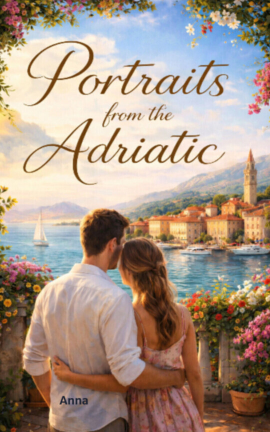

Summary
Sun-bleached stone holds more than heat. In present-day Dalmatia, where the sea meets the sky and ancient history whispers in the alleys, “Portraits from the Adriatic” captures the raw, beating heart of modern life. These are not postcard stories. This is where love festers, grief crashes like a storm-battered wave, and fragile friendships are tested under the relentless sun. Discover the Croatia tourists never see.
1 The Woman Who Rented a Funeral Boat
The first thing Luka ever said to me was, “Your prose is like a beautiful house where someone has died of boredom.” The last thing, six months ago, had been, “If I ever truly die, I’ll make sure you’re the last to know, Vera. Just to inconvenience you.”
So when the call came from his sister in Split, her voice thick with the soft Dalmatian accent he’d shed like a skin, saying he was gone, a boating accident, ashes to be scattered, I felt a perverse satisfaction. Of course he’d dragged me into his final act. An inconvenience, posthumously delivered. I, Vera Zalar, sharpest editorial tongue in Zagreb, booked a flight south, my black Valentino suit a blade against the blinding Adriatic sun.
I rented the boat from a man named Ante, whose face was a roadmap of sun and salt. “A funeral boat?” he’d grunted, looking me over. “For the pokojnik, the departed?”
“For the bastard,” I confirmed, hefting the tasteful pewter urn. It was heavier than I’d expected. Luka had always been substantial.
Ante’s vessel, the Marjana, was less a sleek yacht and more a stubborn, blue-bellied workhorse. “Jugo is coming,” he warned, pointing to a yellowish haze smudging the horizon. The south wind, notorious for turning the sea into a boiling cauldron and fraying nerves into raw wire. “Be quick. One hour out, say your words, empty the box, come back. No poetry.”
The plan was simple. Sail to the open water beyond the island of Brač, perform this final, cynical duty, and return to my life of dissecting mediocre manuscripts and drinking expensive wine alone. But as the Marjana chugged past the marble majesty of Split’s seafront, the jugo arrived like a vengeful god. It didn’t build; it slammed. One moment, calm blue; the next, the world was a roaring, green-grey frenzy. The sky vomited rain. Ante fought the wheel, cursing in a language older than curses, before shouting, “We cannot make it back! We must shelter at Sušac!”
Sušac was a pimple of an island, mostly cliffs, with one perilous cove. As we lurched into its relative calm, I saw another boat, a sleek sailboat with a broken mast, already tethered to the lone rickety dock. Ante secured the Marjana, barking he’d hunker down below. “You go to the old shepherd’s hut! Up the path! Not my job to die with your ghost!”
Clutching the urn like a talisman, I staggered up the muddy path, the wind trying to tear the suit from my body. The hut was a stone croft, low and dark. I shoved the door open, stumbled into the dank gloom—and froze.
There, leaning against a crude table, lighting a cigarette with calm, deliberate hands, was the ghost himself.
Luka.
Alive. Soaking wet in a cable-knit sweater, hair plastered to his forehead, but vibrantly, infuriatingly alive.
The urn slipped from my fingers, hitting the earthen floor with a heavy thud, but it didn’t open. We stared at each other. The storm screamed outside. I found my voice first. It was a icicle, sharp and cold.
“You unimaginable shit.”
A slow, familiar smile spread across his face, the one that always made me want to hit him and kiss him in equal measure. “Vera. In the flesh. And in Armani, no less. Come all this way just for me?”
“I came to scatter your ashes!” I gestured wildly at the urn. “Your sister called! She was weeping!”
“Ah, Marta.” He took a drag. “She always was a terrible actress. But you, my love? You believed it? I’m touched. I thought you’d check.”
“Check?” I shrieked. “Why would I check? Who fakes their own death?”
“A writer with a terminal case of writer’s block and a publisher’s advance he’s already spent,” he said smoothly. “And a desperate need to see if anyone would care. Particularly one razor-edged editor who threw me out with instructions to choke on my own metaphors.”
The absurdity of it, the sheer, colossal audacity, hit me like a physical blow. Then the rage came, hot and glorious. “So this is research? Subjecting me to… to this?” I kicked the urn. “I have a funeral boat, Luka! I rented a funeral boat!”
He burst out laughing, a rich, rolling sound that filled the hut and somehow muted the storm. “Of course you did. Only you would rent a specific class of vessel for maritime disposal. Did you get a bulk rate?”
Our verbal warfare, honed over two years of a passionate, turbulent affair, resumed as if there’d been no hiatus. We dueled with words in that leaking stone hut. He mocked my “metropolitan funeral chic.” I eviscerated his “hackneyed attempt at existential performance art.” He said my tears at the news were probably acid. I said his ashes would have improved the quality of the Adriatic.
But as the hours wore on and the jugo showed no sign of relenting, something shifted. The hut grew dark. We found candles. We found an old bottle of rakija, fiery and crude. The heat of the alcohol, the close, damp space, the adrenaline of fury and shock—it began to meld into something else. A dangerous, familiar electricity.
“You look good, Vera,” he said, his voice dropping its mocking edge. “Anger becomes you. It always did.”
“Shut up, Luka.”
“Make me.”
The challenge hung in the air, thick as the rakija fumes. I moved first. I crossed the small space and kissed him, a collision of lips and teeth and six months of pent-up, furious longing. It was not gentle. It was a continuation of the argument by other means. We tore at each other’s clothes—my expensive suit, his damp sweater—a frantic, clumsy dance in the candlelight. He backed me against the cold stone wall, his hands rough and knowing. I bit his shoulder, drawing a gasp that was half pain, half triumph.
“Still a harpy,” he murmured into my neck. “Still a fraud,” I gasped back, arching against him.
But then, on the musty pallet that served as a bed, the fury transmuted. The frantic energy softened, deepened. The familiar contours of his body, the scent of his skin mixed with sea salt and rain, undid me. Our coupling turned slow, intense, devastatingly sincere. The playful banter faded into ragged breaths, into whispered names that were not insults. In the flickering light, his face, for once, was unguarded. I saw the fear beneath the bravado, the real despair that had driven him to this madness. And he saw, beneath my polished scorn, the genuine hurt, the care I’d so violently denied.
Afterwards, we lay tangled, listening to the storm rage. He traced the line of my spine. “I am sorry, Vera. Truly.”
“I know,” I said, and for the first time, I didn’t say it to win.
The jugo pinned us on Sušac for three days. Three days of stolen time, a surreal, suspended reality. We talked. Really talked. Not as combatants, but as the people we’d been before the wounds. We laughed, too. He tried to fish with a piece of string and a bent nail. I attempted to cook a suspicious-looking mushroom I found, resulting in a hilarious, panicked debate about potential hallucinations. We found an old, waterlogged deck of cards and played for stakes of imaginary millions. We made love again, on the stony beach in a rare patch of sun, the risk of discovery by Ante or some phantom shepherd adding a reckless thrill.
He told me about the book, the one he couldn’t write. The pressure. The silence in his head. “Faking my death seemed… logistically simpler than facing another blank page,” he admitted, his head in my lap.
“You’re a coward,” I said, but my fingers were in his hair. “For you, always.”
On the third morning, the sea lay flat and docile, a brilliant, remorseful blue. The peace was a palpable thing. We sat on the dock, legs dangling over the water, the dreaded urn between us like a morbid joke.
“What now, Vera?” he asked quietly. “Do you sail back to Zagreb and have me arrested for… what, fraudulent dying?”
I looked at him, at this brilliant, infuriating, broken man I had never stopped loving. I thought of my orderly life, my sharp-tongued reputation. And I knew, with a clarity as shocking as the storm had been, that I couldn’t go back.
“The ashes,” I said slowly, an idea forming, wild and perfect. “They need to be scattered. That was the mission.”
He followed my gaze to the urn, then back to my face, understanding dawning. A slow, incredulous smile spread. “You wouldn’t.”
“It’s the logical conclusion,” I said, my old editorial certainty returning. “Luka Barišić, the writer, the man who owed everyone everything, is dead. He died at sea. A tragic accident. His ashes were committed to the deep by his grieving, fierce-hearted editor.”
“And who gets to live?” he asked, his voice husky.
I stood, picking up the urn. I opened it. Inside, instead of fine grey powder, there was a fine grey dust—a mix of fireplace ash from his sister’s villa and, he confessed, a bit of stolen paprika for color. I poured it into the serene water. It swirled and vanished.
“Someone new,” I said, turning to him. “Someone with no advance, no deadlines, no past. Someone who can write a different story.”
We sailed back to Split on the Marjana. Ante gave us a dubious look but asked no questions. In the city, I made one call. To my assistant in Zagreb. “I’m not coming back. Tell them… tell them I found a better story.”
The real twist, the tragedy that became our foundation, came later. With Luka—now “Luka,” in quiet quotation marks—hidden away in a stone house on Hvar, writing feverishly, truly writing for the first time in years, I went to settle his affairs. The “dead” man’s affairs. It was in his apartment in Split, in a locked drawer, that I found the medical file. Not for writer’s block.
For a heart condition. Serious. Inoperable. The prognosis was a timeline measured in seasons, not years.
He hadn’t faked his death just for a book, or for me. He had done it to escape the suffocating pity, to live what time he had left inside a story of his own making. A story where he wasn’t a dying man, but a free one. And he had given me the ultimate editor’s privilege: not just to critique his story, but to rewrite it with him.
I never told him I knew. And he never confessed it. Some truths are too heavy to speak aloud; they would sink the fragile, beautiful boat we had built. Our life together, born from a rented funeral boat and a jugo storm, was built on a lie so vast it became its own truth. We lived with passion, with laughter, with playful, sharp-tongued banter that now held a secret, tender core. He wrote his masterpiece in a year, a furious, brilliant novel about a man who is given a second life under a stolen sky. It was published under a new name, to quiet acclaim.
He died, for real, on a calm spring morning, looking at the sea from our terrace. He was smiling. And I, the woman who rented a funeral boat, finally understood the assignment. It wasn’t to bury the past. It was to learn, in the wild, unexpected, and heartbreaking storm of it all, how to sail with a ghost into a future that was, against all odds, vividly, passionately alive.
2 Summer of Too Many Kisses
The first time I saw him, he was stealing a lemon from the bowl beside my cash register. Not discreetly, either. He plucked it with a magician’s flourish, held it to his nose, inhaled deeply, and then met my gaze across the crowded terrace of Kavana Mara as if he’d just discovered the island’s true treasure.
I was elbow-deep in the espresso machine’s steam, my morning symphony of clattering cups and the hiss of milk. The June sun was already a brute, hammering the white stone of Hvar’s main square, but inside my café, the air was blessedly cool and smelled of freshly ground Arabica and the sweet, buttery scent of kroštule pastries.
“That’ll be two euros,” I said, not bothering to wipe my hands. My voice, I noted with satisfaction, could frost glass.
He was younger—maybe early thirties to my settled forty-five—with the kind of sun-bleached, sea-tossed looks that were as common as cicadas in a Hvar summer. Sun-streaked brown hair that curled rebelliously over his forehead, skin the color of toasted almonds, and eyes that even from a distance I could tell were a stupid, beautiful shade of Adriatic blue. He wore a faded navy t-shirt with a peeling logo of some sailing school, and shorts that had seen better decades.
“For the lemon?” he asked, his Croatian tinged with a hint of a Korčula drawl. He tossed it once, caught it. “I was just admiring. You must be Mara.”
“And you must be putting it back.”
A couple of German tourists at a nearby table glanced over, smelling free entertainment. My regulars—old Mr. Pavić with his chessboard, the trio of sharp-tongued widows who came for gossip and orahnjača—paused their rituals. I felt the heat of their collective attention. This was my stage, my kingdom carved out of heartbreak and sheer will. I’d rebuilt this place after the divorce, after the quiet, suffocating end of a twenty-year marriage that had simply… evaporated. Love was a faulty appliance. I’d unplugged it.
He didn’t put the lemon back. He sauntered forward, leaned on the polished mahogany counter, and invaded my personal space with an odor of salt, sunscreen, and reckless charm. “Petar,” he said. “I’ve taken over the Sirena sailing school. I’ve heard your coffee is the only thing on this island strong enough to wake a dead man.”
“Then it should be effective on you. The lemon, Petar.”
He grinned, a flash of white in his tanned face. “I’ll trade you. The lemon, for your name on my lips for the rest of the day.”
The widows tittered. I felt a flush crawl up my neck, one of pure, unadulterated irritation. “Charming. Did you practice that in the mirror this morning? Put. It. Back.”
He did, finally, placing it gently back in the bowl, his finger brushing a pile of sugar packets. “So it’s true. The famous Mara has a tongue that could slice stone.”
“And you have the manners of a stray goat. Now, are you buying coffee, or are you just here to deplete my citrus?”
“A double espresso, molim. And a smile. It’s summer.”
“The espresso is three euros. The smile is not for sale at any price.”
I turned my back on him, grinding the beans with more force than necessary. I could feel his eyes on me, tracing the line of my ponytail, the defiant set of my shoulders under my simple linen shirt. I served him his coffee in a white demitasse, the crema perfect and dark.
He took a sip, never breaking eye contact. “Excellent. As bitter and complex as promised.”
“The door is that way. Have a lovely day.”
He left, but not before winking at Mr. Pavić. The old man snorted into his newspaper.
That should have been the end of it. But it was only the beginning.
He came back the next day. And the next. Always with a quip, always pushing, always a performance for an audience.
“Mara, my sunshine! Has anyone told you you’re prettier than Pakleni Islands at sunset?”
“Flattery is a weak currency here, Petar. Your tab, however, is getting strong.”
“What did the sea say to the Dalmatian coast?” “I don’t know, and I have a business to run.” “Nothing, it just waved!” He’d beam, and despite myself, a snort of laughter would escape me, which I’d quickly disguise as a cough.
The banter became a daily ritual, a verbal tennis match my customers began to place unofficial bets on. He’d arrive smelling of the sea, with tales of incompetent tourists he’d nearly capsized, or with a fresh, absurd compliment. I’d parry with sarcasm and raised invoices. The air between us crackled, a live wire everyone could feel.
The first twist came on a Tuesday, during a rare afternoon lull. A storm was brewing out at sea, the sky purpling over Brač. He walked in, not with his usual swagger, but looking uncharacteristically somber, water dripping from his hair.
“No sail lessons today?” I asked, already pulling his espresso. “The sea is angry,” he said quietly, watching the churning harbour. “It reminds me of things.” “What things?” He shook his head, the moment gone, the mask back on. “How beautiful you look in this storm light. Like a goddess of vengeance.”
I rolled my eyes, but that night, alone in my apartment above the café, I thought of the sudden shadows in his eyes. They mirrored ones I knew in my own.
The heat of the season built. So did the tension. It culminated one sweltering Friday night after closing. I was hauling bags of trash to the alley, sweating through my tank top, when I found him leaning against my back wall, a bottle of loza in hand.
“You look like you need a drink more than I need a shower,” he said. “Go home, Petar.” “I am home. The sea is my home. And right now, this alley feels very… central.”
What happened next was not gentle. It was a collision. One moment I was telling him to get lost, the next he’d closed the distance, his hand cupping the back of my neck, his mouth finding mine. It wasn’t a request; it was a statement. And I answered. God, did I answer. The kiss tasted of rakija and rebellion. My back met the sun-warmed stone wall, the bags of trash forgotten at our feet. His hands were calloused from ropes, mapping my spine with a sailor’s certainty. It was raw, hungry, and stupidly exhilarating.
“See?” he murmured against my lips, his breath hot. “Not so sharp now.” “Shut up,” I breathed, pulling him back to me.
It became an affair conducted in stolen hours. Passionate, reckless, and hidden from no one. Mornings, he’d be my insolent customer. Afternoons, he’d sneak up my back stairs while I was supposed to be doing inventory. We’d fall onto my sun-drenched bed in a tangle of limbs and urgency.
He was a generous, athletic lover, as attuned to my body as he was to the wind. He’d whisper filthy, funny things in my ear in a mix of Croatian and Italian that made me laugh and shudder at once. Once, he brought a bucket of fresh oysters to bed, feeding them to me one by one, the brine and sex creating a dizzying, primal cocktail. Another time, we made love in the empty café at dawn, me on the cold mahogany counter, the first rays of sun painting stripes across his moving back.
But in the quiet after, the shadows would creep in. He’d trace the scar on my shoulder—a childhood fall from a fig tree, I’d claimed—and his gaze would grow distant. I’d ask about his family, and he’d deflect with a joke about being raised by dolphins.
The true crack appeared in mid-July. We were on his little sailboat, Bura, becalmed in a cove near Stari Grad. The water was glass, the world silent but for the cry of gulls. Sated and sun-drunk, I was dozing with my head in his lap.
“My brother was a sailor too,” he said, his voice so soft it was almost lost in the lap of water against the hull.
I didn’t open my eyes. “Older or younger?” “Older. Josip.” A long pause. The boat rocked. “He was on the *OB-62 Šolta* during the war.” My eyes flew open. The Šolta. A naval patrol boat. I knew its history. Everyone from that time did. A cold knot formed in my stomach. “He… didn’t come back,” Petar said, not looking at me, staring at the Velebit mountains hazily visible across the channel.
The war. The damn war. The ghost that sat at every table, in every family. It was my ghost too, wearing a different face.
“I’m sorry,” I whispered, the words inadequate stones dropped into a deep, dark well. He looked down at me, his blue eyes now the color of a winter sea. “What about you, Mara? That scar on your shoulder. It’s not from a fig tree. It’s shrapnel pitting.”
I sat up, pulling my knees to my chest, suddenly naked in more than body. The sun felt intrusive. “Sarajevo. 1993. I was sixteen. A mortar shell hit the market queue two streets over. A piece of a flower pot came through our kitchen window.” I said it flatly, the way I’d learned to, to keep the shaking out of my voice.
We looked at each other then, truly looked. Not as flirt and café owner, not as lover and mistress, but as two people who had heard the same monstrous symphony, from different seats in the hall. The playful mask was gone from his face. The fortress wall was down from mine. The air between us was charged with a new, terrifying intimacy.
We didn’t speak of it again. We fell back into our rhythm of banter and passion, but the shadow was there now, a third person in the room, on the boat, in the bed.
The climax came during the August Festa od Svetog Lovre, the town a riot of music, roasted lamb, and wine. We were both a little drunk on Plavac and the dizzying crowd. Petar, in a fit of playful possessiveness, had pulled me into a shadowed doorway and was kissing me as if the world were ending. It felt like it might.
“Come away with me,” he mumbled into my neck. “Just for a few days. To Vis. Just us and the sea.” “I can’t, the café…” “The café will survive! Live, Mara. For once, just live!” “You don’t get to tell me how to live!” I shot back, the old defiance flaring.
A man stumbled past us, laughing loudly. He was big, red-faced, his voice slurred with slivovitz. He clapped Petar on the back. “Petar! My boy! Still chasing skirts instead of fish, I see!”
Petar froze. The man’s eyes, bleary and bloodshot, landed on me, then on Petar’s face. A slow, unpleasant recognition dawned on his features. “Ah… I see. You like them… seasoned now. Like your brother did. He always had a taste for the… complicated ones, too. From over there.”
The world stopped. The music faded. I saw Petar’s face disintegrate. The playful sailor, the insouciant flirt, vanished. What was left was raw, unfathomable pain, and a rage so deep it turned his eyes black.
“What did you say?” Petar’s voice was a wire about to snap. The drunk man, sensing his error but too far gone to navigate it, blundered on. “Josip… he loved a Bosnian girl, didn’t he? From Sarajevo. Pretty thing. Tragic, that…”
Petar moved. It was not a punch thrown in anger; it was a release of a decade of grief, a physical eruption of the shadow we’d been nursing. His fist connected with the man’s jaw with a sickening crack. The man went down like a sack of stones.
Chaos erupted. Shouting. Someone pulled Petar back. He was trembling, tears of fury and agony streaking through the dirt on his face. He looked at me, and in that look, I saw it all. His brother Josip, in love with a girl from the city we were supposed to hate. A war that tore lovers and brothers apart. The unspeakable grief that had shaped this playful, wounded man.
And I saw my own reflection in his pain. The shrapnel scar burning on my shoulder. The queues for bread and water. The sound of shells. My own silent, private war that had nothing to do with borders and everything to do with the heart.
He shook off the restraining hands and ran, disappearing into the warren of stone streets.
I found him hours later, on the farthest point of the rocky coast, past the graveyard. He was sitting on a cliff, staring into the black sea, a bottle of loza beside him, half empty.
I sat down without a word. The night was vast, the stars fierce. “He died saving her family,” Petar said, his voice ragged. “Not in a naval battle. Smuggling them out. A checkpoint. They shot him. For her. For a love that made no sense to anyone.” I took the bottle, took a burning swallow. “Love never makes sense. It just is. And then it leaves scars.” “Is that what we are?” he asked, finally looking at me. “A scar? Something painful that marks a healing that never quite happened?”
I thought of my ex-husband, our polite, passionless end. I thought of the shell fragment I still carried in my flesh. I thought of Petar’s jokes, his insolence, the way he kissed me like he was drowning and I was air.
“No,” I said, my own voice rough. “I think we might be the salt water. It stings like hell in the wound. But it also cleanses. It’s what the sea is made of.”
He was silent for a long time. Then he took my hand, lacing his rough, salty fingers through mine. We sat there until the first hint of grey touched the horizon, the boundary between sea and sky slowly revealing itself, not as a line of separation, but as a place of meeting.
The summer of too many kisses wasn’t over. It was just beginning its real work. It was no longer about forgetting, or swearing off love. It was about learning how to hold the lemon and the shrapnel, the bitter coffee and the sweet, salty sea, the playful banter and the silent, shared grief—all in the same trembling, sun-warmed hands.
3 She Counted Lovers Like Church Bells
The bells of Saint Nicholas began before dawn, as they always did in this part of Dalmatia—soft at first, a testing note, then the full, unapologetic peal that rolled down stone streets and into bedrooms where windows stayed open all summer. Mara lay on her back, staring at the pale ceiling of her apartment in Šibenik, counting.
One.
She smiled without opening her eyes. The first bell was for waking, for remembering where you were. The second, she knew, would be for regret. The third—well, the third was always for desire.
She rolled onto her side and reached for the glass of water on the nightstand. It was warm. Everything was warm. August had settled into the city like a living thing, breathing heat into walls, into skin, into memory. Somewhere below her window, a man laughed—too loud, too early—and a scooter buzzed past, its engine angry at the hills.
Mara had learned to count bells years ago, when she realized that memory, like sound, arrived in waves. Each bell carried a face, a season, a version of herself she no longer was.
She had counted lovers the same way—not as trophies, not as sins, but as moments when the air had changed around her.
Two.
The second bell echoed, and with it came Luka, with his hands always smelling faintly of olive oil and engine grease. Luka who fixed boats and broke promises with equal ease. Luka who had kissed her once in the shadow of the cathedral and then married someone else by the following spring. She didn’t hate him. She had never hated any of them. Hate took too much energy in this heat.
Mara swung her legs out of bed and padded barefoot to the window. The stone floor was cool, a small mercy. She leaned out and watched the street wake up—old women with shopping bags, tourists already pink from yesterday’s sun, a priest hurrying with his head down as if the bells embarrassed him.
She thought, not for the first time, that Dalmatia was a place that remembered everything even when people pretended not to. Stone walls absorbed secrets. The sea kept them and returned them when it felt like it.
Three.
The third bell came late that morning, while she was at the café near the waterfront, the one where locals went because tourists found it too quiet. She was halfway through her second espresso, watching a ferry slide toward the harbor, when the sound reached her—full, bronze, inevitable.
She looked up and saw him.
He stood on the other side of the street, holding a folded map like it had personally offended him. He was not young, not old, with hair already deciding to go its own way and a face that suggested he smiled more easily than he should. He wore a linen shirt that had seen better irons and shoes that clearly did not belong on cobblestones.
He looked lost.
Mara felt it before she named it—the small, electric shift in the air. The kind that made counting irrelevant.
He crossed the street without hesitation, as if she had called him, and stopped at her table.
“Is this place open?” he asked, in Croatian that carried a soft foreign edge.
“It is,” she said. “It just doesn’t like to announce it.”
He laughed. “That explains a lot.”
They ordered without ceremony. He introduced himself as Daniel. He was from Berlin. He was supposed to stay three days. He had already stayed five.
“Dalmatia does that,” Mara said. “It stretches time.”
“And morals?” he asked, smiling.
“Especially morals.”
They talked as if they had started a conversation years ago and were only now resuming it. About cities and seas and why people traveled when they already knew what they were looking for. He told her about a failed marriage that ended politely and hurt anyway. She told him about nothing important and everything true.
When the bells rang again at noon, he flinched.
“I keep forgetting,” he said. “Church bells all day. In Berlin, we mostly count sirens.”
“Here,” Mara said, “we count everything.”
“Like what?”
She met his eyes and held them. “Like lovers.”
He didn’t look away. That was something.
Four.
They walked along the water that afternoon, the sun relentless but somehow bearable. He took his shoes off and complained about the stones. She teased him and offered no sympathy. They stopped for cold beer, then another, then one more because the shade was good and the conversation better.
He told her he wrote soundtracks for films no one watched. She told him she restored old photographs—faces rescued from fading, moments given one more chance to exist.
“Do you ever want to step into them?” he asked.
“Sometimes,” she said. “But mostly I want to know who they were just before and just after.”
“That’s where the story is,” he said.
She wondered, briefly, if he was quoting something. Decided it didn’t matter.
They kissed at sunset, not because it was dramatic but because it was obvious. The kind of kiss that felt like agreement. The sea behind them was calm, pretending innocence.
Five.
The fifth bell rang at night, deep and slower, the one that reminded the city of its bones. Daniel’s hand rested on the small of her back as they climbed the stairs to her apartment. Neither of them spoke. Words felt unnecessary, almost rude.
Inside, the air was heavy with heat and jasmine from the courtyard below. She closed the door. He leaned his forehead against it for a moment, breathing out like someone who had been holding something too long.
“I’m glad I got lost,” he said.
“So am I,” she answered.
What followed was unhurried, like everything in Dalmatia. They undressed without ceremony, touching as if mapping familiar ground. Desire here was not loud. It didn’t need to be. It moved like tidewater, patient and certain.
Later, they lay tangled in sheets that smelled faintly of salt. The bells rang again, distant now.
“How many?” he asked softly.
She knew what he meant.
“Enough,” she said. “And never too many.”
He kissed her shoulder, thoughtful. “Do you ever regret them?”
She considered. Faces passed through her mind—not as judgments, but as echoes.
“No,” she said finally. “I regret the ones I didn’t let happen.”
Six.
Daniel stayed. One day became three, three became a week. They settled into a rhythm that felt dangerously like habit—morning swims, afternoon work side by side in silence, evenings that stretched long and golden.
People noticed. In Dalmatia, people always noticed. The woman at the bakery raised an eyebrow. A neighbor asked pointed questions about “the German.” Mara smiled and offered nothing.
“You don’t mind?” Daniel asked once, as they passed a group of men who fell quiet too quickly.
“I mind,” she said. “But not enough to change.”
He watched her with something like admiration. Or relief.
One afternoon, they visited the cathedral. It was cool inside, the stone holding centuries of shade. Daniel stood still, listening as if the bells had followed them indoors.
“You really count them,” he said.
“I count what they remind me of,” she answered.
“Which is?”
“That life happens in intervals,” she said. “Not in straight lines.”
He nodded, serious now. “In Berlin, we pretend everything is linear. Progress. Plans.”
“And here?”
“Here it feels… circular.”
“Yes,” she said softly. “Exactly.”
Seven.
The seventh bell arrived with change. It always did.
Daniel received an email that made his shoulders tighten. A film project revived unexpectedly. Meetings. Deadlines. The world outside Dalmatia calling him back.
They didn’t argue. There was nothing to argue about. They sat on the balcony with glasses of white wine, the city glowing below.
“I don’t want to promise anything dishonest,” he said.
“I don’t want you to,” she replied.
“You make it very easy,” he said, a hint of sadness in his voice.
She touched his hand. “That doesn’t mean it’s easy.”
The bells rang. She counted without thinking.
Eight.
The day he left, the ferry horn cut through the morning like a wound. They stood at the rail until the city became a suggestion behind them.
“Will you come to Berlin?” he asked.
“Maybe,” she said. “But only if I can leave again.”
He smiled. “Deal.”
They kissed once, properly. Then he was gone, absorbed by movement and schedules and a different kind of soundscape.
Mara walked home alone. The apartment felt larger, emptier, unchanged. She opened the windows and let the city back in.
Nine.
Autumn arrived gently, as it always did by the sea. Tourists thinned. Locals reclaimed space. The bells sounded clearer in cooler air.
Mara returned to her routines. Photographs. Coffee. Long walks. Sometimes, memory would tap her shoulder—a laugh, a touch, a shared silence—but it never demanded more than acknowledgment.
She met others. A widower with careful hands. A woman from Zagreb who stayed one night and left a book behind. A fisherman who smelled of the sea and spoke very little.
She counted them, yes. But not as accumulation. As markers.
Ten.
On a crisp October evening, as the bells rang and the city settled into itself, Mara stood again at her window. She counted without effort.
She understood now what she had always felt but never named: that counting was not about numbers. It was about listening. About recognizing the moments when the air shifted and something real passed through.
Dalmatia did not judge. It remembered. And in remembering, it allowed space for repetition, for return, for endings that were not failures.
The bells faded. The sea breathed. Somewhere, a door closed. Somewhere else, one opened.
Mara smiled, already counting the next sound, whatever it might be.
4 Dalmatia Is Not for the Faithful
People think Dalmatia forgives. They think the sea absolves everything, that salt washes sins away, that the sun burns lies into harmless freckles. That if you stand long enough on a stone terrace and let the bora tear through your hair, you will be made honest again.
They are wrong.
Dalmatia remembers. It remembers footsteps and voices, the way a body leaned once against a balustrade, the exact pitch of a laugh carried across water at night. It keeps accounts. And it charges interest.
I learned that late. Too late, perhaps. Or exactly on time—depending on who you ask, and whether you believe in mercy.
I came back to the coast in early May, when the tourists were still shy and the locals already tired of waiting for them. The plane descended over a sea so calm it looked painted, a dishonest blue. I pressed my forehead to the window like a child, as if closeness could make it real. As if I hadn’t been born of this light, as if my first memory wasn’t my mother’s hand and the smell of rosemary crushed underfoot.
At the airport, someone recognized me despite the sunglasses and the scarf tied too tightly around my neck. They always do. Fame in Croatia is a small, stubborn animal; it follows you into bakeries, into grief, into silence.
“Lina,” the woman said softly, not asking for anything, not even a smile. Just confirmation.
“Yes,” I answered, because denial is for the young and the hopeful.
She nodded, satisfied, and turned away. That was the exchange. That was Dalmatia welcoming me home.
I rented a car instead of letting anyone drive me. I needed my hands occupied. The road curled along the coast like a thought you can’t finish, olive groves flashing silver in the wind, stone houses hunched as if eavesdropping. Every bend carried a memory, or the promise of one. I told myself I was here to rest between concerts, to hide from Zagreb’s questions, from producers who spoke about “reinvention” as if I were a blouse that needed better tailoring.
That was a lie. I was here because the songs had stopped coming.
People assume songs arrive the way lovers do—unexpected, breathless, generous. In truth, they are more like debts. They appear when you owe them something. And I owed too much.
I rented a small house above a cove whose name I won’t write down. Some places protect themselves by remaining unnamed. The house had a fig tree leaning dangerously close to the window and a terrace tiled in red that bled rust when it rained. Inside, everything smelled of dust and the sea. It was perfect.
On the first night, I opened all the windows and lay awake listening. Waves, cicadas rehearsing their relentless rhythm, a dog barking somewhere too far away to matter. And under it all, the quiet—the kind that doesn’t soothe but watches.
I thought of him, of course. I always do when the coast is this still. Faithful people don’t return to the places where they learned to betray themselves. Or perhaps they do, to be punished properly.
I was twenty-one when I first sang on a summer stage in Dalmatia. My voice was all nerve then, all hunger. I believed discipline could save me, that if I practiced enough scales and refused enough invitations, I would become untouchable. That belief did not survive the applause.
He was older, married, gentle in the way men are gentle when they already know how the story ends. He told me I sang like someone who had lost something important and wasn’t ready to admit it. I told him he heard what he wanted. We were both right.
Dalmatia watched us from behind its shutters, amused.
The morning after my arrival, I went down to the water early, barefoot on the path, careful where I placed my feet. The stones were still cool, the sea indifferent. I swam out until the house was just a white suggestion against green, until my arms ached pleasantly and my thoughts went quiet. Floating on my back, I stared at the sky and tried to remember when faith had left me.
Faith is not religion. Faith is the belief that your choices will add up to something coherent. That if you love honestly, sing honestly, live honestly, the world will meet you halfway.
Dalmatia does not meet you halfway. It waits for you to cross entirely.
In the village, they pretended not to notice me. This is the highest form of respect. I bought bread, figs, a bottle of cheap white wine. I drank coffee at the small bar by the harbor, listening to men argue about football and women argue about the price of tomatoes. No one asked about new albums. No one asked about him. For an hour, I was only a woman with salt-dried hair and too much time.
It was there that I saw Marko again.
Time had not been kind to him, but it hadn’t been cruel either. He had acquired the kind of wear that comes from staying in one place long enough to be shaped by it. Sun around the eyes, hands permanently smelling of rope and diesel. He looked at me the way people look at mirrors they are not sure they want to trust.
“Lina,” he said, as if testing the word.
“Marko,” I replied. No exclamation marks in either voice.
We did not hug. We stood there with our coffee cups between us like offerings.
“I heard you were back,” he said.
“I arrived yesterday.”
He nodded. “The sea told me.”
This would have been funny if it weren’t true.
Marko had been my friend before he had been anything else. He knew the worst of me and the best, and refused to confuse the two. He had watched me fall in love with men who could not stay, watched me leave with guitars and promises, watched me return thinner, louder, less sure.
“You look tired,” he said.
“So do you.”
He smiled. “I am faithful to my vices.”
“Dalmatia rewards that,” I said.
He laughed, then sobered. “How long are you staying?”
“I don’t know.”
That answer frightened us both.
We did not speak of the past then. Dalmatia prefers to introduce itself slowly, like a host who wants you comfortable before revealing the cost of dinner. We spoke of weather, of boats, of who had died since last summer. He asked nothing of me. I hated him a little for that.
Over the next days, I settled into a rhythm that pretended to be peace. Morning swims, long walks, afternoons on the terrace with a notebook I did not open. At night, wine and the radio turned low. Sometimes my voice escaped me without warning, a phrase hummed into the dark, unfinished and unfaithful to itself.
Songs are jealous. They know when you are withholding.
It was on the fifth day that I drove north without deciding to. The road took me past places I had sworn off—towns where posters still faded on walls, stages where my heels had clicked too loudly. I stopped the car above a small beach and sat with the engine off, listening to it cool.
This was where I had learned the second kind of betrayal: the one that happens when love asks you to choose between yourself and someone else, and you pretend there is no choice at all.
He had met me here, that first man, the gentle one with the married smile. He had spoken of his wife as if she were an illness, unavoidable and private. I had believed him because I wanted to. Faithful to the feeling, unfaithful to the facts.
Dalmatia had watched, patient.
I did not go down to the beach. I did not need to. Memory is a tide that does not require water.
That night, Marko came to the house with fish wrapped in paper and an expression I remembered too well—the look of a man who has decided something and hopes you will make it easy.
“We should eat,” he said.
We grilled the fish on the terrace, drank too much, spoke of everything except what pulsed between us like a third presence. The fig tree dropped a fruit with a soft, obscene sound.
“You could stay,” he said finally. “Here. Not in the house—” He gestured vaguely. “In Dalmatia. Longer.”
“And do what?” I asked, sharper than I intended.
He did not flinch. “Sing. Or don’t. Teach. Rest. Be.”
Be. The most dangerous verb.
“I don’t know how,” I said.
“You used to.”
“I used to be faithful to illusions.”
He leaned back, studying the stars as if they might offer commentary. “Dalmatia is not for the faithful,” he said, as if concluding an argument with himself.
“What do you mean?”
“It rewards those who adapt. Who accept contradiction. The faithful break themselves against it.”
I thought of all the vows I had made—to music, to men, to versions of myself that no longer existed. “Then why are you still here?”
“Because I’m unfaithful enough,” he said softly.
We did not touch that night. This, too, was a kind of betrayal.
The days grew heavier. Heat settled in like an accusation. Tourists arrived with their loud languages and their careless happiness. They took pictures of sunsets as if they were inventing them. I watched from my terrace, feeling both superior and exposed.
My manager called. My mother called. I let both ring. Faith is also the belief that avoidance is temporary.
One afternoon, I took the notebook down to the cove and forced myself to open it. The page was blindingly white, an insult. I wrote the title at the top without thinking: Dalmatia Is Not for the Faithful. Then I sat there, pen hovering, and laughed until my chest hurt.
“You think you’re clever,” I told myself. “You think naming it will save you.”
The sea answered by doing nothing.
I wrote anyway. Not a song. A confession. About a woman who had mistaken intensity for truth. About a coast that had taught her the difference too late. The words came unevenly, but they came.
When I finished, I felt neither relief nor pride. Only a small, dangerous hope.
Marko read it the next evening without comment. He handed the notebook back as if returning a borrowed knife.
“You should sing this,” he said.
“It would ruin it.”
“It would tell the truth.”
“Truth ruins everything,” I said automatically.
“Only illusions,” he corrected.
We argued then, properly. About staying and leaving, about courage and cowardice, about whether love is an action or a condition. Our voices carried down to the water, where someone laughed and did not care.
In the end, we stood too close, breathing the same air, faithful only to the moment. This is where stories usually turn. This is where Dalmatia collects its due.
I stepped back.
“I can’t,” I said.
Marko nodded, once. “I know.”
He left without drama. This is another thing the coast teaches you: how to depart without spectacle.
That night, I dreamed of singing on a stage made of stone, the sea rising behind me with each note. The audience was empty, but I sang anyway, louder and louder, until the water reached my ankles, my knees, my throat. When I woke, my voice was hoarse as if I had tried.
The next morning, I called my manager.
“I have something,” I said.
“Is it commercial?” she asked.
“No.”
There was a pause. “Good,” she said finally. “I’m tired of faithful things.”
I laughed, a sound that surprised us both.
I left Dalmatia a week later. I did not promise to return. The coast does not like promises. On the drive to the airport, I stopped once, just once, to look back at the line where land surrenders to water.
Dalmatia did not wave. It never does.
Months later, on a stage far from the sea, I sang the song I had written there. The audience listened differently. Some leaned forward, as if recognizing something they had been warned about. Others smiled, faithful to their misunderstandings.
Afterward, alone in the dressing room, I touched my throat and felt the familiar ache. Not pain. Proof.
Dalmatia had taken its interest. It had left me with something else instead.
Unfaithful enough to continue. Faithful enough to remember.
That is the balance. That is the lesson.
And the sea, somewhere, agreed by remaining exactly as it is.
5 August Makes Liars of Us All
The lie began, as most great lies do, with a simple, necessary truth. It was August, and August in our valley was a golden, languid beast. It draped itself over the vineyards, pressed the scent of hot pine resin and sun-baked earth into every breath, and made the very air shimmer with indolence. It was a month that promised so much—ripe fruit, slow evenings, the culmination of summer’s work—and in the delivering, it exhausted you with its bounty. You couldn’t trust August. It made you lazy. It made you sentimental. It made you believe in things like permanence.
My husband, Tomas, was up at dawn, as always. I heard the soft click of the bedroom door, the pad of his bare feet on the terra cotta tiles. From my pillow, I watched the light, already bold at five-thirty, paint a blazing rectangle on the white wall. I lay there, listening to the familiar symphony of his morning: the grumble of the coffee grinder, the hiss of steam, the clatter of a single cup and saucer. He wouldn’t bring me one. He knew I liked to surface slowly, to let the world seep in rather than crash. It was one of our thousand silent, marital understandings.
The truth was, I loved Tomas. I loved the solid, quiet fact of him. He was like our stone farmhouse, built into the hillside: weathered, dependable, his foundations sunk deep into this land. We’d met at university in Ljubljana, me studying art history, him agronomy. He’d brought me here to his family’s vineyard thirty years ago, a city girl with romantic notions of rural life. The romance had been scoured away by winters, by the heart-stopping anxiety of late frosts, by backache and bureaucracy, replaced by something more profound: a partnership. We were a good team. We’d raised two sons, now gone to the city’s pull. We’d nurtured the vines and they, in turn, had nurtured us.
The second truth was that I was lonely. A quiet, specific loneliness that had nothing to do with Tomas and everything to do with the woman I had once imagined I would become. She was a curator, perhaps, in a white-walled gallery, her hands clean, her mind buzzing with ideas and intellectual conversations. Instead, my hands were stained with soil and paint—for I had taken up painting the landscape, a cliché I fought against even as I succumbed to it. I painted the vines in every mood, the light on the karst cliffs, the ancient, gnarled cherry tree by the driveway. I sold a few pieces at the local tourist market. Tomas called me his “renaissance woman,” and his pride was genuine, but it also felt like a gentle containment, a way of placing my restlessness neatly on a shelf beside the homemade jam.
And then, there was Silvio.
Silvio arrived in mid-July, a friend of a friend from Trieste, needing a quiet place to finish his book. He was a writer, or so he said. A biographer, working on the life of some obscure Venetian poet. He rented the small stanovanje, the apartment above our old hay barn that we now let out to tourists. He was perhaps ten years my junior, with the kind of careless elegance city men sometimes have—linen shirts that always looked crisp, silver threading through his dark hair at the temples, eyes the colour of the Slovenian sky just before a storm.
At first, he was just a polite, unobtrusive presence. He’d wave in the mornings, a cup in his hand, leaning on the barn’s wooden railing. He’d sometimes appear at the edge of the vineyard as I painted, keeping a respectful distance. One afternoon, a sudden, violent burja wind kicked up, threatening to send my easel and canvas cartwheeling into the rows of Merlot. He materialised, as if summoned by the chaos, grabbing the easel with long-fingered hands while I wrestled the canvas.
“A tempest!” he shouted over the wind’s roar, his Italian accent curling around the words. “It suits the painting. All that furious gold.”
I was breathless, clutching the wet canvas to my chest. “It suits nothing but ruin!”
He helped me carry my things to the shelter of the barn’s lower level. Inside, in the sudden quiet, dust motes danced in the slatted light. I thanked him, flustered, paint on my cheek.
“Lidija,” he said, trying out my name. “It means ‘sorrow’ in some old tongue, doesn’t it?”
“In some,” I conceded, wiping my cheek. “But it’s just a name.”
“Names are never ‘just’,” he smiled. “They are destiny, or rebellion, or both. You don’t look sorrowful. You look… concentrated. As if you’re trying to pin this whole valley down before it changes its mind.”
No one had ever described me that way. Tomas saw me as whole, complete. This man saw a process, an effort. It was unnerving. It was a key turning in a lock I’d forgotten was there.
That was how it started. With a conversation about names. With the feeling of being truly seen, not as Tomas’s wife, or the boys’ mother, or the vineyard’s co-custodian, but as Lidija, a woman wrestling with light and form on a piece of cloth.
August deepened, and so did our conversations. They were never planned. He’d find me painting. I’d find him writing at the rusty table under the cherry tree. We talked of art, of the claustrophobia and charm of small places, of the books that had shaped us. He recited lines of poetry in Italian, his voice low and musical. He asked about my paintings with a piercing attention that made me feel exposed and thrillingly alive. He called my work “brave,” not pretty. He said the way I used thick slabs of white for the limestone cliffs was “almost violent.”
“You love this land,” he said one afternoon, the air thick with the scent of overripe cherries, “but you’re also at war with it. Your paintings are the battlefield.”
I felt a jolt, as if he’d laid a wire bare. He saw it. He saw the conflict I served with dinner each night, the quiet war between contentment and longing. With Tomas, my life was a harmonious canvas. With Silvio, it became a thrilling, fraught composition.
The lie began on a Tuesday. Tomas was in Novo Mesto all day for a meeting with the winemakers’ cooperative. The valley hummed with heat. Silvio found me by the drystone wall at the property’s edge, painting the distant, hazy outline of the Julian Alps.
“I’m stuck,” he confessed, running a hand through his hair. “The words are like glue. I need a distraction. A muse.” His storm-cloud eyes held mine. “Come to Piran with me.”
Piran. The jewel-like Venetian town on the coast, an hour away. A place Tomas and I went for anniversary dinners, a treat.
“I can’t,” I said automatically. “Why not?” “Tomas…” “Is in Novo Mesto until seven. It’s eleven now. We’ll be back by five. A quick escape. A change of light. For your art.” He said it lightly, but the challenge was there.
The August sun beat down, making my head swim. The prospect of the cool, Adriatic breeze, of narrow streets and the shock of blue sea, was a physical craving. It wasn’t about Silvio, I told myself. It was about the sea. About breaking the monotony.
“Alright,” I heard myself say. “As a distraction.”
The car ride was a capsule of stolen time. We talked faster, laughed more easily. He played old Italian pop songs on the radio. The lie began to breathe in the passenger seat beside me: I am just being spontaneous. There is no harm in this.
Piran was a delirium of light and salt. We walked the Tartini Square, not touching, but the space between us felt charged, elastic. We climbed the bell tower, and from the top, the sea was an endless, impossible azure. Standing there, the wind whipping my hair, the whole of my landlocked life seemed small and far away.
“Look,” Silvio said, not at the view, but at me. “You’re different here. Your eyes are hungrier.”
I looked away, my heart hammering. “It’s just the sea air.”
We ate grilled squid at a tiny restaurant on the harbour wall, our knees almost touching under the small table. He told me about his failing marriage, his escape into biography, his search for a story that made sense. I told him about the ghost of the curator, about the fear that my life had become a beautiful, finished painting with no more blank spaces.
“Blank spaces are terrifying,” he said, his fingers tracing the rim of his wine glass. “But they are the only places where anything new can be written.”
On the drive back, sated with sun and seafood, a comfortable silence fell. As we turned into our valley, the familiar vines glowing green-gold in the late afternoon sun, a profound guilt seeped in, cold as groundwater. It was the contrast that did it. The wild, salt freedom of the coast against the dignified, settled beauty of home. I had been disloyal. Not in deed, but in spirit.
“Thank you, Silvio,” I said formally as he stopped the car by the barn. “It was a lovely trip.”
“Lidija,” he said, and his voice was serious. He reached over, not for my hand, but to brush a stray, salt-crusted strand of hair from my forehead. His fingertips were a brand. “It was more than lovely. And you know it.”
I fled to the house. Tomas’s car was not yet back. I showered, scrubbing the sea salt from my skin, trying to wash away the feeling of his touch. When Tomas came home, tired but smiling, bringing the smell of sunshine and car with him, I kissed him with a fervour that startled us both.
“What was that for?” he laughed, holding me at arm’s length. “For being you,” I said, and that was the truest thing I’d said all day.
But August was a liar. It made you believe you could contain multitudes. The clandestine meetings, the electric conversations, continued. They were the secret, shimmering veins in the bedrock of my ordinary life. Silvio’s attention was a drug. I painted feverishly, better than I ever had. The valley on my canvases was no longer just beautiful; it was alive with tension, with longing, with the push-pull of shadow and fierce, illuminating light.
The lie grew. It needed feeding. “I’m going to the art supply shop in Postojna,” I’d say. “I’ll be a few hours.” And I would go, but only after an hour sitting with Silvio in his apartment, drinking bitter espresso while he read me passages of his book, his words weaving a spell of a different, more poetic life.
One evening, after a particularly heated discussion about Caravaggio—a debate about light as revelation versus light as violence—Silvio kissed me. It was in the shadow of the barn, the sky a bruised peach. It wasn’t a gentle kiss. It was a claim. And I, God help me, I claimed him back. For one minute, or ten, I was not a wife, a mother, a vintner. I was pure, rebellious sensation.
I pulled away, my breath ragged. “I can’t.” “You already are,” he said, his forehead against mine.
I didn’t sleep that night. I lay beside Tomas, listening to his steady breath, feeling like a cavern of deceit. I had crossed a line. The lie was now a living thing in our bedroom, curled between us.
The next day, the sky cracked. The heat broke in a spectacular, violent thunderstorm. Rain lashed the vineyards, and the world turned a chaotic, thrilling grey. Tomas was out checking the drainage ditches, a plastic cape pulled over his head. I stood at the kitchen window, watching the chaos, my own turmoil mirrored in the weather.
Silvio came to the house. He’d never done that. He stood dripping in the doorway, his eyes fever-bright.
“Lidija. I have to go back. To Italy. My publisher… my wife. It’s a mess.” My stomach plunged. “When?” “Tomorrow. Come with me.” I stared at him, the rain drumming on the stone step. “What?” “Come with me. This… this is real. What we have is real. It’s not this…” he waved a hand at the cozy kitchen, at the evidence of my life with Tomas, “…this beautiful prison. You’re an artist. You need life, not routine.”
His words were a siren song. They were the culmination of every wistful thought I’d harboured for twenty years. An escape. A narrative where I was the heroine of my own story, not a supporting character.
And then, over his shoulder, through the sheet of rain, I saw Tomas. He was trudging up the path from the lower vineyard, head down against the weather. His plastic cape was flapping, his boots were caked with red mud. He looked up, saw Silvio at his door, saw me behind him. He stopped. Even through the grey curtain of rain, I saw his face change. It wasn’t anger. It was a slow, dawning comprehension, a collapse of a fundamental truth. He didn’t see a kiss, or proof of infidelity. He saw the intimacy of the moment, the fact that this man was in his space, talking to his wife in the heart of their home while he was out in the storm tending their land.
August had lied to him, too. It had promised him the steady fruit of his labour, the security of his home. And now it had shown him this.
Silvio followed my gaze. He stepped back, into the rain. “Think about it,” he said quickly, quietly. “I leave at ten.”
He walked away, past Tomas. They did not speak, did not nod. Two ships passing in a deluge.
Tomas came inside. He took off his muddy boots, his sodden cape. He hung them with deliberate care. The silence was deafening, swollen with the sound of rain.
He walked into the kitchen, went to the sink, and poured himself a glass of water. He drank it slowly, looking out at the storm-washed vines.
“Tomas…” I began, my voice a stranger’s. “Don’t,” he said, not turning. His voice was flat, drained. “Just… don’t yet.”
He went upstairs. I heard the shower run. I stood in the kitchen, the site of a thousand shared breakfasts, a thousand plans, and felt the lie rot inside me, poisoning everything.
He came down later, in clean clothes, his hair damp. He looked old. He looked like the stone of the house, but stone that had been struck by lightning.
“I have to check the barrels,” he said, his voice hollow. “The temperature in the cellar might have dropped with the storm.”
It was an excuse. We both knew it. But it was a rope thrown across the terrifying gap between us.
“I’ll make žganci for dinner,” I said, the words clinging to the ordinary like a lifeline. “With the pork cracklings you like.”
He nodded, just once, and left for the cellar.
I cooked. The simple, peasant food of my homeland. Flour, water, salt. I rendered the fat. The familiar, homely smells filled the kitchen, a pathetic charm against the psychic wreckage.
We ate in near silence. The rain eased to a drip. The storm had passed, leaving a shattered, washed-clean world outside, and a ravaged one inside.
“He asked me to go with him,” I said finally, the words dropping like stones into the quiet. “To Italy. Tomorrow.”
Tomas put down his fork. He looked at me, and for the first time that evening, he really saw me. He saw the fear, the guilt, the wild, tempted creature I had become.
“And will you?” he asked. The question held no anger, only a vast, weary sadness.
I looked around. At the kitchen we had painted together a sunny yellow the spring our youngest left for university. At the painting on the wall—my first decent one, of the cherry tree in bloom, which he had framed himself. At his hands, broad and capable and stained with the earth that was his life’s work. I thought of the cold, blank page of a life in Italy with Silvio, a story yet unwritten. I thought of the deep, familiar text of my life here, every line known, every flaw understood, every joy earned.
August had made liars of us all. It had lied to me about freedom, making it seem like something only found in escape. It had lied to Tomas about security. It had lied to Silvio, perhaps, making him believe he could rescue someone who didn’t truly need rescuing.
But August was ending. The storm had ushered in the first, faint, cool breath of September.
“No,” I said, the word solid, final. “I will not go.”
He absorbed this. He nodded slowly. “Then he will leave,” Tomas said. It was not a question.
“Yes.”
We finished our meal. We cleared the plates. We did the dishes, him washing, me drying, as we had for thirty years. The silence was no longer charged with accusation. It was heavy with hurt, and vast with things unsaid, and fragile with a terrible, tentative possibility: the possibility of what comes after the lie.
Later, in the dark of our bedroom, he spoke. “I don’t need to know everything, Lidija,” he said to the ceiling. “But I need to know if you are still here. Not just in this house. But here, with me.”
I turned to him. In the faint moonlight, I saw the tracks of tears on his temples. My strong, steady Tomas. I had done this.
“I am here,” I whispered, and it was the beginning of a new truth, one I would have to build, word by painful word, day by day. “I am so sorry, but I am here.”
He didn’t take my hand. Not yet. But he breathed out, a long, shuddering sigh.
Outside, the dripping slowed. The world was quiet, exhausted. The passionate, deceptive gold of August was gone, washed away. What was left was the bare, damp structure of things. The vines, heavy with almost-ripe grapes. The stone house. The two of us, lying in the wreckage of what we had built and what I had almost shattered.
The harvest was coming. The real work was about to begin.
6 She Undressed Him with a Dalmatian Wind
The wind, the bura, did not arrive as a guest. It arrived as a conqueror. It scoured the ancient, sun-bleached stone of Split, screaming down the narrow kala between Diocletian’s Palace walls, ripping the last brittle leaves from the fig tree in my grandmother’s courtyard. From my third-floor apartment, the world was a symphony of rattling shutters, the angry hiss of the sea in the harbour, and a cold so sharp and dry it seemed to flay the moisture from the very air. It was a wind that stripped things bare. It suited my mood perfectly.
I was wrapping a cashmere scarf around my neck, preparing to brave the elemental fury for my evening shift at the wine bar, when my phone buzzed. A message from Luka. My heart, a traitorous, weary muscle, gave a single, hard thump against my ribs.
Bura’s madness. Can’t work on the boat. Coming to the bar? Need a drink to remember what warmth is.
I typed a quick, non-committal Maybe see you, my fingers stiff. Luka. He was a seasonal apparition, a man carved from sunlight and salt. A skipper who chartered his sleek wooden gulet to tourists in the endless, languid summers, and who seemed to… evaporate in the winter, retreating into some private, inland cave of his own. We had been a summer thing. A fiery, intense, sun-drenched summer thing that had burned itself out with the last of the August heatwaves. Or so I’d told myself, standing here in the winter silence, polishing glasses in a near-empty bar, pretending the ache was just for the lost season, not for the man.
The bar, “Kraj Mora” – “By the Sea” – was a cave of amber light in the stone bowels of the palace. Owned by my uncle, it was a haven from the tourist throngs in summer and a sanctuary for locals in winter. Tonight, with the bura raging, it was nearly empty. Old Man Petar was in his usual corner, nursing a bevanda and arguing with the chessboard. Marina, a ceramicist with sad eyes, was sketching by the fireplace where real logs crackled, defying the wind’s austerity.
I was restocking bottles of Pošip and Plavac Mali when the door blew open, not with a push, but as if the wind had taken a personal dislike to it. And in he stepped.
Luka was a mess. The bura had undressed him of his usual composure. His dark, sun-bleached hair was a wild nest. His cheeks were raw, slashed with high colour. His eyes, the colour of the Adriatic under a storm sky, were wide and bright with the adrenaline of battling the elements. He wore a heavy navy woollen sweater, but it was speckled with salt spray, and his jeans were damp to the knee. He looked elemental, untamed, and so profoundly out of place in this warm, civilised interior that it stole my breath.
“Iva,” he said, his voice rough from the wind. He stamped his feet, a sailor on land.
“You look like you lost a fight with the sea,” I said, turning back to the bottles, feigning indifference. My pulse thrummed in my throat.
“The sea is sleeping. It’s the wind that’s the bastard tonight.” He slid onto a stool at the bar, his presence immediately claiming the space. He smelled of cold air, of ozone, of the petrichor of wet stone and distant pine forests from where the bura descended.
I poured him a glass of heavy, dark Dingač without asking. He wrapped his large, calloused hands around it, seeking warmth. For a while, he just stared into the ruby depths, and I busied myself with meaningless tasks, acutely aware of every shift of his body, every breath he took.
“It’s different out there now,” he said finally, not looking up. “Without the summer mask. Real.”
“Winter always shows the bones of a place,” I replied, wiping the already-spotless bar.
“Shows the bones of people, too.” He looked at me then, and the directness of his gaze was a physical touch. “I missed you, Iva.”
The words were simple, but the bura had blown away his usual charming evasions. They lay between us, stark and vulnerable. I felt a flare of anger, warm and defensive.
“You have a strange way of showing it. Three months of silence is quite the message, Luka.”
He flinched, but didn’t look away. “I know. I was… I am on the water, in the sun, playing a part for months. It gets into your blood, that performance. Come autumn, I feel hollow. Like I have to remember who I am when I’m not ‘Skipper Luka, the sunset-and-champagne guy.’ I didn’t want to bring that hollow man to you.”
It was more honesty than he’d ever offered in the whole of our sun-drunk summer. The wind howled its agreement outside, a mournful, furious sound.
“And now? The bura has blown the hollow out of you?” I asked, my voice softer than I intended.
“It’s blowing something away,” he murmured. He took a long drink. “It’s blowing everything that isn’t nailed down to hell. It’s… clarifying.”
He stayed until closing, nursing his wine, talking in fragments. He spoke of the eerie beauty of the empty archipelago in winter, of the lead-grey sea, of his tiny stone house in a cove on Brač, with only the wind and the gulls for company. He spoke of his father, a fisherman broken by the changing seas, and his mother who had left for Germany when he was ten, chasing a stability the coast could not offer. Stories he had never shared between jugs of wine on moon-decked decks for applauding guests.
I listened, and with each confession, I felt the careful, resentful wall I’d built over the autumn begin to erode. Not crumble, but erode, grain by grain, under the relentless truth of his words.
At midnight, I closed up. The bura had not abated; it had settled into a sustained, powerful roar. The Riva was deserted, the streetlights shaking in their fittings.
“You can’t drive back to Brač in this,” I said, the words leaving my mouth before I could cage them. “The ferry won’t be running. The marinas will be closed.”
“I know,” he said, standing close to me in the doorway. The wind whipped his hair. “I have a room at Pansion Marta.”
A silence, filled only by the wind’s shriek. The pension was two streets away. It was the sensible, the safe, the obvious thing.
“You’ll freeze walking there,” I said. My heart was a drum now, beating in time with the rattling shutters. “My place is upstairs.”
His eyes searched mine, not for permission, but for meaning. “Iva…”
“Just for the night. The sofa is comfortable.” The lie was pathetic. We both knew it.
We battled the fifty feet to my building door, the wind trying to pluck us from the ground. In the stone stairwell, the world fell into a sudden, profound quiet, broken only by our ragged breathing. The ascent to my apartment was thick with unspoken history and the raw, new vulnerability of the evening.
Inside, the central heating fought a valiant but losing battle against the drafts. I lit more candles, their light dancing over my books, my photographs, the terracotta pots of herbs on the windowsill. My sanctuary, now invaded by this beautiful, weathered storm of a man.
“Can I…?” He gestured to his damp sweater. “Of course.”
He pulled it over his head. Underneath, his t-shirt was old and soft, clinging to the planes of his chest and shoulders. A simple, intimate act. I busied myself with making kava, the thick, strong Turkish coffee my grandmother taught me to make. When I turned, two small cups in hand, I found him standing by my bookshelf, looking at a framed photograph. It was of my grandfather, a stone mason, his hands on a block of Brač limestone.
“He had good hands,” Luka said quietly. “You can see it. Hands that knew how to hold something, to shape it.”
“He said stone wasn’t hard. It was just slow,” I said, handing him his coffee. Our fingers brushed. A spark, or maybe just the static from the dry, charged air.
We sat on opposite ends of the sofa, the coffee’s bitter warmth a small anchor. The wind screamed its frustration at the window. We talked more, but the words were secondary now to the space between us, shrinking with every shared glance, every small gesture.
“This bura,” he sighed, leaning his head back. “It’s like it wants to tear the roof off, show the sky to everything hidden underneath.”
“Maybe some things need to be seen,” I whispered.
He turned his head to look at me. The candlelight carved shadows and highlights on his face—the stubble on his jaw, the curve of his lip, the tired, knowing lines around his eyes. The charming skipper was gone. The hollow autumn man was gone. What was left was someone real, someone laid bare by the relentless wind, someone beautiful and wounded and here.
I didn’t decide to move. It was as if the same gust that rattled the windowpanes moved me. I set my cup down and shifted across the sofa. I reached out and took his cup from his hands, his fingers slowly uncurling to let it go. My movements felt deliberate, slow, as if I were underwater.
I knelt beside him on the cushions. His breath hitched. I brought my hands to his face, cradling his rough cheeks. He leaned into the touch, his eyes closing for a moment, a shudder running through him.
Then, I began. Not to seduce, but to unveil.
With a tenderness that surprised me, I began to undress him. Not with the haste of summer passion, but with the deliberate pace of the winter sea carving a coastline. My fingers found the hem of his t-shirt and drew it up, over the taut muscles of his stomach, his chest, his arms. He raised his arms, a surrender, and I pulled it free. His skin was warm, marked by the sun’s old kisses and the silver scars of a life on boats: a thin line on his ribs, a rough patch on his shoulder.
The bura roared, a soundtrack to my quiet exploration. I leaned in and pressed my lips to the scar on his shoulder. A kiss of understanding, not pity. He gasped, his hands coming up to grip my arms.
I moved to his belt, the buckle cold under my fingers. The rasp of the zip was loud in the room. I eased his jeans over his hips, down his strong thighs. He helped me, kicking them away, until he was left in only his simple cotton shorts. I sat back on my heels and just looked at him. In the candlelight, he was a masterpiece of lived-in flesh and bone—not a statue, but a man. A Dalmatian man, shaped by sun, sea, stone, and wind.
He was trembling. Not from cold, but from exposure. I was undressing him with a Dalmatian wind, stripping away not just cloth, but the last of his defences, his seasonal personas, his lonely winter retreat. I was showing him he could be seen, truly seen, in this raw, elemental state, and not be found wanting.
“Iva,” he breathed, my name a prayer on his lips.
“Shhh,” I murmured. “Let it blow.”
I stood then, and with my eyes locked on his, I undressed myself. The soft wool dress, the tights, the lace beneath. I let it all fall to the floor, piece by piece, until I stood as bare as he was. The cold air raised goosebumps on my skin, but the heat in his gaze was a furnace.
He reached for me then, pulling me down to him, into his lap, skin to skin. The feeling was electric, overwhelming. It was not the hungry, sun-drenched coupling of our summer. This was different. Deeper. A desperate, grateful merging, an anchor against the storm.
He kissed me as if he were dying of thirst and I was the only spring. His hands on my back, my hips, were both possessive and reverent. When he entered me, we both cried out—a sound of shock and homecoming. We moved together in the flickering light, a slow, powerful rhythm that felt ancient, as old as the stone beneath us. The wind was our chorus, our witness, a furious, cleansing force that scoured away every lie, every doubt, every day of loneliness.
After, we lay tangled on the sofa under a heavy woolen blanket, listening to the bura begin to wane. Its fury was spent, leaving behind a clean, scoured silence that felt like a new world.
His fingers traced idle patterns on my spine. “No one has ever looked at me like that,” he said, his voice husky with emotion. “Like they wanted to see through me.”
“I saw you,” I said simply, my head on his chest, listening to the steady beat of his heart. “The bura showed you to me.”
“It wasn’t just the bura,” he said, kissing my hair. “It was you. You have always seen me. I was just too afraid to stand still long enough to let you.”
We slept, a deep, dreamless sleep of the utterly spent. When I awoke, dawn was breaking. The wind had died to a whisper. A pristine, hard light filled the room, illuminating the dust motes dancing in the air. The world outside the window was washed clean, every colour startlingly vivid, every line of the palace rooftops and the distant islands sharp and clear.
Luka was already awake, standing by the window, wrapped in the blanket. I joined him, my body fitting naturally against his side. The Adriatic was a sheet of hammered blue steel. The islands of Brač, Šolta, Hvar stood out as if they had been carved that very morning. The air was so clear you could see the individual cypress trees on the far hills.
“Jutro je,” he said. Morning has come.
“It’s beautiful,” I whispered.
He turned to me, his face peaceful, his eyes clear. He looked young and old all at once. “It is. But I’m not looking out there, Iva.” He cupped my face. “The storm… it passed through me. It left you.”
He didn’t ask to stay. He didn’t promise a future of endless sunsets. He simply looked at me, in the clear, honest light of the morning after the bura, and he was present. Entirely, unequivocally present.
I took his hand, the one that knew how to steer a boat through a storm and how to hold a woman’s face as if it were sacred. I led him back to the warmth of the bed. The wind had done its work. It had stripped us bare, scoured us clean. Now, in the profound quiet it left behind, we could begin the slower, more patient work of building something real. Not from summer dreams, but from winter’s honest stone.
7 Dubrovnik After Dark
The first time I saw him, he was being a nuisance. Not the ordinary kind, the tourist-with-a-selfie-stick variety I could deflect with a well-rehearsed, icy smile. No, this one was leaning against the stone well in the middle of the Stradun, notebook in hand, watching the swirling chaos of the Carnival’s opening night with the detached amusement of a zoologist observing a particularly bizarre colony of ants. He was tall, lean in a way that suggested too many hastily eaten meals on trains, with dark hair that curled rebelliously over the collar of a jacket that had seen better decades. His eyes, even from a distance, were the precise grey of the Adriatic sea an hour before a storm.
He was blocking my group.
“Excuse me,” I said, my voice slicing through the din of laughter and the distant thump of bass from a passing float. “Molim, you are in the way of my tour.”
He looked up, and those storm-sea eyes focused on me. A slow, lazy smile spread across his face, utterly unrepentant. “My apologies,” he said, his English tinged with an accent I couldn’t quite place—something educated, European, rootless. “I was just trying to capture the… olfactory essence of the crowd. Fried dough, cheap glitter, anticipation, and a hint of historical desperation. It’s quite a cocktail.”
My group of ten Canadian retirees blinked at him. I felt my jaw tighten. “Historical desperation is not on the itinerary. This way, please.” I shepherded my flock around him, shooting him a look that had made braver men flinch. He merely winked and scribbled something in his notebook.
That should have been the end of it.
But later, as I was explaining the intricate shame of the Orlando Column to a particularly inquisitive woman named Barbara, I saw him again. He was at a café table, nursing a tiny cup of coffee, watching me. Not with the leering interest I was, unfortunately, accustomed to, but with a focused, analytical curiosity, as if I were a fascinating local ritual himself. It was infuriating.
The second night of Carnival, he was on my evening tour: “Ghosts and Secrets of Old Town.” He paid in crumpled kuna, his fingers brushing mine, and fell into step at the very back. I decided to ignore him, pouring my energy into the tales of star-crossed lovers and Venetian treachery, my voice dropping to a whisper in the shadow of the Rector’s Palace. I spoke of the clandestine tunnels beneath the city, of treasures hidden during the Siege, of the old families who held their secrets closer than their children.
As the group dispersed near the Pile Gate, he materialized at my elbow. “Danijela, was it? A captivating performance. Though I’d argue you downplayed the sheer volume of bloodshed in the 17th century. A tad sanitized for tourist consumption?”
I whirled on him. “It is a tour, not a dissertation. And we prefer not to give our visitors nightmares.”
“Pity,” he said, falling into step with me as I headed towards my flat in the warren of streets above the Ploče gate. “Nightmares are often where the truth resides. I’m Leo, by the way. Leo Vaughan. I write travel pieces. The grittier, the better.”
“I don’t care,” I said, though it was a lie. I’d seen his byline once, in a glossy magazine left on a café seat. He was good. Annoyingly perceptive.
“I think you do,” he said, easily keeping pace. “You recite those stories, but your eyes tell different ones. You’re not just a guide. You’re a keeper. What is it you’re keeping, Danijela?”
His presumption was a spark to tinder. “You know nothing about me.”
“I know you touch the stone of the city wall as if checking a child’s fever. I know you hesitate for half a breath before you mention the Homeland War, as if the name still burns your tongue. And I know,” he said, stopping me under a wrought-iron lantern casting a mosaic of light and shadow, “that you are the most vividly alive person I’ve seen in a year of wandering. It’s… arresting.”
The Carnival noise was a distant hum here. The scent of salt and jasmine hung between us. I should have walked away. Instead, I heard myself say, “Arresting? Is that a writer’s word for ‘I want to sleep with you’?”
His grin was swift and devastating. “It’s a prelude. The banter comes first. It’s mandatory.”
The banter was a duel. It flowed over terrible red wine in a tiny, smoke-filled bar, continued as he walked me home, and escalated into a furious, delicious argument on my doorstep about the merits of versus . It was the most fun I’d had in years. It was also a distraction I couldn’t afford.
He kissed me that night. It wasn’t gentle. It was a collision, a claiming, all witty pretence burned away by a heat that left us both breathless against my ancient door. It was lust, pure and simple, and I let it sweep me away because for a few hours, I didn’t have to think about the weight of the name Petrović, or the empty chair at my family’s table, or the locked drawer in my baka’s house.
Leo became my Carnival secret. By day, I guided; by night, we explored a different city. We danced with masked revelers in the Stradun, our bodies moving in sync as if we’d practiced for years. We argued about history on the city walls under a diamond-dusted sky, and he made me laugh with his terrible impressions of my more demanding clients. He was a temporary creature, a comet passing through my ordered sky, and I was determined to enjoy the light before the inevitable dark.
Then, on the fourth night, he ruined everything.
We were in my flat, the remains of a meal between us. He was poking through my bookshelf, pulling out a thick, leather-bound volume of local folklore—my baka’s book.
“Don’t,” I said, too quickly.
He froze, his fingers on a page that had been dog-eared for decades. A loose, yellowed piece of paper fluttered to the floor. It wasn’t a page from the book. It was a sketch, crude but clear, of the Lovrijenac Fortress. Arrows and symbols were scrawled in faded ink around its base. In the corner, in my grandfather’s bold, slanted hand, was a single phrase: **“Zaštita je u srcu lavljeg.” The protection is in the heart of the lion.
All the air left the room.
“What is this, Dani?” Leo’s voice was soft, all teasing gone.
“Nothing. An old game. My grandfather’s nonsense.” I snatched for it, but he held it up, his writer’s mind already assembling fragments.
“The ‘Lion’s Heart’… Lovrijenac is the Fortress of St. Lawrence, but the Venetians called it ‘The Gibraltar of Dubrovnik’… and the lion is the symbol of Venice.” He looked at me, his stormy eyes alight with a terrible understanding. “This isn’t folklore. This is a map. A treasure map.”
“It’s a children’s story!” I insisted, panic a cold snake in my chest. “A fairy tale he told us about hidden Venetian gold. It’s not real.”
“But you’ve never looked.” It wasn’t a question.
I had. Of course I had. As a girl, with my brother, Luka. We’d spent a sun-drenched summer searching, following our grandfather’s drunken, nostalgic clues. We’d found nothing but dust and disappointment. And then the war came, and Luka went to defend those very walls, and he never came back. The treasure hunt died with him. It was a relic of a deader, sweeter past, and its resurrection felt like a violation.
“It’s a dead end,” I whispered, my voice cracking.
Leo saw it all—the grief, the fear, the secret history written on my face. He didn’t press. He simply folded the paper and handed it to me. “Then we’ll forget it.”
But we couldn’t. It hung between us, a specter at the feast. The next day, distracted and irritable, I made a mistake. I mentioned Leo’s interest in “local legends” to my uncle, Marko, over a tense coffee. Marko, my father’s brother, a man with eyes as hard and cold as the karst. He’d taken over the family’s small shipping business after my father’s death, and with it, a perpetual air of bitter suspicion.
His reaction was volcanic. “You showed a stranger Deda’s scribbles? Are you a fool, girl? That writer, poking around… I’ve heard of him. He digs up dirt and sells it as ‘atmosphere’.” He leaned across the table, his coffee going cold. “That ‘fairy tale’ almost got your father killed. It is not for outsiders. End it. Send him away.”
“What are you talking about? Almost got him killed? By who?”
But Marko just shook his head, a muscle ticking in his jaw. “Forget it. But if you care for this city, for this family, you will bury this again.”
That night, the Carnival reached its frenzied peak. The streets were a river of sequins, sweat, and noise. Leo found me near the clock tower, my mask of professional cheer firmly in place for my last group. He waited until they drifted away, then pulled me into the relative quiet of a side street.
“Your uncle paid me a visit,” he said flatly. A bruise was blossoming on his cheekbone.
Ice flooded my veins. “Marko? He hit you?”
“He suggested, with considerable force, that my travelogue was complete and I should catch the morning bus to Split.” Leo’s gaze was intense. “He was scared, Dani. Not angry. Scared. What is in that fortress?”
“I don’t know!” The cry was torn from me. “But my brother… Luka… the summer before the war, he was obsessed with it. He thought he was close. And then he enlisted, and he…” I couldn’t say it. “After he died, my grandfather burned all his notebooks. He said some curiosities were not worth the price.”
Leo cupped my face, his thumb wiping away a traitorous tear. “Then let’s find out what the price was. Together. Not for treasure. For you.”
The decision crystallized in that moment. I was tired of the ghosts, the half-truths, the weight of my family’s silent sorrow. I took his hand. “The heart of the lion. It’s not the fortress itself. It’s a carving. Inside. A small, medieval lion relief on the inner wall of the cistern chamber. Luka was sure of it.”
We moved through the celebrating crowds like two sharks against the current. The fortress, usually open to tourists, was closed for the night, but I knew a way—a service gate Luka had shown me, its lock old and stubborn. Leo produced a pocket multitool, and with a few tense minutes of fiddling, it gave way.
The interior of Lovrijenac was a cathedral of silence, the pounding music from the city far below mere vibration in the ancient stone. We descended into the lower chambers, the air growing damp and cold. Using the light from our phones, we found the cistern room. And there, on the wall, was the lion—weathered, its muzzle chipped, one paw raised.
“The protection is in the heart of the lion.”
My heart hammered against my ribs. I reached out, tracing the crude carving. The stone in the center of the lion’s chest felt… different. Slightly smoother. Leo pressed his own fingers against it. Nothing. We pushed, pulled, tried to pry.
“Heart… not in the heart, but is the heart,” Leo muttered, running his light over the entire relief. The beam caught something—a faint, almost invisible line around the lion’s raised paw, not the chest. “The paw. The lion’s heart is in its courage… its action.”
He pressed the raised stone paw.
For a terrifying second, nothing happened. Then, with a gritty, groaning sound that hadn’t been heard for centuries, a small, irregular section of the wall beside the lion recessed and slid sideways, revealing a dark cavity no bigger than a bread box.
I reached in, my fingers closing not around gold coins, but around oilcloth, wrapped around something solid. I pulled it out. It was a bundle. Unwrapping it with trembling hands, we found three things: a small, exquisite Venetian cameo of a woman’s profile; a stack of faded letters tied with ribbon; and a single, worn notebook.
It was Luka’s.
I sank to the cold floor, Leo’s arm around my shoulders, as I opened it under the phone’s glow. It was not a child’s treasure hunt. The early pages were maps and guesses, yes. But the later entries… they were a teenager’s terrified documentation. He’d found the cache weeks before the war began. But he’d also found something else: records, hidden by my grandfather, that showed my uncle Marko had been involved in clandestine deals with certain aggressive northern business interests in the late 80s—deals that involved smuggling, information, and the deliberate weakening of local resources. My grandfather had discovered it, hidden the evidence here, and created the “treasure” story as a smokescreen, a way to pass the location to my father if something happened to him.
But the war had come too fast. My grandfather had a stroke. My father, consumed by grief for his son and his country, never solved the riddle. And Marko had spent decades thinking the evidence was lost, while profiting from the post-war reconstruction, his past buried.
The cameo was my great-grandmother’s. The letters, love letters to her. The real treasure, and the real poison, were in the notebook.
“He sold information,” I whispered, the horror a physical taste in my mouth. “He made us vulnerable. For what? A few cars? Appliances?” Luka had written his last entry the day he enlisted: “I have to tell someone. But it is Uncle Marko. It will break Tata. It will break everything. I will hide this better. When I come back, I will know what to do.”
He never came back.
The sound of heavy footsteps on the stairs above echoed like gunshots. A beam of powerful flashlight cut through our darkness.
“I knew you wouldn’t listen.” Marko’s voice was choked with fury. He stood at the entrance, two larger men behind him. He saw the open cache, the notebook in my hands. His face drained of all color, then contorted with rage. “You stupid girl. You dig up graves that should stay buried!”
“You dug your own,” Leo said, stepping slightly in front of me. His voice was calm, but I felt the tension thrumming through him. “War profiteer. Collaborator.”
“It was business! Survival!” Marko spat. “And it stays in the past. Give me the book.”
“Or what?” I found my voice, rising to my feet, clutching my brother’s last words to my chest. “You’ll have your thugs hurt us? Like you hurt my father’s spirit? Like your greed helped hurt this city?” The grief turned to something harder, sharper. “Luka knew. And he died protecting a place you helped make weak.”
The word “weak” struck him like a slap. For a fleeting second, I saw the ghost of the boy he might have been, ashamed before his stern father. Then it was gone, replaced by the hardened man. He nodded to his men.
But Leo was already moving. He didn’t fight them. He threw his entire body against a rusty, ancient fire-alarm lever on the wall we’d passed. A piercing, screeching clangor erupted, impossibly loud in the stone confines, echoing up and out into the night.
Within minutes, the shouts of security and the local police mingled with the alarm. Marko and his men melted away into the shadows of the fortress just as the authorities arrived, finding only a disheveled travel writer and a local tour guide, claiming they’d gotten locked in while exploring.
We told our story, the true story, the next morning to a sympathetic, weary police inspector who remembered my brother. The evidence was handed over. The wheels of justice, slow and creaking, began to turn.
The Carnival ended. The masks were put away. The city settled into its ordinary, beautiful rhythm.
On his last afternoon, Leo and I stood on the city walls, watching the sun gild the orange roofs. The whirlwind had passed, leaving a landscape both ravaged and clear.
“I have to go,” he said quietly. “My editor in Berlin is screaming. And you… you have a family to rebuild. A city to reconcile with.”
I knew he was right. The lust and the banter had been the kindling, but the fire we’d walked through together had forged something else—a respect, a bond that was bone-deep. He wasn’t a man who could stay, and I wasn’t a woman who could leave. Not yet.
“I know,” I said, leaning my head against his shoulder. “Thank you. For not running.”
He turned and kissed me, a kiss of goodbye that tasted of sea salt, dark coffee, and possibilities. “This isn’t an ending, Danijela Petrović,” he murmured against my lips. “It’s a colon. The story pauses here. But the next chapter…” He smiled, that slow, lazy smile. “I hear the off-season is lovely. And I’ve developed a taste for kremšnita and dangerous family secrets.”
I watched him walk down the Stradun, his silhouette merging with the tourists, then separating, distinct until he turned a corner and was gone. The familiar ache for Luka rose up, but for the first time, it wasn’t paired with the choking weight of mystery. The secret was out. The ghost was laid to rest.
That night, Dubrovnik after dark felt different. The stones seemed to breathe easier. The shadows held memory, but not menace. I walked home alone, but not lonely, the echoes of a writer’s laugh and a brother’s courage keeping me company under the watchful, starlit sky. The adventure was over. My life, my real life, was finally, terrifyingly, about to begin.
8 Hrvar Hotel Havoc
The first time I saw him, he was dangling upside-down from the limb of an ancient olive tree, trying to retrieve a neon-pink frisbee, his linen trousers threatening to give way to a rather alarming floral print pair of boxers. It was 7:15 AM on the first Monday of peak season, and I, Marija Kovač, acting manager of the Hotel Delfin on the island of Hrvar, had just spent forty minutes mediating between the head chef and the produce supplier over the philosophical and practical definitions of a “ripe” tomato. The scene before me felt like a particularly absurd omen.
“Sir!” I called out, my voice cutting through the lavender-scented morning. “The tree is historical, not gymnastic!”
He righted himself with a simian grace that was both impressive and infuriating, dropping to the sun-bleached stone patio. He was tall, lean, with hair the colour of sun-bleached wheat and a smile that seemed to have absorbed all the Adriatic sunshine of the last decade. He brushed dust from his trousers, not a hint of embarrassment on his face.
“Apologies… Manager…?” he trailed off, the frisbee now spinning on a tanned finger.
“Ms. Kovač,” I said, straightening the clipboard that was my shield and sceptre. “And you are?”
“Leo,” he said, as if that explained everything. “Room 307. The frisbee took a rebellious turn. It’s a new design. Aerodynamically unsound, but spiritually free.”
Thus began the descent of my meticulously planned season into glorious, sweaty, chaotic ruin. Leo was a travel writer, or so he claimed. I suspected he was a Dionysian deity on a working holiday. He had checked in the previous night, and already his presence seemed to warp the hotel’s orderly reality.
The Delfin was my life. A sprawling, terracotta-roofed edifice built by my great-grandfather, perched on a cliffside overlooking a cove of heart-stopping blue. It was a place of quiet luxury, of generations of families returning for the same suite, the same waiter, the same fig jam at breakfast. My parents were in Zagreb dealing with a family emergency, leaving me, at twenty-eight, in charge for the first peak season. This was my trial by fire, or rather, by tourist.
The havoc began in earnest at lunch. I was reviewing the terrace seating chart when a shriek of laughter erupted from the infinity pool. Leo had organised an impromptu “flotation device grand prix,” involving inflatable flamingos, a unicorn, and Mrs. Henderson from room 212’s prized vinyl swim cap, which he’d somehow commandeered as a “victory crown.” The pool boy, Jakov, was laughing so hard he was hosing the bar area instead of the flower beds.
“Mr. Leo!” I hissed, appearing poolside like a vengeful spectre in a linen suit. “This is not a water park. Mrs. Henderson’s cap, please.”
He swam to the edge, water beading on his ridiculous cheekbones. “Marija—may I call you Marija? The tyranny of ‘Ms. Kovač’ doesn’t suit this sunlight. Mrs. Henderson is having the time of her life. Look.”
I glanced. The seventy-year-old retired librarian from Sussex was indeed giggling, a cocktail in her hand, the unicorn floatie wedged loyally beneath her. She gave me a wobbly wave. I felt the foundations of my authority crack a little.
“The cap,” I repeated, my jaw tight.
He placed the sopping rubber cap in my hand, his fingers brushing my palm. A stupid, electric jolt went through me. “As you wish, Gazdarica,” he said, using the old-fashioned term for mistress of the house, his accent atrocious and somehow charming.
The days unfolded like a frenetic, sun-drenched opera. Leo’s chaos was magnetic. He convinced the sommelier, a man of solemn dignity, to host a “blind tasting” that involved local rakija and obscure Slovenian natural wines, resulting in a spontaneous, slightly off-key rendition of Dalmatian klapa songs by the Austrian finance ministers’ conference in the private dining room. He organised a midnight “moonlight swim” that, due to a miscommunication with the night porter, saw the entire east wing descending to a pool that was being cleaned, leading to a frothing, shrieking encounter with eco-friendly detergent bubbles.
Through it all, I was the frantic conductor, trying to keep the orchestra from devolving into jazz. I was constantly near him, smelling his stupid salt-and-sunscreen smell, fixing his messes. I replaced the antique vase his frisbee finally did shatter (with a convincing replica, billing his room discreetly). I soothed the nerves of the German family whose quiet meditation he’d “enhanced” with a beginner’s didgeridoo lesson. I was a knot of tension in a crisp white blouse.
And yet.
There was the evening I found him on the far terrace, not causing trouble, just sketching the sunset over Vis. The focused quiet on his face was disarming. He looked up, caught me staring.
“It’s not all frisbees and havoc, you know,” he said softly. “Sometimes it’s just… this.” He gestured to the molten gold bleeding into the indigo sea. “Your home is very beautiful, Marija.”
Something in my chest clenched, a feeling dangerously close to longing. “It is,” I said, and my voice was quieter than I intended.
The lust was a slow, insidious burn, like the afternoon sun on stone. It was in the way he’d roll up his sleeves, revealing forearms corded with lean muscle. It was the glimpse of his tanned back as he peeled off a shirt by the pool, the confident set of his shoulders. It was the way he’d look at me during my managerial reprimands, not with defiance, but with a spark of pure, unadulterated amusement, as if I were the most fascinating creature he’d ever seen—a rare, beautiful bird of protocol. I dreamed absurd dreams of linen trousers and olive groves, and woke up irritated, my sheets tangled.
The climax of the absurdity—or so I thought—was the “Great Sardine Incident.” Leo had befriended the local fishermen and arrived one morning with two crates of gleaming, silver sardines, insisting the kitchen host a “true Hrvar barbecue” for the guests. Chef Petar, a temperamental artist, saw this as an invasion of his culinary domain. A shouting match in rapid-fire Croatian and creative English erupted by the herb garden.
I strode into the fray, my patience as thin as a banknote. “Enough! Leo, you cannot bring raw fish into a five-star kitchen! Petar, breathe before you have an aneurysm!”
“But the authenticity!” Leo argued, a sardine held aloft like Excalibur. “This is the taste of the Adriatic! Not your deconstructed tuna tartare with micro-cress!”
“My micro-cress,” Petar roared, “has more sophistication than his entire genetic line!”
It was then, as I was physically positioning myself between the fish-wielding writer and the cleaver-wielding chef, that my heel caught on the cobblestone. I stumbled backwards, arms pinwheeling, destined for a humiliating and fishy descent into the rosemary bush. A strong arm hooked around my waist, yanking me sideways. I landed, not in the herbs, but against Leo’s chest. The world tilted. I smelled sea salt, sardines, and him. For a suspended second, our faces were inches apart. His eyes, I noticed stupidly, were the grey-green of the sea before a storm. My heart was a frantic bird against my ribs, and I knew it wasn’t just from the near-fall.
“Steady there, Gazdarica,” he murmured, his breath warm on my cheek.
I pushed away, smoothing my skirt, my face burning. “The sardines go to the staff beach barbecue tonight. You,” I pointed at Leo, “are in charge of grilling them. And you,” I turned to Petar, “will provide the bread and salad. A collaboration. Not another word.”
I walked away on trembling legs, the imprint of his arm a brand on my waist.
That night, the staff barbecue was a riotous success. The sardines, charred and lemony, were sublime. Even Petar admitted it, after three glasses of potent local wine. There was music from a scratchy speaker, laughter, the staff seeing me not just as the boss’s daughter, but as Marija, who had almost sat in a rosemary bush. Leo was at the centre of it, teaching young Ana from housekeeping a ridiculous dance. He caught my eye across the fire, raised his glass. I looked away, but I was smiling.
The real havoc, however, was yet to come. It was the final week of his stay. A storm was brewing, both meteorological and personal. The hotel was fully booked with a demanding wedding party. My parents were due back in two days. I was a live wire of exhaustion and unresolved tension.
The storm hit at midnight. A proper bura, the wild northerly wind, screaming down from the Velebit mountains. It rattled shutters, tore at the bougainvillaea, and plunged the entire island into darkness. The hotel’s backup generator coughed to life, powering only essential lights and leaving the labyrinth of corridors in a creepy, low hum.
Chaos, of course, found Leo. He appeared in the lobby, which was now a camp of disgruntled guests clutching candles and complimentary robes, holding a massive, industrial flashlight.
“Right!” he announced, his voice cutting through the whimpering. “Who here knows any ghost stories?”
Before I could strangle him, Mrs. Henderson piped up. “I know one about a headless librarian!”
And so, in the flickering half-light, with the wind howling like a banshee, Leo orchestrated an impromptu storytelling circle. He handed out bottles of wine from the bar (“On my tab, Marija, I promise!”), and coaxed tales from the Italian couple, the shy Dutch teenagers, the gruff Scottish golfer. He led a terrified but delighted group in a conga line through the dark halls to “ward off spirits,” his flashlight beam bouncing like a disco ball. The wedding party, initially furious, soon joined in, the bride laughing as she danced in her silk slip.
I stood at the edge of it, my clipboard useless. I should have been furious. This was pandemonium. But the hotel was alive—truly alive—in a way I’d never seen. The formality had been blown away by the bura. People were talking, laughing, connecting. Leo was the spark, but the warmth was communal.
He found me later, in my dimly lit office, where I was pretending to take inventory by candlelight.
“Escaped?” he asked, leaning in the doorway.
“Managing,” I corrected, not looking up.
He entered, closing the door softly. The room shrank. The only sounds were the wind’s fury and the guttering candle between us.
“You’re incredible, you know,” he said. No tease, no mockery. “The way you hold all this together. This beautiful, maddening place. You’re its heartbeat.”
I finally met his gaze. “And you’re its arrhythmia.”
He smiled, a slow, genuine thing that reached his stormy eyes. “Maybe it needs one every now and then.”
He stepped closer. The air crackled, more potent than the static from the storm. All the repressed lust, the constant low-grade irritation, the undeniable pull, coalesced into a single, undeniable point. He cupped my face, his thumb brushing my cheekbone. “Tell me to stop, Marija,” he whispered. “Tell me to go back to my room and write a very boring review about thread counts.”
I didn’t tell him to stop. I grabbed the front of his shirt and pulled his mouth to mine.
It was not a gentle kiss. It was a release of a month’s worth of frustration and desire, a clash of teeth and tongue and stored-up yearning. He backed me against the desk, ledger books scattering to the floor. His hands were in my hair, then on my hips, pulling me into him. The taste of him was like the storm outside—wild, salty, exhilarating. My fingers fumbled with the buttons of his stupid linen shirt, his with the clasp of my sensible trousers. The candlelight danced over bare skin as the bura screamed its approval against the windows. There, on the desk where I’d calculated occupancy rates and olive oil costs, we created our own glorious, reckless havoc.
Afterwards, we lay tangled on the floor on a nest of discarded clothes and scattered paperwork, listening to the wind gradually lose its rage. His heart thudded against my ear. I traced a path of freckles across his shoulder.
“I’m leaving the day after tomorrow,” he said into my hair.
“I know.” The reality was a cold stone in my stomach. My world was here. His was everywhere else.
The next day, the sun returned, brilliant and chastising. The hotel was a mess of broken pots and bruised egos, but the guests were abuzz with the camaraderie of the night before. Leo was quiet, helpful even, assisting the groundskeepers with the cleanup. We exchanged glances, loaded and silent, a secret hum between us in the bright light.
His checkout morning arrived. My parents were due at noon. I stood, professionally perfect, behind the reception desk as he handed in his key.
“Room 307, all settled,” he said, his voice formal, but his eyes held the entire, ridiculous summer.
“Thank you for staying at the Hotel Delfin, Mr… Leo.” I handed him a receipt, our fingers brushing for the last time.
He leaned in slightly. “The review will be five stars. Mostly for the management.”
He walked out into the dazzling portico, threw his bag into a waiting taxi, and was gone. A profound, hollow silence descended. The lobby felt too large, too orderly.
My parents returned, full of praise for how well I’d handled everything. The season wound down. The Hendersons promised to return. Petar even named a new appetiser “Sardine Rebellion.” Life resumed its rhythm.
But something had shifted. I started hosting monthly “Guest Story Nights” on the terrace. I allowed the occasional, well-managed flotation device in the pool. The hotel still had its dignified soul, but now it had a whisper of a smile, a capacity for spontaneous joy.
Three weeks later, a parcel arrived. No return address. Inside was a frisbee, not neon pink, but a beautiful, hand-painted ceramic one, meant for display. On it, in blue and gold glaze, was a detailed map of Hrvar, with a tiny, perfect Hotel Delfin on the cliff. The note was simple:
For the next historical tree. Or the wall behind your desk. Yours, in havoc and quiet sunsets, Leo.
I placed it on the shelf in my office, next to my great-grandfather’s ledger. Sometimes, when the hotel is quiet and the Adriatic is a sheet of calm, blue glass, I look at it and smile. The summer of the Hrvar Hotel Havoc didn’t break me, or my hotel. It let the light in. And somewhere out there, a charismatic, troublemaking guest is probably dangling from another tree, and I hope, just a little, that he’s thinking of the heartbeat he found, and temporarily disturbed, on a windswept island.
9 Stolen Hearts on Brač
The salt-sting of the Adriatic is my perfume, the growl of a diesel engine my morning symphony, and the flash of a rival’s obnoxiously polished speedboat my daily irritant. My name is Amalia, and the water between Hvar and Brač is my kingdom. Or it was, until Luka Marković decided to crown himself its usurping king.
I saw him first on a May morning, his boat, the Neptune’s Fury, gliding into the harbor with a smug, newly-painted gleam. It was bigger than my Sirena, faster on paper, and captained by a man whose smile was as blinding and artificial as the varnish on his deck. He’d bought out old man Petrović’s failing operation, and where Petrović had been a benign, slow-moving fixture, Luka was a torpedo. He wore aviators, his dark hair was perpetually windswept in a way that suggested effort, and he had the audacity to offer “luxury cocktail packages” that included champagne I knew for a fact he bought in bulk from the mainland discount warehouse.
Our rivalry was instant, chemical, and as potent as rakija. It was fought over German families in sensible sandals, over British stag dos pink with sunburn, over Italian couples seeking a romantic sunset. I had history, a decade of knowing the secret coves where the water turned from sapphire to emerald, the best time to skirt the Pakleni Islands to avoid the bura wind, and a nonna’s recipe for seafood risotto that had earned me tearful gratitude. Luka had a sound system.
“He is a peacock, Amalia!” my best friend and first mate, Mara, would huff, polishing my brass fittings until they shone with righteous indignation. “He tells people he is a former racing champion. I heard he capsized a dinghy in Split harbour during a regatta for tourists.”
I’d just smirk, gunning the Sirena’s engine as we passed the Fury on our way to the day’s first pickup. “Let him have his stories. We have the soul.”
But souls don’t pay the mooring fees. By mid-June, Luka’s aggressive online campaigns, his slightly lower prices, and yes, that infuriatingly photogenic smile, were biting into my bookings. The war turned hot.
It started with petty sabotage. I arrived one dawn to find a dozen inflatable rubber ducks tied to my cleats. The next day, his booking sheets for the “Blue Cave and Champagne Dream” tour were mysteriously reprinted in Comic Sans and scattered around the town square. I retaliated by paying a local fisherman’s son to serenade him at 5 a.m. with an accordion rendition of “My Heart Will Go On.” Luka upped the ante by swapping my stock of high-quality snorkels for children’s flimsy pink ones.
The air between us crackled, a constant, charged banter shouted across the water or hissed in the queue at the fish market. “Amalia! I see you’re still using last century’s navigation. Cute!” he’d call.
“Better than navigating by the size of one’s ego, Luka! It must be a maritime hazard.”
He’d laugh, a rich, warm sound that infuriated me because it didn’t match the villain I’d constructed. His eyes, when he finally took off those sunglasses, were the colour of the sea after a storm, and they held a disconcerting spark of genuine amusement.
The prank that changed everything was mine. With Mara’s help, I acquired a bulk bag of biodegradable, water-soluble pink glitter. That night, under a cloak of darkness and suppressed giggles, we meticulously sprinkled it into the air-conditioning vents of the Neptune’s Fury.
The next day was scorching, perfect for his “Luxury Day Cruise to Brač.” As the sun climbed and the Fury’s cabin heated up, the system kicked in. We were anchored in a cove near Milna, my group happily swimming, when I heard the first shrieks. I lifted my binoculars, my heart pounding with triumphant glee.
It was beautiful. A cloud of sparkling pink puff was billowing from the Fury’s vents, coating his pristine white decks and his very bewildered, very formal German clients. They emerged from the cabin like confused, glitter-dusted ghosts. And there was Luka, in the middle of it, his white captain’s shirt now a fabulous shade of rose gold, staring directly at me across the bay.
He didn’t look angry. He looked… impressed. And then he did something terrible. He bowed, a slow, theatrical sweep of his arm, acknowledging my move. My stomach did a traitorous flip.
An hour later, as I was helping a guest back onto the Sirena, his tender pulled up beside us. “A word, Captain?” he said, his voice low.
I climbed down, expecting a confrontation. He simply handed me a single, perfect apricot from the tree on his family’s plot. It was warm from the sun. “A peace offering,” he said. “That was masterful. Diabolical, but masterful. You’ve cost me a refund and a deep clean. I have to respect it.”
I turned the apricot over in my hand. “No retaliation?”
His stormy eyes held mine. “Oh, there will be retaliation. But it will be worthy of you.” He revved the tender’s engine and sped off, leaving me in his wake, smelling of salt and sweet fruit.
The retaliation came not as a prank, but as a crisis. A week later, a sudden, vicious squall blew up out of nowhere as I was returning from Bol. The Sirena, sturdy as she was, was tossed like a toy. My engine coughed, sputtered, and died—fuel contamination. I was drifting, blind in the lashing rain, towards the jagged rocks of a tiny, uninhabited islet east of Brač. Panic, cold and sharp, clawed at my throat. I radioed a mayday.
Through the gray sheets of rain, a shape emerged. The Neptune’s Fury, cutting through the waves with a fearless grace I had to admire. He came alongside, shouting over the wind. “Cut your engines!”
“They’re dead!” I screamed back.
Without a second’s hesitation, he maneuvered, risking his own hull, and threw a line. “Tie off! I’ll tow you to shelter!”
It took an hour of white-knuckled, expert seamanship to get us both into the lee of the islet, a calm, hidden lagoon he seemed to know instinctively. The rain softened to a drizzle. We were alone, two drenched, adrenaline-shaken rivals in a secret cove.
“You saved my boat,” I said, my voice trembling not from fear anymore, but from the sheer, overwhelming force of his competence.
“I couldn’t let the only worthy opponent on this sea sink,” he said, wiping rain from his face. He stepped from his deck to mine, the boards of the Sirena groaning under his weight. “Besides, who would I fight with?”
The space between us evaporated. The charged animosity of months transformed in an instant, superheated by the storm and the rescue into something else entirely. He reached out, his calloused hand brushing a wet strand of hair from my cheek. I didn’t pull away. I leaned into it.
Our first kiss tasted of rain, salt, and the lingering tang of adrenaline. It was not gentle. It was a claiming, a continuation of our war by other, desperate means. His arms around me were as solid as the cliffs of Brač, and I surrendered to the tempest within him, within me.
We didn’t speak much. Words had become useless. In the cramped, warm cabin of the Sirena, with the rain pattering a frantic rhythm on the roof, we called a truce that was anything but peaceful. It was a frantic, sizzling exploration, a mapping of territories more intimate than any coastline. I learned the scar on his shoulder from a real, not imagined, sailing accident. He learned the freckle behind my knee. The rivalry melted away, leaving only a raw, shocking hunger that we fed until the storm passed and the moon broke through the clouds, painting the lagoon in silver.
It was, of course, impossible. We returned to Hvar as the sun rose, towed discreetly by the Fury. We agreed, without saying it, that nothing could change. Our businesses were still at odds. Our public personas had to remain intact. But a clandestine, electric current now ran between us. Our pranks took on a flirtatious, secretive edge. I’d find a single, perfect seashell on my helm. He’d discover his favourite coffee waiting for him at the dock kiosk, paid for anonymously. We stole moments: frantic, breathless encounters in his cabin after dark, slow, simmering kisses against the rough stone of the fortress walls overlooking the harbor, whispered strategy sessions that turned into tangles of limbs in my tiny apartment.
The tension was unsustainable, exquisite torture. We were playing with fire on a sea of petrol.
The breaking point was the Brač Regatta, an annual charity race from Hvar to Bol and back. It was the pinnacle of the summer season, a chance for bragging rights and invaluable publicity. Both the Sirena and the Neptune’s Fury were entered.
“May the best captain win,” Luka said the night before, his lips against my neck in the dark.
“I intend to,” I breathed back, meaning it in every possible way.
The race day dawned clear and breezy—perfect conditions. The harbour was a riot of colour and noise, sails snapping, engines purring, spectators cheering. Mara squeezed my arm. “Beat the peacock, dušo.”
I nodded, my eyes finding Luka on the deck of the Fury. He gave me a slow, secret smile that promised both victory and delicious defeat later.
The starting horn blasted. We surged forward, the Fury and the Sirena leaping ahead of the pack, neck and neck. It was our entire relationship distilled into a nautical duel. We cut past the Pakleni Islands, jockeying for position, shouting taunts lost to the wind. He had the raw speed, but I knew the currents like the lines of my own palm. We rounded the marker at Bol, the famous Zlatni Rat beach a blur of white, and headed back, still inseparable.
Then, halfway back, near the same islet where we’d taken shelter, we saw it. Not a storm, but something man-made and horrifying. A large, sleek private yacht, clearly owned by someone with more money than sense, had ploughed at high speed into a smaller, wooden fishing boat. The impact was catastrophic. The fishing boat was splintered, listing violently, already half-submerged. The yacht was blaring its horn in panic, people screaming on deck.
The race vanished from my mind. “Mayday!” I shouted into the radio, giving coordinates. Luka was already turning the Fury, his face a mask of grim focus.
We reached the scene together. The damage was worse up close. Two fishermen were in the water, clinging to wreckage. A third was slumped on the tilting deck of the fishing boat, not moving. The yacht’s passengers were in chaos, useless.
“I’ll get the ones in the water!” Luka yelled. “You get to the deck!”
It was a seamless, unspoken coordination. Mara brought the Sirena as close as she dared to the sinking hull. I leaped, landing hard on the slippery, angled wood. The injured man was older, his leg twisted at a sickening angle, a gash on his forehead. “Help is here, tata,” I soothed, my voice steady though my hands shook. I fashioned a makeshift brace from a broken plank and my belt.
Across the water, Luka had both swimmers, hauling them into his tender with a strength that took my breath away. He got them to the Fury and immediately turned back.
“Amalia, we have to move! She’s going down!” he shouted.
The fishing boat groaned, taking on water fast. I couldn’t carry the old man. Luka pulled alongside, the tender bobbing violently. “Lower him to me!”
I half-slid, half-lowered the unconscious fisherman into Luka’s waiting arms. As soon as he had him secure, Luka looked up, his hand outstretched. “Now you! Jump!”
I didn’t hesitate. I jumped. His arms caught me, pulling me into the tender against his chest just as the fishing boat gave a final, tragic sigh and slipped beneath the surface. We clung to each other, gasping, surrounded by the spreading oil slick and floating debris.
The coast guard arrived then, along with other race boats who’d abandoned the competition. In the frantic triage and statements that followed, Luka and I worked as one unit. We gave our accounts, handed over the survivors, our hands brushing, our eyes communicating volumes of shared horror and relief.
That night, the regatta party in Hvar town felt like it was happening on another planet. The winner was announced—some other captain—but no one cared. The story was the disaster and the two rival tour operators who’d helped avert a greater tragedy. We were summoned to the mayor’s office, given reluctant, grudging commendations. The press wanted photos.
Exhausted, emotionally shredded, we finally escaped to the secluded terrace of my apartment. We were still in our clothes, stained with salt and a smear of the fisherman’s blood.
We didn’t speak for a long time. Then Luka said, quietly, “I saw you on that deck. You were fearless.”
“I saw you pull those men from the water. You were… a real captain.”
He turned to me, the façade of the peacock utterly gone. In its place was the man from the storm, the man from the tender, raw and real. “I can’t do this anymore, Amalia. The fighting. The hiding. It’s childish. Today… it showed me what matters.”
My heart hammered against my ribs. “What are you saying?”
“I’m saying I surrender.” He took my hands. “Not my business. Never that. I’ll still fight you for every tourist, fair and square. But my heart…” He brought my knuckles to his lips. “My heart you stole the day you covered me in pink glitter. I want it back. And I want yours in return.”
Tears, unexpected and hot, welled in my eyes. The rivalry had been the spark, the conflict the kindling. But the love, the respect—that had been forged in the crucible of a storm and tempered in the face of real disaster.
“It’s not much of a surrender,” I whispered, a smile breaking through. “Since you already had it. Stolen right from under me.”
He kissed me then, a kiss of peace, of promise, of a new kind of competition—one where we’d push each other to be better, knowing we had a safe harbor to return to.
The next morning, Hvar awoke to a new spectacle. The Neptune’s Fury and the Sirena were moored side-by-side in the prime spot. And between them, strung on a line from my mast to his, flew a new, joint banner. It read, in bold letters: “MARKOVIĆ & VUKOVIĆ TOURS: THE RIVALRY ENDS. THE ADVENTURE BEGINS.”
And below it, in smaller script: “Ask us about our ‘Stolen Hearts’ package to Brač.”
Mara brought me coffee, shaking her head with a grin. “A peacock and a siren. The tourists will eat it up.”
I watched Luka on his deck, talking animatedly to an early-bird couple, pointing at the banner and then at me, his stormy eyes alight. He caught my gaze and winked. The war was over. The real voyage was just beginning. And our stolen hearts, I knew, were finally, irrevocably, home.
10 The Language of the Leaves
The olive grove on the hill above our village didn’t just grow; it brooded. My grandfather said the oldest ones, their trunks twisted into agonised, beautiful shapes, had been planted by the Romans. Their leaves were silver-green on one side, dusty grey on the other, and they whispered secrets in a language only the wind and the very old could understand. I, Petar, at sixteen, believed I was neither. I saw only trees, gnarled and ancient, and the endless, backbreaking work they represented.
My life was measured in seasons: the brutal, pruning winter, the hopeful flowering of spring, the tense, sun-baked watchfulness of summer, and the autumn harvest, where our family’s fate for the year was pressed into bitter green oil. My world was this hillside, the village of stone houses clinging to the slope below, and the glittering, indifferent slice of the Adriatic in the distance. My father, Daniel, was a man of few words, most of them commands. “Petar, the irrigation channel is blocked near the old well.” “Petar, we need twenty more crates by Thursday.” My mother’s world was the kitchen, fragrant with oregano and simmering tomatoes, a sanctuary I was too old to seek comfort in.
I found my solace in the highest grove, where a particular tree, wider than my outstretched arms, leaned precariously over a rocky outcrop. Its roots clutched the earth like desperate fingers. I called it The Philosopher. Here, I would escape, a book of poetry—a dangerous, frivolous object in my father’s eyes—hidden in my satchel. I was reading Keats, puzzling over “Ode to a Nightingale,” when I first saw her.
It was early May, the air thick with the scent of thyme and blooming broom. A figure was moving between the trees below, not with the purposeful gait of a villager, but with a slow, appreciative drift. A city person. She wore a wide-brimmed hat and a linen dress the colour of the sky just before dusk. She paused, placed a hand on the fissured bark of a tree, and looked up, not at the olives, but through them, at the pattern of sunlight and shadow.
I watched, hidden by The Philosopher. She was an artist. I knew it before I saw the small sketchbook she produced. Her name was Eleni, and she was from Zagreb, renting the old Milic house for the summer to paint. This information trickled through the village gossip mill, which ground as efficiently as our stone press. She was an outsider, a novelty, a subject of speculation and mild suspicion.
Our first meeting was not romantic. I was repairing a terrace wall that had crumbled in the spring rains, my hands raw and dusty. She appeared on the path, her easel strapped to her back like a strange wooden wings. “Excuse me,” she called, her voice clear, unfamiliar. “Is this your land?” “My father’s,” I corrected, standing, wiping my hands on my trousers. “It’s breathtaking. May I… paint here? I promise not to get in the way.” I shrugged, a gesture I’d perfected from my father. “The trees don’t mind.”
She set up not far from me. The silence was filled with the chirr of cicadas and the scratch of her charcoal. I stole glances. She was older than me, perhaps twenty-five, with a quiet intensity. She didn’t paint the postcard view of the sea; she focused on the tortured trunk of a lightning-blasted tree, its heartwood exposed like a wound. “Why that one?” I finally asked, unable to contain my curiosity. “Because it’s survived,” she said, not looking away from her work. “It’s ugly and beautiful. It tells a truth. The pretty ones,” she gestured to a healthier, more symmetrical tree, “only tell a pleasant lie.”
Something unlocked in me. We talked. She spoke of light, form, and the struggle to capture not just what something looked like, but what it was. I spoke, haltingly, of the soil, the varieties—Levantinka, Oblica—the fear of the bora wind, the poetry I hid. She listened, truly listened, as no one ever had. My father saw a future farmer; my teachers saw a mediocre student; the village saw Daniel’s quiet boy. Eleni saw Petar.
That summer, under the watchful silence of the olives, I fell in love. It was a seismic, all-consuming shift. My world, which had been bounded by terraces and harvest quotas, exploded into colour. She taught me to see: the way the light turned the leaves silver at noon, the profound, deep green shadows in the grove’s heart, the thousand textures of bark. I showed her the hidden spring, the nest of a scops owl, the best figs. We met at The Philosopher. I read her my clumsy attempts at poems about roots and sunlight; she showed me her sketches, each one revealing a soul in the landscape I’d taken for granted.
Our first kiss was there, tasted of olives and shared secrets. The trees were our cathedral, our confidants. I believed, with the absolute certainty of first love, that they blessed us. I was wrong. They only witnessed.
The village, of course, noticed. The whispers grew from curiosity to censure. A local boy and a city artist? It was unnatural. My father’s silence turned to thunder. “You are making us a laughingstock,” he growled one evening, throwing down his napkin. “She is playing with you. She will leave, and you will be left with your head in the clouds and dirt on your hands, useless.” “You don’t know her!” I shouted, a rebellion that made my mother flinch. “I know the land!” he roared. “And that land is your future. This… fantasy ends. Now.”
It didn’t end. It went underground. Our meetings became more clandestine, more desperate. Eleni spoke of me returning to Zagreb with her, of a life filled with art and books. The future shimmered like a mirage. But the pressure tightened like a vise. My father threatened to cut me off. Old women crossed themselves when I passed. My former friends smirked.
The crisis came in late August, the night before the first harvest festival. Eleni had been called back to Zagreb early; her mother was ill. We made a plan. I would meet her at the cove at dawn, help her load her car, and go with her. Just go. Leave the groves, the whispers, the weight of my surname. We would leave a note. It was reckless, mad, glorious.
I couldn’t sleep. As the moon silvered the olive leaves, I slipped from the house and went to The Philosopher one last time. I needed to say goodbye. The tree felt different that night—not a friend, but a stern, ancient judge. The wind through its leaves sounded like a sigh of regret. I pressed my forehead against its cool, ridged bark. “I have to,” I whispered. The tree said nothing.
I arrived at the cove as the sky lightened to rose-gold. Eleni’s small car was packed. She ran to me, her face etched with anxiety and hope. But behind her, emerging from the shadows of the pines, were three figures: my father, my uncle, and Father Jovan, the parish priest. Their faces were stone.
My father didn’t look at Eleni. “Get in the house, Petar.” His voice was low, deadly. “No.” “Petar, please,” Eleni said, her hand on my arm. Father Jovan stepped forward. “This is a sin, my boy. You are destroying your family, your soul. She has bewitched you.” The word ‘bewitched’ hung in the salt air. This was their truth. I was not a young man in love; I was a victim of sorcery.
A storm of words erupted—pleas, threats, accusations. Eleni, proud and furious, told them they were living in the dark ages. My father moved to strike her. I stepped between them, shoving him back. The shock on his face, the sheer blasphemy of my act, froze us all for a second. Then my uncle grabbed me. It was chaos. Eleni was screaming. Father Jovan was praying.
In the end, they dragged me away. I fought like a madman, but I was outnumbered. I saw Eleni, held back by my uncle, her face a mask of tear-strewn fury and despair. They locked me in the cellar, the cool, earth-smelling room where we stored oil. For two days, I raged and wept. On the third day, hollowed out, I was released. Eleni was gone. The Milic house was empty. My father spoke only practicalities. “The harvest starts tomorrow. You will be on the upper terrace.”
Life, brutal and routine, resumed. The harvest was the worst of my life. The rhythmic beating of the branches, the olives falling like bitter rain, the smell of crushed leaves—it all felt like a funeral. The Philosopher stood on the edge of the terrace, a silent accomplice to my betrayal. I hated it. I hated them all.
I stayed. What else was there? The dream of Zagreb faded, exposed as the fragile fantasy my father said it was. The poetry dried up. I married a good woman from the next village, Katarina, five years later. She was kind, solid, understood the land. We had children—a son, then a daughter. My father died, and the grove became mine. I learned to love Katarina in a steady, deep way, a love built on shared labour and quiet moments, not seismic passion. My world contracted again to the horizons of my youth, but now I was the master of it.
The olives witnessed it all. They witnessed my slow transformation into a version of my father—quieter, perhaps, less quick to anger, but just as bound to the soil. They witnessed my son, Marko, at sixteen, chafing against the very same terraces, his eyes fixed on the distant lights of Split. They witnessed my quiet understanding when he left for university, and my secret relief when he returned, a failed business venture behind him, ready to take up the work. They had seen this story before.
Decades poured like oil through a press. My hair turned grey, then white. My hands became mirror images of my father’s—gnarled, strong, permanently stained with earth. Katarina passed, and the loneliness was a cold, familiar tree shadow. I spent more and more time in the grove, not for escape, but for company.
One autumn afternoon, nearly fifty years after that summer, I was napping in the sun-warmed lee of The Philosopher. My granddaughter, Lena, found me. “Deda, a letter for you. From abroad.” It was a stiff, formal envelope from a gallery in Zagreb. Inside was an invitation to the opening of a retrospective exhibition: Eleni Kovač: A Lifetime of Light. And a note, on a separate card, in a handwriting I hadn’t seen in half a century. Petar, if you are there, and if you remember, I would be honoured. Some of the early works… they are of your hills. They were always my truest light. – E.
The past didn’t surge back; it simply settled around me, no longer a ghost, but a fact, as solid as the tree at my back. I went to Zagreb. It was a noise of a city, overwhelming. The gallery was all white walls and hushed voices. And there, on the walls, was my world. The cove at dawn. The path up the hill. The lightning-blasted tree. And there, in a place of honour, was a large canvas titled The Philosopher, August.
It was our tree. But she had painted more than the tree. In its shadows, barely discernible, were two figures—a boy and a young woman, sitting close, their forms merging with the roots and the dappled light. It was a painting of youth, of longing, of a moment stolen from time. It was not a bitter memory, but a beautiful, sad, finished thing. A truth.
I saw her across the room. An elegant old woman with sharp eyes and a shock of white hair. Our eyes met. She excused herself from a group and walked over. We stood, two monuments, surrounded by the frozen echoes of our youth. “Petar,” she said. Her voice was older, huskier, but the clarity was there. “Eleni. The paintings… they are magnificent.” “They started there,” she said simply. “It was the first time I ever understood what I was trying to say.” We talked, of art, of life, of quiet things. There was no rekindled flame, only the gentle acknowledgement of a fire that had burned, fiercely and long ago. She had married, divorced, had no children. Her life had been her art. Mine had been my land. Both were demanding, jealous masters.
I returned to the village the next day. I went straight to the grove, climbing the terraces with an old man’s care. The late afternoon sun gilded the silver leaves. I sat with my back against The Philosopher, my bones grateful for its support. I looked out over the terraces I had rebuilt, the trees I had pruned and tended, the sea that had witnessed my small, steadfast life.
The wind moved through the leaves, that same ancient whisper. I finally understood its language. It wasn’t a language of words, but of witness. It did not judge Eleni’s leaving or my staying as right or wrong. It simply held the memory of both. It held the passion of that summer and the steadfastness of the decades that followed. It held my father’s anger and my son’s restless ambition. It held Katarina’s patient love and the taste of oil from a thousand harvests.
The olive trees don’t care for our human dramas of love and duty, rebellion and sacrifice. They endure. They put down roots through rock and drought, and they bear fruit, bitter and valuable. They witness everything—the pain, the joy, the leaving, the staying—and they translate it all into wood, leaf, and oil. Into something that lasts.
I placed my palm against the Philosopher’s trunk, feeling the deep, spiralling grooves, the scars of centuries. A peace settled in me, deep and hard-won as the roots beneath me. I was not just Petar, the boy who loved, the man who stayed. I was part of the grove’s long, silent story. And the trees, my eternal, silent witnesses, would remember me, too.









0 Comments