
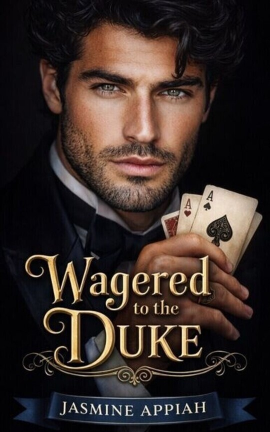

Summary
William, the Duke of Devin, has spent a lifetime building an empire of control. Wealth, power, influence—they are his to command, and his alone. But one reckless moment in a moonlit garden shatters that control forever, trapping him in a marriage of necessity to the one woman who sees past his title: Maya Prescott. Their union is a fortress against the ton’s scorn, an arrangement of cold duty. But within its walls, a different kind of peril takes root—one of unexpected intimacy and secrets that refuse to stay buried. When a brutal death rocks his inner circle, Devin becomes the prime suspect. As suspicion tightens around him and old enemies close in, he discovers the frame against him is more intricate—and more personal—than he ever imagined. With six days until Maya faces arrest for a murder neither of them committed, they must race to uncover the truth. But the killer is closer than they think. And in a world where every smile hides a lie, the most dangerous man in England is about to learn that his greatest enemy was never a rival—but the friend who knew all his secrets.
I
“Maya.”
Her name emerged low, roughened. “Do you make it a habit to laugh with other men as though they amuse you?”
She drew herself up, chin tilting. “Do you make it a habit to humiliate your wife before an entire ballroom?”
“Humiliate?” He gave a soft, incredulous laugh — the sound of a man who rarely heard that word applied to himself. “You think I stood there watching Ashcombe whisper to you and found it amusing?”
“I was civil. As any hostess must be.”
His eyes flashed. “You were radiant. Every fool in that room saw it. And he—” His jaw tightened. “He looked at you as though he’d earned the right.”
Something in her expression softened — then sparked again. “And what right have you earned, William, to dictate the manner in which I smile?”
He took a single step forward. She held her ground, though every instinct warned her to retreat.
“I am your husband,” he said, each word low and definite, as though staking a claim. “The only man in England or the whole world entitled to your smile — or your defiance.”
❦ ❦ ❦
Retiring Room, Novaton Ball, Nottinghamshire — 1883
In a room alight with ambition, Maya Prescott’s most guarded secret was a beetle. Its patient, purposeful crawl across her palm was her silent rebellion—against the rustle of silk, the whisper of titles, the assessing gaze of every marriageable girl in Nottinghamshire.
For the umpteenth time, she wished she weren’t here at all. Her bed—and her very soft pillow—felt a far better alternative to this gathering.
“A moment longer,” she murmured to it.
“How can you be so composed?” cried a debutante swathed in shell-pink brocade, performing a perfect pantomime of distress. “I shall positively shriek if he asks me to dance!”
With a deft motion, Maya shielded her six-legged confidant.
“Only Maya would be cataloging flowers at a time like this,” laughed Victoria, adjusting her corsage of silk roses.
“And ogres,” simpered Rachel, with a pointed glance at Maya. “Do not forget the ogres.”
Maya merely smiled, tucking a stray lock behind her ear. That placid, unruffled expression irritated her companions far more than any retort.
Cordelia swept past in rose-pink satin, her crinolette hissing with intent. “Make haste! His Grace arrives within the hour!”
The announcement stilled the chamber. Ebony and ostrich-feather fans froze. Eyes acquired a new, assaying glitter.
“Does he not have the most arresting eyes?” swooned a girl in blue faille.
“‘Arresting’ is insufficient,” declared another, her voice dreamy. “They are penetrating—I believe he can divine one’s very soul with a glance.”
Lady Clara Penbrook gave a delicate shiver. “I wouldn’t know. I’ve never been brave enough to look directly at him.”
“Brave?” someone snorted. “Is that what we’re calling it now?”
“You laugh,” Clara retorted, “but you weren’t at the Hartley house party last month. I accidentally bumped into him in the corridor—”
“He didn’t even apologize, I’m sure,” another cut in. “He probably looked right through you.”
“That’s just it.” Clara’s voice dropped. “He grinned. This slow, wicked grin. And then he leaned down—he’s so tall, you see—and he said, clear as day, ‘Boo.'”
A collective gasp.
“I screamed,” she admitted miserably. “Actually screamed. And ran.”
The room dissolved into laughter.
“I would have done the same,” someone offered kindly.
“You would have fainted,” another corrected.
“Same difference.”
“Never mind the Duke,” said a girl with knowing eyes, waving her fan lazily. “Has anyone seen Lord Waverly tonight? They say he’s returned to town.”
“Lord Waverly!” A dreamy sigh rippled through the group. “Those blue eyes. Like cornflowers in sunlight.”
“And that hair—like spun straw. He looks like a mischievous angel.”
“A married angel,” someone pointed out.
“Marriage has never stopped him from frolicking,” another said darkly, and the girls dissolved into knowing giggles.
“I heard,” said a girl in primrose yellow, leaning in conspiratorially, “that His Grace once wagered fifty thousand pounds in a single night at White’s. And won.”
A susurrus of reverence followed.
“Fifty thousand!” someone breathed. “My father’s entire estate isn’t worth half that.”
“Your father isn’t a duke,” came a cool voice. “And he doesn’t have the arrogance to risk it.”
A deliberate clear of the throat. The girls turned. Lady Sophia Harton stood like alabaster in lilac tulle, her silhouette sharp, her waist cinched to an unforgiving line by a swan-bill corset. Her blue eyes swept the room with polished calculation.
“They say Devin doesn’t mingle, doesn’t dance, barely speaks,” she continued. “When he looks at you, it’s as if you’re not there.”
“And yet every mother in England still throws her daughter at him,” another observed.
“Because a duke’s indifference is still a duke’s notice,” Sophia said smoothly. “Even if he snubs you to your face.”
She turned then, her gaze finding Maya with unerring precision. “A Duke must marry within his station. A pretty face signifies little without a dowry of appropriate substance.” Her eyes lingered on Maya’s curves, on the fall of her auburn-gold hair. “To hope otherwise is to wish upon the wind.”
The words hung in the air. A few nervous titters. Lowered glances.
Maya held her smile. “Then I suppose, Lady Sophia, it is fortunate I require neither title nor approval to stand upright.”
Sophia’s ebony fan snapped shut. For a moment, the silence was absolute.
Then the moment passed. Conversations flitted onward like butterflies, unable to alight on anything uncomfortable for long.
“Did you know,” someone murmured, “he was nearly married once. Years ago. An heiress—Lady Eleanor something.”
The name landed like a stone in still water.
“What happened?”
“She died.” The girl’s voice dropped. “Consumption, they say. Took her in a matter of months.”
A strange hush fell over the group. Even the most voracious gossips seemed to sense they’d wandered onto sacred ground.
“He never speaks of it,” another added quietly. “Not ever.”
“How awful,” someone breathed. “To love someone and lose them like that.”
“Who said anything about love?” Sophia’s voice cut in, but it lacked its usual edge. “He was a duke. She was an heiress. It was an arrangement, nothing more.”
But the words felt hollow, even to her. The silence that followed was thick with unspoken thoughts.
Maya’s fingers tightened around her beetle. An engagement. A death. A man who never spoke of it.
That explained something. Not everything—but something. The solitude she’d glimpsed at dawn. The way he rode alone, his attention claimed entirely by the path ahead. A man running from something, or toward something, or perhaps just trying to outpace his own ghosts.
“I don’t see what all the fuss is about,” declared a girl with a sharp chin, breaking the spell. “If His Grace tried to speak to me, I should give him the cut direct. See how he likes being ignored for once.”
A beat of silence. Then someone snickered.
“You, Alice?” a friend giggled. “You, who stood frozen like a statue at the Farthingale hunt when he rode past? You didn’t even breathe.”
“I was—I was simply surprised—”
“You whimpered,” another girl supplied gleefully. “Actually whimpered. I heard it.”
Alice’s chin lifted. “A lady does not whimper.”
“A lady also doesn’t give cut directs to dukes she’s been in love with since she was fourteen,” someone muttered.
The laughter swelled.
“His Grace, the Duke of Devin!”
The majordomo’s proclamation split the air.
The transformation was instantaneous. Fans fluttered, skirts hissed, and a tempest of bustles compressed through the doorway—a crush of eager bodies straining toward the arriving paragon.
The storm left in its wake only the echo of laughter and one solitary figure before the mirror.
Maya straightened her spine, gathering the composure others mistook for arrogance. The room, now void of chatter, felt almost sanctified in its stillness.
“At last,” she whispered, more to the quiet than to any soul, “a fragment of peace.”
But her reprieve was fleeting. For from the ballroom below rose the low symphony of music and that distinct buzz—a wave of awe marking the entrance of the man whose name honeyed every tongue.
The Duke of Devin had arrived.
❦
From the apex of the grand marble staircase, Devin surveyed the throng below with the cold clarity of a strategist observing a flawed battlefield. Louis XIV gasoliers hung like cascades of shattered diamonds from the gilded ceiling, their light falling on poult-de-soie gowns and starched cravats. Laughter—brittle and bright as champagne—rippled through the crowd.
The guests parted for him as though an unseen conductor had signalled their movement. He descended, hands clasped behind his back. His evening coat fit his shoulders without a crease.
“Your Grace,” came the first breathless greeting from a portly gentleman, “an honour to see you among us again. London has been the poorer for your absence.”
Devin inclined his head.
Sir Thomas Farnsworth’s jovial laugh faltered, uncertain whether he’d been acknowledged or dismissed.
“Ha! Modesty ill becomes you. The clubs are dreadfully dull without your company. Even White’s has taken to discussing politics.”
Devin accepted a flute of champagne from a passing footman, took a slow sip, and moved into the throng.
Nearby, a slender figure in ice-blue satin turned. Lady Clarissa Whitmore regarded him over the mother-of-pearl guard of her fan.
“Your Grace. You arrive late enough to suggest reluctance, yet early enough to be remarked upon. Quite the balancing act.”
Devin’s thumb traced the rim of his glass. Bother. He took a slow sip, eyes holding hers over the rim. Lowered the glass. Said nothing.
A faint smile crossed her lips. “And how fares your reformation? Or have you abandoned it as unprofitable?”
“If virtue yielded dividends,” he said, his stormy gaze looking past her to the crowd, “I should own the Bank of England.”
Her laugh was lyrical. “Ah, but wealth has never been your deficiency.”
Before Devin could retort, Lord Waverly appeared at his shoulder. “Still collecting broken hearts, are you, Devin? Or has your mother succeeded in frightening you into matrimony?”
Devin shifted his weight. A single brow lifted.
Waverly grinned. “Yet here you stand, at your own ball. The ladies are beside themselves. I overheard Miss Grafton declare you resemble a Greek god, only with less mercy.”
Devin snapped shut his gold half-hunter and pocketed it. “Miss Grafton should aim higher. Or lower. Either would be more interesting.”
Waverly barked a laugh.
Lord Thornton joined them, tall and dark-haired. “You might try civility for one evening. The Dowager is already on the warpath.”
Devin’s lips tugged at the corner. “I am civil.” He lifted his glass toward the crowd and drank.
“Spoken like a man cornered by admiration,” Waverly said.
Devin’s gaze swept the room—gossamer gowns, ambitious eyes, the rustle of silk and fan. He rolled one shoulder. A faint, icy smile touched his lips. “Adoration is a transaction. It expects a return I have no interest in paying.”
Laughter broke from both men.
The Dowager Duchess approached, her diamonds flashing like signals of command. “Devin, do stop affecting detachment. Lady Penbrook has brought her daughter.”
Devin’s grip on his glass tightened. His jaw shifted. “Ah yes. The one with the laugh that could wake the dead?”
Waverly snorted into his drink. Thornton’s hand struck Devin’s shoulder.
“Devin!” the Duchess hissed, snapping her fan shut. “Be polite.”
He gave a shallow bow. When he straightened, his shoulders lifted in the barest shrug.
As she swept away, Lord Thornton murmured, “You tempt Providence, old friend. One day your tongue will cost you dearly.”
Devin watched the crowd. He took another sip of champagne, slow, throat working. Probably.
Author’s Note:
Wagered to the Duke is a slow-burn, character-driven historical romance. The opening lingers deliberately in atmosphere, restraint, and social tension before the storm breaks. If you’re here for sharp dialogue, power imbalance, earned desire, and emotions that simmer long before they ignite—you’re in the right place.
II
Maya released her clasped hands. The wee creature fixed her with a blank, cautious gaze. “Good evening, little one,” she ventured, her voice a soft murmur against the silk-flocked wallpaper.
The creature took fright at her civility, making a desperate dash across the Axminster carpet. “No, no! Do not flee!” she exclaimed, stepping forward, the stiff folds of her crinolette rustling. “I mean only friendship.” Carefully, she drew it back by the tibia. Truthfully, she had no pretense of rescue—her impulse alone had guided her hand.
“My name is Maya,” she continued, with a winsome tilt of her head. “Most delighted to make your acquaintance.” The insect remained indifferent, its tiny antennae flicking in open disdain. Yet Maya persisted.
“Kind sir,” she said with mock gravity, lifting one hand as though presenting a glove at court, “might you honor me with this set?” With a dramatic flourish, she bobbed a deep curtsey, the edges of her skirts fanning about her feet like a peony in bloom.
“The honor, naturally, is mine, fairest!” she intoned in a feigned baritone, dropping into a bow that would have been dignified if not for the wobble of her knees beneath her corset.
Her own comic performance proved her undoing. A peal of laughter burst from her lips, echoing against the moulded plaster ceiling, and the beetle seized its chance, wriggling from her fingers to begin its solitary journey across the parquet with newfound resolve.
“Oh no! Come back!” Maya cried, half-laughing, half-pleading, as her skirts swept in graceful abandon, the Brussels lace at her hem snagging on a rosewood chair leg. The absurdity drew from her a helpless giggle that would have horrified any chaperone.
At last, the beetle took refuge beneath a crimson velvet footstool, beyond retrieval. Maya straightened, drawing a shallow breath, and placed a hand over her heart in mock defeat. “So ends our brief but spirited acquaintance,” she said, smiling to herself. “You, sir, are quite as fickle as any London gentleman.”
She drifted toward the great gilt pier-mirror. Her hair, uncooperative as ever, had loosed a rebellious auburn-blonde tendril from its pins. In the glass, her upturned hazel eyes held a siren’s pull, the sharp arch of her brows giving her an air of alert intelligence. Even the deep groove of her philtrum seemed more pronounced, lending her lips a sculptural fullness. For a fleeting moment, she imagined herself through another’s eyes—not as the odd sister, but as she truly was: a woman of feeling, wit, and a beauty she had never quite learned to name.
The music from the ballroom below swelled, faint yet unmistakable. Amongst the gathered guests, a hundred ambitious hearts quickened at the Duke’s every glance. Maya sighed softly, turned from the mirror, and stooped once more to look beneath the stool.
“Well then, little beetle,” she murmured, “if you have more sense than I, you will keep to the shadows. That is where peace hides best.”
❦ ❦ ❦
Devin stepped aside, letting the waltz’s rhythm wash over him like an unwelcome tide. He could still see her—Miss Clara Penbrook. A whirlwind of frantic energy, navigating the parquet as though the ballroom were a chessboard she must not lose.
He recalled her vividly from the Hartley hunt. The one who’d stumbled into him in the corridor, then stood there gaping, mouth open, frozen. He’d leaned down and said it just to see what she’d do.
Boo.
She’d screamed and ran away in terror like he were some ferocious beast.
And to make matters worse, she’d gaped at him with something close to awe tonight, in that ridiculous gown that did her freckled complexion no favors. He’d flinched, ‘figuratively,’ by the time her words began tripping over themselves during their introduction. Bother. If this was his mother’s idea of matchmaking—preening princesses fresh from the schoolroom—he’d be damned. Her fright, though…entertaining.
As he nursed his glass, a shadow fell across his path.
“Devin, my dear.” His mother’s voice carved through the noise. “Do come. There is someone quite… lovely you must meet.”
He glanced at her, catching the familiar twinkle in her eye. He looked heavenward and followed.
“Lady Sophia,” the Dowager purred, “may I present my son, the Duke of Devinscliffe.”
Before them stood Lady Sophia Harton, whose beauty was pure statement. The lilac tulle of her gown glowed under the crystal gasoliers, and her fair hair was swept into a polished chignon set with diamond stars. Her eyes were as blue as a robin’s egg—and just as vacant.
“Your Grace,” she uttered, sinking into a deep, fluid curtsy.
Devin inclined his head.
The Dowager’s approving smile was a warning—then she evaporated, leaving them marooned.
Lady Sophia, mistaking his silence for captivated attention, pressed on. “Have you noticed how very unkind the weather has been of late? Such dreadful rain—our poor garden fête was nearly washed away! Though, of course, the roses adored it.”
“Fortunate for the roses,” he said dryly.
“Oh indeed!” Her fan fluttered. “And my last charity ball—how I wish you had been there! We raised such a sum for the orphans. Though, between us, I was quite exhausted by the end. I could scarcely lift my fan!”
“A tragic sacrifice.” Some young ladies at the punch bowl threw mesmerized glances his way, he flung his face away.
Her laughter drew speculative glances. “You are terribly wicked, Your Grace. I can quite see why you are so talked of.”
Devin held her gaze. Let the silence stretch. Her smile began to fray. The barest twitch tugged at the corner of his mouth.
“Would you care to walk a little?” She laid a gloved hand on his arm. “One sees the room so much better in motion.”
They moved together, her scent of Lily of the Valley faint and floral. He said nothing. His mind wandered to balance sheets—things that obeyed logic.
Beside him, Lady Sophia prattled about a tableau vivant in which she had portrayed Venus emerging from the foam. He wondered idly if her father had contributed the foam as well as the ambition.
She turned to him expectantly. “And you, Your Grace—do you not find charity to be the most noble of pleasures?”
“It is a duty. Pleasure is irrelevant.” Gee, why had he agreed to this in the first place!
She tittered.
They paused before a gilt-framed pier glass. Their image stared back—the perfect pair: her beauty like painted Sèvres porcelain, his composure flawless as a vault. If this is the face of obligation, he thought, then I am already entombed.
“Forgive me, Lady Sophia.” He gave a shallow bow. “I fear I have duties to attend to.”
“So soon?”
“Punctuality.” That should do it.
Before she could decide whether that was gallant or cruel, he was gone.
From the refreshment table, Lord Waverly raised his glass. “Eight minutes, by my count.”
“An eternity.” Devin took the offered drink.
“You’re impossible.”
Devin’s gaze swept the ballroom. He felt again that fundamental detachment. Society continued its glittering masquerade—beautiful and empty—while somewhere beyond the laughter, the world remained capable, perhaps, of something authentic.
But not tonight. Tonight he would execute his part.
❦ ❦ ❦
Maya’s eyes danced with quiet astonishment as she took in the hallway. It extended before her, walls draped in crimson silk damask. Mahogany wainscoting rose beneath portraits of forgotten viscounts and powdered dowagers, their solemn gazes following her. Brass gas-sconces cast a flickering light that warmed French-polished surfaces, glinting upon a trumeau mirror and Sèvres vases.
The air held the peculiar stillness of great houses—the silence of wealth at rest, scented with beeswax, dried potpourri, and the faint decay of old paper. The frantic beat of the waltz had faded, replaced by a peaceful quiet.
Maya drew in a slow breath, lulled by the tranquillity. It was a dream of perfect, silent order—a stark contrast to the living chaos of the ballroom. Her gloved fingers brushed the smooth curve of a Carrara marble column; for a moment she fancied it might breathe.
Her gaze alighted upon a painting near the end of the hall: a gentleman rendered with such mastery his eyes seemed almost alive. There was an arresting solemnity in his bearing—one hand upon a Borzoi, the other resting lightly on the hilt of a rapier. The artistry was grand, yet something in the set of his jaw stirred her curiosity. It was not the idealized heroism, but a subtle tension in the brow, a shadow behind the eyes that suggested a man acquainted with contradiction. She lingered, her hand tracing the heavy rococo gilt frame as though she might divine his temperament through the brushstrokes.
“What must it have been,” she murmured, “to live in a world where every expression was captured and immortalised, whether one wished it or not?”
Her words were swallowed by the silence. Somewhere, a bracket clock struck the quarter-hour, its mellow chime lingering. The sound drew her forward, each step light, her terracotta silk skirts hissing across the Axminster runner.
There was a sweetness in her solitude. The relentless strain of watchful eyes—Sophia’s cruel comparisons, the matrons’ assessing glances—had dissolved. Here, she was not an “impoverished viscount’s sister,” but simply a consciousness adrift in beauty. For the first time in an age, she felt wholly herself: unguarded, effortless, at peace.
❦ ❦ ❦
Devin watched the amber liquid swirl in his glass, his thumb tracing the sharp, diamond-cut edges of the crystal. If fortune had favored him, he would be in Bath with Sapphire.
Ah, Sapphire. Even her name ignited something wild beneath his ribs. The memory of their shared ecstasy made this stilted pomp feel like a parody.
Across the room, the Dowager Duchess stood with Lady Jersey, their heads bent together in that particular way of women trading observations like currency.
“Lady Penbrook’s girl has perspired through her gloves,” Lady Jersey murmured behind her fan. “And the Ludwig chit has been standing near the lemonade for three dances now. If she drinks any more, she’ll float away.”
The Dowager’s lips twitched. “You miss nothing, Sally.”
“I miss nothing that matters.” Lady Jersey’s fan flicked toward the dance floor—toward Sophia, standing alone at the edge of the waltz, her smile fixed, her gloved fingers tapping against her fan. “Unlike your son, who appears to miss everything that is placed directly before him.”
The Dowager’s gaze followed. Sophia’s smile was beginning to crack at the edges. Other mothers were noticing. Other daughters were whispering.
Her mouth tightened. “If you will excuse me, Sally. I have a son who requires… reminding.”
Lady Jersey’s smile was feline. “Do give him my regards. And my sympathy.”
The Dowager moved, reaching his elbow without a sound.
“Devin.” Her voice was low and edged. “Why, pray, did you not offer Lady Sophia a dance? The poor girl is near wilted from expectation.”
He did not look at her, his stormy gaze fixed on the dancers as he took a slow sip of his Scotch.
“I have no wish to hasten her disappointment, Mother.”
The Dowager gave a delicate, audible sniff. “You might at least appear interested. One would think gallantry a dying art in this family.”
“I assure you,” he replied evenly, his thumb continuing its idle circle around the rim of his glass, “mine is merely dormant.”
“Dormant too long,” she countered. “Your reputation may amuse the more scandalous corners of London, but it will not secure the line. And a Duke without an heir is merely a landowner with an expensive title.”
The faintest hint of amusement touched his mouth. “Ah but my reputation, Mother, ensures the ballroom remains entertained.”
The Dowager’s sigh was soft and resigned. “Truly incorrigible.”
She turned away, muttering a scathing remark about wasted charm, and Devin let her words dissolve into the murmur of the ballroom.
His gaze drifted to the arched windows and the somnolent Nottinghamshire hills beyond—ancient, half-forgotten. Here, rumour said, the Green Man still roamed. An unlikely refuge, but necessity had proved the stronger counsellor.
London was no longer tolerable. Scandal trailed him; wit had ceased to suffice as penance, and so he had retreated north. His father’s infernal will loomed: marry before thirty-four, or surrender everything to a cousin whose mediocrity was exceeded only by his greed.
The notion might have amused him, had it not been so inconveniently real. He, the Duke of Devinscliffe, reduced to a fugitive in his own country, condemned to seek a wife among the unspoiled innocents of Nottinghamshire.
A rake in exile. Almost poetic.
❦ ❦ ❦
A Most Scandalous Turn Of Events
Maya allowed herself one last, curious look at the portrait. The elderly woman’s painted gaze seemed to appraise her with quiet authority, as though weighing whether she belonged among the living presence of the house or merely its passing curiosities. She felt she had already lingered too long.
She turned, intending to retrace her steps, when a peculiar dissonance drew her attention sideways.
Tucked into the far-left recess of the corridor—almost shyly—hung a painting that defied the careful symmetry of the others. It depicted nothing grand: merely a porcelain vase suspended from a brass peg, its deceptive realism making her halt.
On impulse, she reached out.
Her fingers touched the cool metal of the peg.
The illusion did not yield.
A quiet laugh escaped her, breathless and delighted. The artistry was flawless, yet the peg cast a real shadow, sharp against the panelled wall. It was clever—too clever for display alone. A private indulgence.
The sharp clatter of iron-shod boots broke the moment.
Maya stiffened, pressing herself into the shadows of a mahogany cabinet.
III
Two Household Guards rounded the arched opening, their scarlet tunics searingly bright against the pale stone. They moved with metronomic discipline, chin-straps tight, eyes fixed straight ahead, as though she were no more than part of the architecture. Their presence was a cold reminder: this was not just a residence, but a stronghold.
The corridor vibrated with the percussion of their iron-shod heels until the last echo faded. Only then did the air seem to exhale, leaving behind the scent of leather and gun-oil.
Alone, the thrill returned—soft, insistent.
“Just a little more,” she murmured, adjusting her skirt.
As she proceeded, the floor beneath her slippers became parquet of deep mahogany, polished to a soft, satin sheen.
The walls narrowed, stripped of ostentatious gold leaf, now clad in wainscoting or papered in muted, intricate patterns—somber greens and deep indigos.
Here, the tapestries were older, depicting pastoral scenes whose colors had mellowed with time.
The air changed.
The public scent of beeswax and coal smoke faded, replaced by the dry sweetness of old vellum and potpourri—rose petals and lavender pressed in seasons long past. It was warmer here, more enclosed. With every step Maya became acutely aware she had passed beyond the orbit of guests.
The quiet was not an absence, but a presence. In this tucked-away artery, the grand narrative of lineage dissolved into something more fragile. The walls were lined not with grand oils, but with modest frames—charcoal sketches that caught fleeting, unguarded expressions. There was no vanity in these lines, only the raw honesty of a hand trying to capture a soul before it shifted.
Audria’s face rose unbidden—the pinched set of her mouth should she discover Maya’s absence. The thought sent a cold prickle down her spine. She ought to turn back.
And yet—the promise of the closed door at the end of the passage pulled at her.
At the far end stood a set of arched double doors, dark and imposing in the dim light. The mahogany was deep-toned, the brass handles dulled by frequent touch. Not locked. Merely closed.
Maya hesitated, a forbidden thrill tightening her chest.
“Only a moment,” she whispered.
Her gloved fingers closed around the handle.
The door gave way with a soft, conspiratorial creak.
She stepped inside and stood transfixed. The room was a long, narrow sanctuary of industry. Floor-to-ceiling cabinets of oak rose against the walls, their drawers inscribed in precise Copperplate. Between them, sheets of sketches were pinned haphazardly: river-valleys, figures mid-motion, architectural elevations. Smudged edges and delicate erasures bore witness to a mind that returned endlessly to its designs. Among the drawings, the iron skeletons of modern industry caught her eye—cyanotypes of railway viaducts peeking from a half-open drawer.
The faint, dusty scent of vellum and dry graphite lingered. Every surface spoke of meticulous care; every line of ink suggested a mind both disciplined and restless.
She drifted beneath a shallow arch into the library. Shelves curved with the turret walls, packed with books softened by handling. Treatises on steelworks shared space with poetry.
A single fringed lamp burned on a desk near the window, spilling gold across casually stacked papers. One book lay open, face-down, a small model bridge perched nearby, half-completed. The air smelled of wood, ink, and the warm tang of presence.
Before she could stop herself, her fingertip traced the delicate arch of the model bridge. It was still warm from the lamplight.
Maya whispered, “Oh… he leaves pieces of himself everywhere.”
“Ahem.”
A voice, low and dangerously calm, came from behind.
Maya froze. Her fingers dug into the heavy fabric of her skirts, a frantic panic erupting beneath her ribs. She forced herself to turn.
The Duke of Devinscliffe filled the doorway—not just with his height, which made her feel thrillingly small, but with a presence that drank the air from the room. Broad shoulders strained the impeccable line of his evening coat, his hands clasped behind his back. His storm-grey eyes, half-lidded, held hers with a calm that felt merciless.
“Well?”
The single word rolled through the silence like distant thunder.
“Your Grace.” Her voice was a breathless scrape. She sank into a curtsy, the motion hurried, inelegant. She felt the dizzying imbalance of her own body and fought not to topple. “I pray forgive me. I was only… admiring.”
Admiring. It hung in the air.
His eyes began a slow, bold appraisal. They travelled from the rebellious tendrils escaping her pins, down the long line of her throat, to the frantic pulse beating there. They lingered on the full, parted shape of her lips, then swept lower.
“Indeed.” His voice was cool, flat.
The silence thickened, seeping into her lungs. She felt the magnitude of her audacity.
He advanced, one dangerous step. The polished parquet did not creak; it conceded to him.
“Admiring,” he repeated, his voice dropping into a lower, vibrant register. It resonated in the cradle of her ribs. “Or trespassing?”
Her chin lifted. A spark of defiance flared. “Surely, Your Grace, you cannot blame a guest for curiosity when a door stands open?”
A flicker passed through those stormy depths. “Most would turn back,” he murmured. His gaze dropped to her mouth. “You chose otherwise.”
One hand rose to her throat, her fingertips finding the frantic rhythm beneath her skin. “Curiosity is a difficult master to govern.”
“And recklessness is a perilous servant,” he countered.
“Then I must thank fortune you found me before my service grew… dutiful.”
Something shifted in his face. A minute tension around that carved mouth. Was that amusement? It vanished.
“Miss—?” he prompted.
“Prescott,” she breathed. “Maya Prescott.”
“Prescott.” He let the name linger. The two syllables felt like a verdict. “How very… familiar.”
“You know my brother?” The question was out before she could stop it.
A shadow passed behind his eyes. “We’ve crossed paths,” he said, his voice devoid of warmth. “In another life. In a different sort of… room.” He paused. “He possessed a spirited disposition. A habit,” he added, his gaze sharpening on her, “that often proves costly.”
The words were a trapdoor. Before she could plummet, he turned his head slightly, dismissing the subject. The whiplash left her dizzy.
“You speak plainly,” he observed, taking another step. He was close enough now that she could see the individual threads of silver in his grey irises, smell the clean, aristocratic scent of him—bay rum, starched linen, and something darker.
“I find it less troublesome than pretending otherwise.”
His lips quirked at the corner—no smile, merely a signal.
Then he moved past her. His body displaced the air, a wave of heat and solid muscle. She stopped breathing. He reached up, his arm sweeping the space above her head. She caught the scent of sandalwood.
“You were attempting to reach this, I presume?”
He plucked a leather-bound volume from the shelf. Birds of Europe. Her excuse, made material.
Her cheeks flamed.
He turned, holding the book between them. “James Philip Anderson,” he said, his voice a low vibration. “Admired for its artistry. Condemned for its author.”
“Condemned?” she whispered.
“Talent does not absolve cruelty.” He extended the book. “His beauty was built on the suffering of others.”
Their fingers brushed as she took it. A spark jolted up her arm. She clutched the book to her chest. “Then genius,” she murmured, “is sometimes a thief of conscience.”
His gaze held hers. The storm had stilled, revealing a deep, unsettling intensity. “You read, Miss Prescott?”
“Voraciously, Your Grace.”
“Dangerous,” he breathed, his eyes dropping to the pulse hammering at her throat.
A reckless courage surged. “Only when the reader is curious enough to wander into forbidden rooms.”
For a second, the air between them dissolved. The ghost of a smile touched his mouth. “Then it seems,” he said, his voice so quiet it was almost a thought, “the danger is mutual.”
The world shrank to the space between them.
He gave a short, definitive nod. “I trust you will find your way back.”
“Yes, Your Grace.” She curtsied again.
As she turned to leave, his voice stopped her.
“Miss Prescott.”
She glanced back. He had not moved.
“Do take care,” he said, the words layered, “not to lose your way again.”
IV
Her lips curved, the wit returning to her eyes like sunlight through cloud. “I am afraid, Your Grace,” she said, her voice light and clear, “that I already have.”
His expression did not change. But something in the atmosphere did—a sudden, decisive compression. Without a word, he closed the distance between them in two strides. He offered his arm.
“Allow me.” It was not a suggestion.
Her breath tangled in her lungs. She looked from his face to the proffered arm, sheathed in superfine wool. Every sensible instinct screamed caution. Every thrilling, newly awakened part of her leaned forward.
With a grace that felt both innate and inevitable, she placed her fingertips on his sleeve. The muscle beneath was solid as granite. The heat of him seeped through the layers of cloth and glove, a brand.
“To ensure,” he said, as he guided her firmly toward the door, his body a wall between her and the sanctuary she was leaving behind, “that your curiosity finds a more… suitable outlet.”
* * *
They moved through the corridor, their footsteps absorbed by the thick Persian runners. The distant strains of the ballroom were a fading dream.
“You seem remarkably composed,” he observed, his voice a low vibration that seemed to bypass her ears and settle directly in her marrow. “For one who was, until recently, a trespasser.”
Maya’s chin lifted in a gesture of pure elegance. “I find composure improves most situations, Your Grace. Unlike panic.”
“Practical.”
“It has its uses.”
A faint line appeared beside his mouth. “You are quick with your words, Miss Prescott.”
“When silence would be a lie, yes.”
He glanced at her, his storm-grey eyes giving nothing away. “And is this silence a lie?”
She met his gaze, her own frank and unafraid. “No. It is merely… waiting.”
He absorbed this. His expression did not change, but the quality of his attention did. It was no longer the scrutiny of a duke assessing an intruder, but of a man regarding a novel phenomenon.
They passed beneath an archway where his ancestors glared from their frames. Maya’s gaze swept over them, a faint smile touching her lips.
“Your family, Your Grace?”
“In every particular,” he replied.
“They look… formidable.”
“They were.”
Her smile deepened, a genuine expression that illuminated her face. “And do you find it a burdensome inheritance?”
The question was impertinent. It should have annoyed him. He considered her, the intelligence bright in her eyes. A soft breath escaped him—a release rather than a laugh.
“All inheritances are burdens,” he said, the words more than he usually offered. “The trick is in the carrying.”
“And you?” he asked, the question softer. “What illusions do you cultivate?”
She tilted her head, auburn-blonde curls feathering her cheek. “That I am entirely harmless, Your Grace.”
He studied her—the foxy tilt of her brows, the serene bow of her lips. “I think,” he said, the words deliberate, “that may be the most dangerous illusion of all.”
He guided her toward an archway woven with ivy, where moonlight pooled on the flagstones. “The gardens.”
It was not an invitation.
Maya paused, her gloved hand resting lightly on the cold stone balustrade. To follow him was to step into his orbit. He moved with the stillness of a hunter, and she did not retreat.
“If they are as truthful as your library,” she said, her voice firm, “then I should like to see them.”
He offered his arm. The gesture was pure courtesy. Yet when her fingers settled on the wool, a current, faint and undeniable, passed between them.
The garden was a revelation. Moonlight silvered the world, transforming rose bushes into sculptures of captured light and the fountain into a basin of liquid mercury. The air was cool and sweet with the scent of damp earth and night-blooming jasmine. A nightingale offered a solitary, crystalline note.
He was quiet as they walked, but his silence was no longer imposing. It was watchful. He found himself attuned to her—to the sweep of her skirts, the rise and fall of her breathing.
“You have an uncommon composure,” he said at last, the words drifting on the still air. “Most would be designing a swoon by now.”
“Then I must be a grave disappointment,” she replied, her tone wry. “I am hopeless at theatre.”
“Hopeless,” he repeated, and this time, the trace by his mouth deepened into the barest curve. “I doubt that.”
They reached the fountain. Its gentle plash was the only sound. Maya released his arm and stepped closer to the water, her reflection rippling beside his in the dark surface.
“Novaton is the most beautiful place I have ever seen,” she said, her voice full of quiet wonder. “It must also be the loneliest.”
The observation, so softly spoken, shifted something fundamental within him. He stared at her profile and felt the vast, empty chambers inside him resonate.
“Loneliness is a privilege of rank,” he said, his voice tighter than he wished.
“Or its price,” she countered gently, turning to face him. Her eyes were luminous, seeing too much. “You stand apart from everyone. Even in a crowded room, you are alone in it.”
He should have shut her out. Should have erected the wall of icy courtesy. But he was tired of walls.
“Perhaps,” he said, the word a raw concession, “I have grown accustomed to the view.”
“Or perhaps,” she whispered, taking a half-step closer, “you haven’t met anyone you wished to share it with.”
Her words stole his breath. The moment between them deepened, pooling into silence. The air softened, cradling a possibility so near he dared not blink.
Slowly, giving her every chance to retreat, he raised his hand. The difference in their height made the gesture one of unmistakable gentleness. His fingers hovered ever so slightly before they brushed a stray curl from her cheek. The touch was a question.
Her eyes drifted shut, and a sigh escaped her.
He tilted her face up, his thumb stroking the incredible softness of her cheek. His stormy gaze searched hers.
He bent his head, a great oak yielding to a breeze. The world stilled.
When his lips met hers, it was a discovery.
His mouth was warm and firm, yet infinitely gentle as it moved over hers. It was a sigh given form, a silent conversation more truthful than any they had spoken. He kissed her as if she were something precious and fragile.
Maya melted against him. Her hands came up to rest lightly on his chest. She kissed him back with a shy, earnest passion that unravelled the last of his defences. It was innocence meeting experience, and in that meeting, both were transformed.
There was only this: the soft warmth of her mouth, the hammering of his heart against her palms, the rightness of her in his arms.
When he finally drew back, it was with a reluctance that was a physical ache. He rested his forehead against hers, their breath mingling in ragged, shared gasps.
“Y-Your Grace…” she whispered, the title a breathless prayer.
He closed his eyes. “Forgive me,” he murmured, the words gravel-rough with feeling.
“WILLIAM HURGH ARTHUR HENRY FITZALAN CAVENDISH! In the name of Wonder! Scandal! And Folly! Whatever has taken hold of you?!”
V
The voice struck like ice water.
They broke apart. The Dowager Duchess emerged from the shadows, her jet-beaded fan rigid in her grasp.
Behind her, figures stirred in the gloom.
Devin swore softly.
He drew Maya against him, his arm a barricade. “It’s all right, little one,” he murmured against her temple.
The Dowager’s fan snapped shut. “All right?” The words frosted the air. “Heavens above, Devin.”
Murmurs swelled; a stifled gasp cut the night. Maya, trembling and scarlet, lowered her face against his coat.
Devin turned to his mother, his composure an act of defiance. “Mother, you are mistaken.”
“Am I? Then enlighten me. What inference should I draw upon discovering you indulging in such… conduct with an unknown girl?”
The Duke said nothing.
“Nothing to see here,” the Dowager announced, her tone brittle. “The evening is at an end. We retire at once.”
The onlookers retreated. Devin did not release Maya until the last whisper faded.
When he did, she drew a jagged breath and curtsied. “Your Grace, I—”
“Enough. You’ve endured sufficient spectacle.”
“And who,” the Dowager demanded, her gaze a scalpel, “might you be?”
Devin’s hand settled at the small of Maya’s back. “Miss Maya Prescott.”
The Dowager froze. “Prescott?” Her fan struck the gravel. “You cannot mean—”
“Viscount Stormount’s sister,” Devin said, his voice flat granite.
The silence thickened.
“This is unthinkable,” the Dowager whispered, the blood draining from her cheeks. “The sister of that man—”
“Enough.”
Maya stood pale and motionless.
The Dowager drew herself up, spine iron. “Have you lost your reason? Must you invite disgrace with her?”
Devin nodded once. “Mother. I am fully aware of the impropriety. The fault is mine.”
She gave a short, incredulous laugh.
“Nevertheless,” he continued, calm as deep water, “I shall see Miss Prescott home.”
“Scandal, William. That is the word you seek.”
He did not answer. Turning to Maya, he offered his arm. “Miss Prescott, permit me my escort.”
She hesitated only a moment before accepting. “You are most kind, Your Grace.”
“Kindness,” the Dowager scoffed. “This is damage control.”
Devin did not look back. He guided Maya toward the waiting Brougham, his hand a steady pressure at her back. Behind them, the Dowager’s voice followed, sharp as shattered crystal:
“Explanations will be required in the morning.”
The Duke did not turn.
Maya’s steps stumbled slightly as they reached the carriage. He paused.
“You are shaken,” he said softly.
The air seized in her throat. “Shaken, yes,” she admitted, her gaze lifting to meet his. “But perhaps not in the way you imagine.”
His storm-grey eyes ignited. Without another word, he handed her into the carriage and followed, the door closing with a decisive click.
The creak of wheels and clatter of hooves filled the tense quiet.
Maya sat rigid, hands clasped tightly. At length, she drew a thin breath. “Had you not been so… insistent in your escort, we should not have found ourselves in this spectacle.”
Devin felt a rare sting of humiliation tighten his features. “I had not imagined my… assistance… would inspire such condemnation.”
“Oh, but Your Grace, I assure you it was,” Maya retorted, the words striking with a duelist’s edge.
A tenuous silence settled.
Devin allowed the barest of smiles. “Touché.”
Not another word passed between them. The Duke’s profile was half-lit by passing lamps, his countenance hard yet contemplative. Maya sat composed yet uneasy, unnerved by his contained, coiled stillness.
At last, he spoke.
“Your brother,” he began quietly, each syllable freighted, “is a man of extravagant impulses.”
Maya glanced up. “Yes… I suppose he is. Though perhaps a little misdirected.”
Devin’s lips curved slightly, but the smile did not reach his eyes. “Misdirected. A polite expression for ruin, Miss Prescott.”
She drew a quick, shallow breath. “You speak as though—” She trailed off.
Devin turned his head slowly, the faint light tracing the severe angle of his jaw. “Ah,” he murmured, “but it does concern you. Most intimately.”
A staccato rhythm took root in Maya’s chest. His quiet certainty made her feel perilously seen.
“If you mean to suggest my brother has offended you, I cannot see how that concerns me.”
“Do you not?” he asked softly, leaning forward. “You were very young—eight years old, if memory serves. Perhaps your recollection of certain… arrangements is incomplete.”
Her heart gave a single, heavy thud. “Arrangements?”
Devin’s gaze lingered on her lips. “Your brother and I once sat across a table. The stakes were high. He fancied himself a man of daring, but lacked the skill.” He paused. “When fortune turned, he found himself bereft of means. Desperation breeds… creativity.”
“I do not—surely you cannot mean—”
“I mean,” he interrupted, his voice gentle and ruinous, “that in the absence of coin or land, he placed something far more precious upon the table. Something he had no right to offer.”
Her lips parted. Devin’s gaze was mercilessly sure.
“I will not insult you by stating what that was. Suffice it to say, Miss Prescott, that I left his house that night far wealthier than I arrived—though not in the manner I had anticipated.”
Maya’s spine stiffened.
“You cannot mean Spencer—” she managed, the words strangled.
“Would have offered his sister as collateral?” Devin supplied, the words a closing tomb. “Yes, Miss Prescott. He would, and he did.”
The clatter of the carriage wheels seemed to halt. She turned away, a shuddering hand pressed against her breast.
When she spoke again, her voice was fractured. “And you… accepted?”
Devin’s expression darkened. “No,” he said. “Not then.”
“And now?” she whispered.
The Duke’s eyes met hers. The mask slipped. The predator surfaced.
“Now,” he murmured, velveted with authority, “I find myself inclined to collect.”
Her breath snagged. The quiet dominance awakened something that frightened her as much as it fascinated.
Devin leaned back, his gaze inscrutable. “You needn’t trouble yourself. I am a man of honour. You will come to no harm beneath my roof.”
Maya sat motionless, the enormity settling over her. Spencer’s folly had ensnared her. Her life was no longer wholly her own.
As the carriage wheels turned toward Prescott Manor, Devin reclined in silence, a single gloved finger tapping once, decisively, against his knee.
* * *
The sight that greeted him stirred a cold flicker of memory. The once-proud Georgian manor stood under the moonlight like a ghost. Marble steps were webbed with cracks, the fountain dry, the gardens wild with neglect. Devin’s expression betrayed nothing.
The door swung open before he could knock. Lady Audria Prescott swept into view.
“Maya! By all that’s holy, where have you been?” she cried, her emerald eyes wide with theatrical distress. “You vanished—the entire ballroom was abuzz! They said—oh!” Her words broke off as she noticed the man beside Maya. “Your Grace!”
Her curtsy was immediate and artful.
Devin tipped his head once. “Lady Audria.”
Audria recovered with practiced speed. “Well! Nottinghamshire will burst with envy. A common gentleman provides an escort; a Duke provides a legend. His Grace of Devinscliffe himself, delivering my dear sister-in-law to our very door—the gossip will be absolutely delicious!”
Before Maya could interject, Spencer appeared in the doorway, looking as though he’d rather face a firing squad. “Devin,” he managed, his voice strained.
“Spencer.”
The exchange was brief and cold.
Audria fluttered between them. “Now, now! No glowering. We shall have no thunderclouds in the foyer.” She tapped Spencer’s arm with her fan. “I daresay, His Grace has done us all a singular service tonight—though I suspect the ton will spend the next fortnight deciding precisely what sort of service it was.”
“Indeed,” Devin said.
Maya felt the heat rise to her cheeks.
Audria clapped her hands together. “But come—let us have some wine! We must toast to your safe return, Maya—and to this most delightful, most… unexpected acquaintance!” She beamed at Devin, already mentally measuring Maya for a wedding veil.
“Later,” Spencer muttered, his jaw tight. “His Grace and I have business to discuss. In the study.”
Devin’s brow lifted almost imperceptibly. “Just so.”
When the gentlemen withdrew, Audria leaned in at once, a cloud of crushed violets enveloping Maya.
“My darling girl,” she breathed, eyes sparkling, “if half the tales from Novaton are true, then you’ve caught not merely a duke—but the Duke. The one every mother from Mayfair to Manchester has been chasing for years! Oh, you lucky, wicked creature!”
“Audria!” Maya hissed, her voice strangled. “You misunderstand entirely—it was a matter of misplaced directions and nothing more!”
“Do I? Misunderstand?” Audria’s laugh rang sharp. “My dear, I was at the ball. I saw the way he looked at you. A man does not gaze with such possessive, glacial intensity unless he means to make a point of it. And believe me, Maya, the point was exceptionally sharp.”
Maya buried her face in her hands.
Moments later, the drawing-room door groaned open. The two men re-emerged—Spencer pale and shaken, Devin utterly composed.
“Lady Audria. Miss Prescott.” A fractional dip of the chin. “Forgive the intrusion. I shall take my leave.”
Maya walked him to the threshold, murmuring tangled apologies. As she turned to retreat, his hand caught hers—a touch feather-light yet immovable.
“Tsk, tsk,” he murmured. “Such haste to be rid of your betrothed, Miss Prescott.”
The words struck her like lightning. She froze, heart a wild, trapped thing, as he bowed over her hand before disappearing into the ink-black night.
VI
Devin had not slept.
The hour was indecent for a social call—half past eleven. He stood on Prescott Manor’s front step, his jaw set so tightly it ached, telling himself he was here because the betrothal required it. Because a man did not claim a woman and then vanish.
He told himself this. He did not believe it.
The butler—Silas—murmured that Miss Prescott was receiving visitors. Plural.
Devin handed over his hat and gloves, his movements impatient, and followed the man up the stairs.
The drawing-room door stood ajar. Silas moved to announce him. Devin raised a hand, a silent command that brooked no argument. The butler stilled.
Through the gap, Devin watched Maya laugh.
She sat in the window seat, her profile gilded by sunlight. Her gown was cream—the colour of milk still warm from the cow. Flemish lace draped her collarbone, and a single cameo rose and fell with each breath.
A man leaned toward her over an open folio. Young. Fair. His sleeve grazed hers as he turned a page.
“—and this variety, the Rosa mundi, is said to have been named for Fair Rosamund. Henry II’s mistress.” His voice was warm. “He kept her in a bower at Woodstock. The legend claims she could only be found by following a silken thread through the labyrinth.
Maya tilted her head. Her mouth curved softly. “And did the queen follow the thread?”
“She did.” The man smiled. “It ended badly. For Rosamund, at least. The roses survived.”
Maya laughed. The sound grated against Devin. Her hand came up to tuck a loose strand of hair behind her ear. The man watched her fingers. Then, gently, he reached out and caught another stray curl that had escaped its comb. He tucked it behind her ear for her.
Maya did not pull away.
Something hot and savage clawed up Devin’s throat. His hands curled into fists at his sides. He wanted to cross the room and drag that man away from her, to demand why she allowed a stranger’s touch when she looked at him with such guarded caution. He refused to name the feeling as jealousy. To him, it felt like an insult to his territory.
He stepped into the doorway.
Audria saw him first. Her face transformed from placid contentment to radiant calculation in the span of a heartbeat. “Your Grace! What a singular honour.”
The young man turned. His pleasant expression shifted through confusion, recognition, unease. He rose from his chair.
“Mr. Ashworth,” Audria said, “you know His Grace, of course—”
“We haven’t been introduced.” The man bowed. “Henry Ashworth. An old friend of Spencer’s. Miss Prescott and I were just discussing the merits of the apothecary’s rose.”
Devin looked at Maya. She had not risen. Her hands rested on the folio, still and composed—but her index finger trembled once before she pressed it flat. Her hazel eyes met his, and for a second, he saw a flash of defiance that made his pulse jump.
“Were you,” Devin rasped.
“Your Grace is familiar with the variety?” Ashworth’s voice was pleasant
“I am familiar with the rose, if not its merits.” Devin’s gaze held Maya’s face. “I understand it is frequently given as a remedy for ailments of the heart.”
Ashworth laughed, uncertain. “Yes, the French distill it into lozenges. Though I confess I’ve never tested its efficacy.”
“No,” Devin said. “I imagine you have not.”
A suffocating stillness descended upon the room, broken only by the ticking of the mantel clock.
Ashworth’s smile faltered. He looked at Maya, but she remained locked in a silent war of stares with Devin.
“I—my mother will be expecting me for luncheon.” Ashworth gathered his hat, his gloves. “Miss Prescott, thank you for the pleasure of your company. Your Grace.”
Audria swept him out on a tide of pleasantries.
The door closed behind them.
The click of the latch sounded like a gavel.
Devin crossed the room and sat in the armchair opposite Maya, sprawling his long legs with a casual arrogance. He picked up the teacup she had abandoned, turned it once in his hand, and set it down.
“You two seemed to have much to discuss,” he drawled.
Maya turned a page. A faint heat rose in her cheeks. “Henry is an old friend.”
“Henry.”
“He brings botanical engravings. It is a harmless habit.”
Devin looked at the folio—a crimson rose, its stem lined with thorns. “Thorns,” he remarked. “A fit emblem for you, I suspect.”
Maya tucked the hair behind her ear herself, her movements sharp. “Henry is a delightful companion.”
“A delightful companion,” Devin repeated, his eyes narrowing.
“He is kind. Intelligent. He will make some woman very happy one day.”
Maya smoothed the silk of her skirt, her fingers grazing her thigh. She saw Devin lean forward, his shadow looming over her. “And yet,” he said softly, “you are betrothed to me.”
“Yes. I am.”
“Forgive me,” Devin said, hooking a finger in his cravat to loosen the knot. “But I find myself uncertain of the distinction you are drawing.”
Maya closed the folio with a decisive thud. “Henry is the sort of man a woman marries when she has a choice. You are the sort of man a woman marries when she has not.”
Devin’s thumb moved once along the gilded edge of the teacup. He looked at her mouth, his grey eyes growing smoky. “And which sort of woman are you, Miss Prescott?”
He stood and stepped closer, narrowing the distance until she had to tilt her head back to maintain his gaze. “Why did you come here today?” she demanded, rising. Her gaze raked over his chest, noting the way the wool strained over his shoulders.
“I don’t know,” he admitted.
Maya blinked. She looked offended that he’d even admitted to such a lack of control. “You don’t know?”
“I don’t.”
“Your gaze is wandering to my bosom, Your Grace.”
The bastard didn’t even have the decency to flinch, with something that seemed like reluctance, he dragged his eyes back to her face. Maya couldn’t believe her eyes.
“Yes,” he admitted with a boyish grin. “It was.”
“Come here! If you think you can—“
“Hush, little one.” Devin’s index finger came to her lips, the protests died.
“I’ve seen you regard me over that folio like I was some insect you wished to dissect,” he murmured. “Why?”
His finger still rested on her lips. He should take it away. He knew he should take it away.
He did no such thing.
The silence stretched. Her lips were so soft. He watched her eyes, waiting for her to pull back, to bite, to do something that would break the spell.
She did nothing.
He dragged his hand away.
Maya’s tongue darted out to lick her lips. His gaze followed the movement.
“I—I don’t know,” she breathed.
“Very interesting,” he murmured. He reached out. His finger touched her chin—the barest pressure, there and gone.
She did not move. Her eyes, hazel and wide, held his.
He did not look away. He let the silence stretch, watching her watch him, watching her decide whether to retreat or hold her ground.
She held.
Something flickered across his face.
Then he picked up his gloves and pulled the leather on, smoothing the fit over each knuckle unhurriedly.
“What do you mean by that?” she asked, her voice finally finding its footing.
“I’m afraid I have no idea,” Devin said blithely. He turned for the door.
Maya rose, her cream skirts pooling around her. “Henry Ashworth has known me for twelve years,” she called out. “He has never once touched my hair.”
Devin stilled.
“He did so today,” she said, “because he saw you in the doorway. He was marking territory he knew he had already lost.”
Is that right? Devin felt something suspiciously like a smile tugging at his mouth. He schooled his face to a neutral line, but when he spoke, his voice was suddenly gruff. “I shall endeavour to be more… circumspect.”
Maya raised an eyebrow, a spark of wicked delight in her eyes. “You may wish to be more careful with your face, Your Grace. It is far more expressive than you imagine.”
“Is it?”
“It is.” She gave a dainty shrug.
He left without looking back.
Through the hallway window, Maya saw his profile—the line of his jaw had softened. The ghost of a smile remained.
Once he was gone, she touched the strand of hair he had almost claimed. She did not know what she was afraid of—only that the game had finally become dangerous.
* * *
Morning light filtered through the lace curtains of the St. John’s Wood cottage, falling in patterned gold across the Turkish rug. A cup of chocolate sat at Sapphire’s elbow, a thin skin forming across its surface, forgotten.
The newspaper lay open on her lap. One line had been circled in pencil—a jagged, heavy mark that had nearly torn through the page. “The Duke of Devinscliffe has been seen squiring a Miss Prescott about Nottinghamshire. The country beauty has clearly made an impression.”
Sapphire’s thumb moved across the name. Once. Twice. Pressing. She stood, the silk of her wrapper heavy against her curves, and moved to the floor-length gilt mirror. With a slow, sensual motion, she shook out her hair. It fell in a dark, unruly tide—massive, raven-black, and smelling of the expensive oils Devin liked to bury his face in when the world grew too loud for him.
Her gaze traveled down to the sapphire resting in the hollow of her throat. It was the deep, bruised blue of a storm at sea, suspended on a chain so fine it looked like the stone floated against her skin. She adjusted it, her fingers lingering where Devin’s had shakingly rested some nights ago. She remembered the way his weight had felt, the desperate catch in his breath when he whispered that she was the only place he could truly disappear.
She studied her reflection with satisfaction—the generous plump of her mouth, the sultry tilt of her eyes, and the defiant, upturned slope of her nose. She turned slightly, letting the silk cling to the swell of her hips.
A country beauty in Nottinghamshire was a seasonal distraction. But here, in the amber glow of the mirror, was the woman who knew the exact frequency of a Duke’s surrender.
She leaned in close to the glass, her breath steady and silent.
“Let her try,” she whispered.
* * *
“It is a most debasing character!” cried the Duchess of Wintherm, her pearls rattling. “Never have I heard of a scandal so degrading. And while I do not blame your son too cruelly—men will be men—I fault you, my dear, for failing to handle the matter with greater… finesse.”
The Dowager Duchess sat bolt upright on the oxblood Chesterfield, pale fingers trembling on her teacup.
“But what could I have done?” Charlotte exclaimed. “I walked into a catastrophe! My reaction escaped me. I am flesh and blood, not stone!”
“Nor prudence, it seems,” Clara replied, sipping her tea. “One must never let emotion trample discretion. Had you exercised a little self-control, I should have advised sending him abroad. Italy. Paris. Or whatever unholy quarter men of his appetites presently haunt.”
Charlotte gasped. “Send him away? Abandon my son? You are heartless!”
“Heartless?” Clara arched a brow. “My dear, I am the soul of compassion. I have known William since leading strings—watched him grow, gamble, and charm half of London into ruin. Do not mistake experience for cruelty.”
Charlotte’s fan snapped open. “You will not speak so of my son! Will is—was—has always been—” she faltered. “So good. So gallant.”
“Gallant, yes,” Clara murmured, leaning forward. “And gallantry is merely the first refuge of the wicked. He wields that face and those grey eyes like artillery—every height, every creature in petticoats. Though thankfully not every material. Well… until recently.”
“Clara!” Charlotte whispered, her fingers tightening until the china protested.
“Oh, hush. Pretence serves no one.” Clara’s gaze drifted. “He patronises a woman called Sapphire.”
Charlotte blinked. “A… gem?”
“A phenomenon,” Clara corrected lightly. “Resides in St. John’s Wood. Quite fashionable for one so… entrepreneurial. Mrs. Lyell swears she saw him entering the house but a month ago. And when His Grace is there, Sapphire receives no one.”
Charlotte’s cup rattled. “A courtesan?”
“Not precisely. She is… fashionable.” Clara swirled her tea. “They say she wears sapphires in her hair—hence the name—and that Will, Heaven preserve him, purchased the necklace himself.”
Charlotte set her cup down with a clatter. “Merciful heavens. What am I to do?”
“Do?” Clara echoed briskly. “Let us put the Sapphire girl aside. Our concern lies with the Prescott girl—has your son compromised her?”
Charlotte fluttered her fan. “I caught them in the rose garden—at an ungodly hour—during his own bride-hunt ball! Yet I shall draw no conclusions. Perhaps it was innocent.”
Clara snorted softly. “Then there is hope yet. But tell me, Charlotte—are you prepared, should your son entangle himself irrevocably with the Prescott girl?”
Charlotte sprang up, her skirts hissing, then sank back. “That family is disgraced. Indebted. Provincial. We shall have nothing to do with them.”
Clara’s smile sharpened. “Then you do not deny there was more than conversation?”
“I deny everything—until I have proof.”
“Which, given your son’s habit, will arrive by express.”
“Enough, Clara!” Charlotte snapped, her fan cracking shut. “If you insist upon assassinating my son’s character beneath my own roof, then pray take another cup of tea first—lest your tongue combust before dinner.”
Clara tittered. “I speak only as a friend. I should hate for you to be the last in London to learn that your son has made himself tomorrow’s headline.”
Charlotte sighed. “If it is not women, it is wagers. If not wagers, whispered scandal. The man will be the death of me.”
Clara smiled sweetly. “Darling, he already has.”
Silence fell—broken only by the ticking of the ormolu clock. Charlotte traced the rim of her cup, her eyes hardening to cold Sheffield steel.
“Clara,” she said, her voice now smooth as satinwood, “you have, as ever, given me much to consider.”
“I do so enjoy being useful.”
“Indeed. But you must excuse me. I have recalled an errand of pressing urgency. Something… familial.”
“Of course. I shall call tomorrow.”
“I daresay you shall,” Charlotte murmured as Clara swept from the room, the scent of patchouli lingering.
The door closed with a click.
Every trace of fragility vanished.
Charlotte straightened, her gaze fixed on the dying embers.
“So,” she whispered to the empty room, “my own son entangled with a Prescott.”
Her fan stilled.
“Very well.” A brittle calm settled over her features. “If the union cannot be undone, it shall be managed. And if it can…”
A perilous smile curved her lips. “Then, by Heaven, I shall see to it myself.”
She rang the silver handbell for her maid.
VII
The morning sun of the following day gilded the cheerful disorder of the drawing room, where a semicircle of small, expectant faces gazed up at Maya.
“And little Miss Penelope walked through the clearing and found herself in an enchanting land! With houses made of cakes—and candies—and all manner of chocolates besides!”
Gasps of delight rose.
“Oh! And she met some most delightful magical creatures: a fairy named Miss Peggy, a talking squirrel called Mr. Hip-pity, and two elves, Mr. Humpty and Mr. Nippy!”
The children leaned forward, eyes wide. Violet perched on a cushion, her golden curls bouncing; Theodore sprawled at the foot of a settee; Louise hugged her bisque-headed doll.
“‘Kind sirs, ma’am,’ said Miss Penelope, ‘could you please spare a glass of water? I am so thirsty and tired—and quite lost besides!'”
The children giggled.
“The creatures,” Maya continued, lowering her voice, “were astonished. Mr. Hip-pity twitched his whiskers, Miss Peggy blinked twice, and the two elves stared up with round, curious eyes.”
Her listeners leaned closer.
“And seeing how honest she looked, they took pity—offered her a glass of milk, a slice of pie, and a hug apiece. She ate every crumb and drank every drop—oh, how grateful she was!”
“But when she tried to find her way back home,” Maya went on, softening her tone, “poor Miss Penelope discovered she could not. The woods had shifted, and the candy lanes twisted upon themselves. Seeing her distress, the creatures gathered round and said, ‘Then you shall stay with us, dear Miss Penelope, for anyone who loses their way in our land is meant to be found by friends.’ And so they decided to adopt her.”
The children sighed in unison.
“To make her feel at home, her new friends gifted her the loveliest presents—a pair of snowy Persian kittens with eyes like moonstones, and three soft bunnies who followed her everywhere. Oh, how she loved them! She taught them to dance around the chocolate fountains and to nap beneath the sugarplum trees.”
The finale came with a storyteller’s flourish.
“And as all good tales end—Miss Penelope and her kind friends lived happily ever after.”
A storm of applause broke forth—tiny hands clapping, cushions tumbling, laughter ringing.
“Miss Maya! I have a question! Me first!”
Maya raised her hands in mock dismay. “Mercy! One question at a time, from youngest to eldest, or I shall enchant the whole lot of you into silence.”
The order only barely held.
“Miss Maya!” piped Violet, “what colour were the bunnies?”
“And the kittens!” cried Theodore. “Why Persian ones?”
Louise pouted. “Miss Penelope should have eaten the cake houses!”
“And,” declared Oliver, crossing his arms with the gravity of ten years, “why did she not adopt the magical creatures instead? It makes far more sense the other way!”
“Children, children!” Maya exclaimed, laughter spilling from her lips. “You chatter worse than a nest of magpies! Shall I have to bring out the whistle?”
But her warning came too late. The noise rose in a joyous tumult until—tweet!—the sharp blast of her silver whistle pierced the din.
Instant hush.
She surveyed them with mock severity. “Now, my little cherubs—what have I told you about unbecoming conduct?”
“It leaves a negative impression,” chorused the repentant voices.
“Exactly,” said Maya with exaggerated dignity. “And dreadful children must be punished most cruelly—with hugs!”
A collective groan. “No, Miss Maya!”
“Oh yes! Oliver, you shall begin. Come along, and embrace Theodore at once.”
“Not again!” he groaned, to general laughter. “He smells of gooseberries!”
“You wicked imp,” Maya teased, sweeping his hair from his brow. “After all, it was you who knocked him flat with your pall-mall ball! I nearly fainted from fright.”
Her tone softened. “My brave Theodore—promise you shall never give me such a scare again.”
“I promise, Miss Maya,” he said earnestly before flying into her arms.
Peace reigned—until a sudden shriek pierced the air. Violet cried out as Louise stealthily tugged at her curls. In an instant, the two were a tangle of lace and ribbons.
“Oh heavens above,” Maya sighed, darting between them. “Enough! You tiny savages!”
Her presence—firm, affectionate, and inarguable—restored order. She crouched gracefully before them.
“Now, my angels, what dreadful grievance could possibly lead to such warfare?”
Louise folded her arms. “She stepped on my boots and smirked!”
“I didn’t smirk!” protested Violet, lower lip trembling. “I… I thought I stepped on something else.”
Maya blinked, hiding a smile. “Very well. You have both committed terrible crimes. There is but one remedy.”
Both girls peered up at her, wary.
“You must forgive one another—and hug. Or I shall go to the fair alone.”
The effect was instantaneous. With solemnity, the two clasped one another, then dissolved into helpless giggles.
“Good,” Maya declared, clapping softly. “Peace has been restored.”
And as the children’s laughter filled the room once more, Maya leaned back on her heels, her eyes bright with an unguarded joy.
* * *
The fair, a short carriage ride away, eased her apprehensions.
After adjusting bonnets and smoothing curls, the merry band tumbled into the waiting wagonette. A crack of the whip, and off they rattled toward the distant sounds of gaiety.
Inside, the children bounced upon the seats.
“It’s the fair! It’s the fair!” they chorused.
As they approached the bustling square, the air blossomed with the scents of roasted chestnuts, sugar-plums, and hot toffee. The cries of hawkers, the clang of fairground music, and the whir of spinning contraptions blended into one glorious din.
Maya could not help smiling.
“Now, my dears, remember—no running, no shrieking, and absolutely no petting of wild beasts unless I say so.”
“Yes, Miss Maya,” the children promised.
Upon alighting, they were immediately swept into the swirl of merriment. There were puppet shows and conjurors, booths boasting every manner of trinket and sweetmeat. Colourful banners flapped, and laughter rolled through the crowd.
Their first stop was the exhibition of moving waxworks—figures so lifelike Violet gasped.
“Look, Miss Maya! That one is breathing!”
“Only in your imagination, dearest,” Maya said.
From there, the children clamoured to see the ghost show—a painted pavilion glittering with gilt. Inside, the audience gasped as phantoms drifted eerily across the stage. Theodore squealed and grabbed Maya’s hand.
Beyond, the cries of the animal menagerie beckoned. Lions, bears, and wolves occupied cages beneath a striped canopy. The boys pressed close, faces shining.
“Do you suppose they’re truly wild, Miss Maya?” Oliver whispered.
“I rather suppose they’d prefer to be,” she replied dryly.
A seal barked mournfully; nearby, a pair of monkeys performed acrobatics for tossed pennies.
“Oh, how I pity them,” Maya murmured.
At every turn, there was wonder—and mischief. The Fat Bullock drew gasps. Theodore insisted he could have ridden it “if only Miss Maya weren’t such a tyrant.”
They laughed until their sides ached at a Shetland pony who pulled a cart no larger than a tea-tray, and stared open-mouthed as Madame Bradley, the Armless Lady, trimmed paper with her toes.
By late afternoon, the fair was a whirl of colour and sound. The organ ground out a merry jig, the carousel horses gleamed.
Maya, flushed and windblown, could not resist joining them for one last whirl on the carousel. She rode side-saddle upon a painted mare, skirts gathered, laughing as Violet clung to her waist.
“Oh, Miss Maya!” Violet cried breathlessly. “We’re flying!”
“So we are, my darling,” she laughed.
When the ride at last slowed, the children tumbled off, rosy-cheeked and panting. Maya gathered them together.
“Now, my darlings, let us collect ourselves. It is quite time we made our way home.”
A chorus of groans followed, but the promise of one last stick of toffee reconciled them.
They spilled into the street, their joy still bubbling, when a sudden voice cut sharply through the laughter.
“Well—if it isn’t Maya the strumpet!”
The words struck like a blow. Maya froze. She turned, heart hammering, to face Lady Sophia Harton.
Sophia stood in a sharp silhouette of violet silk. Her bustle projected at a near-impossible angle. On her bonnet, the iridescent skin of a hummingbird glinted.
Her two companions flanked her, their smirks practiced. Maya’s fingers dug into her skirt.
Sophia’s smile didn’t reach her eyes.
“How touching, Miss Prescott. Playing nursemaid to country brats?” She stepped closer. “Does His Grace find that charming—or merely convenient?”
The insult hung in the air. A few onlookers turned curious glances upon Maya, who stood very still.
“To what do I owe this… homage, Sophia?” Maya asked, a deliberate calm in her tone.
Sophia’s boot scuffed against the flagstones. “How dare you thrust yourself so shamelessly at His Grace? I dare say he was mine! He singled me out—walked with me! Showered me in adulation! And then—to see you in his arms, in such an… alarming sequestered space!”
Maya’s lips curved into a knowing smile.
“A mystery indeed,” she said. “I was most certainly stunned.”
Gathering her wards closer, Maya inclined her head.
“If you don’t mind, Lady Sophia, the day has been rather eventful. We must take our leave.”
Sophia’s eyes blazed. “Oh, you mustn’t dream of walking out on me, you wretch!”
Her gloved hands seized Maya’s sleeve, cruel and unyielding. A shiver ran up Maya’s arm.
“Leave me be! You are hurting me!” Maya exclaimed, twisting slightly.
“Oh, I assure you this is but a sample!” Sophia hissed, tightening her grip.
“Leave Miss Maya alone!” cried Oliver.
In that instant, chaos broke loose. The children—small, indignant defenders—sprang forward. Theodore lunged, Violet and Louise shrieked, and the entire little battalion hurled itself upon the enemy. Sophia staggered backward with an undignified cry, her hooped skirts tilting awkwardly.
Sophia’s ostrich plumes juddered at a tragic angle as she cast Maya a scathing look.
“Would you look at that dreadful hat! Were I not kind, I’d have declared it extinct three seasons past!”
Her companions tittered, though their laughter stilled at Maya’s calm gaze.
“Tell me truly,” Sophia continued, voice quivering, “how ever did you contrive to ensnare His Grace in such lamentable attire? How utterly shameless!”
Maya, though wincing, answered with quiet steel.
“I would rather be clothed in rags than stripped of common sense.”
“Why, the impudence!”
Sophia’s fury burst into flame. With an outraged cry, she raised her hand to land a merciless strike—
“Leave her.”
The command did not cut through the murmurs of the square. It ended them.
The voice was low. A vibration of pure authority that stilled the air itself.
Sophia froze, her hand a knife-edge against the sky. The attendants behind her turned to stone.
Devin stood at the edge of the parting crowd. He did not move with haste. He occupied the space, his height and the width of his shoulders making a mockery of the distance. His face was a study in impassive control, but his storm-grey eyes were live coals banked in ash, fixed on Sophia’s upraised hand.
“Y-Your Grace!” Sophia’s voice was a mouse-squeak of terror. The colour fled from her face. “A misunderstanding—”
“Your hand.” His voice was soft. Deadly soft. “Lower it.”
It wasn’t a request. It was a last chance. Her arm dropped as if the bones had dissolved.
He took one step forward. Then another. The crowd melted back. He stopped a foot from her, close enough that she had to crane her neck to meet his gaze—a gaze that looked down at her as if she were an inconvenient stain.
“Lady Sophia.” He didn’t raise his voice. He didn’t need to. “You do not look at her. You do not speak to her. You do not breathe in her direction. Do you understand?”
Sophia opened her mouth, but no sound came out. She gave a frantic, jerky nod.
“Good.” He didn’t look away. “If I hear so much as a whisper of her name on your lips, if I see so much as a shadow of your resentment near her, you will find your family’s credit vanished by morning. Your social calendar will become a desert. You will be nothing. Am I clear?”
It was the calm, dispassionate tone of a man discussing the weather while signing an execution order. Sophia made a small, broken sound and stumbled back, colliding with her attendants before turning to flee.
Only then did Devin’s gaze shift. It moved past the scattering onlookers, past the wide-eyed children, and found Maya.
He crossed to her in three silent strides. His eyes scanned her face, her form—a quick, ruthless inventory. Finding no immediate injury, he simply acted.
His arm came around her shoulders with a protectiveness so instinctive, so complete, that she was against the solid wall of his chest before she could protest. The fine wool of his coat, smelling of sandalwood and cold air, was a sudden refuge. His other hand cradled the back of her head, his fingers spearing into her hair, holding her there with a gentleness that was absolute in its possession.
“Enough,” he murmured into her crown. His voice a deep, steady rumble. “You are safe. Do you hear me? Safe.”
Devin glanced down, his tone softening. “Come. The hour grows late, and your friends have had enough excitement.” He ushered them toward his dark Lonsdale wagonette, its matched bays stamping impatiently.
He handed the children in with silent efficiency. When he handed Maya up, his grip on her elbow was firm, lingering a moment too long.
He entered last, settling his powerful frame on the seat opposite her.
The rhythmic clatter of hooves filled the quiet. Maya dabbed her eyes with a lace kerchief. “Forgive me. I did not mean to—”
“There is nothing to forgive,” he interrupted, his gaze a steady, grey anchor. “You bore yourself with more grace than she deserved.”
A faint, tremulous smile touched her lips. “I thank you.”
“You may thank me,” he said, tilting his head in that way that stopped her breath, “by forgetting the incident altogether. I should not wish it to trouble you.”
As the carriage rolled on, Maya gathered the dozing children close. “These are my neighbour’s children, Your Grace. Sir John Flin’s. I assist where I may.”
“A kindness not many would undertake,” he observed, his low voice holding a note of genuine admiration.
She smiled, a gentle, private thing. “They remind me that joy exists in the smallest corners.”
Theodore, half-hidden beside her, peered up. “Miss Maya, is it true? Are you to be married?”
Her heart performed a frantic beat as her gaze flicked to Devin’s. “So it would seem, dear heart.”
Violet’s lip quivered. “But who shall tell us stories?”
A soft chorus of protest rose. Devin watched, his guarded eyes softening at the quiet ache in Maya’s expression.
As the carriage lurched, she swayed. His hand shot out, long fingers encircling her forearm. The contact was electric. He withdrew as if burned, the air between them crackling.
“You manage them with remarkable patience,” he said, his voice a low thrum.
She met his gaze, a spark of her old wit returning. “Patience is a necessity when one’s company is composed of philosophers and would-be poets.”
Amusement creased the corners of his eyes. “And yet I cannot imagine they would adore anyone else so entirely.”
Her gaze held his, and the world narrowed to the space between them. His stormy eyes were a tempest held in check.
“Children are generous,” she managed, her voice barely a whisper. “They love where they are loved.”
A potent silence stretched between them. The scent of lavender from her hair, the delicate shape of her hands, the soft curve of her mouth in the lamplight.
He leaned a fraction closer, his voice dropping to a honeyed vibration. “Careful, Miss Prescott,” he murmured, his gaze tracking the sudden pulse at her throat. “You make the ordinary look extraordinary.”
Her lashes fluttered. She turned her face slightly toward the window, then slowly turned back. “Perhaps it is the company, Your Grace.”
A low, genuine murmur of amusement escaped him, and in that sound, she saw a flash of the man beneath the title.
VIII
The children had at last been ushered into their house, their excited chatter fading, leaving the adults alone in the carriage.
Dead silence.
Save for the squeaking of leather and the crickets.
Maya’s gaze fixed outward, her calm countenance betraying nothing.
“Hey.”
Devin’s voice was a husky rasp in the dark.
Her eyes darted to his, then fled back to the window.
“What’s wrong?”
His fingers brushed her cheek, tilting her face to his.
“Nothing, Your Grace,” she murmured.
“Nothing?” A single dark brow arched. “You were in high spirits only moments ago.”
She smoothed the folds of her skirts. “Very well. Your Grace, I did not appreciate your tone with Lady Sophia. It was uncalled for. Unkind.”
He didn’t smile. A faint, dark amusement glinted. “Was it?”
She lifted her chin. “The poor dear must be weeping in her bed.”
“Let her.” He shifted slightly. “Tears are preferable to consequences. She chose the former. I offered the latter.”
Her chin lifted another fraction. “And yet you offered them with such… finality.”
“Well,” he said, rubbing the back of his neck, a shadow of a smile playing on his lips, “if you must know, I meant every single word.”
“Oh—”
“Listen to me.” His tone softened into a command that soothed even as it dominated. “I apologize if my behaviour upset you. But I do not regret it. Not at all.” His stormy gaze pinned her. “No one touches what is mine.”
Her breath hitched. A subtle heat bloomed across her cheeks. She turned away, a faint, unwilling smile touching her lips. “Well… do try to be more considerate next time. With the ladies.”
“I’ll try,” he conceded, his lips twitching.
She levelled a pointed look at him, her own smirk returning. “Thank you. I fear you were already third on my blacklist.”
A low, rolling chuckle escaped him. “Who holds the first?”
Her eyes sparkled. “I’d tell you, but then I’d have to kill you.”
He threw back his head and laughed—a rich, unguarded, glorious sound.
“You should do that more often,” she whispered, her eyes lingering on the rare curve of his mouth.
His smile faded to a softer, more vulnerable thing. “Do what?”
“Laugh, Your Grace.”
His eyes lowered. She could have sworn she heard him murmur, “I’ll be hanged.”
The carriage turned into her driveway.
She exhaled softly. “Well. Good night, then.”
His strong hand closed gently around her wrist. The touch was commanding, yet reverent.
“Always in such a hurry to leave me?” he murmured, a fleeting mischief lighting his eyes.
She gave a soft, breathless laugh.
He leaned in, his shoulder grazing a stray curl. His whisper was a silken caress. “Good night, sweet Maya.”
The sharp intake of her breath drew a soft, knowing chuckle from him.
“I am courting you, Maya,” he said, the words a dark, velvet vow. “It is only proper we use our given names. And I would very much like to hear you say mine.”
A hot flush crept up her neck. “Good night… William,” she murmured. “And thank you… kindly… for today.”
“My pleasure.” The smirk lingered, but his eyes had softened.
She descended, the sway of her hips a silent poetry in the moonlight. His hand lingered on her wrist a moment longer before releasing her—slowly, reluctantly.
“Damn it all, Maya,” he whispered to the silent, rolling dark. “You will be the death of my peace.”
* * *
Novaton House was steeped in the scent of beeswax, aged leather, and expensive tobacco.
In the amber glow of the drawing room, the high-collared cage of respectability had finally been unbuttoned. To the left, Edward—Lord Thornton—sat with the stillness of a man who didn’t need to raise his voice to be heard. Across from him, Frederic, Lord Waverly, was a chaos of golden curls and half-finished jests, currently eyeing his port as if it held the secrets to his next misspent weekend.
Theirs was a friendship forged in the draughty cloisters of Oxford and tempered by a decade of shared, comfortable ruin.
“It was indeed, Frederic, a display of pluck most singular,” Edward said, his voice low and cultured. “Retreating, as I recall, before the quarry had even been sighted. A fox, mind you. Not a tiger.”
He could still picture it: Frederic bolting from the covert, his frock coat flapping like a distressed banner.
Waverley straightened indignantly. “The creature was ferocious. I distinctly heard it give tongue.” He shot Edward a look of wounded dignity that only a man accustomed to mockery could sustain.
“Give tongue?” Thornton arched an eyebrow, his lips twitching. “It sneezed.”
Devin—watching from his winged armchair with a hooded, amused gaze—gave a low, quiet chuckle that vibrated through the stillness. “Your groom fled first, Frederic. A touching display of fealty.”
Edward laughed outright, the sound crackling like dry wood. “Vanished into the horizon. Never seen a man move with such patriotic zeal.”
Frederic scowled, settling back into the deep-buttoned oxblood Chesterfield with a huff. “My man was securing the horses. As for me, I was conducting a tactical withdrawal.”
Edward noted, not for the first time, that Frederic’s vocabulary expanded considerably whenever cowardice required refinement.
“A retreat, then,” Devin said, his voice a flat, velvety rumble as he charged his glass from the decanter.
“A strategic one,” Frederic corrected, eyes narrowing. “There is a difference.”
“Doubtless,” Devin replied, the single word bone-dry. “Though I fail to see it from this distance.”
Edward tapped the stem of his crystal glass thoughtfully. The three erupted in a peal of genuine mirth that echoed off the corniced ceiling.
When the hilarity subsided, Frederic, still grinning, drew out a chased silver cigar case. “I see I am outnumbered. Very well. You may keep your laurels; I shall keep my pride. A Havana, Edward?”
Edward accepted the cigar with a nod of thanks. Devin, however, merely inclined his head and gave a peremptory wave of his long, elegant fingers.
Frederic struck a Vesta with exaggerated care, his blue eyes focused on the flame as if it were a spell. Edward smirked, tapping his own unlit cigar against the heavy silver rim of the ashtray.
A comfortable silence stole over them.
With a sigh too theatrical to be sincere, Frederic puffed a cloud of smoke toward the vaulted ceiling. “We grow staid. William’s railway mergers, Edward’s tenant disputes, my own lamentable burden of respectability… We need a frolic. Sea air. Piquant company. The sort of jaunt that might traumatize the Vicar.”
Devin let out a low groan. “God, no. Not the sea.”
Frederic’s eyes sparkled. “Still haunted by our last cruise?”
“Haunted?” Devin’s voice dropped into that velvety, dangerous register. “I dream of that wretched cutter. You, in white flannels and a borrowed hat, declaring yourself Admiral. Edward, green and clinging to the gunwale. And me, praying for dry land.”
Frederic snorted, a lock of golden hair falling over his brow as he struggled not to laugh. “You nearly toppled overboard! Your coat was whipping like a snapped sail.”
Edward laughed so hard he had to set his glass down. He brushed a hand across his forehead. “You cursed the vessel before we’d cleared the harbour.”
“With reason,” Devin said, his stormy eyes following a stray ember in the grate. “By the second day, I’d have traded my title for a square foot of solid ground.”
Frederic leaned back, thumb hooked in his fob-pocket. “Nonsense. It was delightful—two charming companions, a bottle of the Widow, and a breeze that flattered everyone’s complexion.”
Devin gave him a look so withering it might have scorched the Axminster. “A tempest. It nearly drowned your ‘companions’ in their own Hungary Water.”
Edward raised his glass in a silent plea. “I propose we stay inland. My constitution was not built for oscillating appointments.”
“Delicate, the pair of you,” Frederic teased. “I pity your yachts—they must lead such quiet lives in dry-dock.”
Devin stretched, the powerful line of his shoulders shifting beneath his coat as he crossed his legs at the ankle. A faint, dark smirk played about his lips. “I’ve never owned one. I prefer conveyances that don’t sink.”
Frederic groaned. “Heaven preserve me from landlubbers!”
Beside them, Edward—ever the diplomat—rose with fluid ease and poured another round. He let out a faint, contented sigh, lifting his glass in a casual half-toast.
“Gentlemen,” Edward’s voice cut through the friendly argument, “before this devolves into maritime warfare: to firm ground and fragile stomachs.”
“Hear, hear,” Devin murmured, accepting the glass. He took a slow sip, his throat working in a raw, unconscious gesture.
Frederic exhaled a lazy curl of smoke. “William.”
Devin raised a brow. A silent command to proceed.
“Do you remember that conversation we had at the club?”
Devin’s features hardened, his gaze turning to flint. “Vividly. Mention it again, and you’ll be swimming home.” He set his glass down with a quiet, definitive click, his large hand dominating the side table.
Edward perked up, amused. “What conversation?”
“Nothing,” Frederic said too quickly, waving his cigar in surrender. “A private jest.”
“Private jest?” Edward grinned. “That look on William’s face says otherwise. It speaks of ruin.”
Frederic’s laugh was a touch too sharp. “Oh, his glower ceased to terrify me after Oxford. Particularly after that afternoon his legion of admirers cornered us in the quad. I never knew such an army of petticoats existed.”
“If you intend to resurrect that scene, I shall leave you to your idiocy,” Devin growled, running a hand through his dark hair.
“Too late,” Edward declared, tapping his glass. “I can see it now—our stately Duke, pale as a ghost, fleeing across the lawn while you dropped your books in panic!” He shook with silent laughter.
“Self-preservation,” Frederic said loftily, crossing his arms. “I was avoiding friendly fire.”
Laughter rolled through the room until even Devin surrendered, a reluctant smile touching his lips.
When it subsided, Frederic tipped his chair back on two legs, smirking through the haze. “You know, Edward, I still cannot think of roses without recalling that evening. Was it crimson or white, Will? I forget which colour served as the backdrop to your downfall.”
Edward lifted his glass, eyes glinting. “Crimson, surely. White would be far too innocent.”
“You two have the memory of washerwomen,” Devin said, his fingers tapping a slow, controlled beat on the arm of his chair. “It was pink. And the matter was accidental.”
Frederic barked a laugh. “Accidental! You were discovered in the rose garden at midnight—with Miss Prescott. Accidents seldom wear such fragrance.”
Edward leaned forward, wickedly amused. “I recall the hue of your neckcloth when you emerged. The precise shade of guilt.”
“I’d call it terror,” Frederic chimed in, grinning. “Half the ballroom thought you’d proposed on the spot.”
“Which, as fate would have it,” Edward added smoothly, “was not so far from the truth.”
Devin pinched the bridge of his nose. “If you two are quite finished rewriting history, I’d remind you that not all of us find scandal a suitable pastime.”
“Oh, we enjoy it,” Frederic admitted cheerfully, stretching his legs toward the hearth. “Especially when it involves you. You’ve provided the ton with a year’s worth of amusement.”
“Two, at least,” Edward corrected, tapping his glass. “The Duke of Devin, Caught in the Roses! One could not have staged it better.”
Devin’s jaw tightened a fraction, though his tone remained deceptively calm. “You forget I was there under duress.”
Edward’s brows rose. “Duress—from the lady?”
“Or the roses?” Frederic supplied, eyes sparkling.
Devin shot him a look that could silence Parliament. “From circumstance. We were talking. Then…” His voice dropped, roughened. “I made an error.”
Edward leaned forward. “An error?”
Frederic’s grin spread. “You kissed her.”
Devin said nothing. His fingers tightened imperceptibly around the stem of his glass.
Edward let out a low whistle. “Good God, man. Of all the reckless—”
“She didn’t encourage it,” Devin cut in, the words sharp. “She was startled. And before I could apologise, my mother appeared.”
Frederic groaned, clutching his chest. “The Dowager’s entrance! She could have woken the dead.”
“She nearly did,” Devin muttered, watching the firelight dance in his brandy. “Half the ballroom descended before I could step back.”
A sharp, breathless bark escaped Edward. “I remember her voice—William! Arthur! Henry! FitzAlan! Cavendish! She nearly summoned your entire baptismal record. I thought Judgment Day had come.”
Frederic doubled over, golden locks spilling forward. “By the time she reached Cavendish, I was certain you’d be disinherited on the spot!”
A low vibration of laughter started in Devin’s throat as he sank deeper into his chair. “My mother favours ceremony in all things—even outrage.”
Edward wiped a tear from his eye. “The orchestra stopped mid-quadrille! Lady Penbrook dropped her fan. I thought someone had expired.”
“Someone did,” Frederic managed, shoulders shaking. “Your reputation.”
“Pity it wasn’t yours,” Devin murmured, darkly amused.
The laughter surged back, drowning the hiss of the fire until the room settled into a companionable, breathless quiet.
Frederic leaned back, eyes thoughtful. “Half the guests thought you were being arrested. The poor girl looked ready to sink into the earth.”
“She bore it better than I did,” Devin said. “She has more steel in her spine than most guardsmen.”
Edward’s gaze leveled, tracking the subtle tension in Devin’s posture. “And so—the engagement.”
Devin’s chin dipped in a single, fluid motion of assent. “There was no alternative. I’d compromised her before half of London. A duke does not leave a lady to face that alone.”
Frederic twirled his cigar. “A scandal fit for the stage—and you, the reluctant hero.”
“Hardly heroic,” Devin countered, his voice dropping an octave. “Only responsible.”
Edward’s smile softened. “Yet you don’t sound altogether miserable, William.”
“I’m not.” Devin’s gaze anchored to the shifting coals. “She is intelligent. Poised. And she was undeservedly humiliated. I owe her my respect.” He paused. “She’s selfless. I’ve seen her with children. There is a… kindness there.”
Frederic’s grin widened into a taunt. “Respect! A way with children! You’re lost, my friend. Next you’ll be hunched in the library, scribbling sonnets.”
“Not likely,” Devin said dryly.
Edward’s chest rumbled with a low, knowing sound. “Oh, it’s begun. That tone—soft, guarded. He’s halfway to the cliff and still thinks he’s standing on solid ground.”
The faintest smile tugged at the corner of Devin’s mouth. “You both mistake duty for affection.”
Frederic leaned forward, relentless. “And yet—you’ve mentioned her three times tonight without prompting.”
Devin’s expression went cold, but the edge of his lip twitched in spite of himself. “You’re both devils.”
Frederic raised his glass. “Trained by the best.”
Their laughter rang out once more. Yet when it faded, Devin’s gaze dropped back to the coals—and in the restless flicker, he saw it again. The garden at midnight. Her pale face lifted to his, the soft, waiting stillness of her lips before the world shattered.
He had kissed her without thought.
And now, he could think of little else.
IX
While His Grace enjoyed what he termed “a little masculine recreation,” Maya and her relations had turned their parlor into a riot of breathless laughter, the air vibrating with the frantic, soundless energy of The Dumb Crambo and Charades. It was a sharp, human tumult, filling every corner of the room
The parlor itself glowed with a muted green hue, its heavy velvet curtains drawn tight to trap the thick summer warmth. The air tasted of malty tea-urn steam; in the brief lulls of silence, a low hiss escaped the gasolier, while the scent of crushed lavender seeped from the seams of the button-back settee.
Aunt Eliza arrived in the small hours, a force of nature that split the quiet of the house in two. She brought the twins—Adeline and Adelaide—and young Gerald in a surge of misplaced trunks and the frantic scuff of servants’ boots on the stairs.
Her husband, a man of the cloth, was a distant shadow on a Scriptural tour of the Levant, and her eldest, Eugene, would not return from the Royal Navy until the winter frost. The letter had been Aunt Eliza in ink: a whirlwind of cheerful confession and practiced entreaty.
It grows rather dull here now that the Season and its gaieties are behind us. The town is beginning to empty, and the heat has become quite unbearable.
We should dearly love to tax your hospitality, if you will not mind terribly.
The girls have not ceased lamenting that they miss dear Maya and Audria, and Gerald insists we must spend proper family time together—he will be sent up to his public school next term, after all.
P.S. Gerald still speaks of that one time you took him fishing—though far too reserved to say so himself. Ha! Never mind this old woman’s chatter.
Spencer had replied with uncharacteristic speed, urging them to stay as long as they pleased, his enthusiasm fueled by the announcement of Maya’s forthcoming espousals.
The reunion was a collision of noise and vibrant chaos. Gerald, flushed with pride, scored his first triumph at charades, shouting the answer with such gusto it ricocheted off the walls. The word had been hippopotamus, and Audria’s attempt at its lumbering gait—while maintaining the dignity of a Baron’s daughter—sent the room into peals of laughter, breathless and chaotic. Chairs scraped, skirts swirled, and even the stoic Sila’s jaw twitched at the spectacle.
Aunt Eliza doubled over, her fan clacking against her silks in a fit of choked wheezing. “Admit it, my dear—you resembled nothing so much as a startled ottoman!”
“I beg your pardon!” cried Audria, cheeks pink. “If anyone resembled an ottoman, it was Gerald—his guessing nearly gave me the vapours!”
“I only said elephant once,” Gerald protested, grinning.
“Once too often,” Audria retorted. “Had you observed me properly, you’d know it was a hippopotamus.”
“An easy mistake,” Spencer said dryly, sipping his Madeira as he leaned against the mantelpiece. “There’s a striking resemblance.”
Audria tossed a tapestry cushion at him with impressive aim. “You may jest, sir, but I recall your turn last Christmas. Your Caesar looked more like a man struggling with his starch than crossing the Rubicon.”
“Ah,” Aunt Eliza sighed dramatically, fanning herself with her ivory brisé, “this family is doomed to theatrics.”
The twins dissolved into helpless giggles, accusing one another of giving hints.
“You mouthed the answer, Addie!” cried Adeline.
“I did not!” Adelaide protested. “You blinked it! I saw your eyelids flutter like a signal lamp!”
Maya, perched gracefully on the settee, laughed until her eyes glistened. “Dearests, I fear The Dumb Crambo shall collapse into ruin before we reach round three.”
“Ruin, perhaps,” Audria said merrily, “but the most delightful ruin imaginable. My dear Maya, you must play next.”
“I would rather guess,” Maya replied, rising to pour a glass of iced barley-water. “You know I am hopeless at pantomime.”
“Nonsense!” cried Audria, catching her by the sleeve. “You are far too graceful to be hopeless. Come—your turn, or we shall never hear the end of it.”
So it went on: laughter ringing through the room, slips of paper flying, cushions toppling, and Aunt Eliza declaring herself “entirely too old for this high-spirited nonsense” even as she guessed with gleeful enthusiasm.
By the time Silas appeared to announce dinner, the parlour bore the agreeable ruin of good humour: overturned antimacassars, scattered cards, and flushed faces.
“Saved by the first course,” Spencer muttered, setting down his sherry glass as the heavy mahogany doors swung open to reveal the dining hall beyond.
❦ ❦ ❦
Dinner unfolded with every appearance of harmony, the table a testament to threadbare elegance. The gasolier above hummed softly, casting a yellowed glow that pooled in the bowls of the venerable silverware—pieces worn thin by a century of polishing, yet still gleaming beneath the stiff, starched linen that hid the scarred walnut surface that had endured the reigns of three monarchs. Aunt Eliza presided at one end, radiant with benevolence and a newfound, soaring ambition.
“My dear Maya,” she declared, lifting her claret glass, “I cannot tell you how overjoyed I am. It is not every day that one’s niece becomes betrothed to a Duke! Why, the very prospect of your elevation to Her Grace fills one with pride.”
Maya nodded, fingers tightening briefly around the cool, slightly tarnished handle of her silver dinner fork. “You are very kind, Aunt.”
A dry laugh escaped Spencer. “Indeed, Aunt Eliza, you ought rather congratulate me. It was my good fortune that set the affair in motion.”
Maya’s fork stilled; a faint flush rose to her cheeks, though her posture remained composed.
“Oh yes!” cried Aunt Eliza, misunderstanding entirely. “You introduced them, did you not? How very enterprising!”
Spencer’s smile widened into a sharp, knowing line. “Introduced—yes. Though His Grace required little encouragement from me.”
A delicate silence followed. “But how did they meet, Cousin Spencer?” Adeline piped up.
“By accident, my dear,” Maya interposed smoothly, glancing briefly at Spencer. “Entirely by accident.”
“Indeed?” Aunt Eliza mused, with a faint chuckle. “Some accidents, I daresay, are providential.”
“Providence,” murmured Spencer, swirling his claret, a playful twinkle in his eye, “often enjoys mischief—especially near a gaming table.”
“Gaming table?” Aunt Eliza repeated, perplexed.
Maya’s mouth curved in a slight, fractured line, betraying her stillness. “Merely a jest, Aunt. Spencer is fond of teasing.”
He watched her then, the taunt in his gaze softening as his shoulders dropped an inch. “As you say, my dear sister.”
The conversation shifted; laughter resumed, bright and brittle. Aunt Eliza praised the twins’ dancing; Gerald battled hopelessly with his peas. Maya’s thoughts leapt to that night in the rose garden—the stillness between them, the unthinking impulse that had sealed their fates. Warmth bloomed in her chest, fleeting but persistent.
“Tell me, Maya,” Spencer’s voice dropped into a level bass, “did you know His Grace is the principal investor in the Future Railway?”
Maya started. “No, I had not the least idea.”
Aunt Eliza’s eyes widened. “Good heavens! The Future Railway! Your Duke must be quite the visionary.”
Maya flushed the color of ripe summer peaches.
Spencer smiled faintly. “Indeed. I sometimes think he would lay rails over heaven itself if given half a chance.”
“That sounds very like him,” the words escaping Maya’s lips before she could recall them.
Their eyes met. Hers softened, his glinted with quiet understanding.
Spencer murmured, “He is not altogether undeserving of you,” the words fraying as he searched her face.
“It would be a pity if he were,” she replied, recovering her self-possession with a grace that masked her inner turmoil.
But she couldn’t resist the sharp pang of jealousy that struck her at a vision of some faceless, fashionable London woman he might one day smile upon.
“What is the matter, my dear?” Audria’s voice broke her reverie. “You’ve been staring at that potato as though it might propose.”
Maya blinked, the five others at table turning to look.
“I am quite well, thank you,” she said softly. “Only not particularly hungry.”
Aunt Eliza gasped. “Not hungry? Oh, come now, say the word and I shall have Agatha flog the cook—figuratively, of course.”
“Nothing of the sort,” Maya demurred, her voice a mere thread of sound as she fought to maintain a countenance of proper gravity.
Adeline snorted, smothered under her mother’s glance.
“Oh, do not play with your food, my dear!” Aunt Eliza exclaimed, though she could not hide a smile.
Adeline’s lips twitched mutinously, but she schooled her face into perfect composure and resumed eating.
Satisfied, Aunt Eliza turned back to Maya. “Has your brother teased you again?”
“Nothing of the kind,” Maya assured her. “I daresay I indulged too freely in tea and cream cakes earlier this afternoon.”
This explanation, though clearly a fabrication, appeased Aunt Eliza enough to redirect her energies.
“Tea and cakes!” she exclaimed, clapping her hands. “That reminds me—we were quite the sensation at Lord Danbury’s ball last Season, were we not, girls?”
Adeline and Adelaide exchanged the kind of look shared only by sisters resigned to their mother’s storytelling.
“Oh, indeed we were, Mama,” Adelaide said dryly. “At least you were.”
Aunt Eliza laughed, undeterred. “Nonsense! You both were the picture of grace—every gentleman in the room lined up for a dance! Why, I thought poor Lord Brixton would faint from impatience before his turn came.”
“Lord Brixton?” Adeline wrinkled her nose. “The one with the ridiculous mutton chops?”
“The very same!” cried Aunt Eliza with mock delight. “Though he dances admirably for a man with so unfortunate a face. Unlike those dreadful Ludwig girls—oh! You cannot imagine, my dears. Not one invitation to dance between them! Dreadfully plain creatures, the lot of them, with noses that—well, I declare, even the most charitable heart would struggle to overlook—”
“Mother!” the twins cried together, scandalized.
Audria, unable to contain herself, burst into laughter so loud it startled Gerald into dropping his fork. “Oh, do hush, Eliza, before you have us all blacklisted from polite society!” she said through her laughter. “If Lord Ludwig hears you, he’ll have you excommunicated from the ton.”
“Better excommunicated than subjected to those noses!” Aunt Eliza retorted, eyes dancing with mischief. “Besides, I am far too old to care for society’s approval—and far too honest to flatter it.”
The room erupted in laughter, the kind that ripples freely and draws even the most reserved into its warmth.
❦ ❦ ❦
The party adjourned to the drawing room, where the rigid formality of the dining table gave way to the comfortable chaos of scattered cushions and low-burning lamps. Before long, Aunt Eliza—having quite exhausted her catalogue of eligible gentlemen—installed herself upon the deep maroon velvet chaise longue nearest the fire. With the air of one assuming a public duty, she diverted the company’s attention to the deplorable state of the hat Mrs. Kent had worn to church the previous Sunday.
“A monstrosity, my dears,” she declared, folding her hands with solemn emphasis. “Positively a milliner’s nightmare! A creation of feathers, ribbons, and despair, perched upon her head like an escaped pheasant.”
China clinked as Audria set the teacups onto the satinwood, her palm pressed to her lips to suppress a chuckle. Spencer—leaning indolently against the mantel—muttered something about Mrs. Kent’s head being “an ill-chosen perch for anything of ambition.”
Encouraged, Aunt Eliza swept onward. Mr. Butcher’s pantaloons were next arraigned for judgment. “Tight as sausage skins, and striped like a confectioner’s window! It is a wonder the good Lord did not intervene.”
“Oh, Mama,” sighed Adelaide, arranging herself upon the ottoman, “you always threaten divine judgment upon someone’s wardrobe.”
“Because, my love,” Aunt Eliza replied gravely, “fashion, when abused, becomes a moral offence.”
By the time the teapot had been refreshed and Gerald had abandoned his seat to sprawl upon the thick Axminster rug, Aunt Eliza had reached—inevitably—Mrs. Ludwig’s daughters.
“It is such a pity,” she went on, shaking her head, “Exceedingly well-behaved girls, and industrious besides. Forever engaged in fancy-work. Doilies, pincushions, tea-cosies—one cannot attend a charity bazaar without stumbling over their efforts. Still, they have excellent hearts. And of course, Adelaide had more offers of dances than she could possibly accept—so many, indeed, that she was obliged to decline several.”
She paused, casting a warning glance. “But I shall say no more, lest the praise rise to her head.”
Maya, seated slightly apart upon the mahogany-framed sofa, allowed her gaze to rest upon the twins. In the three years since she had last seen them, they had ripened into striking beauties. Their blue eyes were equally luminous, yet where Adelaide glowed with copper warmth, Adeline possessed a paler, quieter radiance—autumn beside winter.
As the clock struck ten, Aunt Eliza stifled a yawn behind her fan. “Goodness, the hour has crept upon us. Girls, we must not tire your cousin. She has a Duke to consider in the morning.” She rose, a signal for the room to disperse. “Maya, dear, you look peaky. A good night’s rest is what you need.”
X
Devin leaned on the top rail in the breaking yard watching the grey. A three-year-old colt by Stockwell out of a Meteor mare—raking legs, a heart too big for its chest, moving with a floating, arrogant stride that ate up the ground under the morning sun.
“He’ll do the Derby distance,” Edward, Lord Thornton, said quietly beside him, mirroring Devin’s stance. “If he doesn’t blow his lungs out by Newmarket. He’s too eager.”
“Eager can be schooled,” Devin replied, eyes never leaving the colt. “Stupid can’t. He’s not stupid.”
A crunch of gravel announced Frederic, Lord Waverley, descending from a phaeton. He joined them at the rail, smelling of expensive tobacco and casual arrogance.
“Berkeley’s been boasting,” Frederic said, lighting a cigar. “His new stayer is unbeatable. He’s after a peerage, thinks a winning colt and a new grandstand at Ascot will buy it.”
“It might,” Devin said, tracking the horse. “But not the kind that lasts. To men like Berkeley, everything is a transaction. The world is a ledger. They know the price of everything and the value of nothing.”
Frederic exhaled smoke into the cool air. “Speaking of transactions… the club’s thick with whispers about you. About Miss Prescott. Berkeley implies her brother’s debts made her… convenient.”
Devin’s stillness sharpened, every muscle taut. “Everything is a transaction to a man like Berkeley. He thinks he measures worth. I’m about to change the currency.”
He pushed off from the rail, boots crunching gravel like a verdict. Not to the study—he headed to the small office where his secretary worked, a room smelling of ink and iron-gall.
“A letter to Coutts,” he said, voice flat, leaving no room for discussion. “Five thousand pounds. To Miss Prescott’s sole account, under a Separate Use trust. Today. Ensure her brother cannot touch a penny of the principal.”
* * * *
Adeline looked green. She stared at her mother, who laid the carcass of a cock pheasant on the deal table, its iridescent neck feathers already set aside in a porcelain bowl like stolen jewellery. Aunt Eliza worked with a small pair of pliers.
“The trick,” she said, not looking up as she gripped a quill close to the skin, “is to get them before the skin cools.” She pulled with a sharp, dry pluck. “Once the fat sets, you’ll tear it. Then the down is useless. It’ll leak for years.”
Adelaide held the bird steady, her face averted just enough that she saw the work only in her periphery. At the other end of the table, Adeline polished an apostle spoon, her cloth moving in dull circles over the tarnished silver feet of St. Matthew. The air smelled of hartshorn and wet feathers.
At the escritoire, Audria’s crowquill scratched softly. She was re-inking the faded lines of a fashion plate from The Queen, her tongue caught between her teeth as she traced the impossibly narrow waist of a promenade dress. The original ink had worn away from years of hopeful tracing.
Maya’s world was the basin at her feet. She drew a dark, slick ribbon of lime-bast from the water and laid it across her knee. Her blunt bone tool found the seam, and she began separating the inner fibre from the tough outer rind—a slow, monotonous pull. This bast would be spun into coarse thread for mending sacks, for stable blankets. For holding a fraying world together.
The only sound was the pluck, the scratch, the suck of wet fibres.
Then Silas entered. “A gentleman from London, Miss. A Mr. Throckmorton. He presents his card from Coutts and Company.”
The pheasant’s leg, held mid-pluck, went still. The crowquill nib snapped against the page with a tiny crack. The apostle spoon slipped from Adeline’s fingers and clattered against St. Jude.
Spencer was not in the room. He was in the gun room, cleaning the weapon that had felled the bird.
Maya set her bone tool down. Her fingers, stained faintly brown from tannin, left damp prints on her apron. “Show him to the front parlour, Silas. I will come directly.”
“He asked specifically for you to receive him here, Miss. Said his business was of a domestic nature.”
A domestic nature. The phrase was absurd.
Before she could answer, Mr. Throckmorton appeared in the doorway. He absorbed the scene—the feathers, the ink, the soaking bark, the raw smell ofthe atmosphere. He did not wrinkle his nose. He bowed.
“Miss Prescott. Forgive the intrusion into your household pursuits.” His voice was dry. He carried a leather portfolio. From it, he drew a sheaf of papers, a passbook with a marbled cover, and a small, heavy pouch that clinked softly as he placed it on the only clear corner of the table, beside the bowl of feathers.
“I am charged by His Grace, the Duke of Devinscliffe, to establish your private account and to deliver your first quarter’s allowance.” He opened the passbook. The figures were written in a flawless, black hand. “The principal is settled. Five thousand pounds. The interest, at three per cent per annum, payable quarterly. This—” he tapped the clinking pouch, “—is the first quarterly interest in specie. Fifty pounds. In gold sovereigns. For your immediate pin-money.”
He slid the passbook towards her.
It sat on the scarred wood, a stark rectangle beside the gutted pheasant.
Audria’s broken nib had left a blot like a tiny black eye on the fashion plate’s skirt. Adelaide stared at the pouch as if it were a live coal. Aunt Eliza’s hand, still clutching the pliers, trembled minutely.
Audria did not look up from the ruined plate, her gaze fixed on the black moon she had made.
Maya looked at the passbook. She did not touch it.
“The principal is mine to dispose of? Entirely?”
“Entirely, Miss Prescott. It is settled under a Separate Use trust.” He said the legal term with deliberate clarity. “The principal and all interest are your separate property. It cannot be attached for another’s debts, nor claimed by any future husband. It requires only your signature. A house, land, annuities—the choice, and the security, are yours alone.”
From the portfolio, he produced a sealed letter, the paper thick, the seal a smudge of dark wax. “His Grace asked that I give this into your hand alone.”
She took it. The wax was smooth under her thumb.
Mr. Throckmorton bowed again. “Coutts is at your service, Miss Prescott.” He retreated.
Sudden silence fell, broken only by the slow plink… plink… of water dripping from a bark strip into the basin.
Aunt Eliza let out a shuddering breath. “Fifty pounds… in gold… for pin-money…”
Audria stared at the passbook, then at her ruined fashion plate. “It’s more than the rent of the home farm,” she whispered.
The door to the gun room opened. Spencer stood on the threshold, a cleaning rod in one hand, smelling of gun oil. His eyes went from the pouch to the passbook to Maya’s face.
Maya picked up the pouch. The sovereigns shifted inside with a muffled chime. She placed it in her apron pocket, where it weighed down the coarse fabric. Then she picked up the passbook and the letter.
“If you’ll excuse me,” she said, her voice quiet.
Upstairs, she untied the coarse apron, folding it over the heavy, distorted pocket before laying it on the dresser. The passbook was placed beside it, its new leather stark against the scarred wood.
The letter’s wax seal was cool and smooth, the colour of a dried scab. Without deciding to, she found herself sliding it between the pages of her bedside book. The sound was a soft, papery sigh, a secret tucked into a bigger secret.
* * * *
A soft scratching came at Maya’s chamber door. Before she could answer, it swung open to reveal Adeline and Adelaide, their long hair unbound. They carried a hairbrush and a box of paper curlers.
“May we come in?” Adelaide whispered, though they were already slipping inside. “Mama is finally asleep. We couldn’t stop thinking about it.”
Maya set aside her book—she hadn’t turned a page. “Of course.”
The twins descended upon her dressing table. Adeline picked up the silver-handled brush. “We want to hear everything,” she said. “But first, we must do your hair. It needs to be worthy of a Coutts account.”
The words settled in the room like dust. Coutts account.
Maya met Adeline’s gaze in the mirror. A faint, tired smile grazed her lips. “No. I suppose it does.”
Adelaide opened the box of curlers. “Mama says a lady’s mystery begins at the crown. But today… today was no mystery, was it?”
With a slow breath, Maya surrendered her seat. Adeline began brushing out her long, silky hair with reverent strokes.
“It’s like melted honey and fire,” Adeline murmured.
“It’s the colour of a sunset in a storybook,” Adelaide agreed, dividing a section. “Hold still.”
Maya sat patient as they wound her hair around thin strips of paper. The ritual was familiar, but the silence was different. It thickened with the afternoon’s shock.
“Now,” Adelaide said, her voice a conspiratorial whisper as she secured a curl. “The Duke. Is he as terrifying as everyone says? Papa called him ‘the industrial Ogre of the North.'”
Adeline gasped. “He did not!”
“He did. But Spencer said he’s the only man in England who could stare down a locomotive and make it reverse.”
Maya’s lips twitched. “He does not stare down locomotives. He buys them.”
The twins went still. The brush hovered. Then Adeline giggled, a nervous, delighted sound. “He buys them! And today he bought—”
“Manners, Adeline,” Maya said softly, but without heat. “He did not buy anything. He established a credit.”
“A credit with a lawyer’s seal on it,” Adeline retorted, undeterred. “He could have sent jewels. Or a poem. Something with a ribbon, not a marriage settlement clause.”
“It is not a marriage settlement,” Maya said, her voice low. “It is the opposite. It is a fence. With a very high gate.”
Adelaide’s fingers worked a curl. “What does it feel like?” she asked, her voice small. “To have a credit?”
Maya looked at their reflections, their faces earnest. “It feels like holding a lit cannonball. It’s very solid, and you don’t know whether to admire it or dread the explosion.”
“He didn’t have to send a banker,” Adeline burst out once more. “Jewels, or a poem could have sufficed.”
“He could have,” Maya said. “He did not.”
“But is he handsome?” Adeline asked, the question bursting forth as if to reclaim the conversation for romance.
Maya felt the familiar warm blush creep up her neck. “He is… considered so.”
“Considered so!” Adelaide giggled. “Cousin Maya, you’re blushing! He must be Apollo himself. Describe him.”
Caught, Maya relented. “He is very tall. His eyes are a stormy grey, like the sky just before snow. And he has…” she hesitated, “… very distinct lips.”
Adeline slumped onto the dressing table stool. “Distinct lips! She’s in love!”
“I am not—”
“You are,” a new voice said from the doorway.
Audria stood there, wrapped in a silk peignoir. She glided in and perched on the edge of the bed. “He looks at you, my dear, as if you are the only lit room in a very dark house.” She paused, her knowing eyes on Maya in the mirror. “And today, he paid the coal bill for that house for the next hundred years.”
The twins fell silent, the metaphor beyond them but its gravity understood.
“But is it wonderful?” Adeline asked.
Maya looked at her own reflection, half her head wound in paper spirals. “It is… overwhelming. Like standing on the edge of a cliff in the best possible way.”
Audria nodded. “It is a cliff. And he has just secured the land at the bottom for you, so you need never fear the fall.” She leaned forward. “Listen to me, Maya. Men like Devin do not give gifts. They make investments. They build infrastructure. That draft is not a love letter; it is a railway line. He has laid it directly to your door. The question is not whether you love him. The question is: will you board the train?”
The room was quiet. The fire crackled in the grate.
“Will you be very grand?” Adelaide asked finally, her voice small. “A Duchess in a palace? Will you forget us?”
Maya reached back and took each of their hands in hers. “Never. A title is just a word. You are my blood.” She squeezed their fingers. “And you will always have a place with me. Even if it is a palace.”
The promise lingered, sweet and solid.
“Now,” Maya said, her tone lightening, “enough about railways and dukes. Tell me about this Captain Forster and his flowers…”
Laughter filled the room again, softer now, intimate and warm. For the next hour, secrets were traded, and in the gentle ritual, the formidable Duke of Devinscliffe felt, for the first time, like a part of the family—a thrilling, distant storm, yes, but one that had already sent a definitive, earth-changing rain.
Later, when the twins had stolen back to their room and Audria had retired, Maya stood before the mirror. She carefully untied the papers, letting the curls fall in soft waves. The style framed her face. She looked less like a girl and more like a woman who knew her own worth—a worth now quantified in a passbook in her drawer.
She crossed to the window. Moonlight silvered the garden below.
“No one touches what is mine.”
For one dangerous, glorious moment, she didn’t turn away. She let herself stand there and imagine what it might be like to be not just claimed, but partnered, by a man who built railways and bought banks to make his point. Dreams, perhaps, were not a luxury. Sometimes, they were a blueprint.















0 Comments