

Summary
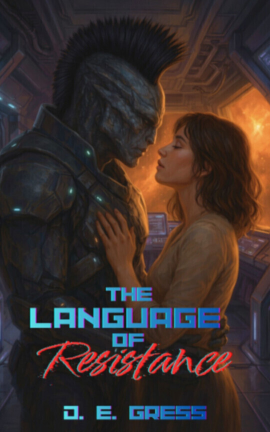
After the fall of Earth, the last remnants of humanity’s resistance are crushed beneath the might of the Eksese—a powerful alien race sent to colonize and harvest the planet’s resources for their homeworld. Among the captured rebels is Maren, a fighter who refuses to bow even in defeat. Her defiance catches the attention of Commander Korath, a stoic warrior bred for conquest, not compassion. Bound by the circumstances of war, their uneasy coexistence begins to shift into something far more complicated. Maren, scarred by loss but unbroken in spirit, begins to see the cracks in her captor’s armor—a soldier learning what peace and mercy might mean. Korath, in turn, finds himself fascinated by the woman who dares to challenge him, drawn to her strength and the strange warmth she awakens in him. But as their connection deepens, it threatens to undo them both. To the Eksese, Maren is a conquered enemy; to her own people, a traitor. Yet within the quiet of Korath’s quarters, something forbidden takes root—a fragile understanding that may be the only bridge between their worlds. A story of defiance, longing, and impossible tenderness in the aftermath of war—where even the conqueror can be conquered by the heart.
1 The Language of Betrayal
Maren Colt
The mountains bled fire tonight.
Gunpowder burned sharply in the back of my throat, mixing with the tang of damp pine and the copper bite of blood. We hit the Eksese convoy just before dusk, when the mist clung low and the ridges swallowed sound. It was supposed to be routine, but now the forest roared with return fire, green tracer bolts searing through the underbrush like lightning.
“Keep moving!” Rhett’s voice cut through the chaos, steady even with half the hillside exploding around us. He crouched, rifle spitting heat, his light auburn hair plastered to his forehead. Always the golden boy, leading raids as if he’d been born for them. The shallow lines etched on his face were not age, but evidence of what this war was doing to humans.
Trent slid in beside me, panting, holding tight to his cowboy hat. “Colt, left flank! Closin’ fast!”
I stood, breaking cover, and spun to face my target. My revolver cracked sharply against the hiss of alien fire. One of the Eksese staggered, its towering frame collapsing in a spray of sickly green. My bullet had found the joint beneath its metal chest plate.
One shot, one kill.
“Nice shot,” Trent muttered, wide-eyed.
I didn’t smile; this was war, and no one should enjoy killing. This was survival.
I cocked the hammer back again and shifted, seeing that the shot only bought us a heartbeat. There were too many of them, shadows with crests like jagged edges moving through the smoke. It had been three years since their ships blotted out the skies, and still they looked like nightmares given flesh and steel.
And they never stopped coming.
Rhett signaled sharply, and we fell back a few yards at his command. The plan had been simple: hit the convoy, take what we could, vanish before the armor could call for reinforcements. But plans fray quickly when the enemy’s boots are suddenly everywhere.
We ran. For a while, it was almost clean—shots exchanged, bodies hit, and blood soaked into pine duff. Then I heard the shout behind me: a string of guttural commands I didn’t recognize, and like a trap springing, a squad dropped from the tree line to cut the route we’d mapped. I pushed harder, doubled over roots, lungs screaming, but something snagged my ankle—Rhett’s voice this time not ordering but urgent. “Goddammit, Colt! Move!”
I did. I jumped to my feet and moved, returning fire. For a breath, I thought we’d make it.
Rhett’s face in the chaos said the rest before the words did. A few of the guys went down hard, their bodies sliding down the mountainside. His jaw was set like steel when he gave the signal to the flank with the practiced ease of a man who could pretend at cruelty and mean it later.
Everyone peeled off—Trent and the other men—like we’d agreed, like we were a single cattle herd.
Except for the herd split.
A volley slammed into the earth to my left. I spun, searching for Trent’s shotgun flash, his hat—anything to help orient me. For a second, the world narrowed to noise and stinging heat. My ankle was wedged under debris, and I couldn’t pull it free.
When the smoke blew clear, the path back was clogged with boulders and the dark line of enemy fighters cutting off our retreat. A hand closed over my shoulder and hauled—hard—and I saw Rhett, not helping me to flee, but yanking my pack off. I thought he was helping to carry my load so I could recover… but I was wrong.
“I’m stuck, help—”
His eyes passed over me like I was already a corpse. “Go!” he barked, not at me, at the others. “Move! Now!” I reached for him, for purchase—anything—and his elbow shoved me away. His mouth twisted, disgust like a taste. It wasn’t confusion. It was deliberate. “People need this stuff. Not you. It’s how it is.”
“No—” I coughed, throat dry, but a burst of fire knocked me flat on the ground.
He didn’t pull me after him. Trent helped him up the rock, his face flashing at the edge of my vision, hesitating, but he broke into motion too.
They left me.
Betrayal hit hotter than any bullet. I wanted to spit, to scream, to curse them—Rhett, Trent, and every man who’d hung that sneer on his mouth and called it teamwork. I wanted to drag them back by their collars and make them look at what they’d done.
Instead, I shook my foot out of my boot and tried to drag myself into the trees, but a net—slick, alien fibers—fell over me like a curtain.
Hands like iron shoved me down. Fingers dug into my flesh. Pain flared when they struck me; I tasted copper and aching, cold fear.
The Eksese around me were efficient and silent. They didn’t gloat. They didn’t shout. They prodded, inspected, and bound my wrists with a cold band that bit into flesh. I spat at one, and it hissed, a sound like grinding stone, before it backhanded me.
Red warmth trickled down my chin. “Is that the best you’ve got? Too afraid to hit a woman, you ugly piece of lizard-shit!” Another blow came from a different direction, but I just laughed. They didn’t like it one bit, taking turns with their strikes until…
He came through the smoke.
Taller than the rest, even without his black mohawk, like a Roman legionnaire’s plume. He moved like a thing born to command, and the other soldiers fell into line as if pulled by invisible strings. We had only seen him—the Commander—a handful of times, but he had always been present for the major battles. He was the bringer of death, a bad omen if there ever was one.
He stopped above me, having been pummeled into the dirt, and looked down. His eyes—eagle-bright and predatory—held me as if he were weighing meat. I should have been begging. I should have been curled small and silent, but pride is a stubborn animal; it kept my chin up, blood and grime streaking my face and smile as I laughed. He watched me with that sharp dispassion that made me so furious I wanted to claw his eyes out.
He cocked his head, and the bony ridges jutting from his cheekbones caught the moonlight. “You have spirit,” he said in that low rasp, the alien accent rolling into English. The word wasn’t a mercy. It wasn’t a condemnation either. It was a currency. He looked at the warriors around him, then back at me. “Take her,” he commanded.
They lifted me to my feet like I weighed nothing, hands shoving me forward. As they carried me past the ruined ravine, past the smoking husk of what we’d fought for, I saw Rhett up on the ridge, a silhouette against the firelight. He didn’t give a signal. He just turned away.
Abandoned. That word burned into me hotter than any bounds the Eksese strapped around my wrists. I had been left to die by people I’d risked my life beside. That would be a debt I’d collect with blood if I ever came back.
2 The Language of Enemies
Maren
The present was cold and smelled like alien blood mixed with my own. I knew what it meant to be taken by the Eksese; I was now a slave, a thing to be worked to the bone.
Rage churned inside me—at them, at the world, and at the tall, beastly Commander who held my fate in his claws. I met his gaze and didn’t break. If they were going to make me something else, I thought, I wouldn’t make it easy.
With the convoy disabled thanks to the ambush, we struck out on foot, the march down the mountains a blur of bruises and beatings. My wrists ached against the alien cuffs, every stumble rewarded with a hit from the butt of a rifle. The band around my skin hummed faintly, numbing my hands and keeping them useless. I hated the sound more than the ache—it was smug, mechanical laughter at my resistance.
The rage inside me smoldered hotter with every step. Not just at the Eksese—though they deserved every bullet I had left in me—but at Rhett. At the memory of his jaw set like stone, his voice sharp with command, his back turning as if I weren’t worth the drag of his arm. The last of the resistance in the former United States. I’d bled for him. I’d killed for him. And this is what I got.
Rhett hated it when I went out with them, but I always ignored his protests. I was used to it, having worked as a ranch hand all my life. It wasn’t a place for a woman, but I made it one. I thought, when I arrived at this Resistance base in the Rocky Mountains, that it was just another place I needed to prove myself. Apparently, I proved myself too much; people who listened to his every word before started turning to me for more tempered guidance.
Just goes to show that even during a fucking alien invasion, guys still have fragile egos.
I chewed on that betrayal like gristle, because it was better than thinking about the truth: that I was a prisoner now, herded like cattle down my own mountains by the monsters who’d burned my world.
The Commander walked ahead of us, strides long and controlled, hair catching the moonlight. He never spoke more than a handful of words, but his presence bled into everything, shaping the silence. His soldiers moved like extensions of him, snapping into place whenever he shifted. His authority wasn’t barked orders—it was the weight of inevitability.
And somehow, he noticed me.
I didn’t mean for it, but when one of his soldiers shoved me too hard, and I staggered, I didn’t stay down. I snapped upright, shoulders squared, chin raised, even when my body screamed for me to fold. When another spat some alien word at me, I spat back in English: “Go to hell.”
The soldier’s augmented arm twitched, a blur of polished metal veins and pulsing light. I thought for sure he’d strike, that I’d wake next in the dirt, if I woke at all, but the Commander’s voice cut through the air. One word. Sharp. Cold. It didn’t need volume when it had weight. The soldier froze mid-motion and stepped back like a puppet whose strings had been yanked.
His yellow eyes found me, glowing faintly, narrowing as they adjusted to the dark. Not eyes meant for mercy, but for tracking. For killing. The kind that looked through flesh and saw only weak points, pulse, and bone. I tried to stand my ground, but my body trembled anyway, heart hammering against my ribs.
He moved closer. Each step was a heavy clink of his dark armor echoing. The air seemed to shrink with him in it. I retreated a step, but my back hit a tree, the bark biting at me through my worn leather jacket.
The Commander stopped a breath away. His face was carved from something colder than flesh, with steel-blue skin stretched taut over strange ridges. I could smell him—something masculine mixed with blood.
Then, without warning, he roared.
The sound wasn’t human. It wasn’t even animal. It was something deeper, vibrating in my chest, rattling my teeth, an eruption of fury. He drove his fist toward my head, and I ducked purely on instinct. His knuckles connected with the tree, and the entire trunk shuddered. Cracks splintered up the bark like lightning, and with a groan, the tree fell, roots tearing the ground open.
Before I could scramble away, a shadow loomed over me. His hand clamped around my throat, lifting me clear off the ground like I weighed nothing. The air left my lungs in a strangled gasp. His claws bit into my skin, stinging the tender flesh there.
Face to face, I saw the alien conqueror who’d burned our cities and ruled Earth’s sky as if it belonged to him. His angular nostrils flared, releasing twin streams of steam that fanned hot against my cheek.
“Another word, human,” he growled—each syllable thick and deliberate, like the voice of a species that learned our language only to weaponize it—“and I will feed your limbs to our beasts, one at a time.”
With an ear-ringing whistle, he glared at me as it echoed through the forest. The earth beneath us began to rumble, yet he remained still, even as it grew to feel like a minor earthquake. Then a roar, like something out of Jurassic Park, split the air, causing me to jolt in his grip.
Bounding out of the brush was a large beast, with the body of a rhinoserous, but scaled and spiked like an iguana. There was a saddle-like seat on its back, and bags of gear and weapons tacked on its flanks. Skidding to a halt before its master, the Commander held me out to it.
I screamed bloody murder.
The beast shook its head at the noise, then bellowed a call back at me before it snapped its fangs at me. Putting himself between us, the Commander glared at me as if to say that his words were no idle threat.
Adrenaline coursed through me. I should have gone still or begged for him to stop… but something stupid and feral inside me refused. So I kicked him. Hard.
The impact barely made him flinch, but it earned me my freedom. He dropped me like refuse, and I hit the ground hard, coughing. Before I could roll away, a boot—massive, armored—came down on my chest, crushing the air from my lungs. I clawed at it, teeth bared, but it didn’t budge.
The soldiers ringed us, their eyes gleaming behind helmets. He didn’t even look at them when he said, voice like a verdict, “Break her. For the pens.” The words weren’t shouted. They didn’t need to be, sinking straight through me, cold and final.
The soldiers tried as Earth’s conqueror rode unbothered astride his ghastly warbeast.
Hands grabbed, metal cuffs buzzed, and boots shoved me forward. The descent was long and steep; I stumbled more than I walked in my one boot. When I faltered, someone kicked me in the ribs. When I spat blood back at them, an electrified rod gave a raw-aching pain. I refused to cry out. Refused to give them that satisfaction.
And every time I got back up, I felt his gaze. The Commander’s. Not pitying or kind, just assessing, like a predator watching the one creature in the trap that still had the nerve to bite back.
We reached the main base sometime after midnight, the trees thinned, and the lights of the Eksese base chased the horizon even in the dark. The compound sprawled ugly against the valley floor, a fortress of alien metal fused with human ruins. Watchtowers jutted high over its walls, enormous guns scanning for threats, and the ground was churned up where their ships had crushed the forest flat. It reeked of fuel and wet dirt.
The deeper we went, the more visible the cells became. Rows and rows of them, large enough to hold dozens of people in cages constructed beneath a partially collapsed and lopsided parking garage. The concrete kept it cool, and I hugged my arms against the lingering chill. It was dark, a few fires lighting the way to the cage doors.
The soldiers shoved me inside one of the pens, the iron bars humming faintly with the same sick circuitry as my cuffs, which they had relieved me of. Inside, the air stank of fear and sweat, packed bodies huddled against the walls. Humans—or what was left of them—looked up at me with hollow eyes as they shifted in the shadows.
I stumbled once, catching myself on the rough wall, and finally let myself drop against the cold ground. My ribs ached, my throat burned, and the weight of betrayal sat heavy in my chest.
I wasn’t just a prisoner. I was a slave now. Rhett might have left me to die, but I’d be damned before I let the Eksese strip the rest of me away. Not while I still had teeth to bear.
3 The Language of Purpose
Maren
Those spiteful thoughts lulled me into a dreamless sleep for an hour or two. When I woke up, I was still slumped against the same wall, untouched thankfully.
The others didn’t look at me at first. They seemed used to new arrivals, like one more broken body dragged in, one more pair of hands to wear out and discard. But after a while, a woman in her mid-twenties, like me, shifted closer, her thin frame wrapped in rags that had once been a sweatshirt jacket. She had dusky brown skin, her dark hair in a long, tangled braid, and eyes far older than the rest of her looked.
“You’ll want to stay quiet,” she said softly, her accent lilting but the words smooth, American English. “They don’t like noise in the pens. Too much, and they come in to remind us.”
I narrowed my eyes at her but didn’t speak. She didn’t flinch at my silence. She just sat down beside me, hugging her knees.
“My name’s Kavya,” she continued, as if offering a thread of humanity. “Kavya Das. I came here three years ago. After Atlanta fell.” Her lips pressed tight on the memory, but her eyes flicked to me again. “You?”
“Maren,” I muttered, voice rough. “Colt.” It didn’t matter where I came from anymore. It was gone.
She nodded, filing the name away. Then, as if she’d done it a hundred times before, she began to explain the new world I’d just been thrown into.
“They’ll put you to work regardless of whether the bruises heal. Farming mostly. The Eksese stripped the forests bare, so they make us grow food to keep them fed. Corn, potatoes, anything hardy.” Her fingers picked at a loose thread on her jacket. “Some tend the animals they brought down from their ships—beasts like cattle, but meaner. They eat more than the Eksese themselves, and it takes an army of us to tend them. Others build, repair, and clean their machines.”
Her voice went quieter. “Others are kept for entertainment. The soldiers bet on fights, sometimes worse. Pray you don’t catch the eye of one of them.”
My fists clenched around my knees. “And if you do?”
Kavya’s gaze dropped to the dirt floor. “Then you don’t last long. Only if you’re made a pet are you protected to a degree. They even ship some of us off to be pets on their homeworld.”
“Do the higher-ups keep pets here?”
“No, the Commander here doesn’t tolerate it, so I’ve heard.”
A silence stretched between us, but I felt her eyes gauging me. I wanted to rage, to kick at the bars until my legs gave out, but the hopeless way she spoke pressed heavier than the cuffs.
Finally, she spoke again. “They work us sunup to sundown. Beat us when we falter. Rations are thin. There is no point running; no one makes it.” I let the words settle like stones in my gut. This wasn’t a prison. It was a graveyard with chores.
Kavya leaned closer then, her voice a whisper. “But you should know one thing.” Her eyes flicked toward the far side of the parking garage, where, through the bars, I could see the silhouette of the tall figure I knew too well already. He was speaking to another officer, gestures sharp and decisive. The firelight danced across his head and black hair like a legionnaire’s crest.
“The Commander,” Kavya murmured. “Korath. That’s his name. He’s in charge of the whole Western Hemisphere. No one disobeys him—not Eksese, not human. If he marks you, you’re finished. Better to fade into the background, keep your head down.”
I followed her gaze, my jaw tightening. Finished? No. I wasn’t finished. I wasn’t Rhett’s abandoned casualty, or some nameless slave to be worked into the dirt.
Korath’s head turned slightly then, as though he’d heard us from across the camp. Sensed my mutinous thoughts. His yellow avian eyes burned faintly in the shadows, and though the distance was wide, I felt the weight of that stare.
Kavya shivered. “Don’t look too long,” she whispered. “He doesn’t forget faces.”
I didn’t look away. Let him remember mine.
The first light of dawn hadn’t even crept over the ridge when the rattling started—metal against metal, sharp and grating. I blinked awake to see an Eksese overseer at the gate, her silhouette filling the frame.
She was tall and muscular, like all of them, but leaner than the warriors I’d faced. The ridges of her face swept back in an elegant curve, etched with faint markings that caught the glow of her armor. Her midnight blue hair was choppy and short, framing her bony cheeks. Eyes like molten copper swept over the pen with cool disinterest. She carried a staff of some alien alloy that thrummed when it struck the bars, sending a pulse of energy through the cuffs at our wrists. Half the slaves winced awake instantly.
“Up.” Her voice was low, feminine, and yet sharp enough to slice. “Work awaits.”
The groans and shuffles began. People stumbled to their feet, hollow-eyed and silent. Kavya nudged me hard, whispering, “Don’t lag. They don’t like laggers.”
I stood, jaw clenched, though my ribs screamed protest. The air was damp with morning fog, sharp with the smell of the camp—smoke, oil, and something humanly sour underneath it all. As we stepped out into the sunlight, my holey jeans and scoop-neck shirt were considerably cleaner than the rest, making me stick out.
Ahead, I could see the overseers sorting and separating us into groups for jobs. They pushed people this way and that. One grabbed Kavya, grumbling something about ‘another scrawny one.’ Apparently, they didn’t try to remember faces; we were just human workhorses.
As I waited for my turn, he appeared.
Commander Korath strode past the sorting area with measured grace, his soldiers peeling back to let him through as though the ground itself bent to him. The dawn caught his crest, glinting pale against the black mohawk framing it. His presence pulled the entire camp tighter, like the world itself snapped into order when he moved.
My eyes locked on him, defiant, unblinking, something hot and bitter rising in me—the memory of Rhett’s betrayal, the pain of chains, the unfair fact that this creature could look like command and control made flesh while I was shackled like an animal.
The overseer saw.
Her staff cracked across my back before I even registered the movement. Pain exploded down my spine, driving the air from my lungs. I staggered, catching myself on the ground, my teeth bared in a grimace. The others backed away instantly, not wanting to be associated with my brand of trouble.
Korath stopped.
He turned, the others pausing mid-step as though the air itself waited on him. His eagle gaze cut to the overseer, then to me, standing, still burning holes in the world with my eyes.
“Again,” he said, his voice even, cold.
The overseer smiled faintly and swung. The blow caught my bruised ribs this time, white-hot lightning lancing through my side. I hissed but stayed upright, nails digging crescents into my palms.
Korath’s eyes lingered a heartbeat longer. He didn’t smile or scowl. He simply looked, then gave a slight flick of his hand and moved on.
“Stupid,” Kavya whispered furiously from over in her grouping as I sucked in shallow breaths. “You’ll get yourself killed.”
But the overseer’s voice cut through. “You. New one. Let’s see if that fire holds.” She jabbed her staff toward me, her copper eyes gleaming. “You’ll tend the Sholta today.”
A ripple of whispers went through the slaves. Kavya’s face paled. “No. No, not that…”
I straightened, still panting, and shot the overseer a glare. “Fine. Show me where.”
Her lips curled in amusement, the staff tapping against the ground as she motioned me out. “We’ll see if you’re still proud when the beasts are through with you.”
The overseer shoved me out into the damp morning air, toward the pens on the far side of camp. Behind me, Korath’s shadow still lingered in my mind, the heat of his test burning against my bruised ribs. If he thought I’d break, he’d have to try harder.
The Sholta pens stank. Even before I saw them, the air told me they were close—rot layered with the sour tang of fruit gone overripe and the coppery undertone of blood. The overseer unlocked a heavy gate and shoved me through with three others who scurried into place inside a large vat.
That’s when I saw them.
The Sholta were nightmares of muscle and bone, their hulking bodies covered in a sickly green-colored hide that rippled with each movement. Blunt, branching antlers jutted low and forward, ridged like a crown designed to gore. Their mouths split wide with fangs as long as my forearm, sharp and blunt like hippopotamuses, and when one of them bellowed, the sound rolled through my chest like an earthquake.
The other slaves didn’t even flinch. They were already wading into the waist-high vat the size of a swimming pool, filled with fruits, vegetables, and pulped greens. Their bare feet squelched down into the slurry, grinding the food into a mush that the Sholta found easier to eat. When the creatures pressed their muzzles into the mix, their antlers swung dangerously, scattering food and splattering juice.
“Move!” one of the slaves hissed at me, elbowing me. “Don’t lag or you’ll get us all killed!”
I climbed in after him, unsure of who would be doing the killing: the Eksese or Sholta. The stench of the beasts and their feed made my stomach clench. The slurry was slick, chunks of things I’d rather not name sliding underfoot. When I stumbled, the Sholta closest to me lifted its head, nostrils flaring. Its eyes—red, rimmed in black—fixed on me like I was prey.
Another slave shoved a chunk of meat into its gaping maw. The beast snapped it up, fangs clashing so close to the man’s arm that he yelped. The Sholta tossed its head impatiently, antlers swinging, catching another worker across the chest. He went down with a cry, swallowed by the muck.
He didn’t come up.
The Sholta’s muzzle plunged down where he’d fallen. When it lifted again, red dripped from its jaws, mixing with the pulped rot.
I swallowed hard, bile rising.
The overseer laughed from the fence, pushing in the man’s replacement. “Faster, or you’ll feed them yourselves!”
My hands shook as I grabbed a melon, hurling it toward another beast’s mouth. It caught it easily, antlers nearly clipping my skull as it leaned close for more. Its hot breath reeked of sweet rot and meat.
By midday, my body ached, juice soaking me from head to toe, bruises forming where the Sholta’s antlers had clipped me in warning. But I was still alive, and I noticed something.
They responded to the rhythm. If we mashed and fed in unison, the Sholta settled, less likely to lash out. If someone lagged, chaos followed. So, I started calling out—short, sharp commands, telling the others when to throw, when to stomp. They looked at me like I was mad initially, but then the order spread. The vat stopped being a frenzy and became a grim sort of dance.
The overseer noticed. She leaned on the fence, copper eyes gleaming, watching me with a mix of amusement and calculation. By the end of the day, she smacked her staff against the gate. All but sinking into the pulp, the four of us dragged ourselves out along with all the others in separate vats around the field. The smell seemed to be ingrained in us, even as I could see an Eksese readying a hose.
“You. New one,” the overseer called, “You’ll work this pen. Every day.”
My shock was drowned by a cold stream of water washing the slop and gore off us. The others groaned at the sentence, but I just stood straighter, chest heaving. I was sore, drenched, reeking—but I had proven something to her.
When the overseer left, one of the older slaves, a man with scarred arms and hollow cheeks, muttered, “You’re mad. Sholta will gut you sooner or later.”
“Not if we keep them fed,” I said, voice hoarse but steady.
And for the first time since the chains went on, I felt something dangerous flicker in my chest. Not hope—never that. But control.
4 The Language of Curiosity
Korath
From the deck of our flagship, the world below unfolded in ordered chaos. Rows of pens and lines of human slaves. The rhythmic movement of labor that powered the outpost’s machines. From this height, they looked like the insects they call ants—slow, soft, breakable.
And yet my gaze caught on one.
Down near the Sholta enclosures, a woman moved with a steadiness that did not belong to the broken. Her hands were caked in pulp, her clothes stained, but her posture was not of submission. She commanded, even in filth. I could tell by the way the others looked at her when the overseer’s back was turned. By the way, the Sholta themselves—restless, violent creatures—responded to her tone.
Fascinating.
I had watched the overseer strike her once for pausing too long. She didn’t flinch. Then struck her again, but she lifted her chin and met the blow. There was defiance in her—the same spark I’d seen in my first skirmish against her kind, before their cities burned and their sky defenses fell silent. It was rare to see that fire now. Most humans learned quickly that resistance only prolonged the pain.
“Commander,” came Captain Malrik’s voice from behind me. My second in command’s boots clicked on the metallic deck. “Scouts report human movement in the southern ridges. They appear organized; perhaps the resistance is planning another attack.”
“Good,” I said, not taking my eyes off the pen. “Drive them east toward the ravine. Cut them off from water sources and let the terrain do the work. They’ll be begging for surrender within the week.”
“Yes, Commander.” He hesitated a moment, watching the operation below as well. “It will not be long before the continent is pacified. The Council will be pleased. A fertile world, oceans intact, minimal structural damage to reclaim.”
I turned to face him. “Pacified,” I repeated, letting the word roll in my throat. “We did not come here to pacify, Malrik. We came to conquer. Never confuse the two.”
He stiffened. “Of course, Commander.”
Another of my officers—Lieutenant Thyrek, ambitious and loud—stepped forward. “The humans were weaker than expected. Fractured, ununified. We broke their armies in less than three cycles. Surely that speaks to our strength.”
I looked back down at the woman. The overseer was watching her closely as she shoved another worker out of the path of a charging Sholta. Her reflexes were fast, deliberate. Not the movements of prey. “Weakness,” I said slowly, “is not universal. Some bend. Some break. And some…”
The words died as she looked up. She couldn’t see me from this height, but still—her eyes lifted to the sky, toward the ship as she mashed feed with her feet. Something in that look rooted me in place. A curiosity. One, I could not yet decide whether to crush… or cultivate.
I straightened, clasping my hands behind my back again. “Lieutenant, continue the hunts. The war is almost over. Burn them from the mountains if you must. Leave nothing that breathes.”
“Yes, Commander.”
He bowed and departed, his armor scraping against the deck plates, eager for more blood to spill in my name. Hunger for recognition served its purpose.
“Commander, we have a few pressing issues to discuss, if I may begin briefing you?” Lieutenant Serral, a hard-faced woman who’d earned her rank in the last invasion, vied for my attention next.
This far from Ekse, I was master and commander of everything and everyone. Closest to my rank was Commander Vyrn, who was in charge of the Eastern Hemisphere invasion. She and I worked efficiently together, and most of our success came through our ability to stay out of each other’s way. We shared resources, but ran our own campaigns and camp.
We adjourned to the privacy of the flagship’s planning chamber. The table before me glittered with holo-maps, the valleys lit in faint amber where patrols ran and small blue sigils where our outposts sat.
“A Council Member visits in seven Earth days,” Serral began, peering over to Malrik and me, as if we’d show some reaction. There was none, only calculation. “They will inspect our operations. They will judge our efficiency.” Serral shifted, voice flat now. “I will have the pens cleared and orderly. We’ll repaint the outer fences, re-level the walkways. The overseers will be reinforced.”
“Good.” I let the word sit, then narrowed my focus. “I want the human labor prepared. Every role filled, quotas met. No slack in provisioning. The Council will not accept excuses for lateness in filling requisitions for Ekse.”
Malrik nodded, his eyes grazing the map with ambition. “They will see the world made usable again. They will see conquest perfected.” He tapped a finger on a holo-projection showing lines of irrigation we’d forced through an old riverbed. “We can point to the farms—cramped, but productive. The Sholta breeding program is efficient. The Council will be pleased.”
I did not correct him. There was no need; their eagerness to be hailed as heroes by the Council member coming would do what words could not. Instead, I laid out the next directive; my voice was low, even, and everything I had practiced for years: the language of control.
“We will select from the human population for transfer. A portion will be taken to the fleet. There, they will be conditioned—trained in labor, integrated into systems suited for large-scale production. The plan is long-term: colonization requires a dependable workforce.”
Malrik blinked once. “Transfer? To the ships? That will require manifest preparation and additional logistic runs.”
“It will,” I agreed. “Prepare manifests. Vet the candidates that will breed effectively.” A silence fell, not from shock but from the matter-of-fact way the phrase landed among us. In my training, the word bred was a stratagem—an engineering of populations, a method to secure labor and adapt genetics to desired parameters. It was not entertainment. It was not entropy. It was planned. I measured their reaction and allowed the fragile pause to prove the point: no one in the chain could afford moralizing.
Serral’s jaw worked. “Council doctrine supports long-term occupation. If we produce stable labor lines, the sectors will be far easier to hold. The populace will sustain infrastructure instead of wasting troop resources on menial repairs.”
“Efficiency equals survival for us,” Malrik added, almost reverent.
I let them look at the holo-grid of projected outcomes, at charts plotting supply against labor. Their minds were mechanistic, and that served the purpose. Conquest had never been poetry; it had been arithmetic. We had come to this planet seeking land and water, and a place to expand. The apex species had been a stumbling block; their extinction, or their conversion into utility, was an acceptable calculus.
“There will be controls,” I continued, colder now. “Medical oversight, conditioning schedules, containment protocols. Disobedience will not be tolerated. The Council requires order, not sentiment.” I observed each face again—Serral, pragmatic; Malrik, acquisitive. They would carry the orders. They would implement the logistics. They would take the credit.
“And the camp?” Malrik asked. “Inspection implies spectacle. We present the operation at its best.”
“Order the overseers to harden a protocol for inspection,” I said. “Clean pathways, present the stock, quiet the pens. Prepare a selection of workers for the viewing, trained to obey and to demonstrate productivity. Make them useful displays.” I let a hard edge creep into the last phrase—the word display was not accidental.
They nodded, immediately consumed by their tasks.
The Council would arrive in seven cycles. The camp would be tidy and obedient. A portion of the human stock would leave us to the fleet’s embrace. Their fate would be decided by calculation and command, and I would make sure the metrics—efficiency, compliance, yield—read in our favor.
The next day, the command chamber hummed with low voices and the muted tapping of data slates. From the viewport, I could see the valley—once a city of human defiance, now reduced to half-built structures, smoke, and containment walls. The air reeked of industry and victory.
“Commander,” Serral greeted as she and Malrik entered. Her voice was the usual smooth veneer of ambition disguised as respect. “Preparations for Councilor Jorek and Princess Orissa’s visit are nearly complete. The inspection of the labor divisions begins at midday tomorrow if you can make time to attend.”
I didn’t turn from the window. “Is this intended to show them our progress?”
“Not progress, Commander,” she said, stepping closer. “Efficiency. Discipline. Proof that the colonization initiative thrives under your command.”
Malrik gave a low sound of amusement. “And I assume you’ve arranged one of your…displays?”
Serral smiled faintly, a predator pleased with her own trap. “Of course. Councilor Jorek enjoys demonstrations of obedience. I’ve selected several humans from the labor pens—strong, compliant ones who can endure the Sholta handlers. But there is one I intend to highlight.”
That earned my attention. I turned, folding my arms. “A problem?”
Her eyes gleamed. “Not a problem—an anomaly. A female from the western resistance cells. She’s difficult, but fascinating. The handlers say she commands attention even from the beasts. They follow her, calm under her hand. The others call her the shepherd. Human and animal alike respond to her presence.”
Malrik gave a skeptical grunt. “Jorek will care little for sentiment.”
Serral’s smile sharpened. “It’s not sentiment I intend to show him—it’s control. I will display the shepherd beside the broken ones. When the Councilor sees that even the defiant can be turned, he will leave satisfied.”
My gaze lingered on Serral, though my thoughts had already shifted. A shepherd. A leader who refused to yield even in captivity. Among a conquered species, she had managed to hold sway. That was more than curiosity—it was influence. Dangerous, but admirable.
“You will send me her record,” I said at last.
Serral blinked. “You wish to review her file?”
“You said she’s from the Sholta pens?” She nodded, and I felt something spike in my gut that this woman was the same one haunting me. If it were, this was a perfect excuse to study her. “I wish to inspect her myself,” I corrected, my tone even. “If she has that kind of presence, I need to understand it before Jorek does. Princess Orissa cares little for little beyond her own entertainment. Jorek, however, will be interested.”
Malrik studied me sidelong but said nothing.
Serral’s smile faltered before she inclined her head. “As you wish, Commander. I will have her brought up shortly.”
When they left, I remained by the window. The sun was sinking low, red light glinting off the metallic skeletons of half-finished structures. Humanity was broken, but not erased, and somewhere in those pens, there was a woman whose very existence defied silence. A shepherd among the conquered. I found myself wondering—not for the first time—what it would take to make such a creature bow. Or if she ever truly would.
5 The Language of Understanding
Maren
After the long day, Kavya and I had collapsed in the straw at the edge of the pen. My whole body ached, and for once, the noise of the camp had faded into a dull rumble I could almost tune out. Almost.
The overseer’s boots crunched over the gravel before I even saw her shadow fall across us. “You. The bossy one.”
I looked up, slow, already dreading what that meant. One of the Eksese soldiers was with her, his armor repelling the low light, shining over the smooth curve of his chest plate. He didn’t say a word. Just nodded his chin toward me.
Kavya pushed up onto her knees, grasping for me. “No—”
I shook my head sharply, squeezing her arm. “Don’t.” There was no point. No one came back better for arguing.
The soldier’s hand closed around my arm like a clamp, hauling me upright and out of the cell. He didn’t miss a stride as he dragged me along, even though I did. Thankfully, we passed the soldiers’ barracks, and I felt relieved that I wasn’t to entertain them tonight.
I stumbled after my armed guide the rest of the way across the muddy camp and up the ramp of one of their ships—the big ship. I’d seen it from below, towering over the valley like some massive blade lodged in the earth, but being inside it was something else entirely. The air smelled sterile, metallic even, and every sound and breath seemed to echo.
They led me to a steel door that opened with a hiss, revealing a dim room that was both orderly and predatory.
And him.
The Eksese Commander was taller than the others—broad-shouldered, movements sharp and precise, his uniform dark enough to drink in the light. His crest shifted slightly when he looked at me, the motion subtle but animal. Beside him stood the female with a holographic tablet, her expression unreadable and faintly amused. Her dark hair fell to one side of her crest.
“This is the one you called the shepherd?” His voice was low, even, but carried weight that made my stomach twist.
“Yes, Commander,” the woman said, her smile too smooth. “She’s an interesting case—no compliance drugs, minimal punishment, yet she continues to lead. Even the Sholta responds to her.”
His gaze didn’t waver. “Leave us.”
Her eyes flicked to me, then back to him. “Commander, if I may suggest—”
“You may not.” The command rolled out of him like thunder, and she bowed her head stiffly before leaving the room. The door sealed behind her, and the silence grew heavier.
I met his gaze head-on, though my heart was hammering. “So, this is where you decide what to do with me?” The question just popped out.
He tilted his head slightly. “You misunderstand. If I wanted to decide your fate, I would not need to speak with you first.”
Alright, so he’s an arrogant smart-ass.
“Then why am I here?”
“To understand you.” He took a step closer. I resisted the urge to back away. “Most of your kind, or what remains of them, react predictably. Fear. Rage. Surrender. But you… do not. The reports describe you as composed, even among punishment. You calm the beasts. You keep the other humans working. Why?”
I almost laughed. “Because someone has to.”
His eyes narrowed slightly. “So you lead them.”
“I keep them alive,” I corrected, heat creeping into my voice. “That’s not the same thing. I was never a leader.”
“Survival is a form of leadership, perhaps you learned from your betters, whether it was good or bad,” he said, as if stating a law of nature. “And here you are leading, even after being captured.”
The words stung, but I kept my chin high. “And what form of leadership do you exhibit? Tyrant?”
He studied me in silence, the slitted pupils of his eyes contracting as though focusing on something beyond the surface. “You have courage, human.”
“I have nothing left to lose,” I said softly.
Something flickered across his features—interest, maybe respect. Then it was gone. He circled me once, movements fluid, assessing—not as a predator, but as someone trying to solve a riddle. “You are not like the others,” he murmured, almost to himself. “Perhaps… worth understanding.”
I met his gaze again. “I’m not here to be understood.”
“No,” he agreed, voice low, “but you will be.”
I stared at him, uncomprehending. “You—” My voice cracked. “You brought me here for what? To interrogate me? To—”
“Interrogate?” He almost smiled. The Commander’s blazing golden eyes burned me. “Why? You have nothing I need to know about the resistance.”
The words landed harder than a blow. “Then why am I here?”
He leaned forward, hands braced on the table, the metal creaking beneath their weight. “You seem not to listen. I want to know why you do not break.”
My throat tightened, but I met his gaze anyway. “Because if I break, you win.”
Korath’s eyes gleamed faintly, like molten metal catching light. “Your war is already lost.”
He turned his wrist, activating a console on the table. The air shimmered as a series of holographic projections flickered to life—a map of Earth, scattered with red and blue lights. Entire continents glowed beneath shifting alien symbols. Red faded to blue with every pulse around the world. The Commander tapped the images with his finger, and it zoomed to the Western Hemisphere, then to our location.
“Your resistance base in the mountains,” he said, motioning toward the dimmed red cluster, “was eliminated three days ago.” My breath caught. That base provided my home, one—the main Resistance base—with food. Still, it was a relief to see my home wasn’t on his map. “Your oceans are patrolled. Your remaining command centers are gone.” He swept his hand, and the last red points winked out. “You have lost.”
I felt something twist in my chest. “That’s what you think.”
He looked at me then, curious. “Do you deny the evidence before you?”
“I deny your meaning of it,” my voice shook, but not from fear. “You can wipe out armies, cities—hell, whole continents—but so long as there are humans alive, we haven’t lost.”
His expression didn’t change, but there was a flicker in his eyes, like intrigue. “You speak as though belief can rebuild what is already ash.”
“Belief built my country to begin with,” I said. “And back in 1776, we beat the most powerful empire in the world. All was lost then for a while, too, but we never gave up. You can’t understand that because you think power is the same as victory. It’s not so cut and dry to us humans.”
He circled the table again, slow, deliberate, the hum of the holograms pulsing around us. “You mistake endurance for triumph.”
“Call it what you want,” I said. “You can chain me, starve me, beat me—but I’ll still wake up human. Maren Colt from Colorado. You can’t take that from me.”
He stopped beside me. I could feel the weight of his presence—controlled, immense. “And that is what you think makes you unbreakable? A name?”
I met his gaze, steady this time. “No. That’s what makes me alive. Keeps the fallen alive.”
For a moment, there was only silence, the hum of alien light between us, his breath quiet and measured. Then, softly, almost like a confession, he said, “You speak as though you have already accepted death.”
“I have,” I whispered. “But not defeat. ‘I only regret that I have one life to lose for my country.’” It had always been one of my favorite historical quotes, and to actually be in circumstances to use it only hardened my resolve.
He stared at me, something unreadable in his avian eyes—neither anger nor amusement, but the sharp interest of a predator watching prey that refuses foolishly to run. Finally, he deactivated the holo-map, and the room fell back into shadow. “You are an anomaly,” he said. “And I wish to understand anomalies.” A pause. Then, he straightened, tone reverting to command. “You will be transferred to private quarters under my supervision.”
“So I’m your prisoner,” I spat.
His mouth curved faintly, the expression unreadable. “Technically, my pet,” he corrected. “For now.”
When the guard returned to escort me out, I could still feel his gaze on me—steady, searching, almost reverent. And though I hated it, some part of me wondered what he saw when he looked at me that way. I could tell the female Eksese—an advisor, or something—was thinking the same, appraising me in passing to rejoin the Commander.
The guard led me through the halls of the Eksese stronghold—corridors that hummed faintly, the air thick with ozone and the steady vibration of unseen machinery. The walls glowed dimly, like veins of bioluminescent light pulsing in patterns that felt alive.
When we stopped before a heavy door, the guard pressed his palm to a glowing panel. The lock hissed, the door slid open, and I stepped inside—only to stop short.
It wasn’t a cage.
The chamber was spacious, austere but elegant: dark stone walls lined with faint glyphs, a sunken hearth that flickered blue, and a massive bed draped in sleek, metallic fabric. One wall opened to a viewport; the ruined skyline of the city spread beneath the night sky.
Before I could speak, the door sealed behind me. The silence that followed was complete.
My muscles trembled from exhaustion, from hunger, from the shock of surviving a second encounter with the Commander. I moved toward the bed without thinking, sinking down on the edge of it. It was soft and warm. Too warm.
I didn’t even hear the door open again until his voice cut through the quiet.
“Off.”
I startled, spinning around. Korath stood in the doorway, unarmored but unmistakable—broad-shouldered, clean, his golden eyes sharp in the low light. “Get off my bed,” he repeated, tone flat, commanding. “You are filthy.”
My throat worked around a dry swallow. His bed? I was in his room? Shame flared before I could stop it. I stood quickly, arms crossing over my chest. “Where would you have me sit, Commander? The floor?”
“Yes.” The single word landed like a blow. Then, softer but no less firm, “There is a wash chamber through there. You will bathe. Remove the filth from yourself.” His gaze flicked over me—impersonal, assessing, yet something in it lingered too long. I turned away before he could see how much it burned.
I disappeared into the adjoining room and found a basin filled with pale water that shimmered faintly blue. Alien soaps, smooth like glass stones, lined the edge. I cleaned myself in silence, my reflection blurred in the mirrored metal walls. When I emerged again, I felt lighter but no less raw.
Korath had changed into dark, woven garments that caught the light when he moved. Eksese pjs, perhaps? The small oval dining table was set with small trays emitting soft heat. The scent hit me before I saw it—rich, earthy, unfamiliar. My stomach clenched painfully.
He gestured to the chair across from him. “Sit.”
“I thought my place was on the floor.”
His yellow eyes didn’t move. “Sit.” I obeyed this time, seeing it was no trick. He lifted one of the lids, revealing slices of something dark and glistening. “Sholta meat,” he said. “A rarity on Ekse now since they require an immense amount of feed, as you know. It will restore your strength.”
I blinked at it, uncertain. “You feed your pets well.” He ignored my sass, and I wondered if it even registered to him. I picked up the fork anyway, the smell overwhelming my pride. The first bite seared my tongue—gamey, tender, and oddly sweet. I tried to hide how desperately my body wanted it, but his gaze was fixed on me, tracking every small motion.
“Your physiology weakens quickly,” he said, almost to himself. “You have gone too long without sustenance.”
“Is this part of understanding me?” I muttered between bites. “I thought you did all the dissecting already when you first invaded?”
He didn’t answer immediately. “I’m not a scientist. I’m a soldier who was told that the apex species on Earth was ripe for invasion. I ignored what kept you healthy because my job was to kill. Now, the Council—our governing body—wishes us to colonize this planet for resources. With how rich and vast your land is, we need a labor force.” He took a bite, chewing it faster than I, he having slightly sharper teeth. “My observations of you, pet, will only benefit the longevity of your people in captivity.”
“Why don’t I just make a list for you of what humans need, and then you can throw me back to the Sholta?”
“Because I don’t trust you.” He stabbed his utensil on the plate. “You have a rare opportunity to better life in capitity for your people. I suggest you seize it.”
I sighed, too hungry to process it all now and unable to feel guilty yet as my belly swelled with food for once. We fell into a mutual silence after that, exchanging glances across the table. When he was finished, he placed everything in a small kitchenette-like corner of his quarters.
“Rest,” he ordered at last, turning away to fetch something from a shelf. “You will remain here until further instruction. Your bed is at the foot of mine.” When he came back over and stood behind me, he snapped a collar on my neck. I flinched, and he caught my hand, bringing my glare back to his face. “If you cannot behave, I will chain you to the wall.”
“Aren’t you afraid I’ll kill you in your sleep?”
He smiled for the first time, but his partially scaled steel-blue skin seemed to resist it, like Eksese weren’t supposed to. “No.”
Stomping over to my assigned spot, I sank into the foam mat that looked like it was for a large dog. As he readied himself for bed, I felt around the collar on my neck. It was black and maybe 2 cm wide, made of some smooth living material. When I touched it, it pulsed with color, much like the augmented limbs I’ve seen on some of the soldiers. But there was no clasp, at least that I could see or feel.
With a resigned huff as he climbed into his large bed, I tried to get settled. I hated the fact that in the past three years, I’d not had a bed more comfortable than this. I pressed a trembling hand to my mouth. The taste of the alien meat lingered on my tongue. I should have felt humiliated. Instead, I only felt seen.
Yes, I had pulled more than my share in the Sholta pens, but I hadn’t done it to be rewarded with “pet” status, if one could call it better than “slave.” If this arrangement was temporary, as he mentioned, then I suppose I could enjoy it while it lasts in this gilded cage.
When I woke, the room was bathed in a thin, pale light that filtered through the viewport. For a moment, I didn’t remember where I was until I saw the faint shimmer of the holo-map still projected over the table.
Korath stood before it, already dressed in his black uniform, his posture rigid, purposeful. His hands moved over the glowing console with practiced precision. I realized, distantly, that he had probably been awake for hours.
He turned when he sensed my movement. “You are awake,” he said, voice clipped but not unkind. “How did you sleep?”
I pushed myself up, the sheets cool against my bare skin. “Worse than in the cells.”
His brow furrowed faintly. “Explain.”
“In the cells,” I said, rubbing my arms, “I was with my own kind.”
He regarded me for a long moment, as though waiting for me to realize how absurd that sounded. “You prefer confinement,” he said slowly, “to safety and comfort under my protection?”
My laugh was thin, humorless. “Comfort? You mean captivity.”
“I mean shelter,” he corrected. “You were bathed, fed, and given the safest quarters on this continent. Your vitals have stabilized.”
“That’s your idea of mercy?” I asked.
“It is the only kind there is,” he said simply. “You were withering in the cells. I preserved you. That should matter.”
The words stung, not because they were cruel, but because he believed them. He truly believed that safety and survival were all that mattered. That gratitude should come as naturally as breathing.
I looked past him, to the holo-map of the planet—so little red, so little left. “You don’t understand what you’ve taken,” I said quietly.
He didn’t answer immediately. His gaze followed mine, settling on the scarred projection of Earth. “This world will rebuild. Efficiently.”
“Under your flag,” I muttered.
He inclined his head. “Under order.” There was no triumph in his tone, no gloating, just cold certainty. That was what chilled me most.
When I finally turned away, I felt the weight of his gaze linger—not cruel, not curious, but measuring, as if trying to reconcile my defiance with the logic that governed his species.
“I must see to a number of tasks in preparation for the Council’s upcoming visit. Here,” he said at last, handing me what looked like a tablet. “This is a slate. You may use it to learn about my culture and the invasion of Earth. Perhaps then you will understand the scale of what has been achieved.”
The word achieved burned through me, but I held my tongue. Curiosity jabbed at me, and it had been years since I had a day of reading and browsing whatever they called their form of “internet.” I had so many questions about the invasion after the power grids failed and satellites went down. Maybe I could even find out something about my jailor… if only to see what kind of “man” I was dealing with.
6 The Language of Resistance
Korath
The reports blurred on the screen. Columns of data, troop movements, supply quotas—all precise and efficient. I should have felt satisfaction. Every metric screamed success.
But the image of her face would not leave my mind.
Maren.
She’d sat across from me, rigid as if the air itself might shatter her. I had given her food—real food—warmth, a place of safety from the violence. She had survived where others had not. She should have understood the privilege of that. Instead, she’d looked at me as though I had dug her grave myself.
My fingers flexed against the desk of my command station—a small room off of the Command Deck. The sound of metal scraping alloy echoed in the silence.
“Commander,” came a voice from the comm, thin and distant. “You’ve missed the supply update.”
“I have not,” I said evenly, closing the report with a flick of my hand. The screen dimmed, and my reflection stared back—blue skin, the faint luminescence of my eyes flickering brighter than it should have. Agitation. I exhaled sharply gazing at my agenda on the slate beside me. I did miss it. “Send me the summary, promptly.”
The link cut. I leaned back in the chair, the hum of the ship settling into my bones.
She should have been grateful.
That was the part I could not reconcile. Humans clung to life with such desperation. She had been left for dead by her own kind—abandoned and discarded—and yet she grieved them. All of them. Her species. Her kind. It made no sense.
Eksese did not mourn the weak. We moved forward. We adapted. We consumed. The human capacity for sorrow was wasteful—an inefficient expenditure of emotional energy with no yield, and still, something about it unsettled me.
When she spoke, it had not been defiance that lingered in her tone, but… emptiness. A silence so deep it absorbed every sound around it.
I found my gaze wandering to the far viewport on the Command Deck. Below, the forests stretched black and endless beneath the alien sunlight. My forces combed those valleys even now, flushing out the remnants of her species—her former friends, perhaps.
They were already doomed.
Still, the thought of her face when she learned the truth again, when all remaining resistance was ash, twisted something unfamiliar in my chest. I straightened abruptly, locking the thought away. This was sentiment, an indulgence unbecoming of a commander.
And yet…
When I closed my eyes, I could still hear her voice. “Then maybe that’s why you’ll never understand what you’ve destroyed.”
For the first time in many cycles, I could not find the right response.
Malrik found me pacing the deck. He didn’t announce himself, nor did he need to. “I thought you’d be reviewing the Council protocols,” he said, his voice smooth as alloy, though the faint curl of amusement at the edge betrayed him. “Or is the Commander of the Western Hemisphere too mighty for etiquette?”
“I have reviewed them,” I replied, not turning from the glass. “Twice, on account of the Princess joining Jorek.”
Malrik came to stand beside me, tall and broad-shouldered, his crest curved sharply back like a hooked blade. His augmentations illuminated faintly through his uniform, yet still brighter than mine. He was a warrior rebuilt more times than he’d admit, but like me, it’s all we’ve known. He folded his arms. “Then why do you look as though you want to hurl yourself into the atmosphere?”
I said nothing. The forest below shimmered with the morning mist. It had a strange beauty to it now that the resistance fighters didn’t use it for concealment.
He tilted his head, eyes narrowing. “You’ve been restless since the last raid.”
A low growl escaped me before I could stop it. “You see too much.”
“That’s my function,” he said dryly. “You command the armies. I make sure they don’t notice when you stop sleeping.”
I exhaled through my nose, sharp and measured. I hadn’t slept much last night, unable to stop listening for Maren’s light breathing. “It’s… nothing.”
He grinned; the expression always looked foreign on our faces. “That means it’s something. What’s her name?”
My head turned sharply. “What?”
Malrik’s grin deepened. “You think I haven’t heard the rumors? You had Serral bring a human out of the pens on a personal request. Then have her assigned to your quarters. Is she your pet now?”
I scowled. “I removed her from an inefficient environment.”
“In a collar, no less.”
“She was feral.”
He laughed softly. “And now?”
The question hung between us like static. I hesitated, an indulgence in itself. “She is… difficult.”
Malrik’s amusement faltered. “You mean defiant? And you made her your pet?”
“No.” I searched for the word, the one that refused to form in our language. “She has been labeled pet, but she is something else.”
He studied me for a long moment, the teasing gone. “Whatever she is, she’s gotten into your head.”
I turned away, jaw tightening. “She refuses to accept reality. Even after everything. The collapse of her species, her own abandonment. She mourns them still, speaking of them as if they might return. As if they were worth saving.”
“Ah,” Malrik said quietly. “Faith. That’s what they call it, isn’t it?”
The word burned. “A waste of intellect.”
He shrugged. “Maybe. But it’s why they lasted as long as they did.”
I shot him a look. “You admire them now?”
“I admire endurance,” he replied simply. “Even in lesser creatures.” Then, after a pause: “You’ve seen too much battle, Korath. You start to forget what it means to feel anything at all. Maybe this human just reminded you what that looks like.”
“That is absurd,” I snapped, more sharply than intended.
Malrik chuckled, lifting a hand. “Calm yourself. I’m only saying, if she troubles you, break her in properly. Or give her back to the pens. Either way, stop letting her rattle you.”
I didn’t answer.
“Besides,” he continued, tone turning businesslike, “you should be focusing on the Councilor’s arrival. Four days, Korath. If he finds this camp in disarray or these humans mismanaged, he won’t care how many provinces you’ve conquered. He’ll see weakness. And weakness is what gets commanders replaced.”
“I am aware,” I said curtly.
Malrik inclined his head slightly, satisfied. “Then set your mind straight. Leave the pet to the handlers. You have a world to finish breaking.” He turned and strode away, his armor catching the sterile light, leaving me alone again with my reflection in the glass.
A world to finish breaking.
And yet, even as the words echoed, all I could think of was the strange tremor in her voice when she’d asked, “Why me?” The question should not have mattered. So why did it still linger, long after she was gone from the room?
Maren
When Korath left, the room fell into an unnerving silence. He had given me a rectangular device before leaving—a sleek black slate that shimmered faintly when I touched it. The screen came alive with strange glyphs, then shifted into Standard, translating itself for my convenience.
A distraction, I thought. Or a test of my intelligence. I was like his fucking performing monkey.
I hesitated before searching his name. Korath. The results appeared instantly on pages upon pages of military records, propaganda reels, and archived holo-portraits that painted him as something larger than life.
He wasn’t just a commander. He was the Commander.
The slate’s narration unfurled in a clipped female voice:
“Korath Thane, born in the industrial sector of Kaat’ta Prime. Elevated through merit recognition after the Siege of Vorn IX. Youngest in Eksese history to achieve a command rank at thirty-one cycles. Decorated for planetary pacification campaigns on five worlds, including the Eos Rebellion and the Targaan Insurrection. Currently, Supreme Commander of the Western Hemisphere Occupation of Earth.”
I scrolled through photos of him younger, leaner, with fewer scars but the same piercing golden eyes. His expression never changed, not even when standing beside the Ekse royalty.
A line caught my attention:
Distinguished by an unbroken record of conquest and the belief that order, not dominance, sustains the galaxy.
“Order,” I whispered bitterly. “That’s what you call it.”
But the more I read, the more my anger tangled with something unexpected—a quiet, reluctant kind of curiosity.
I read he wasn’t like his counterpart, Vyrn, the Eastern Commander. Vyrn came from a noble lineage, bred for conquest. Korath had clawed his way up from the lower sectors. A soldier who’d built his name from blood, military genius, and discipline, not inheritance. He’d been fighting since before I was born. Sixty years of war. Thirty-one of those as a Commander.
Suddenly, the way people moved around him made sense. They had probably been with him for years, maybe decades. A loyal following of staff and soldiers that wouldn’t hesitate when he gave an order.
I stared at his image again, his eyes distant even in victory. What did that do to someone—to live only for efficiency, for command? Was that why he looked at me the way he did? Not like prey, but like… proof of something. A flaw in his perfect system.
The slate dimmed, its glow fading to black. I set it down slowly, my pulse uneven. I wondered if Korath even remembered what peace felt like.
The door hissed open, breaking the serenity of my solitude. I didn’t look up right away, only tilted the slate away from me before he could see the screen.
“I see you found something to occupy yourself,” Korath said as he stepped inside, setting his gloves on the table. His tone was even, but there was that faint edge again, the kind that made it hard to tell if he was amused or wary.
I didn’t answer. My eyes followed him as he crossed the room, moving with that same controlled precision as always. When he turned toward me, I asked before I could stop myself, “Why did you become a soldier?”
He paused mid-motion, clearly not expecting the question. “Why do you ask?”
“Because I read about you,” I admitted, holding up the slate. “You’ve been fighting for sixty years. Thirty-some as a commander. You could’ve done anything, but you chose war.”
His crest flicked, a slow movement like a sigh. “I chose service,” he corrected quietly. “Our homeworld was starving when I was young. Entire sectors were abandoned by the Council. I watched my kin fight over grain while nobles dined in their spires. I enlisted so others would not have to.”
There was no boast in his tone, no self-praise, only memory, stripped bare.
“I rose through the ranks because I obeyed,” he went on. “Because I endured. I believed if I suffered first, my people would not have to. That was my logic.”
I swallowed hard, the edges of his story scraping something familiar inside me. “I grew up on a ranch,” I said softly. “Colorado plains. Drought years came hard. You learn quickly how to stretch what little you have. Feed the animals first, then yourself. You can’t sell dead animals.”
He studied me then, not as an experiment, as if he were seeing me for the first time. “You understand scarcity,” he murmured. I nodded in quiet memory of the farmstead that was lost and everyone with it. “Now, I know why you’re so good at handling the Sholta, too.”
A contemplative pause found us both staring off toward the viewport. We were just two people trying to translate the same pain across species.
Korath inclined his head. “Perhaps that is why you endure where others break.”
“And perhaps,” I said, meeting his gaze, “that’s why you don’t understand what breaking feels like.”
His expression didn’t change, but something flickered there, like an echo of thought, or maybe recognition. “Perhaps,” he admitted. “But I am learning.”
For a long moment, we simply looked at each other. Two survivors from dying worlds, quietly measuring the distance between duty and humanity.
7 The Language of Duty
Korath
The next two days blurred together—the rhythm of duty and report broken by the quiet, improbable cadence of conversation. She asked questions no human had ever dared to before about Ekse, my youth, the taste of our harvest grain, and the color of our skies at dusk. I found myself answering, not because I had to, but because she listened.
Her eyes lit when I spoke of the great plains of Ekse, where I hunted as a boy. She told me of her ranch, of open fields and storms that carved rivers through dust. I had never seen Earth before the war, but in her voice, it almost sounded worth saving.
By the second day, I caught myself… lingering. When she smiled, when her hair caught the light, or when she tried to figure out some of our technology. Maren’s lips would form a pout, yet she was ever exploring, ever asking endless questions. Her presence had filled my quarters with something warm and alive, her human mannerisms becoming more and more familiar. I would tell myself it was observation—a Commander’s assessment of a curious captive. But even I could hear the lie forming.
It was during one such exchange, mid-meal, that the door opened without warning.
“Commander.” Malrik’s voice, sharp and reminding.
I turned. His eyes flicked from the empty datapad to the half-eaten Sholta, then to the human seated across from me, relaxed, talking as though she belonged here.
“The Councilor’s vessel is approaching orbit,” he said pointedly. “You were expected in the briefing an hour ago.”
An hour ago. I had lost track of time.
I rose too fast, chair scraping the floor. “See that she’s secured,” I said curtly, though my voice came out rougher than intended. Maren’s expression faltered, confusion and maybe hurt ghosting over her features.
Malrik followed me out, boots striking the deck in clipped rhythm. I could feel his stare on the back of my neck before he spoke. “You’ve grown… domesticated, Commander.” His tone was careful, but only just. “Dining with your captive. Losing track of time. Shall I schedule all briefings around your human now?”
I stopped mid-stride. The urge to turn and silence him was sharp enough to taste, but I said nothing because he was right.
“I don’t answer to the gossip of my subordinates,” I said finally, voice colder than the metal walls surrounding us.
Malrik only gave a thin smile. “No, you answer to the Councilor, and he does not take kindly to divided focus.”
I walked on, faster this time, but the reprimand had already taken root in me. Divided focus. The very thing I’d always despised in others. I had seen entire campaigns collapse because a commander let sentiment cloud his aim. It was why I was so lethal and advanced in rank so quickly.
And here I was, undone by a single human who stared me in the eye instead of bowing her head. Who fascinated me more than I dare admit.
By the time I reached the Command Deck, the anger had turned inward. The words came out before I could soften them. “Serral,” I said into the comm, “the human—return her to the Sholta pens. Effective immediately. I’m sending you the code to unlock her collar.”
There was a pause. I could almost hear the hesitation, the faint static of disbelief. Then Serral’s even tone: “As you command, sir.” The channel closed with a final click that felt like a door sealing shut—and something inside me shut with it.
I told myself it was necessary. That I was purging weakness. Discipline had carried me through sixty years of warfare, through famine and blood and loss. I had survived because I did not feel.
And yet… I saw her face when I closed my eyes. Her dark brown waves, sun-kissed skin, and expressive eyes. I heard her voice’s steady cadence, speaking of her life before I obliterated it. The spark of defiance was still present when challenged, yet her open-mindedness was trying to see our conflict from all angles. And as much as I wanted to understand her, I wanted her to understand me.
The ache beneath my sternum was unfamiliar, like an open wound without ebbing blood. Just hollowness. I adjusted my gauntlet, straightened my shoulders, and stepped into the briefing chamber as though nothing had changed.
But everything had.
My quarters were silent when I returned.
Not the kind of silence born of peace, but the hollow echo of something missing. The air seemed thinner, colder, as if her presence had somehow warmed it before. What a foolish thought.
Her blanket was folded precisely where it had been. The faint trace of her earthy scent lingered in the corners. I stood there longer than I meant to, gauntleted hands clasped behind my back, staring at the empty space by the low table where she used to sit.
It was better this way.
That was what I told myself as I removed my armor, each piece clattering to the rack with mechanical precision. I was a soldier, not a man built for such frivolity—that was for Councilors and princesses. Distraction was a liability, and with the Councilor’s arrival imminent, I could not afford even the shadow of weakness.
Councilor Jorek would be arriving within the rotation, Princess Orissa with him, in all silks and politics—venom hidden behind civility. They would bring their retinues, their guards, their spies. Every gesture, every word would be recorded and dissected.
And Jorek… he had a taste for curiosities. Exotic trophies, as he called them—remnants of conquered worlds he paraded through the halls of Ekse. A lock of hair, a carved bone, and entire beings preserved for study or pleasure.
I had seen him look at slaves before.
A cold weight settled in my gut. Maren—with her sharp eyes, blatant defiance, that impossible steadiness even in captivity—she would have drawn him like a flame draws nightmoths. Jorek would pluck her apart just to see what kept her burning. It would not be all conversation, Jorek would… touch her and revel in snuffing out her light.
So yes. It was better this way. Safer for her. Simpler for me.
She would hate me now. That, at least, was familiar. Hatred was clean, predictable. She would curse my name, call me a monster, and the balance would be restored. Everything would return to normal—that cold, disciplined normal that had carried me through six decades of war.
But as I stared out across the alien twilight of the dead world we now claimed as ours, I could not shake the thought that, for the first time in a very long time, I did not want to be alone in it.
Maren
He threw me back into the pens like I was nothing. After his second-in-command whisked Korath away, a guard came for me, ripping my collar off and marching me back down to the cells. One shove, and the gate slammed shut behind me. The clang still echoed in my skull.
I hit the ground hard enough to jar my teeth, dust biting at my scraped palms. Around me, the others stared—hollow-eyed, sunken-cheeked, the same dull resignation that once used to make my stomach twist. Now, I just wanted to scream.
Kavya was the first to move. “Maren?” Her voice was soft, disbelieving, as if I might disappear if she said my name too loud.
I forced a laugh, brittle and sharp. “Miss me?”
She dropped to her knees beside me, arms looping tight in a quick, fierce hug before pulling back. “We thought he—”
“Yeah.” I swallowed hard. “So did I.”
No one else came closer, but their stares said enough. Relief in some, jealousy in others. Maybe they thought I’d failed at whatever the Commander had wanted. Maybe they thought I’d ruined the only chance any of them had of being noticed—of being kept alive.
Kavya searched my face, her eyes darting to the collar, the faint red mark on my throat. “What happened? Why did he send you back?”
I stared past her for a long moment before answering. “He said I was… an anomaly.” The word caught in my throat, bitter as ash. “He just wanted to understand, but I guess the novelty wore off.” The past few days, I had thought we were making progress. I had foolishly hoped that maybe our friendship—if I could call it that—would in the long run help improve conditions in the cells. “I think I distracted him more than he wished from his duty, being all about efficiency.”
Kavya’s expression hardened, the sympathy there edged with fury. “Bastard.”
“Don’t,” I said quietly. “It’s done. I’m back where I belong.”
“So… he only wanted to talk? Nothing more?”
“Yeah, he… didn’t touch me. I had my own bed, he fed me well, and I felt heard for once.”
Kavya didn’t miss the disappointment in my voice. “I’m sorry. That honestly doesn’t sound all bad. Did you… like him?”
I gave a bitter laugh, “Unfortunately, I think he was growing on me.” I went on to tell her all about what I learned about the invasion and the Commander. She and some others listened enthralled by it all.
By dawn, the overseer’s barked orders split the air, and we fell into motion like machines. The day stretched, brutal and endless—sweat, dust, and the stench of the Sholta pens thick in my lungs. I was glad for the intensity of working in the Sholta pens, because the alternative was, as Korath would say, wasting my time drowning in emotions.
If he wanted to talk about emotions, maybe he should look in the goddamn mirror at the way he dismissed me. He didn’t even have the balls to do it to my face! The sad part of it all is that I did know Korath, the real Korath. The way he blinked slower when I asked too many questions or tilted his head when he hung on my words. How he tried to hide his smile when I did something endearingly human. Or didn’t lie down in bed until he knew I was on the cusp of sleep…
Damn him.
It wasn’t until the next day that I saw him again. Korath moved through the camp like a blade—precise, unhurried, and lethal in his composure. But this time, he wasn’t alone.
The male beside him gleamed like a god forged from gold and silver. His armor was filigreed, ceremonial, a high crest curving like a stag’s crown. The female was otherworldly with long midnight blue hair spilling from her jagged crest. I wondered if their ornate crests symbolized their rank in Eksese society. Aside from Korath’s dominating presence, his legionnaire-like crest looked plain.
Even the soldiers kept their distance from the group as they toured the base. A small entourage followed quickly behind, reacting to their every wave of the hand. Whoever they were, they definitely outranked Korath, and he—the unflinching, unbreakable Commander—was trying to impress them.
From my place by the Sholta pens, my hands buried elbow-deep in the vat, I watched him gesture toward fortifications and resource lines, his tone measured, deferential. For the first time, I saw him bow his head—and it didn’t sit right. For all his rippling muscle beneath the uniform—that I tried and failed not to notice—he didn’t flaunt it. As he said, he was a soldier, nothing more or less.
And apparently I had been a curiosity—nothing more, but inherently less—until the real audience arrived. Something twisted deep inside me. Anger. Hurt. The perfect conqueror, playing his part for his betters. My hands clenched, crushing the feed mixture into pulp, fruit and grain bleeding together under my fingers.
He looked up then, just for a heartbeat, and our eyes met. The noise of the camp fell away, leaving only that look—sharp and impossible to read. There was no guilt or remorse, but something moved in him. A flicker, barely there, before the golden one spoke, and he turned his head.
The moment shattered.
The overseer’s whip cracked against my shoulder, pain white-hot and immediate. “Eyes down, human!” she barked.
I swallowed the cry that clawed up my throat and threw another armful of feed into the vat. My blood mixed with it, a thick red thread in the brown sludge. The Sholta knocked their antlers against each other to taste it, hoping there was more of me swirling around down there. I acted fast and threw a bucket to distract them while my team regrouped and I got the Sholta back into line.
From the corner of my eye, I caught Korath looking back. Just once with furrowed brows. Concern? Or was he simply measuring me again—weighing how much I could take before I broke? Either way, he’d get the same answer. Not yet. Not from me.
8 The Language of Politics
Korath
The Councilor’s stride was unhurried, the sort of pace that forced every subordinate to match his rhythm or risk appearing anxious. His armor was ceremonial, etched with patterns that marked his lineage. His crest shimmered faintly with embedded circuitry, gold veins pulsing beneath the skin like living metal. He wasn’t royalty, but he was aspiring to look it beside Princess Orissa.
She was dressed in a semi-sheer gown unfit for the dirt of a military camp, but to her credit, she cared little when there were humans around—and staff that lifted her train. She was a gemstone among the browns, grays, and greens of Earth’s palette. Even the humans stared at her, unsure what to make of such a female of superior breeding.
We walked side by side along the upper walkway that overlooked the Sholta pens. The beasts shifted restlessly below, snorting and stomping greedily for food. Their fangs glinted wetly in the sunlight. Around them, the humans moved like insects—small, quick, and purposeful.
The Councilor’s expression was one of measured intrigue. “I admit,” he said, his voice cultured and slow, “I did not expect to find them so… capable. Crude, but efficient.”
“They adapt,” I replied evenly. “Pain teaches swiftly when hope is gone.”
He hummed, clearly pleased. “You have done well here, Commander Korath. The harvest quotas are higher than those of the colonies in the Eastern Hemisphere under Commander Vyrn. The Council will commend your management for all of Ekse eats well thanks to you.”
It should have pleased me. It didn’t.
Below, one of the humans stumbled in the muck after being struck—a dark-haired woman with her sleeves rolled to the elbows, blood running from a cut on her shoulder. The Sholta reacted instantly, nostrils flaring, massive heads lowering toward her. But she didn’t cower.
She barked something short and sharp, making the other humans freeze. With one hand, she grabbed a discarded feed pail and hurled it across the pen, clanging it against the rail. The nearest Sholta snapped its head toward the sound, distracted, and the others followed. Within seconds, she had the line back under control.
I sighed in relief that Maren’s time in my quarters did not dull her edge.
The Councilor stopped beside me, crest tilting forward slightly. “That one.” I followed his gaze, though I already knew. “She bleeds and yet commands the beasts as though she were one of us.”
“She is unusually resilient,” I said carefully. “A number of the humans have similarly surprised us.”
The Councilor smiled faintly—a thin, knowing curve. “You sound almost… admiring.”
“I value efficiency,” I corrected.
“Of course you do.” He folded his hands behind his back, watching her longer than I liked. “Bring her up. I wish to inspect this specimen more closely.”
My jaw tightened. “She is injured, Councilor. The overseer struck her earlier. She must be treated before she can stand for presentation.”
“Ah. You care for the welfare of your livestock now?” His tone was mildly amused, but his eyes were sharp. “How progressive of you.”
I met his gaze without flinching. “Neglect weakens productivity. I have learned that from experience.”
A pause. Then a soft laugh. “Spoken like a commander who has tamed even his conscience. Very well. Have her seen to, but I will expect her for presentation after dinner.”
I inclined my head in acknowledgment, though every instinct in me screamed against it. “As you command, Councilor.”
He moved on, the discussion already fading in his mind, his focus shifting to the next metric, the next figure of conquest. But I remained at the railing, gaze locked on the scene below. Maren was still there, blood streaking her arm, pushing one of the younger slaves out of harm’s way. Her face turned briefly upward, as if she sensed she was being watched.
For a moment, I thought she saw me. Then she turned away, shoulders squared, and went back to work.
A dull, foreign ache settled behind my sternum. I told myself it was irritation—frustration that she still occupied my thoughts. But as the Councilor’s command replayed in my mind, I found myself calling out discreetly to the nearest aide.
“Send a medic to the Sholta pens,” I ordered. “Immediately.” And when the aide hesitated, confused, I added tersely, “Under my authority. For… my pet.”
The aide’s eyes brighten scandalously before rushing off. I exhaled, pinching the bridge of my nose. I was a Commander, not a frivolous noble flaunting a pet about. She was counterproductive and a distraction I could not afford if I wanted to escape scrutiny.
Our esteemed guests returned to their shuttle to get ready for dinner. I retired as well, but the air in my quarters still felt charged, like the echo of a storm. I stood before the viewport, watching the endless expanse of forest stretch out beneath the ship. The human pens were a smear of motion far below. My reflection in the glass looked like a stranger. The Commander of the Fifth Conquest Fleet, conqueror of the Terran continent, reduced to pacing over one slave.
The door hissed open behind me without warning. Only one person on this ship would enter unannounced. “Korath,” Malrik said, his tone cautious. “I heard about your exchange with the Councilor.”
I didn’t turn. “Did you?”
“His aide said you defied a direct request.” He stepped closer, the sound of his boots sharp against the metal floor. “You realize that, don’t you? He ordered her brought to him, and you—”
“I gave her to the medics,” I interrupted.
He exhaled through his nose, a frustrated sound. “You disobeyed him.”
“I delayed him.”
“That’s semantics, and you know it.”
I turned then, and Malrik froze for a fraction of a second at whatever he saw in my expression. He was the only one who dared speak to me this way, but even he knew when the line trembled beneath his feet. “She was bleeding,” I said simply.
He tilted his head. “You’ve led extermination campaigns on four planets, Korath. You’ve ordered entire colonies burned for resistance. And now you’re concerned about a little blood?”
“It wasn’t about concern.” I paused, realizing how hollow that sounded. “She was in the middle of the pens, commanding them. Slaves and beasts alike obey her. I couldn’t have her dragged away like—like another corpse.”
“Because you see something in her.”
“She’s useful,” I said, too fast, but I wondered who she helped more: her people or me?
Malrik’s crest shifted—subtle amusement, subtle warning. “Useful,” he echoed. “Yes, of course. That must be it.”
He walked to the console and leaned against it, arms folded. “You’re losing perspective,” Malrik said evenly. “The Councilor’s visit is a test. Not of the humans, and not even of your conquest—but of you. He’s looking for weakness. If he suspects attachment—”
I cut him off with a sharp look. “I am not attached. If Jorek wishes to investigate, let him start with Vyrn. She keeps a human pet, and her quotas have fallen short more times than she has filled them.”
Malrik’s jaw flexed—a small, skeptical tell. “Then prove it. When he asks for her, give her to him. You are not Vyrn. She’s of royal blood. Her indulgences are expected.” His voice hardened. “You come from nothing, Korath. You cannot afford even the appearance of sentiment.”
Silence pressed down between us. Outside, a Sholta bellowed as the pens were cleared, the beasts herded into transport carriers bound for Ekse. Fresh meat for our people. Sustenance for our empire. This was my purpose—my triumph. My people knew my name as salvation, not scandal. Not a Commander distracted by a single human female.
“If I hand her over,” I said finally, “he’ll destroy her. And everything I’ve built here depends on stability. The humans listen to her. They follow her. If he jeopardizes that—”
Malrik’s eyes narrowed. “You’re rationalizing.”
“Perhaps.”
“Or perhaps you’ve forgotten what we are.”
He pushed off the console, his shadow cutting across the dim green light. At the door, he paused. “Whatever she is to you, don’t let her unmake you, Korath. The Council ends legacies for far less. If you fall, so do we.”
When the door closed, I stood alone, staring through the glass out at the dark wilderness beyond the camp. The stars hung cold and indifferent over a conquered world. Even their moon seemed pale, defeated.
I told myself Malrik was wrong—that this wasn’t weakness. This was control. Logic. Yet unease coiled in my chest, persistent as a heartbeat.
Was I any stronger than she was? She had no power, no freedom, yet she endured—held together a people already broken. If I had lost everything as she had, would I still stand as she did?
The Councilor would not take her from me—not for his carnal amusement, not for his experiments. There were pens full of human females for that. Maren was mine—to study, to protect, perhaps even to understand.
In sixty cycles of service, I had never taken anything for myself. Not a single indulgence, not one selfish act. But if I were to live two hundred cycles, I wanted to remember that, once, I’d chosen something for reasons no soldier could name.
Maren
The medics came for me at dusk.
The pens had gone quiet, the kind of bone-deep silence that came only after twelve hours of backbreaking labor and too little food. The air reeked of Sholta musk and churned fruit. My legs were cut up to the knees, and my nails were caked with slop. I barely noticed when the metal gate screeched open.
Two Eksese soldiers stalked in, weapons slung over their shoulders, their armor gleaming dull silver under the floodlights. I expected to be dragged to punishment for whatever I’d done wrong—maybe for looking at the Commander earlier because he was clearly trying to put distance between us. Instead, they pulled me up and led me toward a small structure near the pens.
Inside, a female Eksese medic with mottled blue skin and an expression I couldn’t read. She said nothing, just guided me to a bench and started cleaning the blood and grime from my cuts with clinical precision. The antiseptic burned like acid, but it was temporary before a cooling sensation replaced it. When she finished, the guards simply escorted me back to my cell.
Kavya snuck over to me, worry written across her dirt-streaked face. “You okay?” she whispered once the soldiers left.
“I don’t know,” I admitted, dumbfounded. “They said nothing. Just dragged me to the medic and brought me back.” I reached back, checking the wound, where I could already feel a rough scab had formed on the skin broken by the rod.
Kavya crouched beside me, her eyes darting around. “After you left, the other guards said the orders came from higher up to have you looked at.”
“Higher up?” I repeated, my throat tightening. “You mean—”
“I mean the Commander,” she said, low and certain. “Who else would dare have one of us taken to a medic unless it’s dire? No offense, but that would’ve healed on its own, eventually.”
I tried to laugh, but it came out hollow. “You think he’s looking out for me?”
Kavya’s mouth pressed into a thin line. “I think he’s watching you. Maybe he’s not done with you yet.”
I slumped against the concrete wall of the dilapidated parking garage, exhaustion crashing over me, but my mind spun. If it was him… why? Had I misread the situation?
I wanted to hate him for it, to believe it was some twisted display of ownership. We had been bridging the casam between human and Eksese, maybe it had been too fast. Somewhere deep down, a dangerous, traitorous part of me wondered if it was something else.
Kavya nudged me. “Don’t think too much on it. Nothing good ever comes from trying to understand them.”
“I wasn’t,” I lied.
But I was.
An hour later, as the colorless nutrition bars were passed out, the overseer returned. She barked orders, and the guards opened the gate. “You and you,” she snapped, pointing at me and a broad-shouldered man I had worked with several times. “On your feet.”
We were shoved toward the perimeter fence where a transport craft waited. The air was thick with tension, the hum of engines vibrating through my bare feet as we climbed aboard.
A new Eksese stood inside the transport alongside Korath’s advisor—the one whom I saw with him when he first took me. She was tall, with sharp, elegant features and clothing that shifted around her like molten glass. She was definitely not a soldier, but her posture screamed authority, and her expression was cold enough to strip flesh from bone.
“Those two,” she said to the overseer. “They are the last ones on the list to be cleansed for presentation, Lieutenant Serral.” The word presentation made my stomach drop.
His advisor—Serral—replied, “That’ll be all, close the hatch.”
The overseer shoved us forward, and the stern female’s eyes swept over me, appraising. “Is this the one?” Serral nodded. “The Councilor will want perfection,” she said, her tone clipped towards the team of Eksese waiting behind her. “See that they are properly washed and dressed. Especially this female. The Councilor has taken an interest so far as instructing us on her garments.”
My heart thudded.
The Councilor.
The sound of it radiated with power I’d not seen yet. My mind sprinted ahead with questions, thinking of why he asked for me… Did Korath have something to do with it? At hearing about the Councilor’s arrival, Korath had changed…
A few minutes later, the transport ship landed, and the hatch dropped open. As we were herded up the ramp, I glanced once toward the ships above the camp—toward his ship. The Commander’s. We were on the opposite side of camp, the restricted part, where the majority of the Eksese lived and worked. There were labs and large warehouses stocking everything from food to alien machinery. Even with all the sights, my gaze roamed towards the heavens.
I didn’t know if he could see me, but some foolish, desperate part of me hoped he did. That he was standing stoically at a window, brooding. Nothing happened here without him knowing. He had to know I was taken…
But did he care? He had tossed me back like a fisherman does a scrawny fish, not worth its weight in meat. Certainly not for all 7 feet of Eksese muscle like him.
Even so, I had to hope I’d see him. He could be with the Councilor for this presentation; he had been with him all day playing host. Maybe I could beg him to take me back, because if he didn’t stop whatever was about to happen in time… no one else would.
9 The Language of Defiance
Maren
The air inside the building we were taken to was cool, humming faintly with the sound of purifiers. Everything gleamed—metal tables, mirrored panels, and bright strips of white light that made the space look more like a surgical theater than a dressing room. Three other humans were there waiting, staring at us with wide eyes as we joined them.
The group of Eksese females spread out around the room like an assembly line. Their skin varied in shades of blue and pale green, their hair bound in metallic cords that signified rank or profession. They were attendants of some kind, clearly chosen for their grace, precision, and detachment. Still, I could feel their eyes linger too long when they saw me.
“Strip,” one of them ordered in their clipped, toneless English, though the word wasn’t cruel—just habitual, the way someone might command a machine to start.
The five of us—three women, two men—obeyed. The fabric of our soiled clothing pooled at our feet, and for a heartbeat, I thought I’d dissolve into the floor from sheer humiliation. They washed us briskly, hands cold and efficient, their long fingers coated in some silvery antiseptic gel that left our skin faintly shimmering under the lights. They also removed all our body hair, as Eksese are hairless on all but their heads.
The female working on me studied me like an artist would a sculpture. Her touch was surprisingly light as she smeared lotion on spots and avoided my recent injury across my upper back. She inspected my fingernails and even cleaned my teeth. Her detailing made me wonder just how closely I was going to be inspected…
Then came the clothing.
The white dress they gave me was indecently simple. It clung to me like liquid light, every ridge of my ribs, every faded bruise a visible confession. It clasped at the throat, cascading down from there, leaving my arms bare, and falling all the way to my ankles. The fabric caught the light each time I moved, like the body of a jellyfish. It was beautiful, but it was also incredibly thin enough that I could feel the air whispering against my skin through the open sides.
The two other women were dressed the same, their hair smoothed and coiled tightly at the base of their necks. My hair they left, but added a headband with glittering spikes, much like an Eksese crest. Why was I being singled out? The words of the head attendant came back to me: The Councilor has taken an interest so far as instructing us on her garments. A wave of nausea rolled in my gut, thinking that he requested this.
Oh God, was he going to take me as his? Would I be his pet instead? Be taken from Earth? Did Korath tell him of his rare ‘anomaly’ that the Councilor had to have?
One of the men grunted to my right, breaking my spiraling thoughts. The men were being fitted into shirts that molded to their torsos, and trousers cut too close for comfort. The Eksese in charge of their appearance were enjoying oogling them, flashing coy gazes back and forth, letting only their gazes roam rather than their hands. Their hair was styled to resemble Eksese crests with a thick pomade-like goop.
The Eksese attendants circled us, checking seams and adjusting the clasps at our throats. When they reached me, I caught them whispering to one another, their quick syllables hissed like steam. “Is it true?” one murmured. “That she was the Commander’s pet?”
“Serral says she was actually staying in his quarters,” another replied, glancing around my body as she smoothed my… well, I feel calling my attire a dress was a stretch. “That insisted on being alone with her.”
“Then why is she here? If he cast her aside, perhaps she bored him.” That last line drew a faint click of tongues—disapproval, curiosity, maybe envy.
I wanted to scream, ‘I’m right here!’ not that they cared. Instead, I stared straight ahead, jaw clenched, heart beating in a staccato rhythm that made my hands shake.
One of them—taller, older—paused in front of me and tilted her head. “She must have pleased him through her obedience,” she said in halting English. “The Commander does not tolerate those who do not know their place. No matter the race.” The attendant’s mouth curved slightly—not in cruelty, but in intrigue. “Perhaps this is why the Councilor wants her. To know what caught Commander Korath’s eye. I would if I were him.”
A cold weight settled in my gut. Damn, Korath and his need to ‘understand’ me. Knowingly or unknowingly, he threw me into an Eksese rumor mill that spanned galaxies.
When they finished, we were lined up side by side. A faint scent of the antiseptic clung to us, sharp and metallic, masking the smell of fear. Serral surveyed us like a collector inspecting a set of artifacts. “The Councilor wishes to see humanity at its best,” she said. “You will speak only if spoken to. You will kneel when commanded. You will not resist.” Her gaze stopped on me. For a fraction of a second, something flickered in her expression like recognition, or pity, or perhaps warning. Either way, it made my stomach twist.
As we were led toward the main hall, I couldn’t help it—my eyes sought the decks above us, searching for a familiar dark silhouette. If he were there, if Korath was watching, he’d see exactly what he’d thrown away. And maybe, just maybe, he’d regret it.
Korath
The private dining chamber was too small. Or perhaps it only felt that way—every breath thick with the Councilor’s oil, metallic and cloying, like something dying beneath sugar. The ship’s engines thrummed through the floor in a low, steady heartbeat. I kept my posture still, precise. It was easier to endure the suffocating closeness when everything about me was deliberate.
Across the table, Councilor Jorek reclined, his robes a cascade of molten gold, the neckline open in that indulgent capital fashion that proclaimed he feared neither scandal nor shame. His eyes—pale metallic green—never stopped moving. They were a predator’s eyes, cataloging weakness, weighing appetites.
To his left sat Orissa, the youngest sister of Commander Vyrn. Regal in her indigo skin and night-blue crest, she radiated the effortless arrogance of royal blood. Her beauty was cold, ornamental. Dangerous only to those who forgot she could whisper poison into the right ears.
Yet, the danger in this room was not her. It was Jorek.
And the danger to me… knelt at his feet.
Maren.
The white fabric they’d dressed her in clung to her like water. It hid nothing—her bruises, the feminine curves of her body, the anger tightening every muscle beneath her skin. She knelt with her head bowed, but even then, her defiance was palpable. Her hands were steady, her chin high enough to draw attention from the wrong eyes. From his eyes.
Jorek smiled as if savoring a private joke. “You’ve kept secrets, Korath.”
I set my cup down, careful not to betray the pulse climbing up my throat. “Councilor?”
He gestured lazily toward her. “This one. She is not like the others. I watched her in the pens today—bleeding, and still commanding those creatures as if she were one of them. Quite remarkable for prey.”
“She is disciplined,” I said evenly.
“Disciplined?” His laugh was soft, sharp. “No. She’s alive. The rest are empty, broken things. But she bends, doesn’t she? You would know. I’ve heard the rumors, Korath.”
Jorek rose, his movement fluid and theatrical, and approached her while waving the other humans away. Every muscle in my body went taut, but I stayed seated. To move now would reveal too much. He touched her chin, forcing her to look up. The way she stared back at him—defiant even in humiliation—made something hot and primal tear through my restraint. She should have lowered her gaze. She should have bowed. She didn’t.
“She would fetch a high price on the homeworld,” Jorek murmured, turning his head toward Orissa. “Don’t you agree?”
The princess tilted her head, studying Maren like a specimen. “Her form is… unusual, yet pleasing. And the soldiers’ gossip says the human females desire to be touched. Can you imagine such a lack of control?”
The Councilor’s grin widened. “No wonder they breed so fast, even in captivity.” His hand drifted lower along Maren’s body—slowly, deliberately—until it hovered on her thigh. Her chest heaved, her emotions beginning to spill over. “I wonder how this one would yield. Perhaps I should take her with me. I’ve long wished for a specimen that fights back.”
Something snapped.
“No.” The word left me before I could temper it, sharp and final, echoing through the chamber like a strike.
Jorek froze, then turned, his smile fading into something leaner. “No?”
I stood slowly, the air between us electric. “She is not for trade,” I said. “She belongs to me.”
I pulled her collar from my belt pouch and stood before them, snapping it back around her neck. She gave me her throat willingly, intelligent enough to understand the gesture was both a shield and a confession.
For a moment, no one moved. Maren was caught between Jorek and me.
His gaze slid to the collar, then back to me, his grin returning—wider now, sharper. “Yours,” Jorek repeated softly, tasting the word like a challenge.
We both returned to our seats, readying for a verbal spar, leaving Maren room to breathe. Even if I had saved her for the time being, her anger still reached for me.
“So the rumors are true. The conqueror of planets has finally found a prize worthy of him.” He leaned closer across the table. “Then I will expect a demonstration, Commander. I would very much like to see how you handle what is yours.”
And just like that, the trap was sprung.
The words made my hands tighten on the armrest of my chair until the metal creaked. Malrik’s words come back again: You defied a direct request. It wasn’t just once; it was twice now after claiming her. Could I afford another?
The Councilor’s words hung in the air like a blade suspended by a thread. Jorek wanted a display I would not give him in a thousand eons. The thought of using Maren in such a heinous manner for their carnal entertainment sickened me.
A demonstration.
Every instinct in me screamed refusal. But the hierarchy of our kind was immutable—his rank, his bloodline, his position on the Council—meant I could not deny him outright without giving him the victory he sought. Refusal would signal weakness. Attachment. Proof that he was right.
I inclined my head, the motion slow, deliberate. “As you wish, Councilor.”
Jorek settled back into his chair, the faintest curl of satisfaction ghosting across his mouth. Orissa leaned forward, eyes bright with curiosity, her cup untouched.
I turned to Maren. She hadn’t moved, but her breathing had changed—shallow, fast. Her eyes, when they flicked up to meet mine, burned with fury and fear. I could not help her here. I could only play the part I had made for myself.
“Maren, come,” I said, my voice steady.
She hesitated, then obeyed, rising with the slow grace of someone choosing defiance even in compliance. The white fabric shifted with her movement, catching the low amber light. She stopped a pace before me, every line of her body tight with tension.
“Do you know why you’re here?” I asked, keeping my tone neutral—measured for the audience, not for her.
Her jaw clenched. “To be shown off.”
A ripple of amusement passed through Jorek. “She has spirit. I like that.”
I ignored him. “You are here,” I said, locking my gaze with hers, “because you are strong. You bend, but do not break, and I intend to show the Councilor the difference between obedience and destruction.”
Her lips parted slightly, confusion flickering beneath the anger, hearing the familiar topic. Good. She needed to trust that I wasn’t what I seemed, even when I had to appear the opposite.
“On your knees,” I ordered.
Her glare cut through me, a wordless protest burning in her eyes. But she sank down, slow and deliberate, until she knelt before me again. Her breathing steadied; her shoulders straightened. Proud even when forced low.
“Look at me.”
She did.
And in that moment, everything else—the room, the Councilor, the politics—fell away. The only thing that existed was the fire between us. Her gaze held mine, not in submission, but in challenge. The line between dominance and reverence blurred until I could barely tell which of us commanded the other.
“She follows,” I said, forcing my voice calm. “Not from fear. But understanding.”
Jorek’s voice oozed through the air. “So you say, but understanding fades when tested.” He stared at us like a wolf assessing prey and rival alike. “Tell her to crawl to me. Let me see this understanding you claim.”
My blood turned to ice. Every muscle in my body coiled, but my face betrayed nothing. To refuse now would expose everything. Slowly, I turned to Maren; her expression said she’d rather die. I almost envied that clarity.
“Crawl to him,” I said quietly.
Her nostrils flared. “No.” The word was barely a whisper, but it cut through me like shrapnel.
Jorek smiled, eyes glittering. “So the beast still bites.”
“She is untrained,” I said, grasping for control, “but she learns quickly—”
“Then teach her, Commander.”
The air between us trembled with danger. I could feel Orissa’s gaze and the weight of my own authority teetering. I leaned over my knees, grabbing a fistful of Maren’s hair, and hauled her up to me. Her arms lashed out at me, but they were trembling too much to be effective. I pressed my mouth to her ear so only she could hear, “Do this,” I murmured, “and you live.”
Her jaw clenched, and her hand rested on my shoulders. For a heartbeat, I thought she’d strike me again, but then she exhaled—sharp, furious—and moved, sliding down my legs to my feet. She crawled forward, slow and deliberate, her dignity somehow intact despite the degradation. I kept my eyes fixed above her, refusing to watch.
When she stopped before Jorek, he reached down, touching her chin again with one jeweled finger. “Beautiful,” he murmured. “She’s not as untrained as you think, Commander. This one commands her kind, yet understands who her true master is. That must do something to you—it does to me.” He chuckled to himself.
I said nothing because inside, I was burning.
When he finally waved her away, dismissing her like an afterthought, she rose and returned to her place beside me. Slightly unsteady now, I guided her to her spot, unable to help my eyes from admiring her. My fingers brushed her smooth skin that was charged with her emotions.
The Councilor turned back to the guards, motioning for the next human to come forward, apparently satisfied with Maren’s performance. “You’ve proven your control, Korath. Perhaps the frontier has not softened you after all.”
I inclined my head. “I live to serve.” But my thoughts were far from obedience. For the first time in decades, I wanted to kill a superior officer.
10 The Language of Humiliation
Maren
By the time the dinner ended, I could barely feel my hands. The laughter had curdled into something meaner, sharper—Councilor Jorek’s booming amusement mixing with Orissa’s lilting mockery as they watched the other humans stumble and crawl for their pleasure. One of the men had been forced to sing; one of the women had been made to kneel and pour wine, spilling it down her trembling arms while the princess giggled behind her jeweled hand; and another was under the table massaging the Councilor’s feet.
Me? I’d been spared. Not because of mercy, but because Korath had spoken once—quietly, with that clipped, authoritative tone that made even Jorek’s smirk falter. After that, no one touched me. No one even dared.
And that was when I realized: he had saved me. Not for my sake, perhaps—but still, he had.
When we were at last able to leave, Korath didn’t waste time. From the hazy lights of the dining chamber, the corridors of the ship felt colder than I remembered—or it was my lack of clothing.
My bare feet made no sound against the metal floors as I followed him—two paces behind, my collar heavy around my throat. My arms hugged me, trying to hide the parts the dress revealed. The echo of laughter from the Councilor’s chamber still burned in my ears. Every word, every mocking glance, every smug look directed toward me.
The Commander hadn’t said a single thing since we’d left. His stride was silent and purposeful, shoulders set, the kind of posture that made others move out of his way without a word. And I just trailed him like the obedient little pet they thought I was.
When we reached his quarters, the door slid shut behind us. The silence that followed was worse than the laughter. I stood by the door, hands shaking from anger I didn’t know where to put. Korath braced against the table, his fingers looking more like claws as he white-knuckled it.
Finally, it spilled over.
“Was that fun for you?” My voice came out sharper than I meant, but I didn’t stop. “Letting them gawk at me like I was—like I was some kind of animal to be inspected?”
Korath turned slowly, the pale light glinting off his crest and the faint lines of metal running through his arm. His expression didn’t change, but something in the air shifted. “Careful,” he said softly. Too softly. “You are angry at the wrong thing.”
I laughed bitterly, gesturing to my attire. “Oh, I’m sorry. Should I be grateful that I got to be humiliated instead of your Councilor’s entertainment for the evening?”
His jaw flexed. “You think you were the only one humiliated tonight?”
I blinked, thrown.
Korath stepped closer, his presence filling the room like a storm building pressure. “I am the Supreme Commander of this campaign. I have conquered entire planets, destroyed formidable armies, and yet tonight I had to justify why I claimed a human as mine.” His tone hardened, deepened, until the air between us thrummed. “Do you think that was easy? To prove rumors true? They will go back home and, rather than speak of my deeds here, gossip about the slave I made a pet… and what I do with her.”
I stared at him, chest heaving, anger tangling with confusion. “Then why do it? Why not let him take me?”
His breath caught—just slightly. “Because he would have broken you.”
That silenced me.
“The other slaves are already lost. There is nothing more Jorek could break in them, but you could be. Tonight only proved that.” He paced a step away, then stopped, shoulders rigid. “Jorek would have taken you back to the homeworld, paraded you until your mind shattered or your body failed to keep up with his demands. I saw it in his eyes. He wanted to make you proof—a symbol of our dominance. If you felt humiliated then, he’d have you do worse before hundreds. I would not allow it.”
My throat tightened. “So, you saved me out of pity.”
He turned back toward me, eyes catching the low light, burning faintly gold. “I saved you because you do not break, and if you did not for him, he’d kill you. It is a rare quality to find hope when there is none.”
The words hit harder than I expected. For a moment, the room seemed to tilt, and all I could do was stare at him.
He exhaled, the sound almost human. “You defied your own kind. You defied me. You worked in the blood and filth today like you never left it. You should have been dead by now, but you are not. That… defies logic.”
The anger that had been roaring inside me a moment ago drained out, leaving something rawer, emptier. “I just…” My voice cracked, and I hated that it did. “It’s hard to be grateful when I’ve lost everything.”
Korath’s expression shifted again—something softer beneath the steel. “Gratitude is not what I seek from you.”
I frowned, moving to stand before him. “Then what do you want?”
“You know already.” For the first time, Korath didn’t have an immediate answer. His jaw tightened as if the question itself was an offense, his eyes flicking past me, toward the dark viewport and the stars beyond.
I blinked. “To understand, I know.”
He didn’t respond right away. His hands curled slightly at his sides, the faint gleam of his augmentations pulsing beneath his skin. When he looked back at me, there was something fractured behind his calm—something I hadn’t seen before.
“I lied to a superior today,” he stated, almost to himself. “I denied direct orders. Do you know what that means for someone of my rank?”
I shook my head. “No.”
“It means I have risked exile. Disgrace.” His tone was clipped, but the edge wavered. “All for something I cannot explain. A decision I cannot rationally justify.”
“You mean me,” I said softly.
He didn’t confirm it, but his silence was confirmation enough. The admission hit harder than I expected. This warrior—this Eksese Commander—had lied to protect me. A slave. A human.
“Why does having a pet, or protecting one, defy logic for you? The others didn’t seem to think twice about it.” I asked, my voice catching.
His gaze sharpened, defensive now. “Protecting non-Ekseses is a weakness. It creates instability. Division. Look at what it has already made me do.” He paused, almost sneering at the next words. “My kind rise and survive because we do not need attachments.”
I shook my head. “That’s not how humans see it.”
“And look where it got your people. Conquered.” The Commander moved to bed, sitting on it with less grace than usual. “But enlighten me,” he said dryly, though there was no real venom in it.
“Strength doesn’t come from standing alone,” I explained, choosing my words carefully. “It comes from the many working as one. From trust, and… and connection. We fight harder when we fight for something—or someone.”
His expression didn’t change at first. Then something in his posture sagged, the ever-present command in him dimming just enough to show the exhaustion beneath. He looked at me—not as a superior, not even as a conqueror—but as a being weighed down by centuries of war and doctrine. Of being dependent on himself for everything.
“I fight for my world. My people.”
“That bastard tonight got one thing right: you were protecting me. That could be seen as a form of attachment.”
He looked at me as if I had slapped him. “I’m a warrior, I cannot afford such sentimentality.”
“Maybe. Does everything have to be so definitive to you? So black and white?”
“You ask a lot of questions, human,” he murmured, voice quiet but heavy.
I met his gaze evenly. “Yes. But I think you’re already starting to understand.”
For a moment, he said nothing. Just sat there, caught between defiance and revelation. Then, without another word, he stood and turned away—back to the stars, to the war, to anything that wasn’t me. But I saw it before he could hide it again: that flicker of uncertainty, that fracture in his perfect, controlled world.
I, too, felt something dangerous bloom in my chest. I wasn’t going to let his resistance to change keep him chained. I reached for his hand and tugged him away. “Bed.”
He didn’t resist as I led him over and motioned for him to sit. His movements were slow, detached, like he was moving through the echo of his own thoughts. I knelt, undoing the buckles of his boots. The sound of them hitting the floor was louder than it should’ve been in the quiet room.
I eased his shirt off next, folding the heavy fabric neatly before setting it aside. His eyes were far away, lost in calculations and memories I couldn’t begin to imagine. Good thing too, otherwise I may have died of mortification, still in my white… cloth.
Gently, I placed my hands on his shoulders and guided him down. The bed dipped beneath his weight, and when his head hit the pillow, he sighed a long, weary sound that felt older than he was.
“You need to go back to the infirmary,” he murmured, eyes half-lidded.
I matched his softness, settling beside him. “I’m staying here. They patched me up well enough.”
“Maren—”
“Hush,” I whispered. “You need rest.”
I smoothed a hand over the crest on his head, feeling the fine, silken texture beneath my fingertips. His breathing slowed, deepened, and within moments, the tension that always gripped his body began to unwind.
Satisfied he was asleep, I slipped away quietly, the room dim and still. I peeled off the fine, white dress and traded it for one of his shirts hanging from a nearby hook. It was far too large, the fabric heavy and faintly scented of metal, leather, and something indefinably him. My protector.
Tiptoeing to my floor bed, I sank down and drew my knees to my chest. For the first time in a long while, I felt safe. The lines between friend and foe blurring. And that, more than anything, terrified me.













0 Comments