

21 The Pardon
Sarah’s campaign shifted from the tactical to the strategic. The cough syrup and clean socks were holding a line, but the line was collapsing. Toby’s good hours grew shorter, the jaundice more pronounced, his swollen belly a taut drum under his layers. The infection in his leg was contained, but the body it was attached to was failing.
She did the research, called places, used a firm, polite voice that brooked no brush-off. She found it: a medical respite shelter run by a Catholic charity. It wasn’t the hospital, but it was the next best thing. A real bed with clean sheets. Round-the-clock nursing aides. Three meals a day. A warm room. They had a bed. They would take him, based on her description. It was a minor miracle.
She presented it to him not as a hope, but as a plan. She knelt beside him in the alcove, the weak afternoon light doing him no favours.
“Toby, there’s a place. A shelter, but a special one. For people who are sick. They have nurses. A bed for you. It’s warm, and they’ll give you proper medicine.”
He was in a lucid period, the fog of the morning’s drink having burned off to reveal the raw, aching clarity beneath. He listened, his winter eyes fixed on the cracked concrete between his feet. When she finished, there was a long silence.
“No,” he said. The word was flat, final.
“Toby, you can’t stay here. You’ll get pneumonia. You’re already…”
“I said no.” He looked at her then, and his gaze was terrifying in its stillness. There was no fear of institutions, no paranoia about rules. There was only a deep, settled conviction. “I don’t belong in a warm bed.”
“Don’t be ridiculous. Everyone belongs in a warm bed when they’re sick.”
A harsh, wet cough seized him, bending him forward. It left him gasping, a strand of saliva connecting his lip to his knee. He wiped it away with a trembling hand. “You don’t understand,” he rasped, his voice shredded. “This,” he gestured vaguely at the ground, the wall, his own broken body, “this is what’s right. This is the… the consequence.”
“This isn’t justice, Toby. It’s just suffering.”
“It’s what I deserve.” He said it so simply, as if stating the time of day. “I earned the cold. I don’t get to be warm anymore.”
Sarah felt a flash of something hotter than pity. Anger. “That’s a lie. A terrible, stupid lie you’re telling yourself. No one deserves this.”
He shook his head, a slow, weary motion. “You don’t know. You think you do, but you don’t.” He was looking through her now, at some internal tribunal. “A warm bed… that’s for people who saved their children. Who protected them. Not for people who…” He trailed off, the sentence too monstrous to complete in the daylight.
He was choosing his sentence. Not the court’s sentence of time served, but the one his own conscience had handed down: life in the cold, ending in the cold. The shelter wasn’t a refuge; it was a pardon. And he would not accept a pardon.
“It was an accident, Toby,” she said, her voice breaking. She was skirting the edge of the real past, the one they never named.
He flinched as if she’d struck him. “Don’t,” he whispered, sharp and pained. “Just… don’t.” He pulled his blanket tighter around his shoulders, a deliberate shutting out. The discussion was over.
Sarah sat back on her heels, defeated. She had marshalled resources, navigated systems, secured a precious commodity—a chance. And he had rejected it not out of fear, but out of a sense of cosmic fitness. His homelessness was no longer a circumstance; it was a penance. And he would serve every last minute of it.
Leo, who had been listening from a few feet away, felt a surge of helpless fury. He wanted to shake the old man, to scream at him that he was throwing away the only lifeline he’d ever get. But looking at Toby’s face—a mask of accepted damnation—he knew it would be like screaming at a stone. The cold wasn’t something happening to Toby. It was something he had married. And he would be faithful until death.
22 12:47 PM
The phone rang at 12:47 PM.
Sarah was wiping down the kitchen counter, the radio playing soft jazz. She’d just been thinking she might run to the market, maybe get stuff for a special after-park snack. Jake loved cinnamon toast.
She picked up the cordless phone from its cradle on the wall. “Hello?”
It wasn’t Mr. Toby’s voice. It was a woman’s voice, tight and formal, straining for calm. It was Helen, the school secretary.
“Mrs. Miller? This is Helen from Little Sprouts.”
“Yes?” Sarah said, a sliver of mundane annoyance slicing through—had Jake forgotten his lunch? Left his jacket?
“There’s been an incident.” The words were careful, heavy. “At the park. We need you to come right away.”
“An incident? Is Jake hurt?” Her voice was sharper now. A scraped knee? A bee sting? They’d call for that.
A pause on the line, a heartbeat too long. “The paramedics are here. You need to come to Maple Grove Park. Now. Please, come straight to the north playground.”
Paramedics.
The word didn’t compute. Paramedics were for car crashes, for heart attacks. Not for a Tuesday field trip to the park. Not for a scraped knee.
“What happened?” The question was a whisper.
“Please, just come, Mrs. Miller. As quickly as you can.”
The line went dead.
Sarah stood in her sunny kitchen, the phone buzzing in her hand. The world had not yet ended; it had simply paused, holding its breath. Her mind was a blank, white screen. Paramedics. North playground.
She moved. It was not her moving. It was some autonomic survival protocol taking over. She put the phone down. She walked to the hook by the door. Her coat. Her keys. Her hands were steady. She opened the door. The beautiful, crisp blue day assaulted her senses.
The drive was a series of frozen snapshots. The turn of the key in the ignition. The too-loud sound of the engine. The familiar streets passing in a blur of normalcy—a woman pushing a stroller, a man walking a dog. The ordinary world, mocking her.
She didn’t remember the route. Her body drove. Her mind was elsewhere, trying to build a scenario that fit the words. Incident. Paramedics. A broken arm? A bad fall from the big slide? That must be it. He’d fallen. He was brave. He’d be crying, but he’d be okay. She’d hold him. They’d go for ice cream after the hospital. A story to tell.
She turned into the park entrance. The usual calm was gone. She saw the yellow school bus, parked haphazardly, its doors open. She saw a cluster of other parent cars, some with doors still open. And she saw the flashing lights. Red and blue, painting the autumn leaves in garish, pulsating strokes. An ambulance. A police car.
Her foot slammed the brake. The car jerked to a stop.
There was a crowd. Teachers, parents, children huddled together, faces pale and streaked with tears. She saw Mr. Toby. He was sitting on the ground near the swing set, his head in his hands. A police officer was crouched in front of him, speaking. Toby wasn’t looking at him. He was staring at a fixed point on the asphalt.
Her eyes swept past him, searching for the red sweater.
She didn’t see Jake.
She saw a paramedic, back to her, kneeling on the ground near the edge of the blacktop, close to where the trees began. They were blocking her view. There was a shape on the ground. A small shape. Covered by something… a foil blanket? It was too still. Too terribly still.
The world did not so much drop out from under her as it simply dissolved. The sound of the jazz station, the smell of her kitchen cleaner, the thought of cinnamon toast—it all vanished, erased by the silent scream that filled the universe. Her hand found the door handle. She fumbled, pushed.
She stepped out into the perfect, blue, horrible day. The air was no longer crisp. It was thick, suffocating. She took one step, then another, towards the flashing lights and the kneeling paramedic and the small, still shape on the ground that could not, could not, be her boy in the red sweater.
23 The Second Disaster
They were in Sarah’s car, parked in the same side street. The engine was off, the heater having taken the worst of the chill from the air. It was a neutral space, not the camp, not her home. A sealed capsule for confession.
Leo had asked, his voice small in the quiet. “After… after the park. What happened? To him, I mean.”
Sarah stared through the windshield at the brick wall opposite. Her hands rested on the steering wheel, but she wasn’t seeing it.
“The aftermath,” she said, the word tasting like ash. “It was… a second disaster. A public one.”
She told him about the blur of those first days, which were not a blur at all, but a series of hyper-sharp, agonizing images. The sterile brightness of the hospital room where they’d taken Jake, where a doctor with too-kind eyes had used words like “non-viable” and “instantaneous.” The smell of the funeral home flowers, cloying and sweet, like a sickroom. The unbearable lightness of the small white casket.
Then, the world intruded.
“It was in the papers,” she said, her voice flat. “Not front page, but close. ‘Tragedy at School Outing.’ ‘Preschool Teacher Under Scrutiny.’ They used his name. Tobias Evans. They printed a photo of him from the school website, smiling in his sweater. They called him ‘the teacher in charge.’ They quoted ‘anonymous sources’ saying he was ‘overwhelmed.’ They mentioned the previous school he’d worked at, making it sound like there was a history.”
She described the TV vans that camped outside the school for a day, their satellite dishes like obscene mushrooms. The reporters with their microphones, trying to talk to shell-shocked parents. The online comments sections, a sewer of anonymous cruelty. Hang the teacher. Where was he looking? He should never work with kids again.
“They vilified him,” Sarah said, a current of old anger vibrated in her tone for the first time. “They needed a villain. A simple story: negligent teacher, dead child. They didn’t want the messy truth—that it was a sunny day, that kids are fast, that a moment’s distraction is a lifetime’s curse. They painted him as a monster. And for a while… I let them.”
She turned her head slowly to look at Leo. Her eyes were dry, but ancient. “I needed a monster. My grief… it was a wild animal. It needed to attack something, to tear at flesh. I couldn’t attack God. I couldn’t attack the driver of the car, who was just a teenager, who was also destroyed. So I attacked Toby. In my mind, in my heart. I blamed him. I burned with the righteousness of it. He was the professional. He was in charge. His job was to watch. I clung to that blame like it was a life raft. It gave the senseless tragedy a cause. A single point of failure.”
She looked back at the wall. “I didn’t go to the hearings. I let my lawyer represent me in the civil suit. I wanted him punished. I wanted him to hurt. I wanted his life to be as ruined as mine felt. And the system… it obliged. It stripped him, piece by piece. His job, his reputation, his money. I didn’t see him again until… until the soup kitchen.”
She fell silent. The weight of her complicity hung in the air, a tangible thing.
“But you don’t blame him now,” Leo whispered.
Sarah shook her head, a slow, painful movement. “Grief changes. If you live with it long enough, it… it settles. It doesn’t go away, it just becomes a part of the landscape. And you start to see the other ruins in the same landscape.” She took a shaky breath. “I saw what the blame did. To him. It wasn’t just the legal consequences. It was the look on his face in that park, Leo. Before the media, before the lawyers. It was… annihilation. He didn’t need a court to condemn him. He’d already passed a sentence on himself, one my blame just helped to execute.”
She finally released the steering wheel, flexing her stiff fingers. “We broke in two different ways. I broke outward—into anger, into a lawsuit, into a life that tried to rebuild around a crater. He broke inward. He collapsed into that crater and buried himself alive. With a different story. A story where the villain was fate, not him. A story where the lost child was his own, so he could mourn as a father, not be prosecuted as a teacher.”
She looked at Leo, her gaze clear and terribly sad. “So you see, I can’t just ‘get him help.’ I’m not the rescuer. I’m one of the reasons he needs rescuing. The kindest thing I did for years was to stay away. Now, the only thing left is to show up. Not as an accuser. Not as a saviour. Just as… a witness to the ruin. And maybe, to offer a sip of water to the man dying in the hole we both helped to dig.”
24 Time Served
She went to the sentencing. Not out of vengeance, but out of a grim, incomprehensible need for an ending. The civil suit was a separate, cold machine of financial ruin. This was the criminal side, the state versus Tobias G. Evans. The charge was misdemeanor criminal negligence. A wrist-slap, her lawyer had said, but a permanent stain.
The courtroom was small, functional, and smelled of lemon polish and despair. Sarah sat in the back, a scarf covering her hair, sunglasses hiding her eyes though the room was dim. She felt like a ghost haunting her own tragedy.
When they brought him in, she didn’t recognize him at first.
This was not Mr. Toby from the park, shattered but whole. This was not even the man from the initial arraignment months before, who had been pale and tremulous. This was a reduction. A sketch of a person.
He wore a cheap, ill-fitting suit that hung on him like a sack. His hair, once neat, was shaggy and greasy. He was thinner, gaunt, the bones of his wrists sharp against the cuffs of his shirt. He moved with a slow, careful stiffness, as if his body were made of glass.
But it was his face that stopped her breath. It was vacant. The open, kind lines were still there, but they were empty, like a house with the lights turned off and the doors hanging open. His eyes, which had once held the gentle focus of a storyteller, were fixed on the floor a few feet in front of him. They were not sad. They were simply… absent. The lively blue had faded to a flat, winter grey.
His public defender, a young woman with a harried expression and a stack of files, whispered to him urgently. He gave no sign of hearing her.
The proceedings were a dull, bureaucratic drone. The prosecutor listed facts in a monotone: the number of children, the ratio of supervision, the moment of inattention. The word “oversight” was used. The word “tragedy” was used. They were just words. They bounced off the shell of the man standing at the defense table.
When the judge asked if he had anything to say, Toby just shook his head, a tiny, mechanical movement. He never looked up.
His defender argued for leniency. She spoke of his previously spotless record, his profound remorse, his “deteriorated mental state.” She mentioned the time he’d already served—four months in county jail, awaiting trial because he couldn’t make bail. She asked for time served and probation.
The prosecutor argued for a stronger message. For the community. For the parents.
Sarah sat, frozen, watching the husk of the man who had once made her shy son feel like an astronaut. The anger that had been her fuel, her life-raft of blame, began to gutter. It wasn’t extinguished by forgiveness. It was smothered by something colder: recognition.
She saw the truth. The state wasn’t punishing a negligent teacher. It was processing a broken thing. The jail time, the plea deal, the probation—it was all administrative litter, swept around the base of a human ruin. They could no more punish him than they could punish a landslide. The person who could be held accountable, the Mr. Toby who bore responsibility, had already been destroyed. This was just the legal ghost of him.
The judge, a weary-looking man with spectacles, pronounced the sentence. Time served. Three years probation. Mandatory counseling. He spoke about responsibility and second chances. The words were meaningless.
Toby showed no reaction. No relief, no despair. His defender nudged him, and he turned, allowing himself to be guided out of the courtroom by a bailiff. He passed within ten feet of Sarah’s row. He didn’t glance left or right. His vacant eyes swept over her without seeing. The air around him was cold.
As the door shut behind him, the last flicker of Sarah’s anger turned to a fine, cold ash. It wasn’t that he didn’t deserve her rage. It was that her rage required a recipient, a conscious entity capable of feeling its heat. The man who walked out of that courtroom was not capable of feeling anything. He was already serving a life sentence in a prison she couldn’t see.
The shared tragedy of it dawned on her then, not as an idea, but as a physical chill. They were both in life sentences. Hers was in a world of empty spaces—a too-quiet house, a unused booster seat, a future erased. His was in the total eclipse of self. One was a sentence of presence amidst absence. The other was a sentence of absence itself.
She left the courthouse, the autumn sun feeling thin and false. She didn’t feel justice. She didn’t feel closure. She felt like she had just watched them bury a man who was already dead, while she remained, painfully, alive. And in that moment, her hatred for Toby Evans was replaced by a profound, lonely horror for them both.
25 Which One?
The cold snap hit, a brutal, teeth-rattling freeze that turned the city into a sculpture of grey ice. It was the cold Toby had spoken of, the one that could steal your life in your sleep. In the tent, it felt like being trapped inside a meat locker.
Toby stopped shivering. That was the first bad sign. The violent tremors that had seized him for days just… stopped. His skin, when Leo touched his forehead in the pre-dawn dark, radiated a dry, terrifying furnace heat. The heat seemed to come from the very core of him, as if his body were burning its last reserves of fuel in one final, catastrophic blaze.
He stopped making sense. The muttering, always present, became a chaotic, overlapping radio broadcast picking up two stations at once.
“Chloe… need another blanket, she’s cold… the machine, the beeping…” His voice was thin, plaintive, a father’s worry. His hands plucked at the air as if tucking in an invisible child.
Then, a shift. His eyes, glassy and bright with fever, would dart around the tent as if seeing a different scene. His voice dropped to a raw, guilty whisper. “Jake… stay with the group. Hold Lily’s hand. Don’t run… don’t run toward the street.” A pause, a gasp. “I turned my back. Just to tie a shoe. Just for a second…”
Back and forth. A dizzying, heartbreaking lurch between two graves.
“Marianne, the bills are on the table… I’m sorry, I’m trying…”
“Sarah… the sun picture. Don’t let it get lost. It’s smiling…”
The names, the roles, the tragedies, swirled together in the stew of his infection and his broken mind. He was a husband, a father, a teacher, a failure, all at once. The two stories he’d kept meticulously separate—the beautiful delusion and the unbearable truth— were melting at the seams and merging in the final fire of his fever.
Leo could only watch, a cold dread seeping into his own bones. He tried to get him to sip water. Toby would sometimes obey, gulping greedily like a man in a desert, only to choke and cough, a deep, wet rattle that sounded like something tearing loose inside. Other times, he’d bat the bottle away, his eyes wide with a confusion that bordered on terror.
“Where’s Chloe? They moved her room. The walls have clowns.”
“The asphalt is so hot. Why is the asphalt so hot?”
Bones and Mags took shifts outside the tent, their faces grim. There was no talk of clinics now. This was beyond that. This was the endgame they’d all seen coming, arriving not with a whimper, but with this frantic, spoken chaos.
Dog brought a stolen space blanket from a construction site, its crinkly silver surface absurdly futuristic in the grimy tent. They wrapped Toby in it, over his own blankets, a desperate attempt to contain the heat or reflect it back, they didn’t know which. He fought it weakly, mumbling about “foil in the park… they covered him with foil.”
The crisis peaked in the deep, still heart of the night. Toby’s breathing grew ragged, each inhalation a whistling struggle, each exhalation a wet sigh. He suddenly sat bolt upright, his eyes wide open, staring at the tent wall as if it were a movie screen.
“I see them,” he rasped, his voice clear, horribly lucid. “Both of them. On the same street. Chloe’s in her little gown. Jake’s in his red sweater. They’re waiting. They’re both waiting for me to choose.” A tear, shockingly clean, traced a path through the grime on his cheek. “I can only carry one. Which one do I carry? Which one do I leave behind?”
He wept then, not the quiet tears of the sick, but great, heaving sobs of utter despair. He was trapped in the final, cruel paradox of his own mind: to save the fictional daughter was to abandon the real child. To acknowledge the real child was to let the fantasy daughter—the vessel for his survivable grief—perish.
He collapsed back, the sobs subsiding into weak, hiccuping cries, then into silence. His breathing evened out, but it was shallow, a tide going out.
The fever had broken not into health, but into exhaustion so profound it was a cousin to death. The two realities had clashed in the battlefield of his consciousness, and neither had won. They had simply left him scorched and empty, stranded in the no-man’s land between them, too weak to cling to either story any longer. He lay still, a burned-out husk, the only sound the faint, perilous whistle of air struggling through fluid-filled lungs. The choice, it seemed, would be made for him.
26 Quiet Archeology
The tent was a tomb of fever-scent and shallow breath. Sarah knelt on the cold groundsheet, having pushed past Bones’s silent, yielding presence at the flap. Leo moved aside, his own face pale with sleepless worry, making space for her beside Toby.
He was barely conscious, existing in a twilight between the raging fever’s chaos and the final, cold stillness. His eyes were slits, seeing nothing in the dim light. His lips moved, forming silent words.
Sarah didn’t reach for medical supplies. She didn’t try to rouse him. She simply sat, her posture straight but not stiff, and watched his face. She listened.
A whisper escaped him, cracked and dry. “…medicine… for Chloe…”
Sarah didn’t flinch. She didn’t say, There is no Chloe. She leaned in slightly, her voice a low, clear murmur in the stagnant air. “Jake loved the juice boxes you let them have on field trips. The apple ones.”
Toby’s brow furrowed, a flicker of confusion in his stillness. His head turned a fraction on the rolled-up coat serving as his pillow.
A few minutes later, he mumbled, “…the hospital… the clown walls…”
Sarah’s hand, which had been resting in her lap, twitched, but her voice remained steady. “He talked about the block tower you built for a week, Toby. The space station. He said you were the best builder.”
Another fragment, more agitated. “Marianne… she’s so angry…”
Sarah closed her eyes for a brief second, then opened them. “He drew you a picture. A sun. With a smile. You told him it was magnificent.” She pronounced the word carefully, the way a four-year-old would: mag-nif-i-cent.
A tear, slow and thick, welled in the corner of Toby’s closed eye and traced a path into his matted hair. He didn’t speak for a long time. His breathing hitched, the terrible rattle momentarily lessening, as if he were listening to a distant, familiar song.
When he spoke again, the voice was a threadbare scrap of sound. “I lost her… I lost my girl…”
Sarah didn’t contradict the ‘her.’ She simply laid the truth beside it, gently, like placing a correct piece next to a puzzle. “You made him feel brave,” she whispered, her own voice thickening. “On his first day. When he was so scared. You called him an astronaut. He never forgot that.”
She was not arguing with his delusion. She was not trying to shatter the protective story his mind had built. She was performing a quiet act of archeology, brushing the dust away from the real artifact buried beneath the beautiful, false replica. She was speaking the names of the real world—Jake, juice boxes, blocks, sun picture—into the haunted house of his fantasy.
Leo watched, his throat tight. He saw the immense courage it took. She was not claiming him as her lost husband, or demanding he remember her son as his victim. She was offering the truth as a gift, not a weapon. A gift he might be too far gone to receive, but one she had to give.
Toby’s hand, lying limp on the blanket, twitched. His fingers curled slightly, as if trying to grasp something.
Sarah didn’t take his hand. She just continued her quiet, relentless litany of the real. “He had your picture on our fridge until the day we moved. The sun. It made him smile every time he saw it.”
Another tear joined the first. Toby’s lips moved, forming a word without sound. It could have been ‘Chloe.’ It could have been ‘Jake.’ In the end, it was just a shape of sorrow.
Sarah fell silent. She had planted the seeds of the true story in the scorched earth of his mind. Whether they would take root now, in these final hours, or simply wither, she didn’t know. But she had spoken them. She had named her son in the presence of the man who had loved him, and then failed him, and then forgotten him. It was an act of remembrance, and an act of absolution, all in one. She had borne witness, not to the fiction, but to the fragile, human man who had needed to create it. And in that tent, heavy with impending death, it was the only kind of healing left.
27 The Changed Lock
They were in her car again, the engine running just for the heat. Toby slept a heavy, drugged sleep in the tent, watched over by Bones. The crisis had passed, leaving him frail as a dried leaf, but alive. For now.
Leo had asked the question that had been burning in him since the fever broke. “After the court… after they let him go. How did he… end up here? Really.”
Sarah stared at the dashboard, her knuckles white on the steering wheel. She had told him about the accident, the blame, the trial. But not the final, mundane mechanics of the fall.
“He had a house,” she began, her voice dull with the exhaustion of recounting. “A small one. Near the school. He’d lived there for years. A teacher’s salary, a teacher’s mortgage.” She took a slow breath. “When you’re arrested, and you can’t make bail, you sit in jail. You don’t pay your mortgage. The bank doesn’t care why.”
She explained it in simple, brutal steps. The missed payments piling up. The foreclosure notice sent to an empty house, or maybe to a jail cell, ignored or uncomprehended. The auction. All of it happening while Toby sat in a concrete cell, then stood in a courtroom, his mind already vacating the premises.
“I heard about it later,” she said. “From a mutual acquaintance. After the sentencing, when he was released with time served… he had nowhere to go. His lawyer, that overworked public defender, probably gave him a bus token and a court slip. That was the extent of the ‘reintegration.’”
She fell silent for a long moment, seeing it. “He went home. Or, to where his home had been.”
She described the scene, not as she saw it, but as she had pieced it together, and as Leo had seen it in Toby’s own shattered memory.
“The garden would have been overrun. He’d been gone for months. He’d have walked up the path, maybe still in that awful suit. He’d have fumbled for his keys.”
Her voice dropped to a haunted whisper. “But the lock was different.”
Leo saw it. The prologue he’d read. The confused man on the sidewalk.
“A woman answered. A stranger. Maybe she had a child hiding behind her legs. There might have been a toy on the path. A tricycle.”
The tricycle on the path. The detail landed with the weight of a tombstone.
“That was the moment,” Sarah said, turning to look at Leo, her eyes dark with the horror of that imagined threshold. “The legal system broke his career, his name. The blame broke his spirit. But that… that ordinary moment at his own front door… that broke his last connection to being a person in the world. It erased him. He wasn’t a teacher, or a defendant, or even a grieving man. He was just… a body standing where it wasn’t allowed to be anymore. A ghost.”
She looked away, out at the grey street. “He was frozen on the porch that day, they said. The porch of his own house. Maybe at night he slept in a park. And he just… never tried to be a person with an address again. The street doesn’t ask for your mortgage. The cold doesn’t check your credit. He traded a world that had evicted him for one that couldn’t evict him, because he never tried to own anything in it. Not even a self he could recognize.”
She told him about the drinking, then. How it would have started in earnest. Not just to quiet the memory of a park, but to incinerate the memory of a tricycle on a familiar path, of a strange woman closing a door in a face that was once your own.
“That’s when ‘Chloe’ would have been born,” she murmured. “Out there, on the porch, in the park. His mind couldn’t hold ‘I lost a student and then I lost everything I owned.’ So it built ‘I lost a daughter, and the grief destroyed my life.’ One is a professional failure followed by a systemic punishment. The other… is just a tragedy. A tragedy anyone could understand. A tragedy that could even be loved, in a way. A father’s love for a lost child.”
She turned off the car, the sudden silence loud in the small space. “So you see, Leo, he didn’t ‘choose’ the streets. He was washed up on them. The legal system, the bank, his own shattered mind… they were the tide. And by the time he got here, the story of Chloe was the only life raft left floating. He climbed into it. And he’s been drifting in it ever since.”
Leo sat back, the full, crushing arc of it settling into his bones. It wasn’t a mystery anymore. It was a map of ruin, with clear signposts: a park, a courtroom, a changed lock, a tricycle. Each one a door slamming shut, until the only door left open was the one to the alley, and the only story left to tell was the one that let him walk through it without screaming.
28 Sarah
The days after the fever were a slow, grey drifting. Toby existed in the tent, propped on his side to help his ragged breathing, sipping water when Leo held the bottle to his lips, eating nothing. The terrible heat was gone, replaced by a deep, bone-chilling cold that seemed to emanate from within him. The cough was quieter now, but each one was a weak, defeated shudder.
Sarah came every day. She brought broth in a thermos, which he sometimes swallowed. She changed the dressing on his leg, which was no longer infected, just a pale, puckered mouth on his yellowed skin. She spoke in her calm, factual way, about the weather, about a book she was reading, about the stubborn daffodils pushing up in a planter downtown.
She never again mentioned Jake, or the sun picture. She had planted those seeds. Now she simply tended the ground, whether anything would grow or not.
Then, one afternoon, as the low sun cast long, cold shadows through the tent’s nylon, it happened.
Sarah was rewrapping his hands in clean gauze—his knuckles were cracked and bleeding from the cold. She was focused on the task, her head bent. Toby had been watching the play of light and shadow on the tent wall, his eyes half-closed.
Suddenly, his gaze shifted. It focused on her—on the curve of her cheek, the way a strand of her dark hair fell from behind her ear, the faint, tired lines around her eyes that hadn’t been there fifteen years ago.
A change came over his face. The vague, placid emptiness sharpened into a pained, piercing clarity. It was like a man waking from a long, confusing dream and recognizing the room he was actually in.
His breath hitched. Not a cough. A gasp of recognition.
Sarah felt it. She went very still, her hands pausing over his.
Slowly, Toby’s head turned on the makeshift pillow. He looked directly into her eyes. The winter grey of his irises was clouded with sickness, but behind the clouds was a stark, awful awareness.
His lips, chapped and pale, parted. The name came out on a whisper of used-up air, but it was clear. Unmistakable.
“Sarah.”
It wasn’t a question. It was an acknowledgement. A naming. He saw her. Not the phantom wife, Marianne. Not a nurse from a fabricated hospital. He saw Sarah Miller. Jake’s mother.
A tremor went through him. The clarity in his eyes swam with a welling of tears that held decades of shame, grief, and a terrible, fragile understanding. He tried to speak again, his throat working. The words were a ragged scrape.
“I’m… sorry.”
Two words. So small. So immense. They held everything: the park, the turned back, the years of silence, the ruin that followed. They were an apology not for a story, but for the truth.
Sarah’s own composure, the careful, gentle fortress she had maintained for weeks, shattered. The tears she had swallowed back in courtrooms and soup kitchens and this very tent broke free. They fell silently, steadily, tracing clean lines down her cheeks and dripping onto the dirty blanket between them.
She didn’t wipe them away. She didn’t look down. She held his gaze through the shimmering veil of her own grief.
She reached out then, not to take his bandaged hand, but to cover it gently with her own. Her touch was warm, solid, real.
“I know, Toby,” she whispered, her voice thick but steady. “I know you are.”
She took a shaky breath, the truth they had danced around for weeks now out in the open, named and trembling in the cold air between them.
“It was an accident,” she said, and the words were not an absolution she granted, but a fact they now shared. A terrible, life-altering fact. “A terrible, terrible accident.”
She squeezed his hand lightly, the pressure speaking of a connection that transcended blame. “We both got broken.”
We both got broken.
It was the final, devastating piece of forgiveness. Not a pardon from one to the other, but a mutual recognition of shared wreckage. She wasn’t saying he was innocent. She was saying his punishment—the internal, life-long sentence he had served—had been enough. That they were, in the end, fellow survivors of the same cataclysm.
A single, clear tear escaped from the corner of Toby’s eye and vanished into the grey of his beard. He didn’t speak again. He just looked at her, the unbearable weight of his guilt met, at last, not with further condemnation, but with a sorrow as deep as his own. The ghost of Marianne, the spectre of Chloe, seemed to dissolve in that look, leaving only a dying man and the mother of a lost boy, finding a moment of peace in the ruins. He closed his eyes, a profound exhaustion sweeping over him, but his hand, under hers, relaxed for the first time in years.
29 The Sun Picture
He died in the hour before dawn, the time when the city is at its quietest, holding its breath for the day.
There was no final rattle, no dramatic gasp. One moment, the shallow, whistling rise and fall of his chest was there. The next, it simply wasn’t. The silence that followed was different. It wasn’t the silence of sleep. It was an absolute, settled silence, as deep and cold as the space between stars.
Leo, who had been dozing fitfully beside him, woke to that silence. He knew before he opened his eyes. He lay there for a long minute, listening to the absence of sound, feeling the new, empty quality of the air in the tent.
Then he sat up.
In the thin, grey light seeping through the nylon, Toby looked smaller than he ever had in life. All the sharp angles—the cheekbones, the nose—seemed softer. The lines of pain and tension that had been etched into his face for years had smoothed away, leaving behind a strange, peaceful neutrality. He just looked old, and tired, and finally, completely still.
Leo didn’t cry. He felt numb, hollowed out. He crawled to the tent flap and pushed it open.
Bones was already awake, leaning against the wall, smoking. He saw Leo’s face. He didn’t ask. He just took a final drag, crushed the cigarette under his heel, and gave a single, slow nod. He walked over to where Mags and Dog were bundled together and nudged them gently with his foot.
Wordlessly, the camp assembled. They didn’t crowd the tent. They just stood around it in a loose circle, like mourners at a graveside who have no grave. Their faces were blank, worn smooth by too many of these moments. There were no words. No prayers. Just a shared, raw vigil in the freezing dawn.
Sarah arrived an hour later, her thermos of broth in hand. She saw the circle, the stillness. She stopped twenty feet away, her feet rooted to the pavement. Leo met her eyes across the distance and gave a small, helpless shake of his head.
She walked forward then, her steps measured. The circle parted for her silently. She ducked into the tent.
Inside, she knelt beside him. She didn’t check for a pulse. She just looked at his face for a long, long time. She reached out a hand, hesitated, then gently brushed a stray strand of hair from his forehead. Her touch was tender, a mother’s touch.
With her other hand, she reached out and, with a soft, final motion, closed his winter eyes. She leaned forward and pressed a kiss to his cool brow. A single, silent goodbye to the teacher, to the broken man, to the fellow survivor.
When she emerged, her face was pale but composed. She looked at the ragged group. “I’ll call… the proper people,” she said, her voice husky. “They’ll come for him.”
Bones nodded again. That was the way of it. The city would collect its dead.
There was nothing else to do. The vigil was over. The group began to disperse, moving slowly, heavily, back to their own patches of concrete and cardboard. The business of being alive, poorly as it was, resumed.
Leo went back into the tent. He avoided looking at the still form. Instead, he gathered Toby’s few things. The extra, worn-out coat Toby had said he could have. The empty cough syrup box. The tin for rolling cigarettes, which still held a few strands of tobacco. He folded the grey wool blanket, the one Toby had slept under for years. It was thin and smelled of sickness and the street.
As he was packing, his hand touched something stiff in the inner pocket of Toby’s coat, the one he still wore. Carefully, he reached in and pulled it out.
It was a piece of paper, folded many times into a small, thick square. It was soft with age, the creases almost worn through. Leo, his heart hammering, carefully unfolded it.
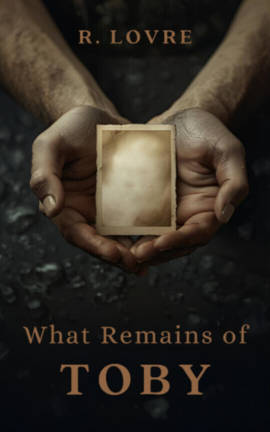
It was a child’s drawing. The paper was brittle, the colours faded to pastel ghosts. But he could still see it. A yellow circle. Jagged red spikes. A wide, smiling mouth drawn in clumsy crayon.
The sun picture.
Toby had kept it. Through the loss, the trial, the streets, the bottle, the delusion. Through everything. He had kept the real sun, drawn by the real boy. It had been pressed against his heart, a silent, true relic in the shrine of his false story.
Leo stared at it, the numbness in him cracking open into a grief so sharp it stole his breath. This was what remained. Not the story of Chloe. Not the phantom wife. This. A faded smile on fragile paper. Proof that a small, shy boy had once loved his teacher. Proof that the teacher, in some deep, un-shatterable part of himself, had never forgotten.
He folded the paper back with infinite care and slipped it into his own pocket. He finished packing the meager belongings into Toby’s old backpack. He took one last look around the empty tent, at the shape under the blanket that was no longer Toby. Then he walked out into the cold, new day, the weight of the sun picture in his pocket a small, heavy anchor to a truth that was finally, unbearably clear.
30 One Way To Cedar Springs
The city woke up around him, indifferent to the small death under a bridge. Leo stood at the edge of the camp, Toby’s old backpack slung over one shoulder. It held little: the coat, the blanket, the tin, the folded drawing pressed between two pieces of cardboard for safekeeping. The sum of a man’s life.
Sarah was by her car. She looked exhausted, emptied out. She had made the call. Soon, anonymous men in a van would come and take Toby’s body away to be processed by the city, a number in a ledger. Her part was done.
Leo walked over to her. They looked at each other, two people bound by a tragedy that wasn’t theirs to share, yet was now theirs to carry.
“What will you do?” she asked, her voice soft.
He nodded towards the backpack. “Going home.”
She searched his face, saw the resolve there, and a flicker of the first real hope he’d seen in her eyes. “Good,” she whispered. “That’s good, Leo.” She reached into her purse, not for a grand gesture, but for something practical. A twenty-dollar bill, folded. “For the ticket. Or for food on the way.”
He almost refused. Pride reared up, the street’s proud independence. But he thought of the last of his own change, counted out for a bagel days ago. He thought of the journey ahead. He took it. “Thank you.”
“Thank you,” she said, meaning it. “For looking after him. For… for listening.”
He turned to the others. Bones gave him a hard, appraising look, then stuck out his hand. Leo shook it. The grip was like iron. No words passed between them. Mags gave him a stiff, awkward hug. Dog just nodded, his eyes wet.
There were no grand farewells. They were not that kind of people. Leo shouldered the pack and walked away from the alcove, from the tent, from the ghost of the fire-pit. He didn’t look back.
He didn’t head towards the shelter district, or the soup kitchens, or any of the familiar, grimy landmarks of his new life. He turned his feet toward the centre of the city, toward the train station.
The station was a cathedral of noise and movement, a world away from the frozen silence of the camp. He stood in line at the ticket counter, his clothes dirty, his face too young and too old all at once. The woman behind the glass didn’t blink. She’d seen it all.
“One way to Cedar Springs,” he said, his voice rough from disuse. He gave his home town’s name. It felt strange on his tongue.
He paid with Sarah’s twenty and his last few coins. The ticket was thin, flimsy. A receipt for a change of direction.
He found his platform, sat on a hard plastic seat, and waited. The backpack sat beside him. He could feel the shape of the folded drawing through the fabric, a quiet, persistent pressure against his side.
He thought of Toby’s stories. The beautiful, sunlit lie of Chloe and Marianne, a tragedy of love and loss. And he thought of the unbearable truth of Jake and Sarah and a park and a changed lock. One was a sanctuary built from pain. The other was the raw, ugly wound the sanctuary hid. He carried both now. The weight of them together was immense, but it was a clean weight. It was the truth.
The train announced itself with a deep blast of its horn, a sound of purpose and distance. It slid into the station, huge and powerful. Leo stood up, slinging the pack over his shoulder.
He was not going back to the same home. The boy who had run away was gone. He was coming back as someone else. Someone who had seen where the road of anger and running ended—in a cold tent with a dying man telling himself kinder stories. Someone who knew that some wounds could be tended, and that some sentences didn’t have to be life-long.
He boarded the train, found a seat by a window. As the city began to slide away outside the glass, first in blocks, then in blurring streaks of grey and green, he didn’t feel hope, exactly. He watched his reflection in the train window—a stranger with Toby’s old pack and his own father’s set jaw—and knew exactly what the first words out of his mouth would be when the door opened. He was going back to fix what could still be fixed. To face the anger in his father’s eyes, the fear in his mother’s. To try. Because Toby had shown him the terrible cost of giving up, and Sarah had shown him the fierce, quiet grace of not looking away.
The train gathered speed, carrying him away from the ruins and toward the fragile, broken thing that was home. In his pocket, the sun picture rested, a faded smile from a lost boy, a silent lesson from a ruined teacher: that even in the darkest story, a little light, carefully kept, could show you the way out.




0 Comments