
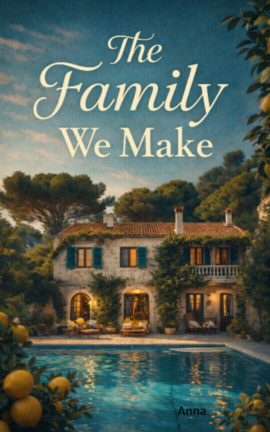

21 Luciano in Love
It began with a change in his morning routine. Instead of his usual imperious waddle directly from his kennel to the prime sunbathing slab for his grape tribute, Luciano became… distracted. He would pause at the edge of the garden, his head cocked, listening to sounds only he could hear in the wild olive grove. His quacks, normally commands or complaints, took on a new, softer, almost questioning tone.
Then, one morning, he brought her home.
She was a creature of exquisite, feral beauty. Sleeker than Luciano, her feathers a mosaic of earthy browns and tans that spoke of reeds and hidden riverbanks, of camouflage and caution. She had a bright, intelligent eye and a watchful stillness that was the absolute opposite of Luciano’s pomp. He ushered her onto the terrace with a series of low, encouraging murmurs, his chest puffed out to twice its normal size, showing off his magnificent emerald head and burgundy chest. He looked at his family, then at her, as if to say, “Behold! My domain! And… her.”
The family, having their coffee at the big table, froze.
“Well,” Ina said, lowering her sunglasses. “His Majesty has a consort.”
“She’s beautiful,” Ania breathed, setting down her cup.
“She’s wild,” Petar observed, a slight frown on his face. “He can’t just… bring wild ducks to the pool.”
Marija just smiled, a slow, knowing smile. “He is in love. Or something very like it. Look at him.”
Luciano was performing. He led the female—whom Ania instantly christened “Divna” (Wonderful) in her mind—on a grand tour. He showed her the pool, dipping his beak in and shaking it to demonstrate its superb wetness. He waddled past the cats, Bura and Jugo, who watched from the roof with supreme feline indifference, a look that clearly said, “More birds. How tedious.” He even offered her a grape from his own stash, nudging it towards her with a tenderness that was utterly out of character.
Divna followed, but warily. She did not take the grape. She kept a respectful distance from the humans, her eyes missing nothing. She seemed intrigued by the pool, this vast, unnatural, turquoise puddle, but when Luciano plunged in and sailed across it, inviting her to join, she only paddled at the very edge, as if testing a foreign element.
The courtship was a study in contrasting languages. Luciano spoke the language of Vila Mimoza: entitlement, abundance, scheduled tributes. Divna spoke the language of the wild: suspicion, freedom, survival. He offered her the security of his human-provided kingdom. She offered him the allure of the untamed world beyond the stone wall.
Over the next few days, Luciano’s reign was utterly disrupted. He spent less time bullying guests and more time trying to impress his lady love. He attempted to display his prowess by chasing off a much larger seagull, resulting in a comical, flapping skirmish that sent feathers flying and ended with the seagull stealing a croissant anyway. He brought her gifts: not just grapes, but a shiny pebble, a piece of orange peel, a wilting petal from the bougainvillea. Divna accepted these offerings with polite curiosity, but her gaze kept drifting back to the grove.
The family watched with a mixture of amusement and a strange, empathetic melancholy.
“He’s trying so hard,” Ania said one afternoon as they watched Luciano demonstrate the best technique for begging bread from the German hikers.
“He doesn’t understand that she doesn’t want what he has,” Petar said, his voice tinged with a sympathy that Ania knew ran deeper than ducks. He’d been quiet since the talk with Ina, working through the “separate blankets” theory.
“Or perhaps,” Marija said, joining them with a tray of iced tea, “she wants it, but she is afraid of the price. To live here is to trade the wide sky for a guaranteed grape. It is not a trade every heart can make.”
Ina, stretched on a lounger, observed through slitted eyes. “He is a king offering his crown to a forest nymph. It is a classic tragedy in the making. She will break his little green heart.”
Luciano, oblivious to the tragic commentary, redoubled his efforts. He became less of a tyrant, more of a gallant. He even let Divna eat first from the bowl of peas. His devotion was so complete, so strangely human in its vulnerability, that it became impossible not to root for him.
Then came the afternoon of the decision. Divna, having spent three days as a cautious guest, seemed to reach some internal conclusion. She stood at the boundary where the manicured lawn met the wild grasses leading to the olive grove. Luciano stood beside her, quacking softly, nudging her towards the house, towards the pool, towards his safe, silly, wonderful world.
Divna looked at him. She looked back at the grove, at the dappled light and the whisper of freedom. She gave a soft, low call, a sound that held a profound apology.
Then, she spread her wings. With a few powerful beats, she lifted into the air, clearing the stone wall and disappearing into the green shadows of the trees.
Luciano stood perfectly still. He didn’t quack. He didn’t chase her. He just watched the empty space where she had been. His head, usually held so high, drooped slightly. The magnificent puff of his chest seemed to deflate.
The family watched, hearts breaking for him.
For a full minute, he didn’t move. Then, with a dignity that was heartbreaking, he turned his back on the grove. He waddled, slowly, not to his kennel or his favorite slab, but to the edge of the pool. He didn’t get in. He just sat there, on the warm stone, staring at his own reflection in the turquoise water, a king alone in his empty castle.
“Oh, the poor thing,” Ania whispered, tears in her eyes.
Even Ina was silent, a rare moment of having no sharp words.
Marija sighed, a sound of deep understanding. “He offered his whole world. It was not enough. Or it was too much.”
Petar put his arm around Ania, pulling her close. They watched the forlorn duck, a mirror for their own unspoken fears about offers and choices, about the risk of offering your tamed, beautiful world to someone whose soul might yearn for a wilder sky.
Luciano’s love story had ended not with betrayal, but with a quiet, irreconcilable difference. He was a domestic duck who had fallen for a wild one. And in that silent afternoon, as he gazed at the water that was both his privilege and his cage, the family saw a reflection of their own dilemmas, and understood, with a new and aching clarity, that sometimes love means letting someone fly back to the life they need, even if it leaves you sitting alone by the pool, wondering if your grapes were ever really enough.
22 The Unwelcome Suitor
He arrived in a car so low-slung and silently powerful it seemed to glide over the gravel rather than drive on it. A silver Aston Martin, a predatory shark in the sun-drenched lane. The man who unfolded himself from its leather interior was of a piece with the machine: sleek, polished, and radiating an air of having just purchased the horizon. He was in his late fifties, tanned the color of expensive walnut, his silver hair swept back with ruthless precision. He wore a linen suit that cost more than the monthly mortgage of an average Croatian family, and his cologne—a cloying blend of oud and entitlement—announced his presence ten seconds before he did.
Goran Marković. Businessman. Philanthropist (self-styled). And for the better part of two decades, an intermittently persistent, never-successful admirer of Ina Dvoršak.
He had seen her perform at a charity gala in Zagreb five years ago and had decided, with the unwavering certainty of a man used to getting what he wanted, that she would be his crowning cultural acquisition. Ina had found him amusing for precisely one evening, then tiresome, then actively repellent. She had evaded, ignored, and once, famously, had him removed from a backstage area by security. Yet, like a stubborn fungus, he kept reappearing in richer, more intrusive forms.
And now, he had found her sanctuary.
Petar saw him first from his studio window. The sight of that car, that man, swaggering towards the terrace as if he owned the deed to the sunlight itself, sent a bolt of pure, tribal fury through him. He was out of his chair in an instant.
“Mrtav je,” Petar growled under his breath. He’s dead.
Ania, who was on the terrace proofreading a translation, looked up at the venom in his tone. She followed his gaze and saw the man. She didn’t know who he was, but she recognized the type: a human predator in a linen suit. “Petar, wait—”
But he was already storming out, a protective thundercloud in shorts and a faded t-shirt.
Goran had settled himself at the best table, the one with the panoramic view, and was snapping his fingers imperiously towards the kitchen door. “Service! A bottle of your best champagne. Chilled. And find Miss Dvoršak. Tell her an old friend has come to admire the view.”
Before Marija, who had appeared looking politely wary, could respond, Petar was there. He planted himself between the man and the house. “There’s no service here. This is a private home. You need to leave.”
Goran looked Petar up and down with the bored disdain of a man examining a mildly irritating insect on his windshield. “And you are?”
“The owner’s son. And I’m asking you to leave.”
“Ah, the nephew.” Goran smiled, a thin, condescending stretch of lips. “Charming. I’m here to see your aunt. Run along and tell her, there’s a good boy. And bring that champagne.”
Petar’s hands clenched into fists. The “good boy” was the spark to the tinder of his protectiveness. He took a step forward. “You don’t listen, do you? She doesn’t want to see you. No one wants you here. Get back in your overcompensation-mobile and drive off the cliff.”
“Petar!” Ania’s voice was sharp. She was beside him now, her hand on his arm, her grip surprisingly strong. She could feel the tension vibrating through him. She looked at Goran, her sweet face set in a mask of cool civility. “Sir, Ms. Dvoršak is unavailable. If you’d like to leave a message, I can assure you it will be delivered.” Her tone was a masterclass in polite dismissal.
Goran’s eyes flicked to Ania, registering her as another minor obstacle. “And you are?”
“The translator,” she said, leaving it beautifully ambiguous. “And I’m translating ‘unwelcome’ for you right now. It’s ‘nepozvan’. You should remember it.”
Before Goran could retort or Petar could explode, a voice like smoked honey poured over the scene.
“Goran, dragi! What a… predictable surprise.”
Ina stood in the doorway. She was a vision of effortless, lethal elegance. She wore a simple white dress, her hair was down, and she had no visible makeup. She looked less like a diva and more like a goddess who had just decided to grace the mortal plane. She was holding a pair of gardening shears.
She glided forward, ignoring Petar’s furious glare and Ania’s worried one. She stopped a few feet from Goran’s table, looking not at him, but at a rogue branch on the oleander bush beside it. “You’ve tracked your ambition onto my sister’s clean terrace. How… vulgar of you.”
Goran, wrong-footed by her appearance and her tone, stood up, his smarmy smile back in place. “Ina! You look… rustic. It suits you. I heard you were hiding away here, playing innkeeper. I had to come and see it for myself. I’ve brought a proposal.”
“Have you?” Ina said, her voice mild. She reached out and snipped the offending oleander branch with a clean, sharp snip. “I do hope it’s more interesting than your last one. The yacht in Monaco was so… nouveau. And the diamonds were frankly small.”
Petar made a strangled sound. Ania tightened her grip on his arm, whispering, “Wait. Watch her. She’s fishing.”
Ina was indeed fishing. She turned her full attention to Goran now, her head tilted, a faint, interested smile on her lips. It was the look of a cat that has seen a particularly plump, stupid mouse. “What is it this time? A villa in Korčula? A named wing at the opera?”
Goran puffed out his chest. “Better. A festival. The Marković Festival of Adriatic Arts. In Dubrovnik. You would be the artistic director. The headliner. The face. Your name in lights, permanently. A legacy.”
Ina tapped the shears against her palm. “A legacy you would own. How generous. And the budget?”
“Unlimited,” Goran said, sweeping a hand. “Whatever you need.”
“How delightful.” Ina’s smile widened, showing teeth. “You know, Goran, I’ve recently become involved with a little charity. The Children’s Music Foundation of Dalmatia. They provide instruments and lessons to kids in the villages. Desperately underfunded. A tragedy.” She sighed, a sound of profound social concern. “If one were to be the face of such a… commercially-minded festival, one’s credibility in the philanthropic community would need shoring up. A substantial, public gesture would be required. Say… a donation to the foundation. To show your heart is in the right place, not just your wallet.”
Goran’s eyes gleamed. He saw a hook, and he was desperate to bite. “Name the figure.”
Ina named a figure. It was astronomical. It was the kind of sum that would buy a small island or fund the charity for a decade.
Goran didn’t even blink. For him, it was just another line item in the budget of owning Ina Dvoršak. “Consider it done. The paperwork can be drawn up this week.”
“Wonderful,” Ina purred. She took a step closer. “You will, of course, make the donation first. As a gesture of good faith. A wire transfer. Today. Then we can discuss my… participation.”
“Today?” For a moment, the businessman balked.
Ina’s expression cooled by a degree. “No? Ah, well. I suppose your commitment to the arts is as flexible as your hairline.” She turned as if to leave.
“Wait!” Goran pulled out his phone, his fingers flying. “I’ll do it now. See? For you, anything.”
They all stood in silence as he made a call, barking orders to some underling to initiate the transfer. He hung up, triumphant. “Done. The money is on its way. Now, about the festival—”
Ina’s transformation was instantaneous and devastating. All pretense of interest vanished. The warm, engaged woman was gone, replaced by the icy, imperious star. She looked at him as if he were something she’d just scraped off her sandal.
“The festival,” she said, her voice now as sharp and cold as the shears in her hand, “sounds ghastly. A monument to your ego, with my name as the cheap paint. I would rather sing for Luciano the duck. At least his demands are honest and he has better taste in cologne.”
Goran’s face went from walnut to puce. “You… you said…”
“I said we could discuss my participation after the donation. We have discussed it. My participation is zero. Thank you for the donation to the children, Goran. It’s the only decent thing you’ve ever done, even if your motives were as cheap as your suit.” She turned to her stunned family. “Petar, darling, please see Mr. Marković to his car. He was just leaving.”
Petar, his fury now replaced by awestruck glee, stepped forward with a grin that was all teeth. “With pleasure. This way, sir.”
Goran spluttered, humiliated, outmaneuvered, and several hundred thousand euros poorer. He shot a look of pure venom at Ina, who was already examining another branch, utterly bored.
As Petar firmly escorted the sputtering man off the terrace, Ania looked at Ina. The older woman winked.
“A shark, dušo,” Ina said softly, watching the silver car roar away in a cloud of angry gravel. “You don’t reason with a shark. You bait it, you let it tire itself out, and then you steer it where you want it to go. And if you’re lucky, you get a nice donation for the children out of it.” She sniffed the air with distaste. “Now, someone open all the windows. The stink of desperation is clinging to the furniture.”
She walked back inside, leaving Ania on the terrace, shaking her head in wonder. Ina hadn’t just defended her territory; she’d weaponized the suitor’s own arrogance, turning an invasion into a windfall for charity. It was ruthless, brilliant, and, in its own way, deeply moral. The unwelcome suitor was gone, his money was going to a good cause, and Ina’s reign remained unchallenged. It was, Ania thought, a masterclass in how to handle a predator. And a potent reminder that the most formidable force of nature at Vila Mimoza was, and always would be, Ina herself.
23 Storm Clouds
The change came not from the sky, but from the sea. In the late afternoon, the Adriatic, usually a placid sheet of blues, turned a sullen, bruised grey. The air, thick with humidity and unsaid words, lost its breeze. A profound stillness descended, pressing down on Vila Mimoza like a held breath. Even the cicadas fell silent, sensing the shift.
Inside, the emotional weather mirrored the gathering tempest. Petar was pacing the length of his studio, the dazzling Zagreb offer and Ina’s “separate blankets” philosophy warring in his head. Ania sat in the sunroom, her laptop dark, staring at a page where her siren’s triumphant song now felt hollow, a fantasy against the real-world fear of being adrift. Marija moved through her tasks with a quiet intensity, her usual serenity strained at the edges. Only Ina seemed to thrive, declaring the atmospheric pressure “excellent for the vocal cords” before retreating to her room to practice scales with dramatic fervor.
Then, the first low grumble of thunder rolled in from the horizon, a distant drumbeat of impending chaos. The light changed, taking on a lurid, greenish-gold cast that made the familiar rooms look alien. The wind arrived not as a breeze, but as a sudden, gasping wall that shook the shutters and sent dry leaves skittering across the terrace like frantic insects.
The storm was upon them with breathtaking speed. Rain, not in drops but in a solid, roaring curtain, lashed the house. Lightning fractured the purple-black sky, followed by thunder so immediate and violent it seemed to crack the world open.
And then, with a soft pop from the direction of the road, the lights went out.
Darkness, absolute and profound, swallowed the villa. The relentless drum of rain on stone and glass was now the only sound, underscored by the thunder’s periodic fury.
For a moment, no one moved. Then, the soft scratch of a match. A flame bloomed in the kitchen, illuminating Marija’s calm face as she lit the first of the heavy, beeswax candles they kept for such occasions. One by one, other points of light appeared—Petar with a flashlight from his studio, Ania lighting the candles on the sunroom mantel, Ina emerging with a candelabra that made her look like a Baroque painting of Reason in a tempest.
They gathered in the main living room, a island of flickering light in the sea of darkness. The storm roared outside, but inside, the candlelight created an intimate, confessional space. Shadows danced on the stone walls, making secrets feel closer, truths harder to contain.
Ania watched the flames, her fear, nurtured by the oppressive afternoon and the primal storm, finally breaking its banks. “He’ll take the job,” she said quietly, not looking at Petar. “And I’ll be here. Translating contracts. Writing stories about a life that’s moving on without me. I’ll be… a souvenir.”
Petar, who had been staring into his own candle, looked up, stricken. “That’s not what I want. That’s my fear! That I’ll go and become some… some corporate design drone in Zagreb, and you’ll stay here and your writing will soar, and I’ll have missed it. I’ll have missed us. I’m terrified of disappointing you. Disappointing majka. Disappointing myself by choosing wrong.”
His confession hung in the air, raw and honest. The storm provided the punctuation—a crack of lightning that whitened their faces, a boom of thunder that shook the glasses on the table.
Marija listened, her hands folded in her lap. She looked from her son’s tormented face to Ania’s vulnerable one. The candlelight softened the lines around her eyes, making her look both younger and impossibly wise. The time for jam-making was over. The time for a different kind of preservation had come.
“Come,” she said softly, gesturing to the floor around the low coffee table. “Sit close. The light is better for stories here.”
They obeyed, settling on cushions and the rug, drawn into the circle of warmth. Ina, for once, was silent, watching her sister with a knowing, somber gaze.
Marija took a slow breath, as if diving into deep water. “You are both talking of futures as if they are stones you must carry alone,” she began, her voice a gentle counterpoint to the storm’s rage. “But a life is not a burden. It is a house. You think you must choose one room and live in it forever. But a house has many rooms. And sometimes, you must build new ones.”
She looked at Petar. “Your father, Luka… he dreamed of being an architect. Did you know that?”
Petar shook his head, stunned. His father was a smiling ghost in old photos, a man associated with the smell of sawdust and the solidness of the stone walls. An architect?
“Oh yes,” Marija smiled, a distant look in her eyes. “He had notebooks full of sketches. Beautiful, impossible things—houses on stilts over the water, towers woven from olive wood. He was a poet of space. But his family had no money. He took over his father’s small construction business. It was a good, honest life. But the dreams… they were a room in his heart he thought he had to keep locked.”
She picked up a candle, holding it so the light played over her features. “When we inherited this place, it was a ruin. Just walls and grief. And I saw his eyes light up for the first time in years. This was his canvas. Not a fantastical tower, but a real home. We worked side by side. He would say, ‘Marija, this wall needs a window here, so the morning light will find your coffee cup.’ He wasn’t just building a guesthouse. He was building a love letter. To me. To life. To the future he thought he’d lost.”
A tear traced a clean path through the candlelit air down her cheek. “He died before it was finished. A heart attack, right over there, where the herb garden is now. He was arguing with a stonemason about the curve of an arch.”
A soft sob escaped Petar. He’d never heard this. His father’s death was a fact, a sadness, but never a story with such specific, heartbreaking detail.
“I wanted to run,” Marija whispered. “To sell the stones and the dreams with them. The silence in the unfinished house was worse than any storm. But then, I went into his workshop. I found his notebooks. And in the margins of a sketch for this very room, he had written, ‘For Marija’s laughter. It must echo here.’”
She looked around the room, now filled with their flickering, attentive faces. “So, I finished it. Not as an architect, but as a cook. As a mother. I built it with cakes and clean sheets and listening ears. This guesthouse… it is not a prison of memory. It is the room he built for my laughter. And I have filled it. With guests. With Ina’s noise. With your art, Petar. With your stories, Ania. With Luciano’s ridiculousness. It is a living thing, not a monument.”
She reached out, taking one of Petar’s hands and one of Ania’s. “You are afraid of choosing wrong. But Luka’s dream wasn’t wrong. It was just… redirected. It found a different window. Your dream, Petar, does not have to be Zagreb or here. Your father’s dream was beauty and creation. You can have that in a city office or in this studio. You can have both, if you are clever and brave with your design. And you, kćeri,” she said, squeezing Ania’s hand. “You are not a souvenir. You are a cornerstone. This house’s story is now partly in Polish. You translate the world for us. You can translate your own life into whatever shape it needs to be, here, in Zagreb, or in a hundred places. The story does not end if the setting changes.”
Outside, the rain began to lessen. The thunder retreated, grumbling in the distance. The candle flames steadied.
“Do not be afraid of the storm,” Marija said, her voice firm now, filled with the love that had weathered her own personal tempest. “Be afraid of building a house with no windows. Build many rooms. Leave doors open. And remember, the most important design is not for a logo or a book, but for a life that can hold all the love and all the dreams, even the redirected ones.”
She released their hands. The confession was over. The secret history of the house had been shared, a gift of context and courage.
In the new, softer quiet, broken only by the drip of rain from the gutters, Petar and Ania looked at each other across the candlelight. The fears were still there, but they were no longer formless monsters in the dark. They were practical problems—rooms to be designed, stories to be translated. They had been given the blueprint of a love that had built something lasting from ruins.
The power would come back on later. But in that candlelit circle, with the scent of beeswax and rain and the echo of a love letter in the stones around them, they had found a different kind of light.
24 The Decision
The morning after the storm dawned with a scrubbed-clean clarity. The sky was a hard, brilliant blue, the air rinsed of humidity and heavy with the petrichor of drenched earth and bruised rosemary. The world felt new, and in the quiet of his sunlit studio, Petar felt a new resolve, tempered by the candlelit truths of the night before.
He opened the daunting email from Kontura Design. He read the dazzling figures, the prestigious title, one last time. Then, he began to type.
His reply was not a rejection. It was a counter-proposal. He thanked them profusely for the incredible offer and the validation it represented. Then, with a calm he didn’t entirely feel, he laid out his alternative: he would accept a senior designer role, but on a remote basis. He proposed being their “Adriatic Creative Lead,” handling clients and projects with a connection to the coast, or those seeking the aesthetic his unique location inspired. He offered to come to Zagreb for one week each month for meetings, workshops, and collaboration. He attached his redesigned brochure for Vila Mimoza as an example of the “narrative depth” he could bring from his specific environment.
He cited studies on remote work productivity. He quoted the unique creative stimulus of his setting. He was professional, passionate, and utterly uncompromising on the core point: his life was here.
He hit ‘send’ before he could second-guess himself.
The reaction in the house, when he announced what he’d done, was a complex symphony. Marija’s face first flooded with a relief so profound her knees seemed to buckle slightly; she gripped the back of a chair, her eyes closed, whispering a silent prayer of thanks. Then, the practical worry set in. “Will they accept? A part-time senior designer? From so far?”
Ania felt the icy knot of ‘being left behind’ in her chest begin to thaw, replaced by a warm, giddy rush of hope. He’d chosen their life. He’d fought for it. But with the thaw came new, trickling anxieties. Would this remote compromise work? Would he be pulled to Zagreb more and more? Would he come to resent the limitations he’d placed on his own career?
The air in the kitchen was thick with this mixed brew of relief and fresh, unknown worry.
It was Ina who cut through it. She had been listening silently, sipping her morning espresso with an inscrutable expression. When Petar finished explaining his counter-offer, she set her cup down with a decisive click.
“Well,” she said, her voice low and measured. She looked at Petar, really looked at him, not as her exasperating nephew, but as a man. “Gledaj ti njega. Would you look at you.” There was no sarcasm in it, only a genuine, deep-seated approval. “You didn’t just slam the door. You built a porch. That is… unexpectedly sophisticated.”
Petar, braced for a dramatic critique, was left speechless by the praise.
Ina stood up and walked to the window, looking out at the glittering, post-storm sea. Her usual theatrical posture was gone; she seemed smaller, more contained. “All my life,” she began, her back to them, “I have chosen the spotlight. The tour bus, the hotel room, the applause that evaporates before you reach the wings. I built a castle of noise so I wouldn’t have to hear the silence in the rooms I was leaving empty.” She turned, and her face was unguarded in a way they had never seen. The sharpness was softened by a profound, lonely weariness. “I chose the road. And the road is a jealous lover. It gives you adoration and takes everything else. There is no porch on a tour bus. No room for a compromise. You are either on it, or you are off it.”
The confession hung in the sunlit kitchen, more shocking than any of her embellished tales. This was the truth beneath the sequins and the sharp tongue. A life of magnificent, solitary noise.
Ania, moved by a surge of empathy, reached out without thinking. She placed her hand over Ina’s where it rested on the table. It was a simple, human gesture of understanding.
Ina looked down at Ania’s hand covering hers. For a single, breathtaking moment, her formidable composure shattered. Her lips trembled. Her eyes, those famous, expressive eyes, glistened with the threat of real, unperformed tears. The vulnerable woman who had searched for a lost duck in a grove was fully present, laid bare by her own admission of loneliness.
They all held their breath, waiting for the dam to break.
But Ina Dvoršak did not cry. She took a sharp, controlled inhale, as if pulling the emotion back inside and locking it away. She shook her head, a tiny, fierce motion. The moment of raw vulnerability passed, smoothed over by an act of sheer will. Then, the corner of her mouth quirked upwards into her familiar, wicked smirk.
She gently, but definitively, slid her hand out from under Ania’s. “Don’t get sentimental, dušo,” she said, her voice regaining its smoky brass, though it was slightly huskier than before. “I am not a tragedy. I am a luxury item. And luxury items don’t do porches. They do pedestals.” She picked up her espresso cup again. “But you,” she said, pointing at Petar with the delicate china, “you are building a life, not just a career. A life with porches and gardens and ridiculous ducks. It’s a bourgeois choice, and it is absolutely the right one.”
She took a sip, the subject closed, the fortress of her persona rebuilt. But something had shifted. They had seen the crack in the foundation, heard the echo in the empty rooms of her glamorous life. And in doing so, Petar’s decision—to build a porch, to choose connection over isolated ascent—was cast in a new, heroic light.
The relief in the room deepened, now tinged with a bittersweet respect. The new anxieties about the remote work gamble were still there, buzzing like flies against a window. But they were overshadowed by the profound understanding of what was being preserved: not just a job or a location, but the intricate, messy, loving architecture of a shared life. Petar had chosen to build his dream around his home, not in spite of it. And Ina, from her lonely pedestal, had just given that choice her highest, hardest-won compliment.
25 The Polish Parents & Lost in Translation
The announcement came via a video call that crackled with the familiar, comforting chaos of the Nowak household in Krakow. Ania’s mother, Elżbieta, her face a softer, older version of Ania’s, beamed from the screen. “Kochanie! We have surprise! Your father, he has finally retired from the railway! And we are coming to see you! Next week!”
Behind her, Ania’s father, Jan, gave a solemn, mustachioed nod, as if confirming the departure time of a very important train.
Ania’s heart performed a complicated maneuver—a soaring leap of joy immediately tethered by a plunge of sheer terror. “That’s… that’s wonderful! Naprawdę!” She was thrilled. She missed the solid, grounding love of her parents, the taste of her mother’s pierogi, the dry, precise humour of her father. But the thought of them here, in the sun-baked, chaotic, emotionally verbose world of Vila Mimoza, sent a frisson of anxiety through her.
The cultural divide felt suddenly vast. Her parents were people of order, of schedules, of understated sentiment. Her father lived by timetables; her mother expressed love through meticulously folded laundry and perfectly seasoned soup. How would they navigate the Dalmatian world of fjaka—the sacred, languid art of doing nothing—of Ina’s volcanic personality, of Marija’s tactile, food-based affection, of a duck that expected tribute?
Petar, seeing the panic flit across her face after the call ended, took her hands. “They’ll love it. They’ll love you. And we’ll… translate.”
The week of preparation was a fever dream. Marija began baking and preserving with a zeal usually reserved for state visits. Ina conducted a critical audit of the guest rooms, declaring one “too melancholic” for Poles and insisting on brighter cushions. Petar designed and printed a welcome sign in both Polish and Croatian. Ania oscillated between writing exhaustive briefing documents in her head and wanting to hide under the bed.
The day arrived. Jan and Elżbieta Nowak emerged from the taxi looking pale and slightly crumpled from travel, but with an air of quiet, observant dignity. Elżbieta hugged Ania fiercely, her eyes scanning her daughter’s face for signs of hardship (finding none, only a new light). Jan shook Petar’s hand with a firm, metronomic grip, his eyes already taking in the property’s layout with the assessment of a station master.
The initial hours were a ballet of politeness. Gifts were exchanged: exquisite pottery from Krakow for Marija, a bottle of premium śliwowica for Ina (who accepted it as if receiving a royal decree), a beautifully illustrated book on Polish architecture for Petar. They admired the view. They praised the house. They ate the welcome cake with murmurs of appreciation.
The first fissure appeared on the second morning, after breakfast. Jan, having finished his coffee at exactly 8:45 AM, consulted his watch. “So, Ania. What is the plan for today? We are ready.”
Ania, still in her robe, blinked. “Plan? Well… we could… go down to the cove later? Or maybe just… sit?”
“Sit,” Jan repeated, the word sounding foreign on his tongue. “For how long? To what purpose?”
It was then that Marija, sensing the impending cultural collision, swooped in with a pitcher of more coffee. “Jan, the purpose is fjaka. Come, sit. More coffee.”
Jan, too polite to refuse, sat. But his posture remained that of a man waiting for a platform announcement. “Fjaka? This is a local activity?”
“It is not an activity!” Ina declared, sweeping onto the terrace in a kimono. “It is an anti-activity! It is the sublime art of surrendering to the moment. Of allowing the sun and the sea air to dissolve your will. It is the luxury of not having a plan.”
Jan looked profoundly uneasy. His life had been built on plans. Timetables were a moral framework. “But… the day. It is passing. There is the Dubrovnik city wall to walk. The map has markings.”
“The wall has been there for eight hundred years,” Ina said, waving a dismissive hand. “It will be there tomorrow. But this sunlight, at this exact angle, warming this exact stone? That is a once-in-a-universe event. You must appreciate it.”
Marija, trying a more practical approach, sat beside him. “Jan, think of it like this. In Poland, you have big, beautiful forests, yes? Sometimes, you do not go into the forest to collect mushrooms or to hike. You go just to… be in the forest. To listen. To let the green quiet enter your bones. Fjaka is like that. But with better weather and less risk of wolves.”
Ania translated, adding, “It’s like… the opposite of a schedule.”
Jan’s brow furrowed. The concept of intentional, scheduled unscheduling was a paradox that threatened his entire worldview. “So, we are… waiting. For something to happen by not trying to make it happen.”
“YES!” Ina and Marija exclaimed in unison, as if he’d finally grasped a complex mathematical theorem.
“But what if nothing happens?” Jan pressed, genuinely concerned.
“Then you have succeeded perfectly!” Ina boomed. “You have achieved a state of pure, unadulterated fjaka! It is a high art form! Many attempt, few truly master it.”
To demonstrate, Marija leaned back in her chair, closed her eyes, and let her face tilt towards the sun. Ina did the same, with a more dramatic flourish. They became statues of blissful inertia.
Jan looked at his wife. Elżbieta, who had been quietly watching the exchange with amusement, gave a slight, almost imperceptible shrug that said, ‘When in Rome, or in this case, a Dalmatian guesthouse…’
Hesitantly, Jan set his watch on the table, as if disarming a bomb. He looked at the shimmering pool, the drowsy olives, the vast, empty sky. He shifted in his chair. He cleared his throat. He looked at his watch again, then quickly away, as if caught doing something illicit.
Minutes ticked by. The only sounds were bees, distant waves, and the slow, steady rhythm of three women breathing in a state of fjaka. Jan’s shoulders, held in their usual precise military square, began to soften, just a fraction. His gaze, which had been darting about looking for a task, settled on a lizard doing push-ups on a warm rock. A faint, bewildered smile touched his lips.
After twenty of the most aimless, purpose-free minutes of his adult life, he spoke, his voice softer. “The lizard… he is also having this fjaka?”
Marija, without opening her eyes, smiled. “He is a grandmaster.”
Jan nodded slowly. He leaned back, mimicking their posture. He didn’t close his eyes, but his stare lost its focused intensity, becoming a gentle gaze. He was, Ania realized with a burst of loving hilarity, fjaka-ing. Or at least, he was attempting a brave, beginner-level approximation.
The linguistic and cultural divide had been bridged not by words, but by the deliberate, communal absence of them. The conquest of the day’s schedule had been surrendered. And in that shared, sun-drenched stillness—with a former railway manager from Krakow tentatively embracing the Dalmatian art of blissful idleness—Ania felt her two worlds touch, blend, and find a perfectly absurd, perfectly beautiful common ground. The visit, she knew, would be full of more lost-in-translation moments. But as she watched her father tentatively reach for his coffee without checking the time first, she knew the most important translation—that of the heart—was already well underway.
26 Luciano’s Heist
The fjaka lesson had created a fragile, polite détente. Jan Nowak was trying, with the intense concentration of a man defusing a bomb, to relax. He had managed to sit for a full thirty-seven minutes without consulting his watch, a personal record. His reading glasses, a symbol of his orderly, intellectual world, lay folded on the small table beside his sun lounger, next to his book on Polish engineering marvels. He had just succumbed to a light, sun-warmed doze, lulled by the unfamiliar rhythm of doing nothing.
Luciano, surveying his domain from the pool’s edge, saw his opportunity.
The glasses were an object of supreme interest. They were shiny. They were placed with precision. They belonged to the New Serious Man who did not offer grapes. In the duck’s monarchical logic, this constituted both an insult and an invitation. If the tribute was not given, it would be taken.
With a stealth belying his waddling gait, Luciano approached. He moved like a feathered jewel thief across the hot stones. The cats watched from the roof, their tails twitching with mild interest. Bura conveyed a single thought: “The bird has finally lost its tiny mind.”
Ania was inside fetching more lemonade. Marija was in the kitchen. Ina was tuning a guitar somewhere out of sight. Petar was showing Elżbieta the herb garden. The terrace was quiet.
Luciano reached the table. He stretched his neck, his beak a precise, gleaming tool. He nipped one arm of the glasses. They slid off the table with a soft clatter that did not wake Jan. Satisfied, Luciano clamped the glasses firmly in his beak. They protruded from either side of his head, giving him the look of a very smug, very myopic aviator. He turned and began a stately, if slightly lopsided, retreat towards his kennel, the prize secured.
It was Elżbieta who saw it first. She pointed, her mouth opening in silent surprise. Petar followed her gaze. A grin spread across his face. “Oh, no. Luciano, you little brigand.”
Jan stirred at the sound of voices. His hand went automatically to the table for his glasses. He patted empty space. He opened his eyes, squinting. He saw the blurry shape of a duck waddling away with what looked like… “Moje okulary!” he bellowed, leaping to his feet with a speed that defied his recent fjaka.
The chase was on.
“Luciano! Drop it!” Petar called, already moving, but the duck, hearing the tone of command, interpreted it as a challenge to his sovereignty. He broke into a waddling sprint, his webbed feet slapping the stone, the glasses bouncing comically.
Jan, half-blind and fueled by righteous indignation, gave chase. “You! Bird! Stop! Those are progressive lenses!”
Ania emerged with the lemonade pitcher to see her normally dignified father in hot pursuit of a duck, shouting in a mix of Polish and fractured Croatian. “Stój! Stop! Ptica glupha!” (Stupid bird!)
Marija came running from the kitchen, wiping her hands. “Luciano! Not the guest’s glasses! Bad king!”
Ina appeared on the upper terrace, guitar forgotten. She took one look and erupted in laughter. “Bravo! A critique of Western ocular dependency! He’s a postmodern waterfowl!”
The scene descended into glorious chaos. Luciano, energized by the pursuit, executed a sharp turn around the potted lemon tree, forcing Jan to skid on the smooth stones. Elżbieta was laughing so hard she had to hold onto Petar’s arm. Ania stood frozen, mortified and hysterical in equal measure.
Luciano made for the pool, perhaps thinking the water would grant him clemency. He reached the edge, paused, and looked back at his pursuers—Jan red-faced and determined, Marija pleading, Petar trying to cut him off, Ina cheering from the balcony. With an air of final defiance, he turned back to the pool… and dropped the glasses.
They landed on the stone coping with a sickening crack, one lens popping out and skittering towards the water.
A collective gasp. Jan froze, his rage dissolving into utter dismay. “Mój Boże…”
For a moment, there was silence. Luciano, his point made, gave a triumphant QUACK and plunged into the water, leaving the scene of the crime.
Then, Elżbieta began to laugh again, a warm, rolling sound that broke the tension. “Jan, kochanie, you were outwitted by a duck!”
The absurdity of it crashed over Jan. He looked at the broken glasses, at his laughing wife, at the mortified but grinning faces of his hosts, at the duck now serenely paddling in the middle of the pool. A slow, reluctant smile spread beneath his mustache. Then a chuckle escaped. Then a full-bodied laugh, the first truly unguarded one they had heard from him.
“Progressive lenses,” he wheezed, wiping his eyes. “For seeing the world clearly! And a duck steals them! This is a parable!”
The ice was not just broken; it was vaporized. The chase, the shared outrage, the communal defeat by a feathered tyrant—it was a universal language far more effective than any attempted explanation of fjaka.
Petar fished the glasses out of the pool. Marija produced superglue with the efficiency of a field medic. As they all gathered around the table, meticulously piecing the glasses back together, the conversation flowed effortlessly.
“In Poland, we have a saying,” Jan said, holding the newly repaired, slightly lopsided spectacles to the light. “’Złodziej okularów i tak widzi krzywo.’ A thief of glasses still sees crookedly. I think Luciano sees the world just as he wants to.”
“He sees a world where he is in charge,” Ina agreed, admiring the duck’s audacity. “I respect that.”
Elżbieta patted Marija’s hand. “Your duck is a very… assertive host.”
“He keeps us humble,” Marija sighed, smiling.
Ania watched, her heart swollen with relief and affection. The cultural divide, the linguistic barriers, the nervous politeness—all had been swept away in a sixty-second duck heist. Her father was laughing with Ina. Her mother was sharing gardening tips with Marija. Petar was clinking his lemonade glass against her father’s repaired specs.
Later, when Jan put on the glued glasses, the world was slightly tilted, with a hairline crack running through his left field of vision. He didn’t mind. Every time he looked through them, he would see a reminder not of disorder, but of the day a duck stole his glasses and, in doing so, gifted his family the one thing they needed most: a perfectly broken, hilarious, and unifying moment of pure, unscripted chaos. The heist was the best possible welcome.
27 Kitchen Diplomacy
The morning after the Great Spectacle Heist, a new peace reigned at Vila Mimoza. Jan Nowak, peering through his newly adhesive, philosophically-crooked glasses, no longer looked at his watch with anxiety, but with a kind of wry wonder, as if time itself had become a more flexible concept. The ice was broken, but the true merging of worlds began, as it so often does, in the heart of the house: Marija’s kitchen.
It started with the scent of yeast and cinnamon. Elżbieta, an early riser, had wandered into the kitchen to find Marija already up, her hands deep in a mound of dough. “Dzień dobry, Marija,” she said softly.
“Dobro jutro, Elżbieta!” Marija beamed, flour dusting her cheeks like war paint. “I am making povitica. It is a… a sweet bread. For breakfast.”
Elżbieta peered at the dough, her baker’s eye assessing the texture. “It is like a strudel, but with bread, yes? We have something similar. Makowiec. Poppy seed.”
“Poppy seed!” Marija’s eyes lit up. “Ania brought me seeds! But I have never…” She gestured helplessly at the dough. “You know this makowiec?”
A shy but proud smile touched Elżbieta’s lips. “It is my specialty. For every Christmas, Easter, family sadness, family joy.”
Without another word, Marija cleared a space on the vast wooden table. She fetched the precious bag of Polish poppy seeds Ania had brought, along with honey, butter, milk, and more flour. She handed Elżbieta a bowl. “Show me.”
And so, the diplomacy began. Not with words, but with actions. Elżbieta toasted the poppy seeds, releasing a deep, nutty fragrance that was different from the local aromas of rosemary and sage. Marija watched, fascinated. Elżbieta ground them with a mortar and pestle, her movements firm and rhythmic. She mixed them with honey, melted butter, and plump raisins, creating a dark, fragrant paste.
“Now, the dough must be very thin,” Elżbieta explained, her hands demonstrating. “Like a sheet for the bed. So you can roll it.”
Marija nodded, understanding perfectly. She fetched her own rolling pin, a well-worn cylinder of olive wood. “For povitica, it is the same. Thin like a summer night’s dress.”
They worked side-by-side, two matriarchs from different shores, speaking the fluent language of dough. Elżbieta’s precise, measured movements complemented Marija’s intuitive, generous ones. Marija showed Elżbieta how to stretch the povitica dough by hand, letting its own weight pull it into a gossamer sheet over the floured tablecloth. Elżbieta watched, mesmerized, then demonstrated the specific tight roll required for a perfect makowiec swirl.
Laughter bubbled up as flour puffed into the air and dough stuck to fingers. Ania, drawn by the familiar scent of her childhood, found them there, both women flushed and smiling, their hands sticky with shared purpose.
“Mamo! You’re making makowiec?” “With a Dalmatian supervisor,” Elżbieta said, her eyes crinkling.
“And she is a stern taskmaster!” Marija laughed. “But look! We are making both. A Polish-Dalmatian union in the oven!”
Soon, the kitchen was a warm, fragrant United Nations. Jan, lured by the smells, was put to work chopping walnuts for the povitica filling, his railwayman’s precision applied to the nuts. Petar was tasked with melting butter and brushing the loaves. Even Ina deigned to enter the floury fray, declaring herself the official “aesthetic consultant” for the egg wash, ensuring each loaf would achieve a perfect, glossy golden brown.
Ania moved between them, a joyful translator of technique, not language. “Mamo says a little more sugar in the poppy seed… Marija says the dough needs to breathe for five more minutes…”
The barriers of language and custom dissolved in the shared, tangible act of creation. Elżbieta confessed her secret for a flaky pastry—a splash of vodka in the dough. Marija, delighted, shared hers for the sweet bread—a single crushed clove in the sugar syrup. They were trading state secrets, and the kitchen was their embassy.
As the two loaves—one a dark, swirled Polish log, the other a lighter, nut-speckled Dalmatian braid—baked together in the big oven, filling the house with an impossible, blended perfume, the families gathered around the table with cups of coffee. The conversation was no longer stilted. It was about the crackle of the crust, the sweetness of the filling, the memory of other kitchens, other ovens.
When the breads emerged, glorious and steaming, they were placed side-by-side on the table, a delicious peace treaty. Marija cut the povitica. Elżbieta sliced the makowiec. They each took a piece of the other’s creation.
Elżbieta closed her eyes as she tasted the povitica. “It is… like a sweet cloud with a heart of walnuts. Beautiful.”
Marija took a bite of makowiec. The rich, deep, slightly bitter-sweet flavour of the poppy seeds was unfamiliar, profound. “Oh,” she breathed, her hand over her heart. “This is a serious taste. A taste for long winters and big thoughts. I love it.”
Jan, chewing happily on both, nodded. “This is good diplomacy. Much better than treaties. No one argues with makowiec.”
Ina raised her coffee cup. “To the culinary alliance! May our collaborations always be this sweet, and may our only conflicts be over who gets the last slice.”
As they ate, the two breads on the platter becoming a marbled map of their new connection, Ania watched, her throat tight with emotion. Her mother, usually so reserved, was gesturing animatedly, asking Marija for the Croatian words for “knead” and “rise.” Her father was discussing oven temperatures with Petar as if they were engineering schematics.
Food had done what words could not. It had provided a common ground—literally, the flour-dusted table. It had given them a shared task, a shared mess, and finally, a shared, triumphant reward. The kitchen, once solely Marija’s domain, was now a joint territory, its air thick with the mixed scents of Dalmatian rosemary and Polish poppy seed, a perfect, delicious metaphor for the future they were all, quite literally, cooking up together.
28 A Song for Two Lands
The evening after the kitchen diplomacy had settled into a deep, contented glow. The last crumbs of povitica and makowiec were gone, the plates cleared, but the warmth of the shared creation lingered. They had gathered on the lower terrace, where the last embers of sunset were fading into a velvety, star-pricked navy. The air was cool, scented with night-blooming jasmine and the faint, clean smell of the sea. A bottle of cherry rakija made its way around the table, its fiery sweetness a fitting digestif to the day’s sweetness.
Conversation was soft, meandering—Elżbieta asking Marija about the herbs in the garden, Jan discussing stonework with Petar, his hands sketching arches in the air. Ania sat between both worlds, translating not words, but feelings, her heart full.
Ina had been quiet, observing the scene from her chair, a silhouette against the deepening blue. She had a glass of rakija in her hand, but she wasn’t drinking. She was listening. To the murmur of Polish and Croatian, to the laughter that needed no translation, to the gentle sigh of the pines. Her sharp, performative edge was nowhere to be seen. In the twilight, she looked thoughtful, almost pensive.
Then, without a word, she stood up. She walked over to the old, slightly out-of-tune upright piano that stood in the corner of the terrace, sheltered by a grape arbor. She hadn’t touched it all summer. She opened the lid, the action a soft creak in the quiet. She sat on the worn bench, her back to them, and let her fingers hover over the yellowed keys.
No one spoke. This wasn’t one of her dramatic announcements. It was an offering being prepared in silence.
She played a single, clear chord, letting it hang in the night air. Then another, a gentle, wandering progression that sounded like water finding its way over stones. It was a melody none of them knew—not a famous klapa song, not a jazz standard. It was being born in the moment.
She began to sing. Not in her powerful, chest-resonant stage voice, but in a softer, lower register, a voice meant for lullabies and confessions. The words were Croatian, simple and poetic.
“Dva obala, jedno more,” she sang. Two shores, one sea.“Jedna mjesečina na dvije strane.” One moonlight on two sides.“Vjetar nosi pjesmu s juga,” The wind carries a song from the south, “A sa sjevera, šapat hladan.” And from the north, a cool whisper.
Ania felt the breath catch in her chest. She didn’t need to translate for her parents. The melody itself was the translation—a bridge of sound.
Ina’s fingers danced lightly, the piano’s gentle imperfections adding to the song’s raw, intimate beauty. “Ptica leti izmedu grana,” A bird flies between the branches, “Nosi sjeme, nosi tugu, nosi nade.” Carrying seed, carrying sorrow, carrying hopes. “Zemlja hrani različite korijene,” The earth nourishes different roots, “Ali nebo je isto za sve nas.” But the sky is the same for all of us.
The song wove a tapestry of imagery—shared moon, dividing sea, migrating birds, unifying sky. It spoke of distance and connection, of separate lands under the same celestial blanket. It was a song for Ania and Petar. For Elżbieta and Marija. For Poland and Dalmatia. For any two points held together by the fragile, strong threads of love and choice.
Ania glanced at her mother. Elżbieta was sitting perfectly still, her hands clasped tightly in her lap. Her eyes, reflected in the candlelight, were fixed on Ina’s back. As the song built to a gentle, aching crescendo—“I mi gradimo most od pjesama, da pređemo more koje nas dijeli…” (And we build a bridge of songs, to cross the sea that divides us…)—a single tear escaped Elżbieta’s eye. It traced a slow, glistening path down her cheek, followed by another. She didn’t wipe them away. She let them fall, a silent, profound tribute.
Jan reached over and took his wife’s hand, his own eyes suspiciously bright. Marija had her hand over her mouth, her gaze swimming with emotion. Petar’s arm was tight around Ania’s shoulders.
Ina held the last note, a pure, soft tone that seemed to merge with the whisper of the night breeze, and then let it fade. Her hands rested on the keys. For a moment, there was only the sound of the sea and the distant cry of a night bird.
Then, Elżbieta let out a soft, shuddering breath. She stood up, her movements slow with feeling. She walked to the piano. Ina turned on the bench to face her.
Elżbieta didn’t speak. She didn’t need to. She simply opened her arms. Ina, the formidable, un-huggable force of nature, hesitated for only a second. Then she rose and stepped into the embrace. It was not a dramatic, theatrical clutch. It was a firm, heartfelt, woman-to-woman hold. Elżbieta whispered something in Polish into Ina’s shoulder—“Dziękuję. To było piękne.” Thank you. That was beautiful.
Ina, who understood the sentiment if not the words, simply patted her back. When they parted, Ina’s own eyes were glistening, but she blinked rapidly, her old defenses snapping back into place with a sniff. “Yes, well,” she said, her voice slightly husky. “The moonlight was inspiring. And the rakija.”
But the moment had been sealed. The song had done what no feast or conversation fully could. It had spoken directly to the heart of the mother who had let her daughter cross a sea, acknowledging the pain and the beauty of that letting-go, and celebrating the new bridge that was being built.
As they all sat back down, the silence was deeper, richer. The two shores felt closer. The same moon, which now hung over them all, silvering the olive leaves and the quiet faces, seemed to bless the improbable, beautiful union growing under its light. Ina had not just sung a song; she had composed an anthem for their new, blended family, and in doing so, had given Elżbieta the greatest gift of all: the understanding that her daughter’s new home had a heart that could speak the language of love, in any key.
29 Departure with Promises
The final morning dawned with the soft, pearly light of farewell. The suitcases, now slightly heavier with gifts of local olive oil, lavender sachets, and a bottle of the cherry rakija, stood by the door like silent, obedient pets. The air, which had thrummed with the vibrant chaos of two families colliding and merging, now held a quieter, more poignant energy—the sweet ache of a visit that had succeeded beyond all hope.
Breakfast was a lingering affair on the terrace, but the usual lively chatter was replaced with a contented, wordless communion. They passed the povitica and the last slice of makowiec without speaking, each bite a memory. Jan savored his coffee, no longer checking the time, his repaired glasses giving the world a comfortably imperfect clarity. Elżbieta held Marija’s hand across the table for a long moment, her eyes speaking volumes of gratitude and newfound kinship.
The taxi’s arrival was announced by the crunch of gravel on the lane, a harsh, real-world sound that broke the spell. Goodbyes began, messy and heartfelt.
Jan shook Petar’s hand, then pulled him into a brief, back-slapping hug. “You take care of her,” he said, his voice gruff. “And… build a good studio. With a strong roof. I will send you Polish insulation specifications.”
Petar laughed, his throat tight. “I will. And you come back. For the housewarming.”
Elżbieta embraced Ania fiercely, whispering motherly incantations in Polish—eat well, sleep enough, call often. Then she turned to Ina. The two women looked at each other, the memory of the moonlit song hanging between them. They didn’t hug again, but Elżbieta took Ina’s hands in hers. “Dziękuję za wszystko. For the song. For the… life you give her here.”
Ina, for once, had no sharp retort. She simply nodded, a regal, accepting dip of her chin. “She gives life to this place. Come back. I will teach you a Croatian drinking song. It is less poetic but more fun.”
Then, it was Marija’s turn. She approached Elżbieta and Jan, not with tears, but with a serene, grounded warmth. In her hands, she held not a shop-bought souvenir, but a simple glass jar, its contents glowing like captured sunlight.
“This is for you,” she said, her voice soft but clear. She placed the jar in Elżbieta’s hands. “My apricot jam. From the tree by the gate. The one that gets the first sun in the morning and the last in the evening.”
Elżbieta held the jar, turning it so the golden, jewel-like preserves caught the light. It was more than jam. It was bottled Dalmatian summer, the care of Marija’s hands, the essence of the land that now held a piece of her daughter’s heart.
“When you are back in Krakow,” Marija continued, her eyes shining, “and the winter is grey, you open this. You taste it. And you will remember the sun here. You will remember that your daughter is safe, and loved, and home.”
Elżbieta’s composure finally broke. She pulled Marija into a tight embrace, the jar pressed between them. “Dziękuję, siostro,” she whispered. Thank you, sister.
The word hung in the air, a final, perfect seal on the new bond. Siostra. Sister. Not by blood, but by choice, by shared bread, by a duck’s heist, by a song under the same moon.
Jan cleared his throat, his own emotions too close to the surface. He took the jar from his wife with great care, as if handling a holy relic. “We will enjoy it on Christmas morning,” he vowed. “With remembrance.”
One last round of hugs, a flurry of waved hands, and they were in the taxi. Ania stood between Petar and Marija, Ina a watchful presence just behind. They watched as the car disappeared down the lane, the dust settling slowly in its wake.
The terrace felt vast and quiet. Luciano waddled over, quacking softly, as if checking to see if the interesting, spectacle-stealing visitors were truly gone.
Marija put her arm around Ania’s waist, pulling her close. “They are wonderful people. Your makowiec mother.”
Ania leaned her head on Marija’s shoulder, the warmth of the departing sun on her face. “They loved it here. They love you.”
“They left you with us,” Marija said simply. “That is the greatest gift a parent can give. And we will keep you safe. And fed.” She smiled. “Now, we have an empty jar to fill next summer. And they will be back to taste it.”
The departure was not an ending, but a punctuation mark—a comma in the long, run-on sentence of their now-joined lives. The Poles had left, but they had not left behind. They had been woven in. They had taken a piece of the Dalmatian sun with them in a simple glass jar, and left behind a deepened certainty, a broader definition of family, and the sweet, lingering promise of return. The guesthouse by the sea had welcomed its newest, furthest-flung members, and had sent them home not as visitors, but as kin, bound by jam and song and the unshakable knowledge that home was now, wonderfully, in two places at once.
30 The Poisonous Review
It was Petar who found it. A slow morning, scrolling through the booking site’s dashboard for Vila Mimoza, a routine check for new inquiries. He saw the notification for a new review. A flicker of pride—maybe from the German hikers who’d left so happily? He clicked.
The stars were a single, glaring asterisk. The title was a dagger: “Fake Charm, Worse Food.”
The review was a masterclass in vague, spiteful vitriol. It accused the guesthouse of being “a staged fantasy for gullible tourists.” It mocked the “overhyped, rustic simplicity” as “calculated poverty chic.” But the blade twisted deepest when it reached the heart of the house: Marija’s cooking.
“The much-lauded ‘homemade’ meals were amateurish at best. The famed lemon cake was dry and bland. The ‘peka’ was overseasoned and tough. One gets the distinct impression the owner is more interested in playing the doting nonna than in actual culinary skill. A disappointing, and frankly overpriced, performance.”
It was anonymous. A guest under the pseudonym “DiscerningTraveler99.”
Petar felt the words like a physical blow to his own gut. He read it twice, his blood turning to ice, then to fire. He stormed into the kitchen, laptop in hand, his face pale with rage. “Mati.”
Marija was at the sink, humming as she polished a copper pot to a brilliant shine. She turned, her smile fading at his expression. “Što je, sine?” What is it, son?
He couldn’t speak. He just turned the screen towards her.
She took the laptop, wiping her hands first on her apron. She read slowly, her lips moving silently over the English words she understood well enough. As she read, the light in her face—the warm, steady glow that was as much a part of Vila Mimoza as the stone itself—dimmed, guttered, and went out. The color drained from her cheeks. Her hands began to tremble so violently the laptop screen shook.
She didn’t cry out. She didn’t argue. She simply placed the laptop carefully on the kitchen table, as if it were a live bomb. She untied her apron, folded it neatly, and laid it over the back of a chair. Then, without a word, she turned and walked out of the kitchen. They heard her slow, heavy footsteps on the stairs, and then the soft, definitive click of her bedroom door closing.
The silence she left behind was louder than any scream. The kitchen, usually a realm of fragrant, bustling life, felt cold and abandoned.
Ania had come in from the terrace, drawn by the palpable shift in the air. She saw Petar’s stricken face, the abandoned laptop, the folded apron. “What happened?”
Petar just pointed at the screen.
Ania read. With each cruel line, her own heart clenched. This wasn’t criticism; it was assassination. It targeted not just the business, but Marija’s soul—her nurturing, her love, her very identity. It was a poison-tipped arrow aimed at the core of their home.
The stunned silence was shattered by Ina’s arrival. She took in the scene, read the review over Ania’s shoulder, and her reaction was volcanic. “KO JE OVO?!” she roared, the sound echoing off the tiles. “Who is this cockroach? This DiscerningTraveler of his own pathetic imagination! I will find him! I will sue him for slander, for defamation, for crimes against taste! I will have him blacklisted from every respectable establishment from here to Trieste!”
Petar, his own rage finding a target in the digital void, slammed his fist on the table. “I can find the IP address! I know people! We can get it taken down, we can flood the site with complaints about them!”
The family was in crisis, and their instincts were fight or flight—Marija had fled, Ina and Petar were ready for all-out war.
Amidst the fury, Ania was quiet. She reread the review, her translator’s mind analyzing not just the words, but the empty spaces between them. The lack of specifics. The personal venom. The cowardice of anonymity. This wasn’t a guest with a legitimate grievance about a cold shower or a noisy room. This was someone who wanted to wound.
She closed the laptop lid gently. “Suing an anonymous account is impossible. Hacking… is a bad idea.” Her voice was calm, a small island in the storm of their anger.
“So we do nothing?!” Petar exploded. “We let this… this lies stand? It will destroy her! It will destroy the business!”
“No,” Ania said, her gaze steady. “We don’t do nothing. We do the opposite of what they want.” She took a deep breath. “They want a reaction. They want drama, rage, defensiveness. They want to prove the ‘false charm’ by making us look petty and angry.” She looked at Ina, then at Petar. “The most powerful response is not a scream. It’s a whisper. A whisper so kind, so unshakeable, it makes their poison look cheap.”
Ina glared at her, but the fury was banked by a flicker of curiosity. “What whisper?”
“We respond,” Ania said. “Publicly. On the review. Not as the business, but as the family. We thank them for their feedback. We express genuine regret that their experience fell so short. We reaffirm what Vila Mimoza is about—family, authenticity, love. We kill them with kindness. And then…” she looked towards the stairs, “we let our real guests speak for us.”
Petar shook his head, pacing. “It feels like surrender. Like we’re admitting they’re right.”
“We’re admitting nothing,” Ania said firmly. “We’re refusing to fight on their toxic ground. We’re choosing our own battlefield. One made of the truth we live every day.”
She sat down at the table, pulled out her own laptop, and opened a blank document. She stared at the screen, her fingers poised. The fury of her adopted family swirled around her, but within her, a cool, clear resolve had formed. This was her weapon: words. Not Ina’s theatrical salvos or Petar’s digital counterattacks, but words of measured grace, an antidote woven from the very fabric of the love that had been attacked.
She began to type, her expression one of focused determination. Upstairs, behind a closed door, the heart of their home was wounded. Downstairs, the battle to defend it had begun, not with a roar, but with the quiet, persistent click of a keyboard, crafting a shield not of steel, but of unwavering, gentle light.











0 Comments